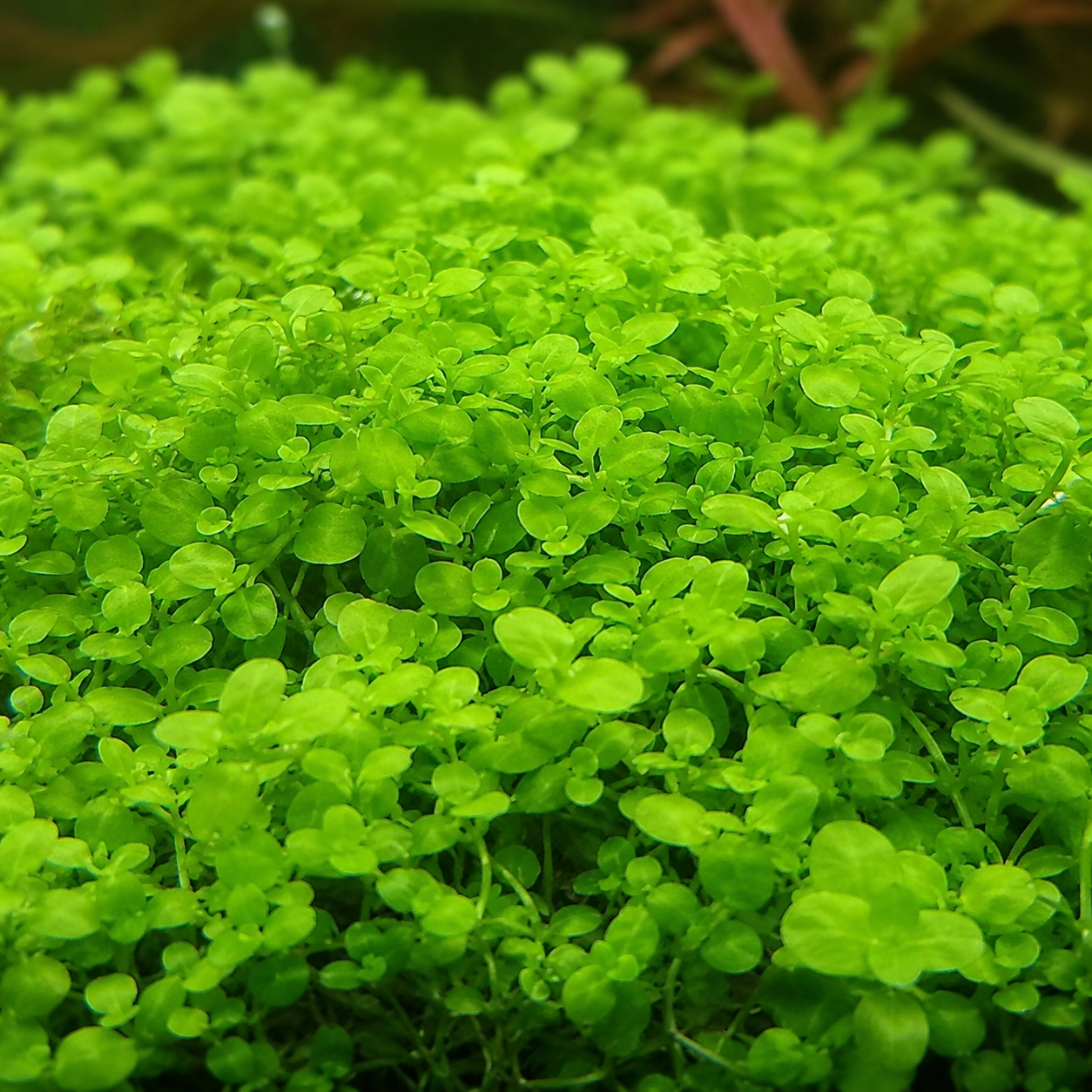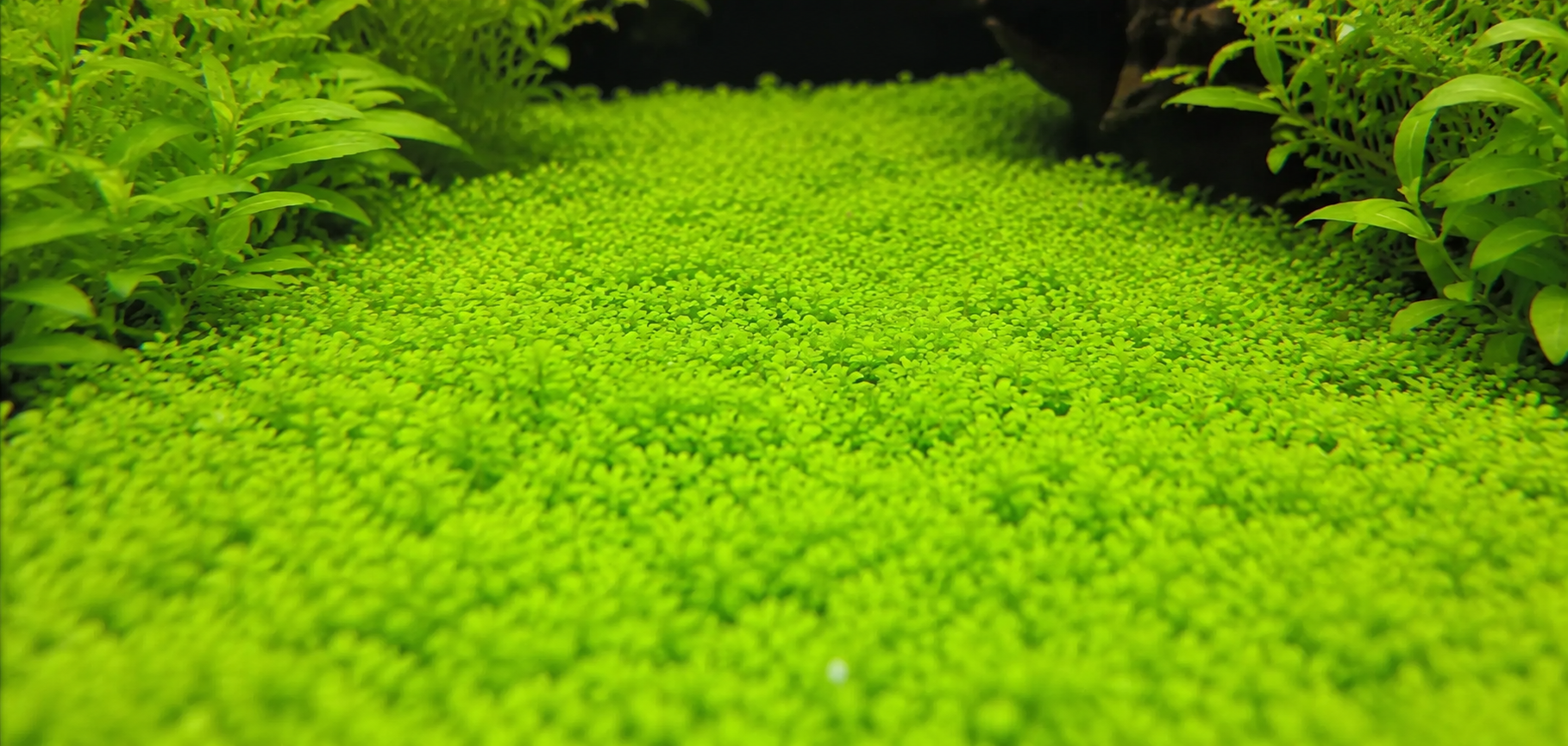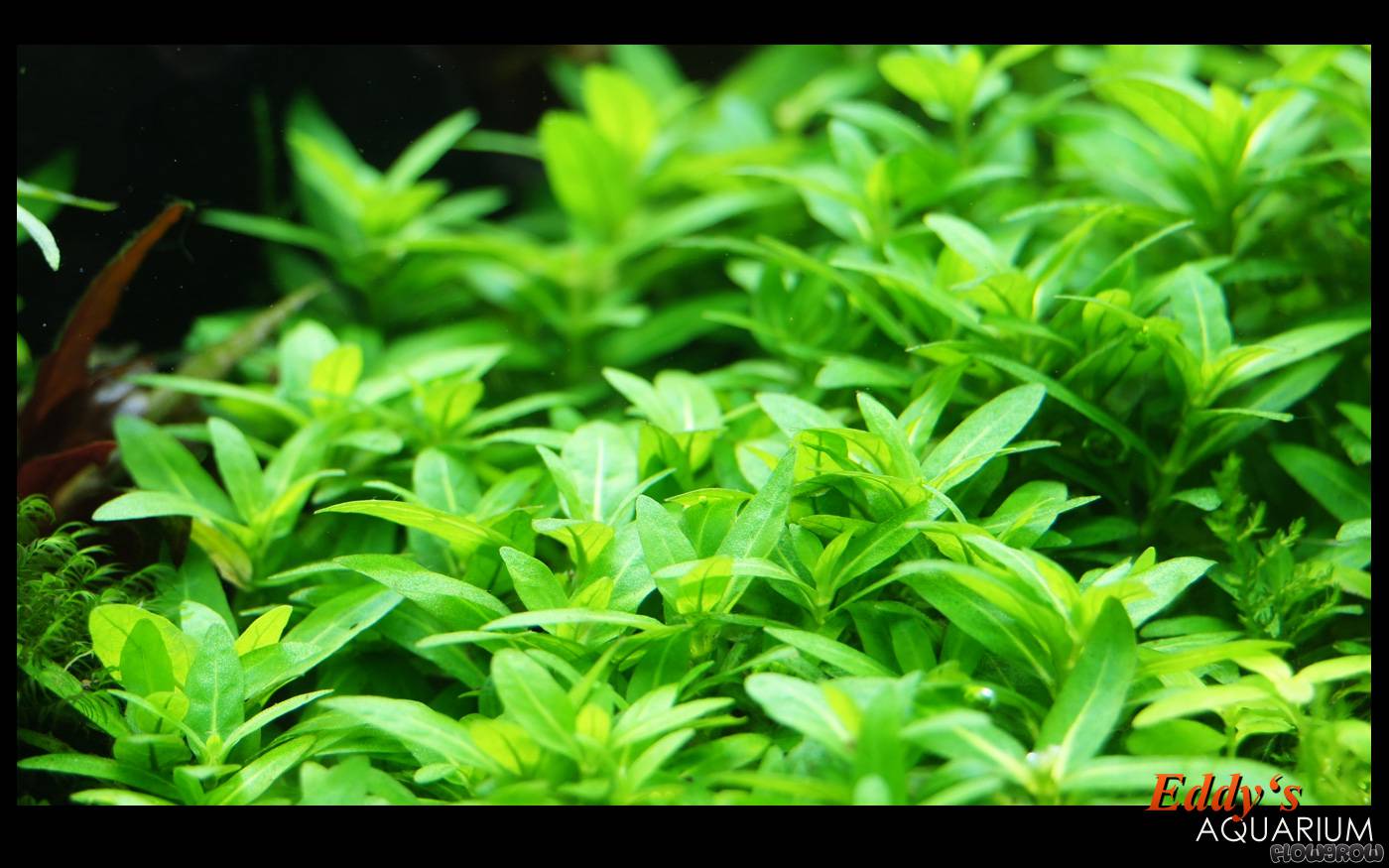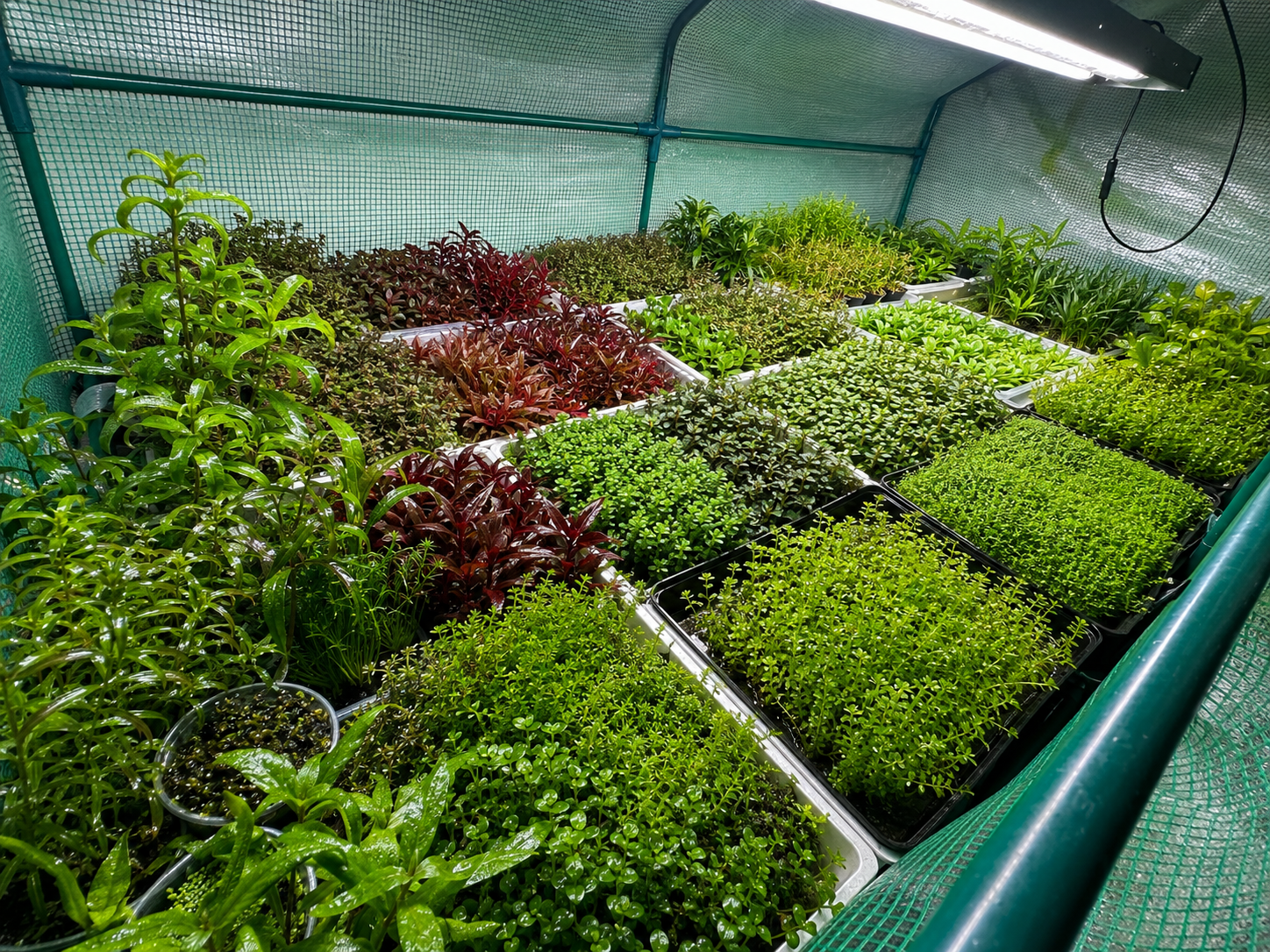

Hydrocotyle tripartita “Japan” is one of those plants that does exactly what you want without a lot of fuss. It carpets flat substrate, climbs along driftwood and rocks, and fills midground gaps with a dense mat of bright green three-lobed leaves — all without CO2 injection. The “Japan” designation refers to the compact, small-leaved form that’s become the standard in the aquarium trade.
Native to Southeast Asia (found across Japan, Korea, China, and tropical Asian regions), it grows in shallow marshy areas and along stream margins.
How It Grows
H. tripartita “Japan” spreads horizontally through runners that creep along the substrate surface, sending down fine roots at each node. In good conditions it can cover a significant area within a few months. It also has the interesting habit of climbing — press a stem against driftwood and it will send runners up and along the wood, creating a natural cascading effect.
Height is variable: 3–10 cm when carpet-growing flat, taller when climbing. Use it in the foreground as a carpet, in the midground as a filler, or let it trail up hardscape for a natural, overgrown look.
Color
Bright, vivid green regardless of light level. The three-lobed leaf shape creates an almost coin-like appearance up close — simple but distinctive.
Water Parameters
Warm, shallow Southeast Asian water suits it well: 70–82°F (21–28°C), pH 6.0–7.5, tolerant of a range of hardness. A standard weekly 20–25% water change is plenty.
Feeding
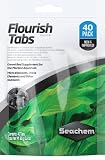
While not a demanding plant, H. tripartita “Japan” responds well to root nutrition. Seachem Flourish Tabs pushed under the initial planting areas accelerate spreading noticeably. As runners extend further from the original plant, Seachem Flourish liquid in the water column ensures new growth tips stay healthy even when roots haven’t yet reached a tab.
Trimming
Trim runners that reach unwanted areas. Cut at any point along the runner — the remaining section will continue growing. Overgrown mats can be thinned by pulling up sections and replanting elsewhere.
How to Plant
Divide the plant into individual stem sections, each with 2–4 leaves. Press each section 1–2 cm into fine substrate using tweezers, spacing pieces 2–3 cm apart across the planting area. Because H. tripartita ‘Japan’ spreads by runners, exact starting positions don’t need to be precise — it fills gaps on its own over the following weeks. Push a Seachem Flourish Tab under the initial planting area immediately at planting. For the climbing effect on hardscape, simply lay stems against driftwood or rocks; the runners will follow the surface upward on their own.
Common Problems
- Runners spreading where you don’t want them. Simply trim at any point along the runner — this plant has no issue being cut back and redirected.
- Slow start. Like most runner-based carpets, the first couple of weeks can look uneventful while root establishment happens below the surface.
- Thinning mats over time. Old, dense mats can thin out in the center as they age; pulling up and replanting sections refreshes growth.
Pests
No specific pest issues. Rinse new stems and check for hitchhiker snails before adding to an established tank.