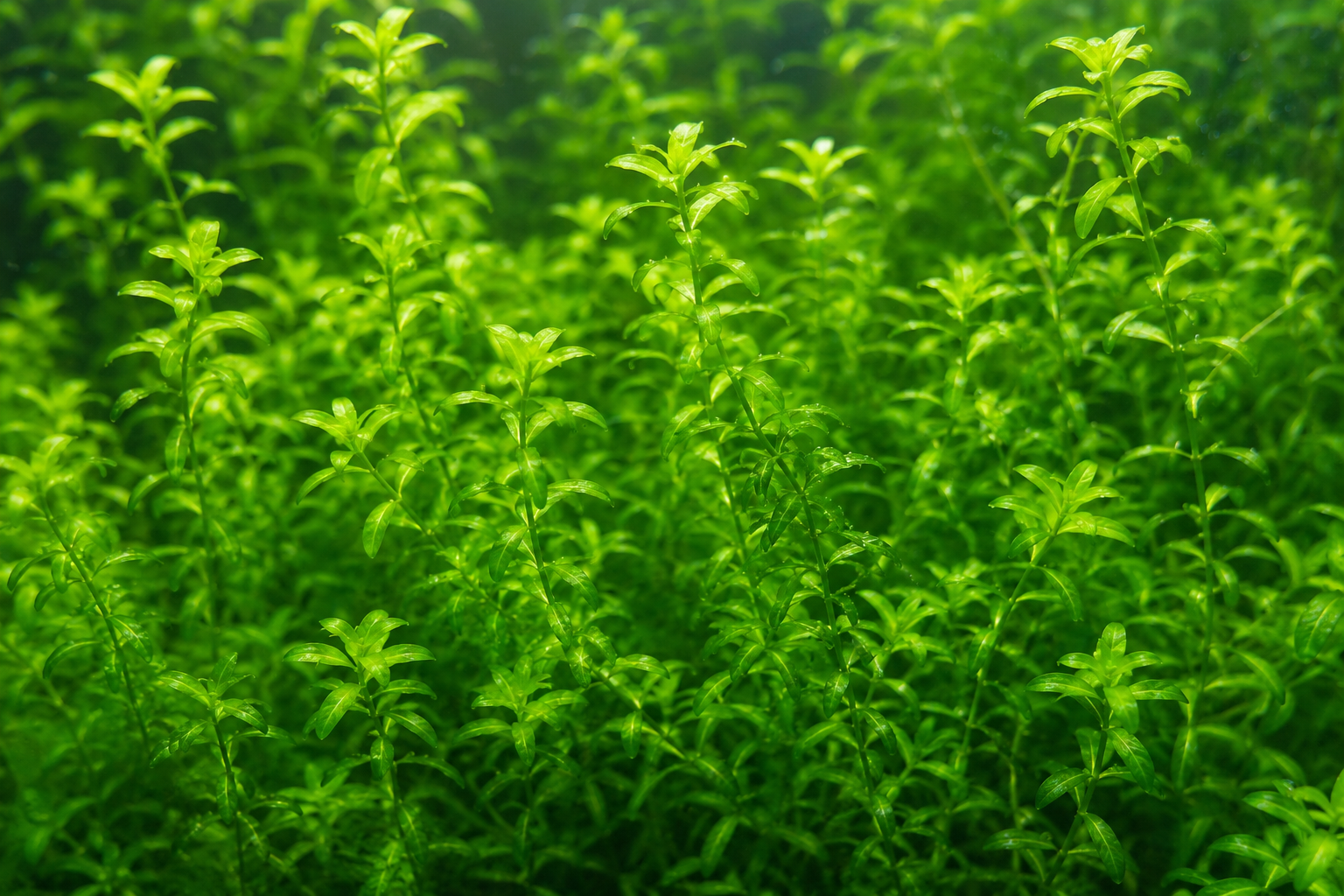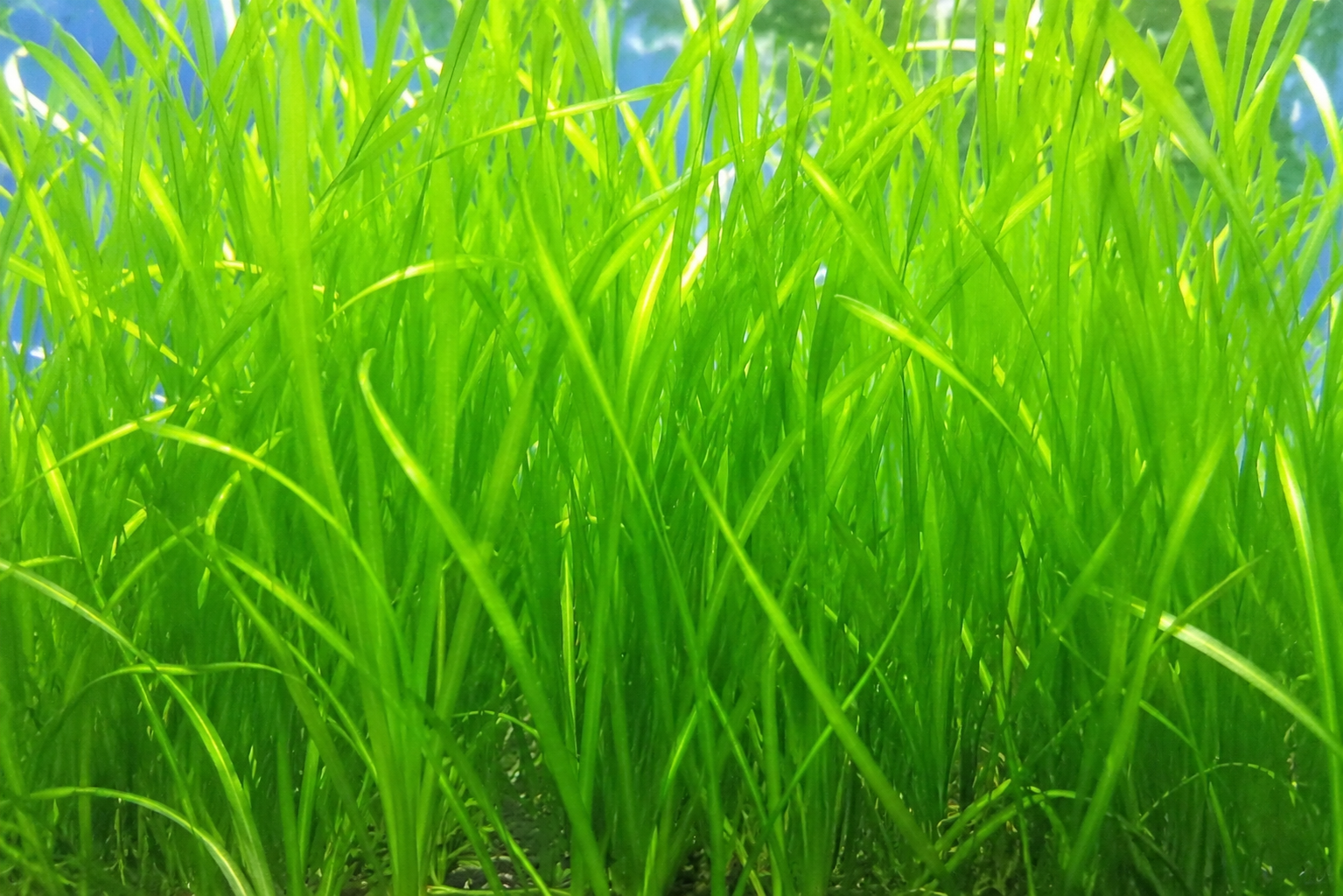

Sagittaria subulata — Dwarf Sagittaria — is native to eastern North America and South America, growing in freshwater and brackish marshes, pond margins, and slow streams. In the aquarium it fills a similar grass-like role to Vallisneria, but at a smaller scale and with a genuinely useful trait: it adapts its own height to how much light it’s given.
A Plant That Adjusts to Your Tank
Under modest light, Dwarf Sagittaria stays low and dense, spreading into a true lawn-like carpet across the foreground or midground — this is where the “dwarf” in the name comes from. Under stronger light, or simply as an established patch matures, individual leaves lengthen and reach toward the surface, taking on more of a background role. Both are the same plant responding normally to its conditions, not a sign anything is wrong.
How It Grows
Like Vallisneria, it spreads through runners extending from the base of each plant, producing new daughter plants at intervals that gradually knit together into a dense mat. Left alone in good conditions, a handful of starting plants will fill in a meaningful area over a few months.
Water Parameters
Given its North American range, it tolerates moderately hard, alkaline water well — a useful option if your tap water runs harder than many South American plants prefer: 68–82°F (20–28°C), pH 6.5–7.5. A standard weekly 20–25% water change is enough.
Root Feeding
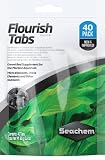
Dwarf Sagittaria is a consistent root feeder, and the difference fertilizing makes is significant. Seachem Flourish Tabs placed near each cluster’s roots, replaced every 3-4 months, produce noticeably wider, darker leaves and faster runner production than unfed plants in inert substrate. Seachem Flourish liquid weekly rounds out water column nutrition.
How to Plant
Plant it the way you would any rooted grass: push the roots into the substrate while keeping the base of the leaves at the surface level, spacing individual plants 4-5cm apart to leave room for runners to fill the gaps. Push a Seachem Flourish Tab near the roots of each cluster at planting. See how many plants per gallon for general guidance on starting density before you buy.
Trimming and Control
If you want to keep it as a low lawn rather than letting it reach for the surface, trim the longest leaves back periodically — this also encourages denser lateral growth. Because it spreads readily once established, pull and thin excess runners every so often so it doesn’t crowd out neighboring plants.
Common Problems
- Pale, narrow leaves that won’t spread. The classic sign of a missing root tab — this plant needs consistent root feeding to perform.
- Leaves reaching for the surface unexpectedly. Normal light-driven growth, not a problem — trim if you want to maintain a lower profile.
- Spreading beyond where you want it. Thin runners regularly once the patch is established; this is an easy plant to have too much of if left unchecked.
Pests
No specific pest issues. Rinse and check new plants for hitchhiker snails before adding them to an established tank.
Dwarf Sagittaria is a good pick when you want the grass-like look of Vallisneria without committing to a full background plant — and it forgives you either way if your light setup changes down the road.