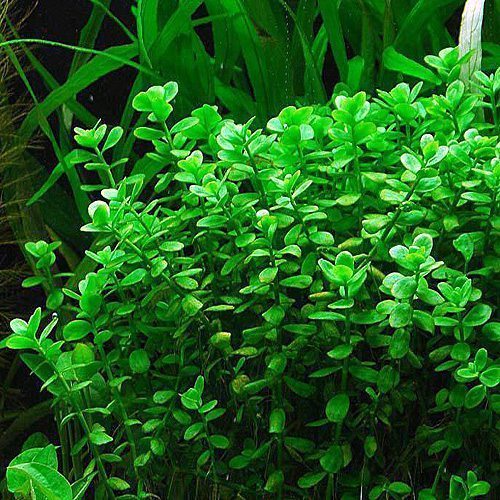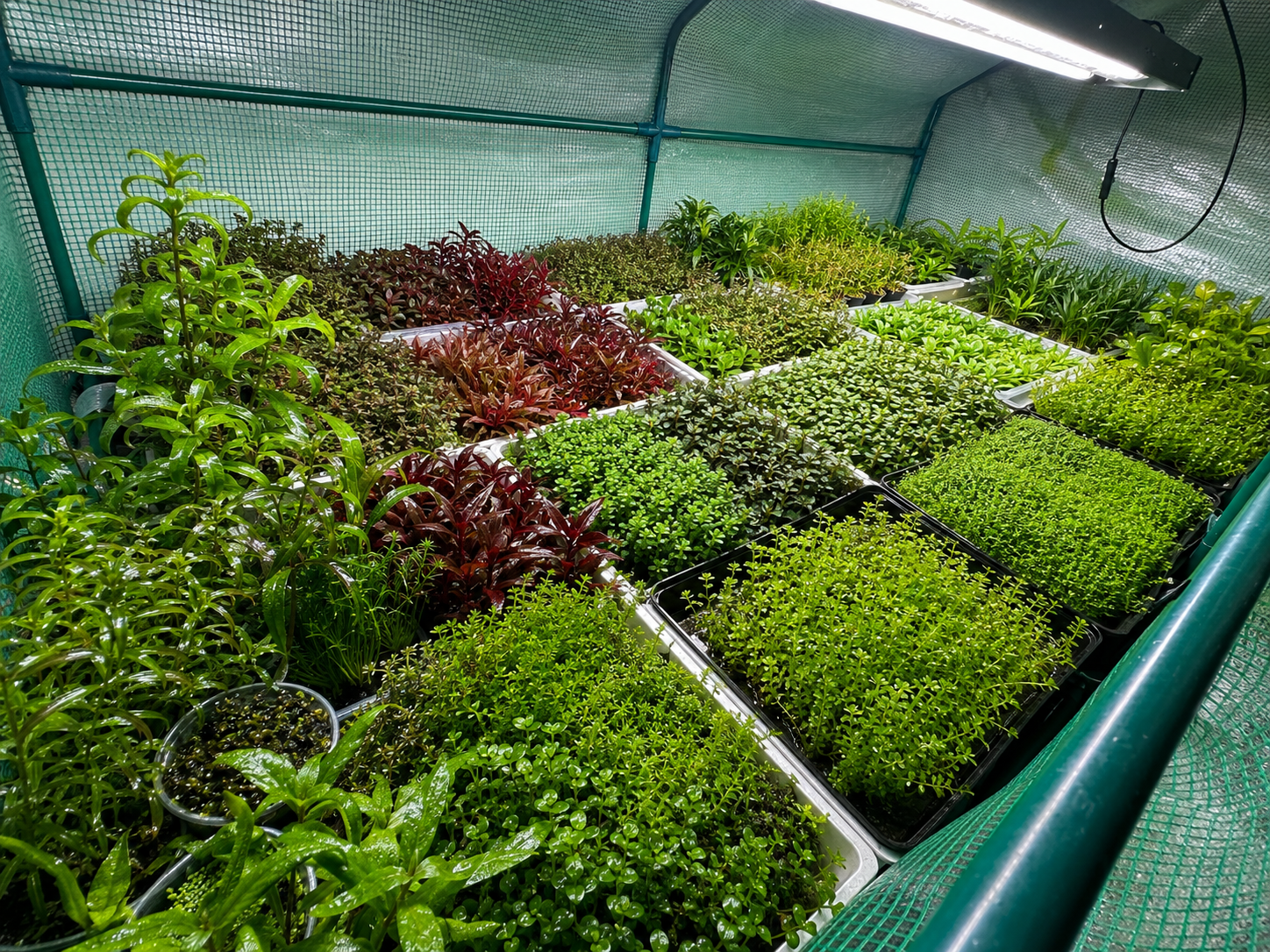
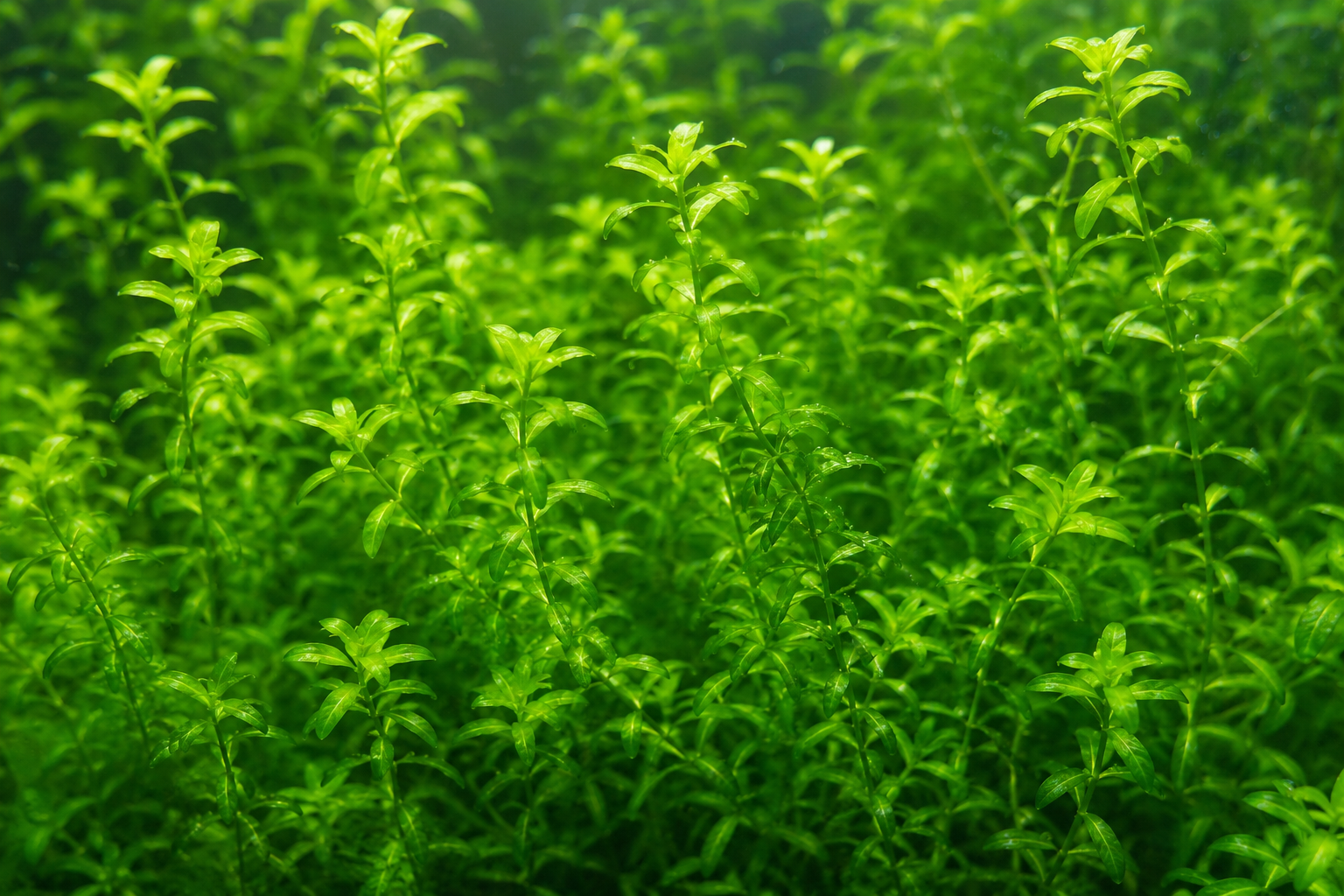
Hemianthus micranthemoides — Pearlweed — is native to the eastern coast of North America and Cuba, growing in shallow water along streams, wet soils, and coastal wetlands. It’s a small plant — stems are thin, leaves are tiny and round, typically just 2–4 mm across — and that small scale makes it versatile in ways larger stem plants can’t match.
How to Use It
As a midground mound: Plant a dense cluster of stems together and trim frequently to encourage lateral branching. The result is a compact, dome-shaped mound of bright green that creates nice visual separation between foreground and background plants.
As a soft foreground: At 5–15 cm when kept trimmed, it works as a foreground filler in larger tanks — not as low or uniform as HC Cuba or Monte Carlo, but more forgiving and faster-growing.
Floating: Pearlweed floats readily, creating a loose, airy mass of green at the surface. The tiny leaves look delicate floating and provide good cover for bettas.
Color
Consistent bright green. The tiny round leaves catch light well and appear to glow under strong lighting.
Water Parameters
Coming from a coastal North American range, Pearlweed is tolerant: 68–82°F (20–28°C), pH 6.0–7.5, and adaptable to both soft and hard water. A standard weekly 20–25% water change is enough.
Care
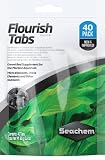
Pearlweed adapts to a wide range of conditions and doesn’t require CO2. Seachem Flourish Tabs near planted stem bases support root nutrition and produce denser, bushier growth. When floating, rely on Seachem Flourish liquid weekly. Without regular fertilization, stems become sparse and leggy.
Moderate light is sufficient. Higher light produces more compact internodes and a denser overall form.
Trimming
Trim the top surface of planted clumps to maintain the mound shape — like pruning a small hedge. The more you trim, the more side branches develop, and the denser the overall plant becomes. Replant trimmings in new areas or float them temporarily.
How to Plant
Pearlweed can be planted in substrate or floated — both work well.
Planted: Divide the plant into individual stem sections and push each one 1–2 cm into fine substrate (sand or 1–3 mm gravel) using fine tweezers, spacing pieces 2–3 cm apart. The stems branch and fill in over several weeks. Push a Seachem Flourish Tab under the planting area immediately.
Floating: Drop portions directly onto the water surface — Pearlweed floats naturally and develops hanging roots below. Floating masses provide surface cover and can be harvested for replanting once they grow out. In floating mode, Seachem Flourish liquid weekly provides all the nutrition needed.
Common Problems
- Sparse, leggy stems. Almost always a fertilizing gap — step up dosing frequency, whether planted or floating.
- Slow mounding. Trim more often, not less; regular trimming is what drives the dense, bushy shape people want from this plant.
- Melting after planting. A little leaf loss in the first week or two is normal as it adjusts to your tank’s specific conditions.
Pests
No specific pest issues. Rinse new stems and check for hitchhiker snails before adding them to an established tank.