
Ludwigia palustris has an impressively wide native range — it grows wild across Europe, North Africa, Asia, and the Americas, typically in shallow water, wet margins, and slow streams. That cosmopolitan nature makes it one of the most adaptable aquarium plants available, thriving in soft or hard water, warm or cool.
Two Forms, Two Tank Sizes
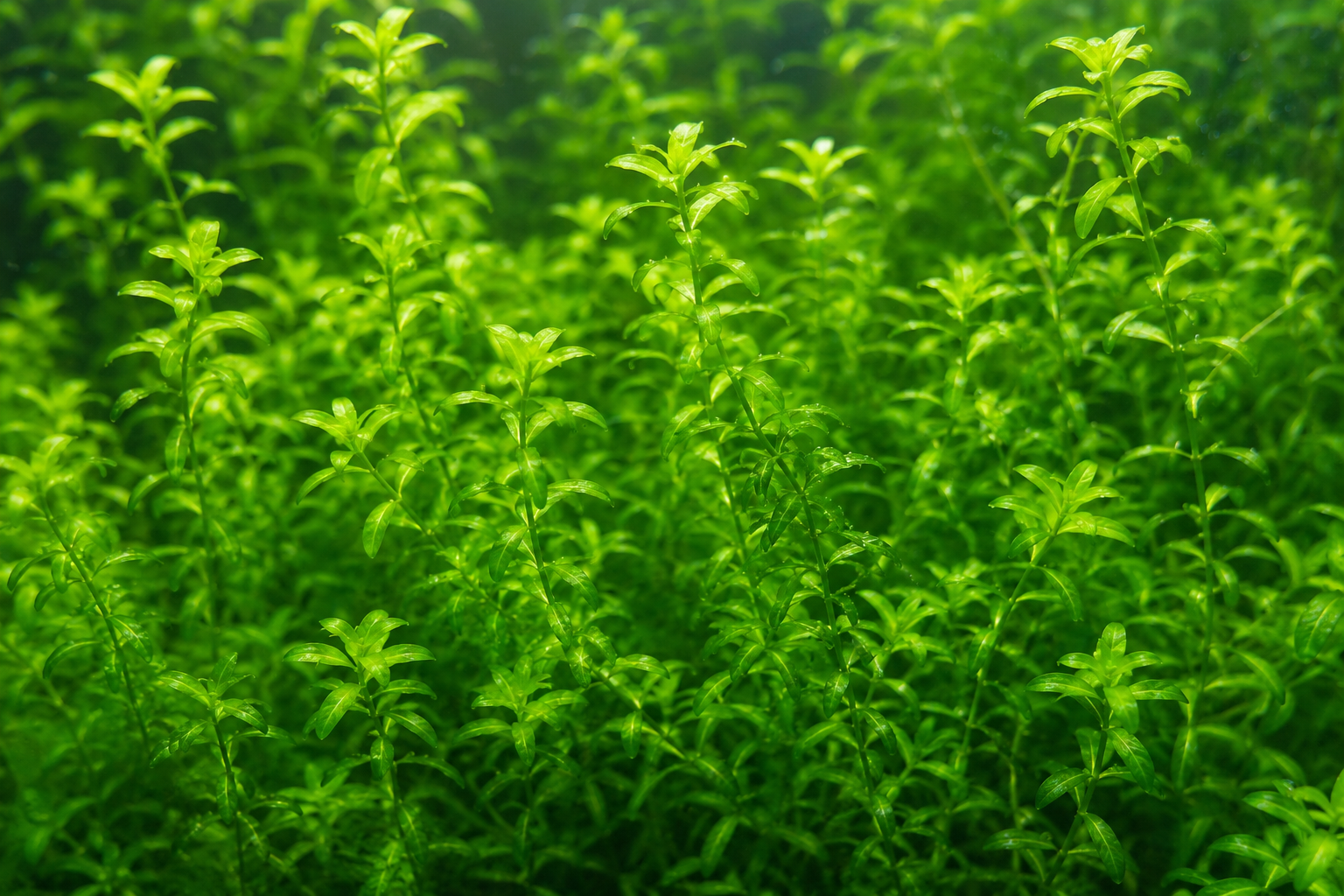
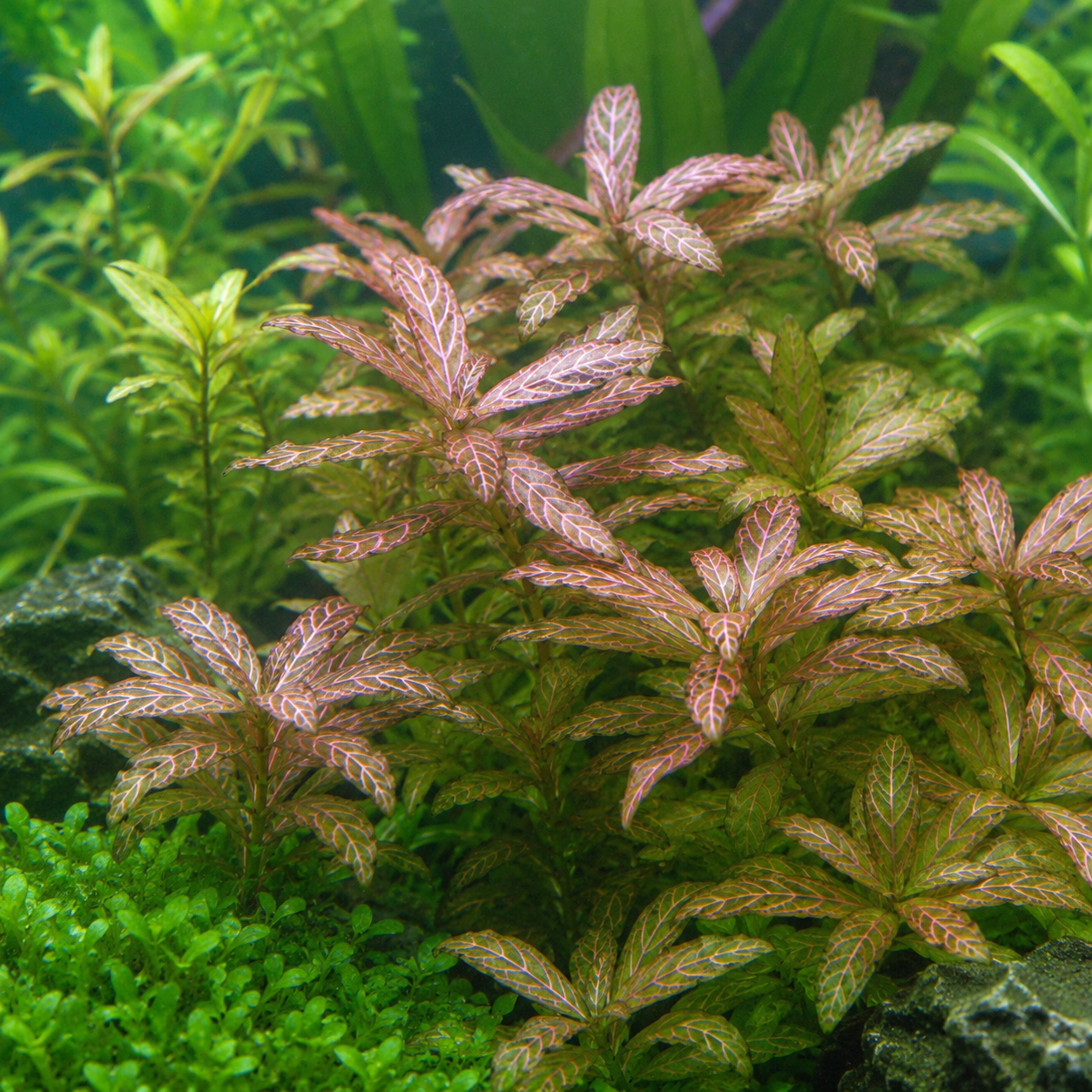
The standard L. palustris reaches 15–30 cm, fitting as a midground to background plant. Leaves are oval, slightly glossy, and transition from olive-green under low light to a rich orange-red as intensity increases.
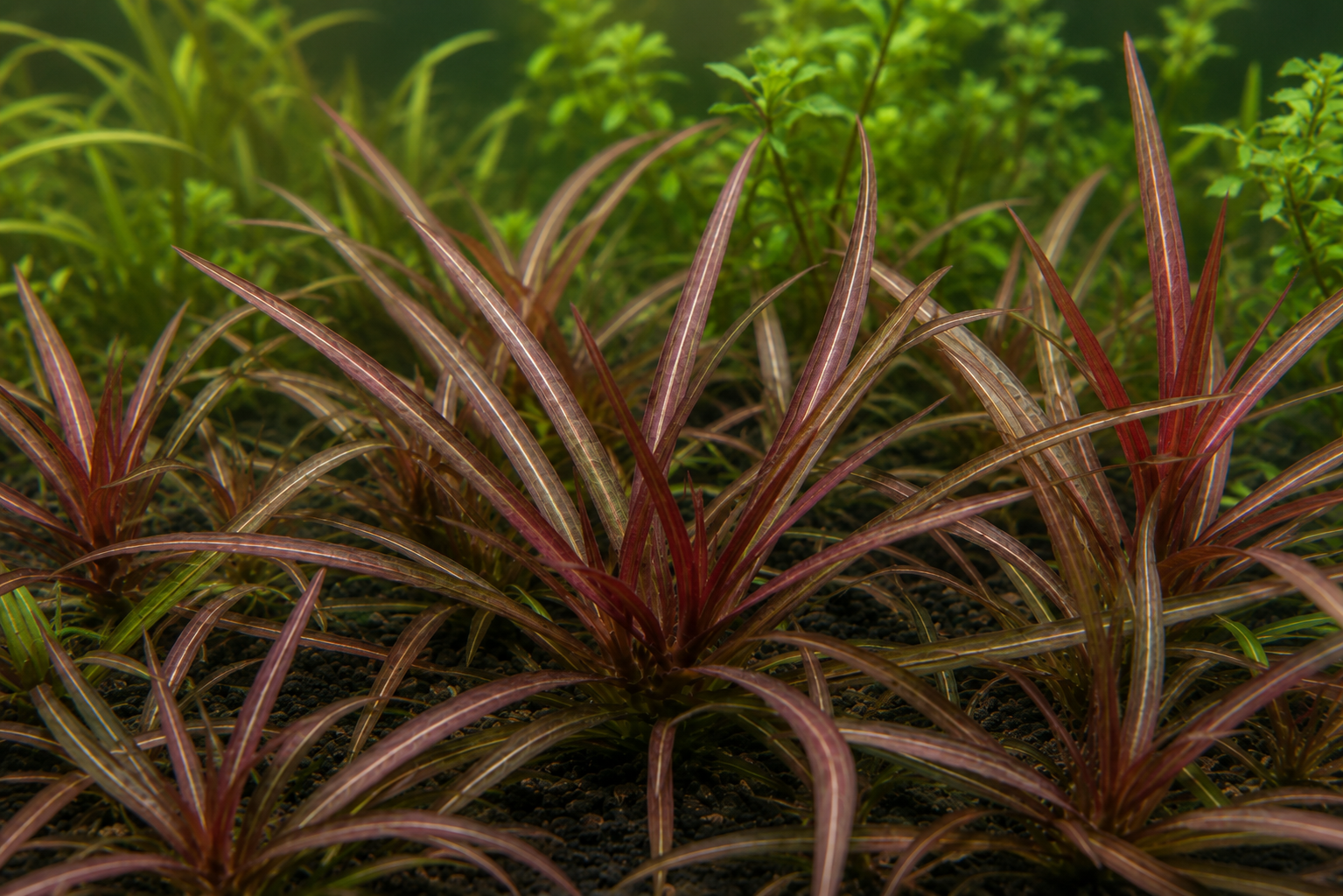
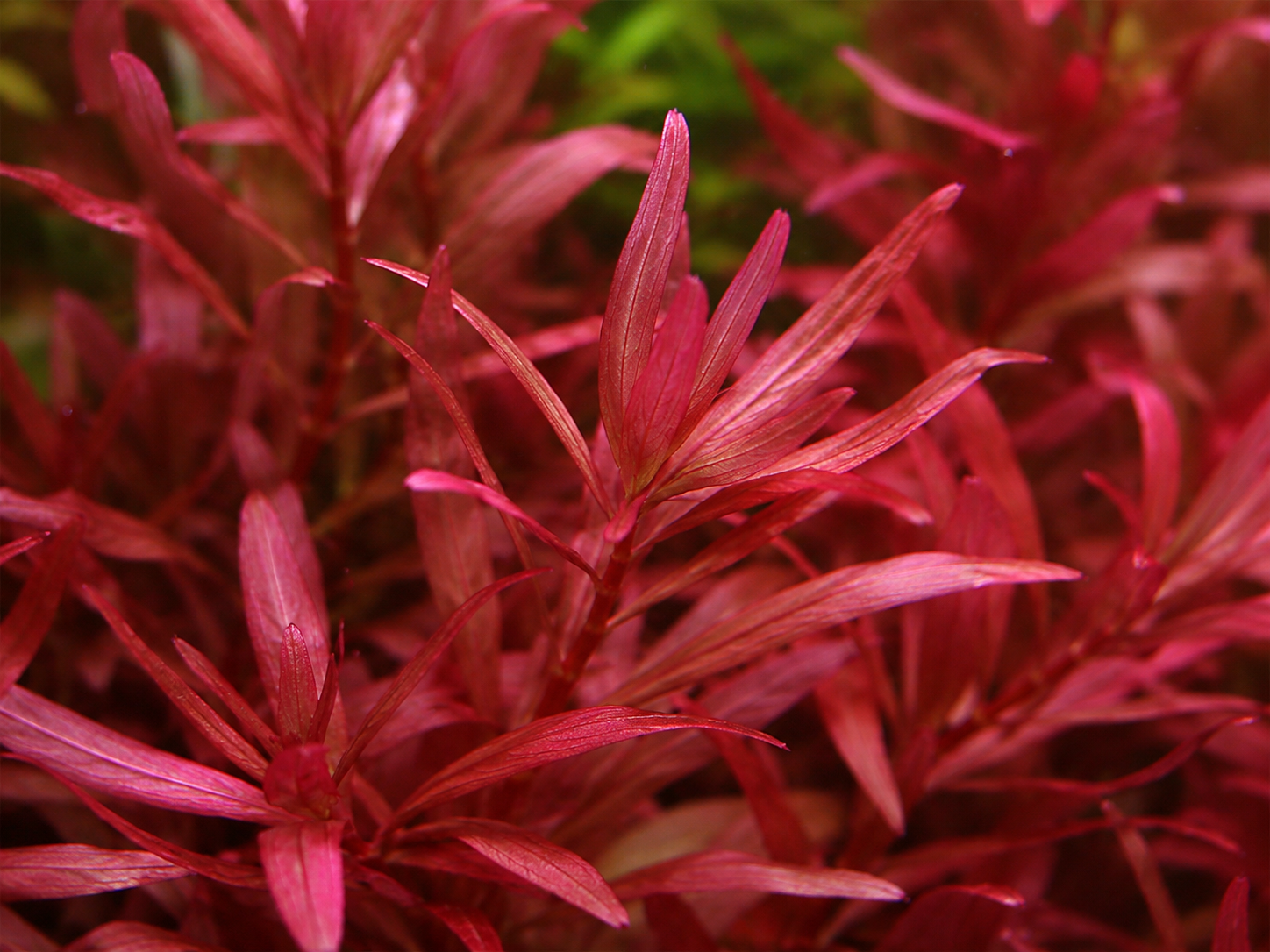
Super Red Mini is a compact cultivar staying around 8–15 cm, making it genuinely usable as a midground in smaller tanks or even a background in a nano. The ‘Super Red’ designation is earned — this form holds deeper red coloration at lower light levels than the standard variety, making it one of the better low-tech red plants available in small form.
Light and Color
| Form | Height | Low light | High light |
|---|---|---|---|
| Standard palustris | 15–30 cm | Olive-green | Orange-red |
| Super Red Mini | 8–15 cm | Pink-red | Deep red |
Both forms appreciate but do not require CO2. Strong lighting makes the most dramatic difference in color saturation — see how to get red aquarium plants to actually turn red for the full mechanism behind this.
Water Parameters
Given its broad wild range across several continents, L. palustris isn’t picky: 68–82°F (20–28°C), pH 6.0–7.5, and tolerant of both soft and hard water. A standard weekly 20–25% water change keeps it healthy.
Feeding
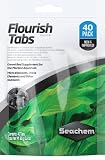
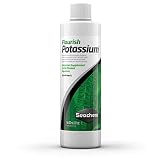
L. palustris roots firmly into the substrate and is a consistent feeder. Seachem Flourish Tabs placed near the stem base every 3–4 months prevent the lower-leaf drop that’s common in unfertilized Ludwigia. Weekly doses of Seachem Flourish liquid round out the nutrition and keep growth tips compact and colorful.
Trimming
Cut stems above a node and replant the tops. The Super Red Mini in particular benefits from frequent trimming to maintain its compact shape — left untrimmed it becomes stretched and loses its neat form. Trim whenever stems exceed your target height and expect 2–3 new shoots from each cut stump.
How to Plant
Strip the lower leaf pairs from each stem and push 3–4 cm into the substrate with tweezers. For the standard form, plant in groups of 5–7 stems toward the back of the tank. For Super Red Mini, tighter groupings work well in the midground — 3–5 stems per cluster spaced 2–3 cm apart suits its compact size. Push a Seachem Flourish Tab near each cluster immediately at planting; the faster the roots find nutrition, the sooner the distinctive red color develops.
Common Problems
- Reverting to green. Not a disease — it’s a direct response to insufficient light. Increase light intensity or duration before assuming a nutrient issue.
- Bare, leggy lower stems. The classic unfertilized-Ludwigia problem. Root tabs and regular trimming both help prevent it.
- Transplant melt. A little leaf drop in the first one to two weeks after planting is normal, particularly with emersed-grown stock.
Pests
No pest issues specific to this plant. Rinse and check new stems for hitchhiker snails before adding them to an established tank.