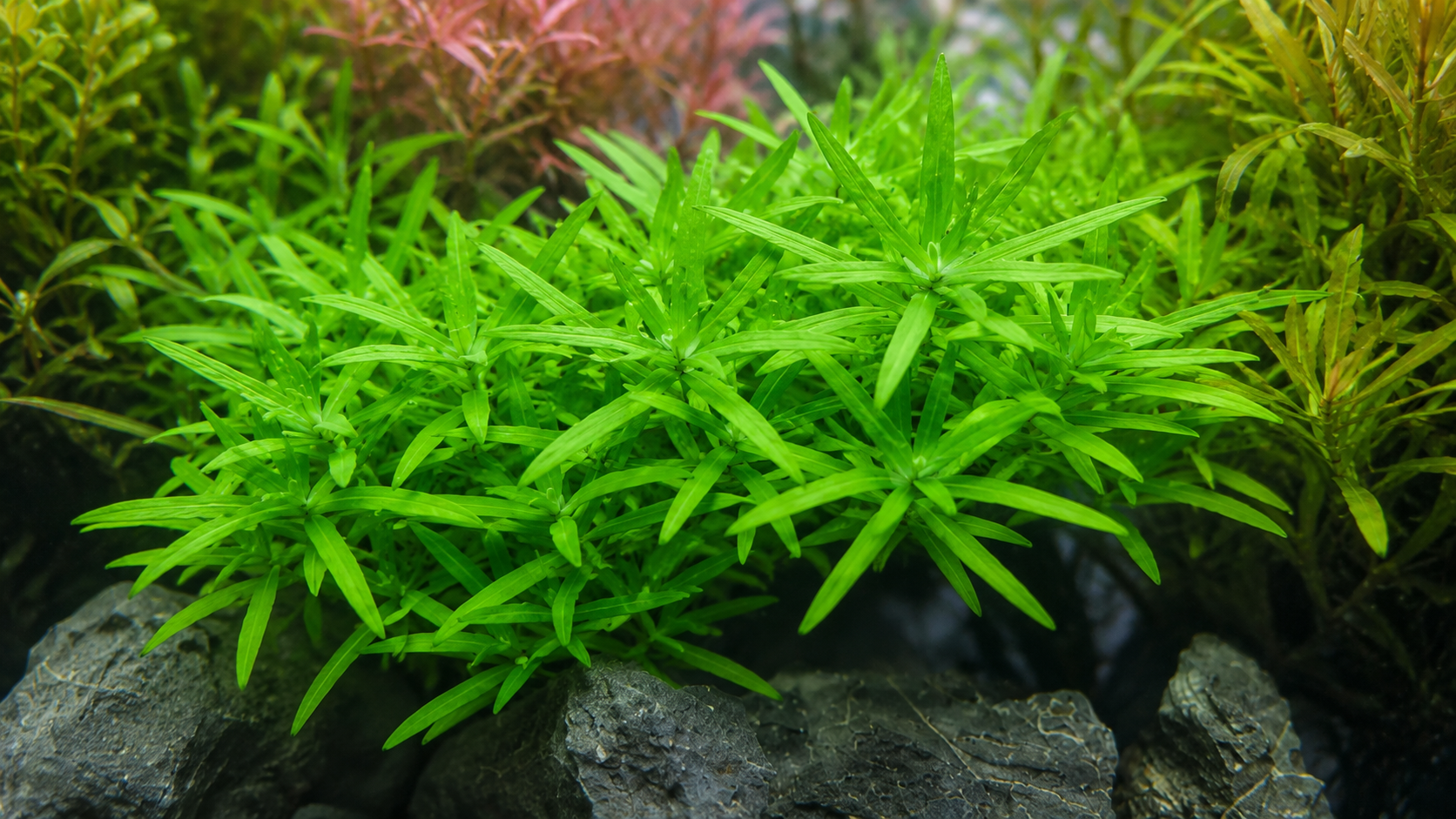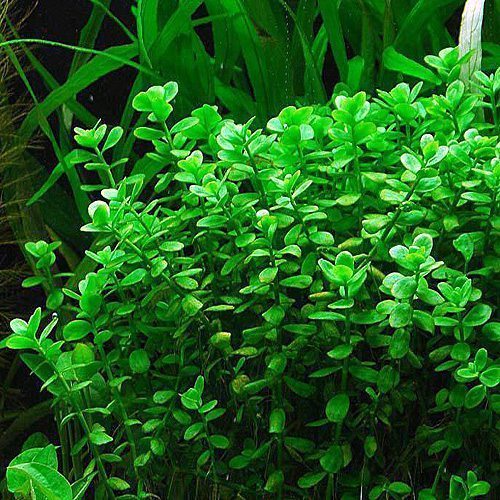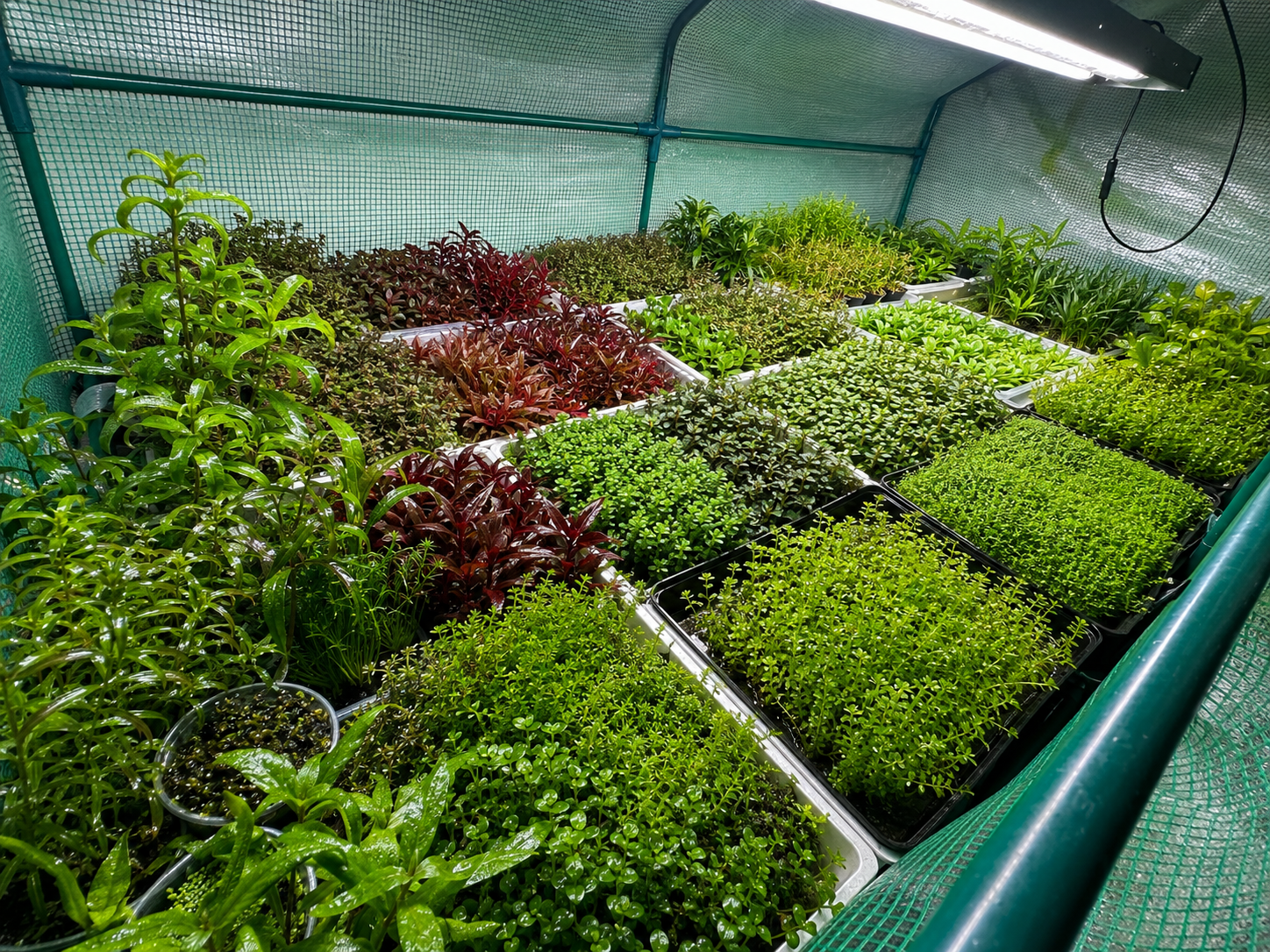
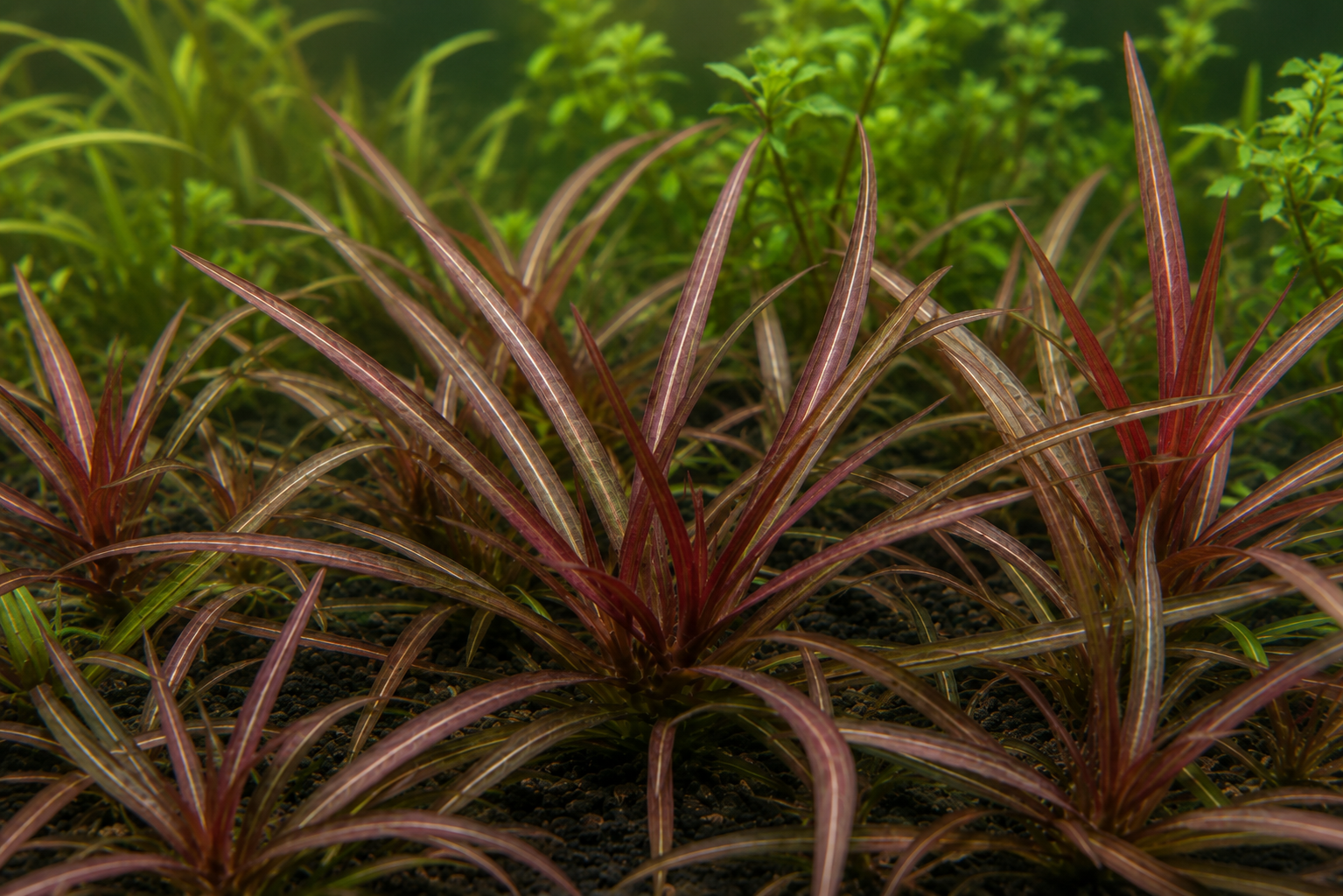
Hygrophila araguaia is named for the Araguaia River in central Brazil, where it grows along shallow margins in warm, mineral-rich water. It’s a relatively recent addition to the aquarium trade and often overshadowed by its better-known Asian Hygrophila cousins, but it deserves more attention. The small, tightly packed leaves create a finer texture than most Hygrophila, and the bronze coloration under strong light gives it a unique look that’s different from both green and red stem plants.
What Makes It Different
Most Hygrophila species are large and bold. Araguaia stays more compact — typically 20–35 cm — with leaves significantly smaller than H. corymbosa. The dense leaf arrangement along the stem creates a bushy, full look even from a single stem. New growth under good light comes in with warm bronze-orange tints before maturing to green.
Light and Color
Under low light: uniform medium green, compact growth. Under moderate to high light: new growth flushes bronze and orange-green before settling to a warm green at full maturity. The contrast between the bronze tips and older green leaves creates a layered, attractive effect. See choosing a planted tank light if you want to push the bronze coloring further.
Placement
At 20–35 cm, this plant works as a midground focal point in larger tanks, or as background in nano or mid-size setups. Its fine texture contrasts nicely with broad-leaved plants like Anubias or large Cryptocorynes in the same tank.
Water Parameters
H. araguaia comes from warm, mineral-rich South American water and adapts well to typical aquarium conditions: 72–82°F (22–28°C), pH 6.0–7.5, and a wide tolerance for hardness. A standard weekly 20–25% water change is all it asks for.
Feeding
Seachem Flourish Tabs in the substrate provide the root nutrition it needs, and weekly Seachem Flourish liquid rounds out the water column supply. It isn’t a demanding feeder compared to the larger, faster Hygrophila species, but consistent fertilizing keeps the bronze new growth vivid rather than pale.
Planting and Trimming
Strip one or two of the lowest leaf pairs and push each stem 3–4 cm into the substrate using tweezers. Plant in groups of 5–7 stems, spacing them 3 cm apart. Because H. araguaia stays more compact than most Hygrophila, it works well positioned as a midground focal group where the bronze new growth is clearly visible rather than hidden behind taller plants. Push a Seachem Flourish Tab near each stem cluster immediately at planting. Trim stems once they reach your target height and replant the tops to keep the cluster dense.
Common Problems
- Bare lower stems. Like most Hygrophila, older leaves near the base can yellow and drop as the plant matures, especially under lower light. Trimming the stem and replanting the top resets this — the cutting will root and fill back in from a clean base.
- Melting after planting. A little leaf loss in the first one to two weeks after planting is normal, especially with emersed-grown stock adjusting to fully submerged growth. New leaves that come in afterward are adapted to your tank and won’t repeat the drop.
- Pale, washed-out color. Usually a light or fertilizer issue rather than disease — check that both are consistent before assuming anything is wrong.
Pests
This species doesn’t have any pest problems specific to it. The usual precaution applies: rinse and visually check new stems for hitchhiker snails before adding them to an established tank.