Fertilizer gets asked about constantly, but lighting is the other half of the equation that determines what a tank can actually grow — and it’s the one piece of equipment people either wildly overspend on or completely underthink. Here’s what actually matters.
The three things that matter
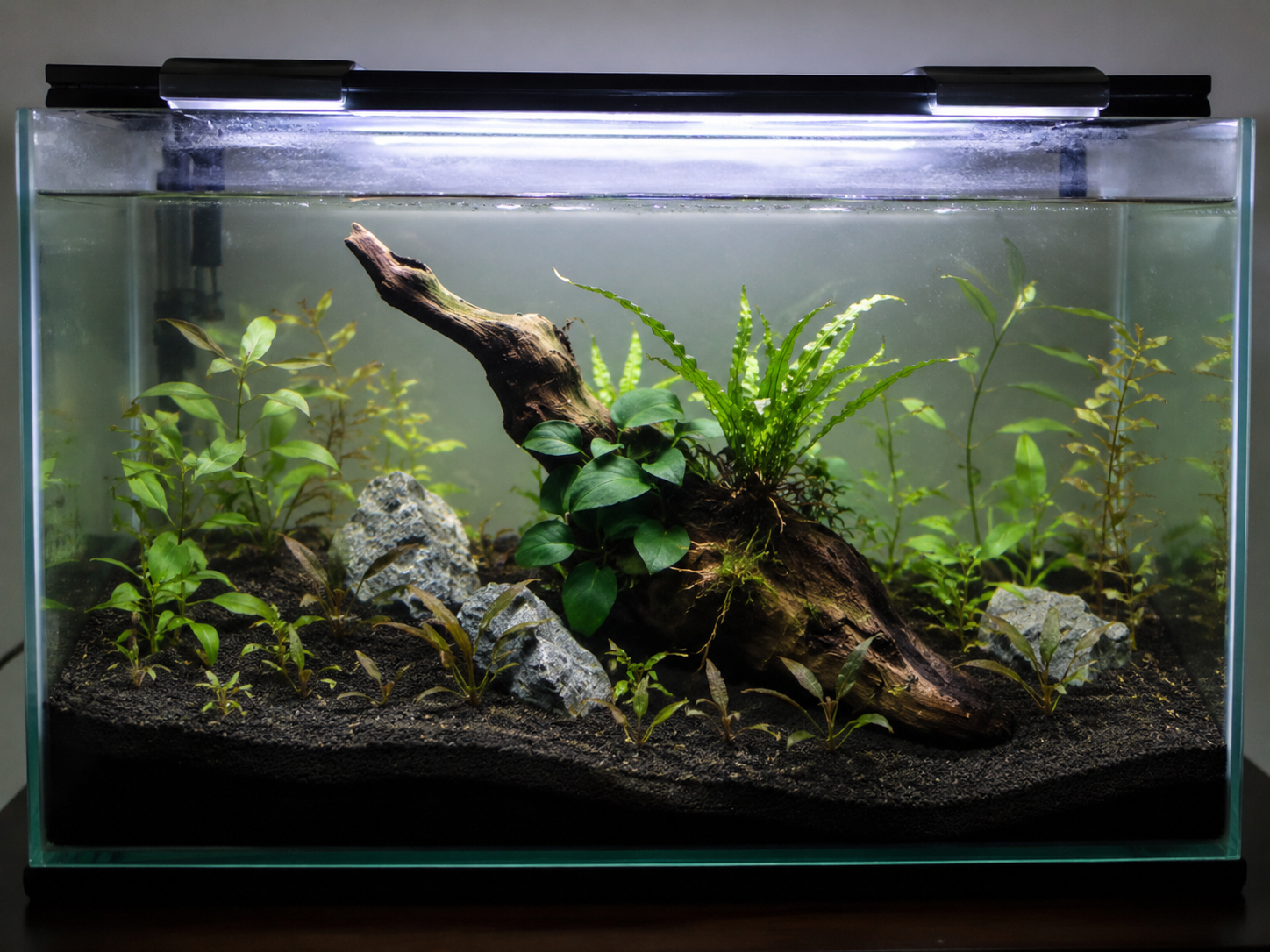
- Intensity. How much light actually reaches your plants, which depends on the fixture’s output and how deep your tank is. Low-tech plants (Java Fern, Anubias, mosses, most crypts) do fine under a basic fixture. Demanding carpet plants and red stems need meaningfully more — see our low-light plants guide and our piece on why red plants need strong light to actually turn red for the two ends of that spectrum.
- Spectrum. Full-spectrum LEDs marketed for planted tanks (rather than generic white light strips) include the red and blue wavelengths plants actually use for photosynthesis, not just the green-heavy light that looks bright to human eyes but does less for a plant. We recommend Hygger lights for an affordable but great option!
- Duration. A consistent 6-8 hour photoperiod on a timer matters more than raw brightness. Inconsistent lighting — on for 12 hours one day, 4 the next — is a bigger driver of algae problems than most equipment choices. Our algae guide covers why consistency beats intensity here.
Matching light to your plant list
This is really the only question that matters when picking a fixture:
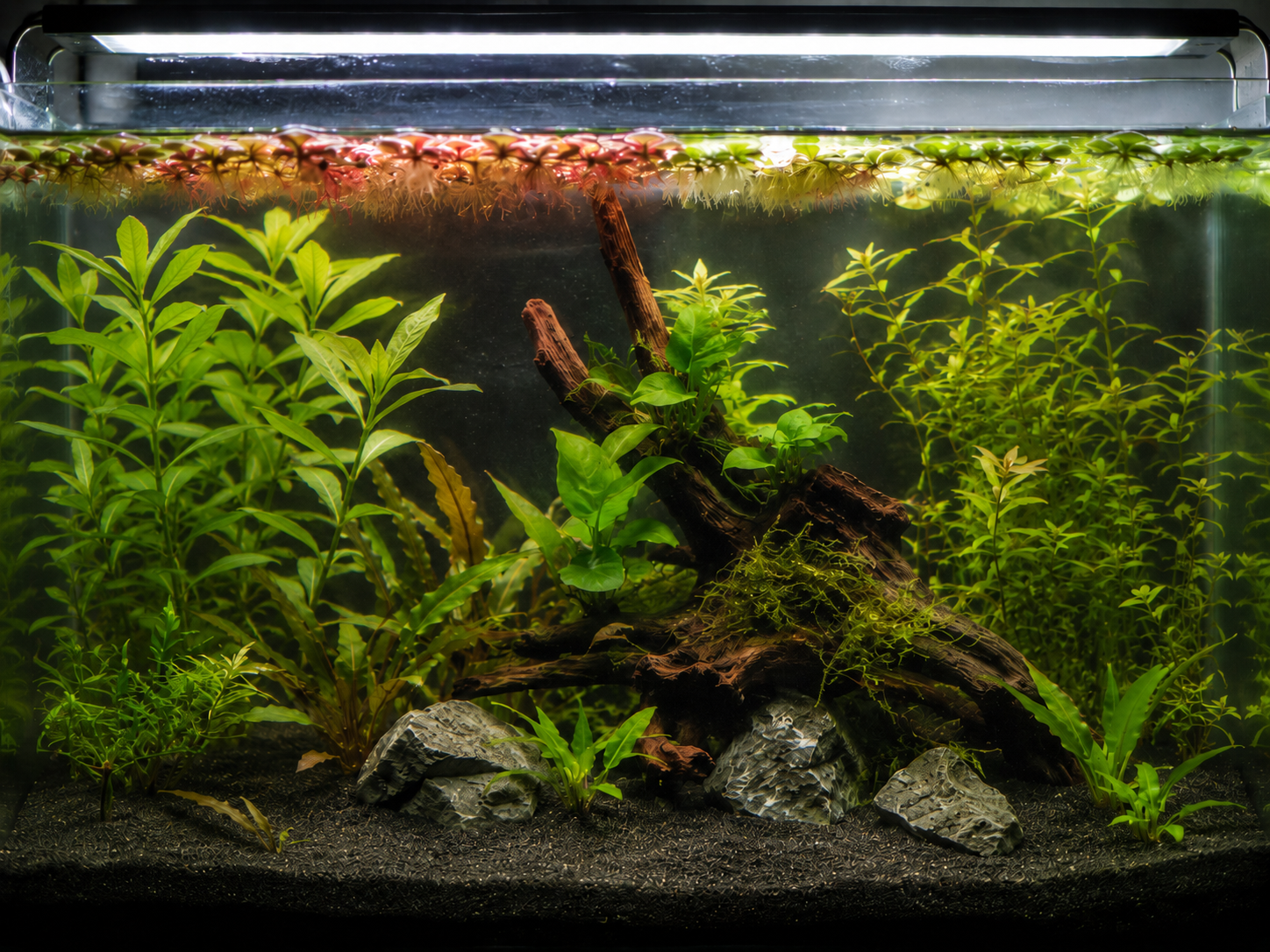
- Low-tech, no CO2, hardy species: a basic full-spectrum LED clip-on or hood light is genuinely enough. You’re not trying to push growth, just support it.
- Carpet plants, CO2, vivid color: you need a stronger fixture rated for “high light” or “high PAR,” typically mounted closer to the water or built into a canopy. This is also the point where CO2 injection usually enters the picture, since strong light without enough carbon to match it just fuels algae instead of plant growth.
If you’re not sure which category you’re in, our guide to aquascaping vs. just filling a tank is a good gut-check — a “fill the tank” goal almost always pairs with basic lighting, while an ambitious aquascape usually needs the stronger option. Dimmable LEDS are the king here allowing you to choose as your tank adapts!
Common mistakes
- Buying a fixture rated for the wrong tank depth. The same light that’s plenty strong for a 10-gallon can be too weak once it’s mounted higher above a taller tank — intensity drops off fast with distance.
- Running the light too long “to help the plants.” More hours doesn’t mean more growth past a point — it means more algae. Six to eight hours on a timer is plenty for almost every plant list.
- Ignoring the light entirely and blaming fertilizer for slow growth. If plants are pale, stalling, or leggy under otherwise good fertilization, check the light before assuming a nutrient problem.
The simple version
If you’re building a low-maintenance, no-CO2 tank, don’t overspend — a basic full-spectrum LED on a timer will grow nearly everything on our low-tech plants list just fine. Save the higher-output fixture for when you’re actually chasing a carpet or deep red coloration that needs it.