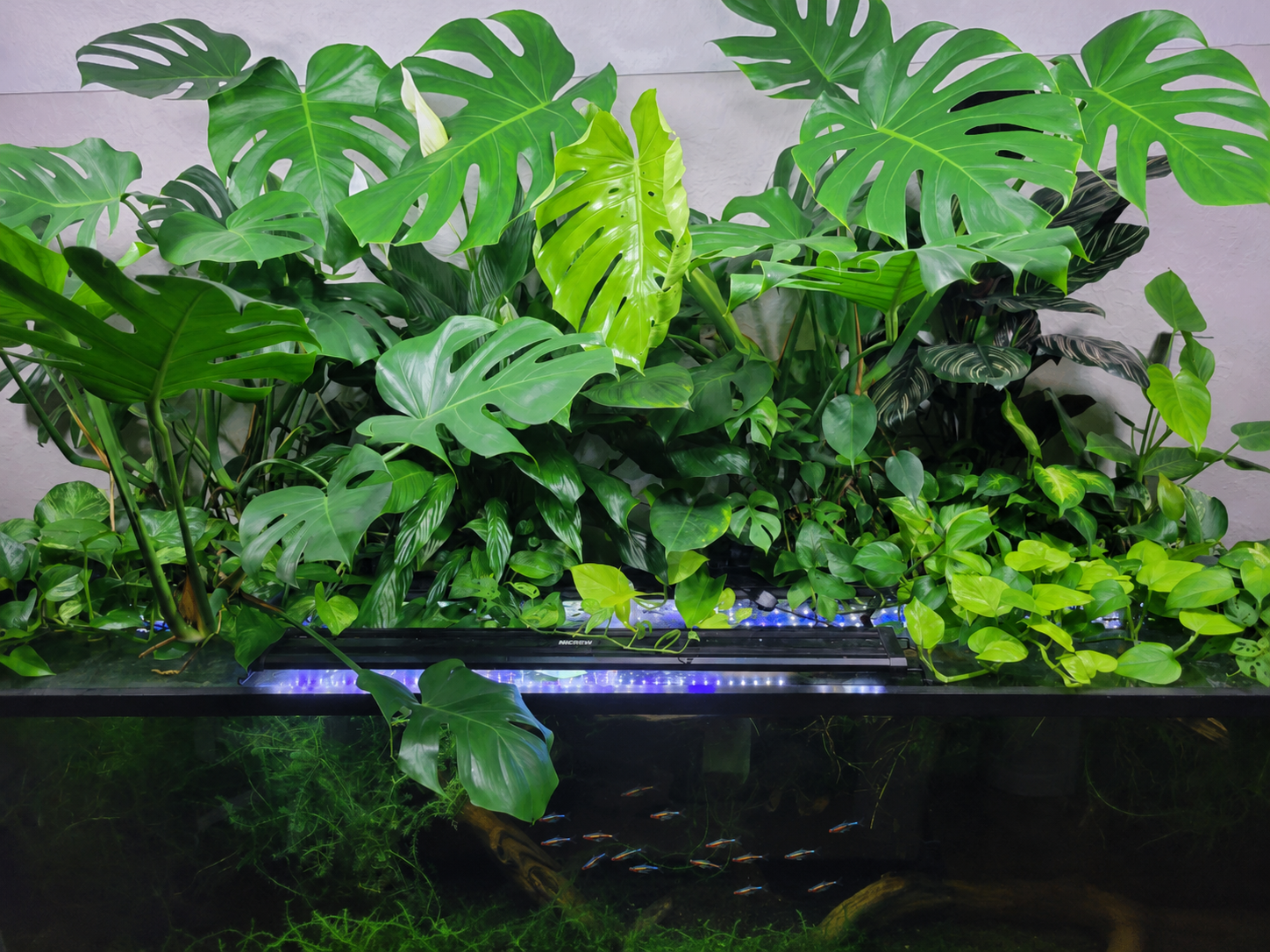
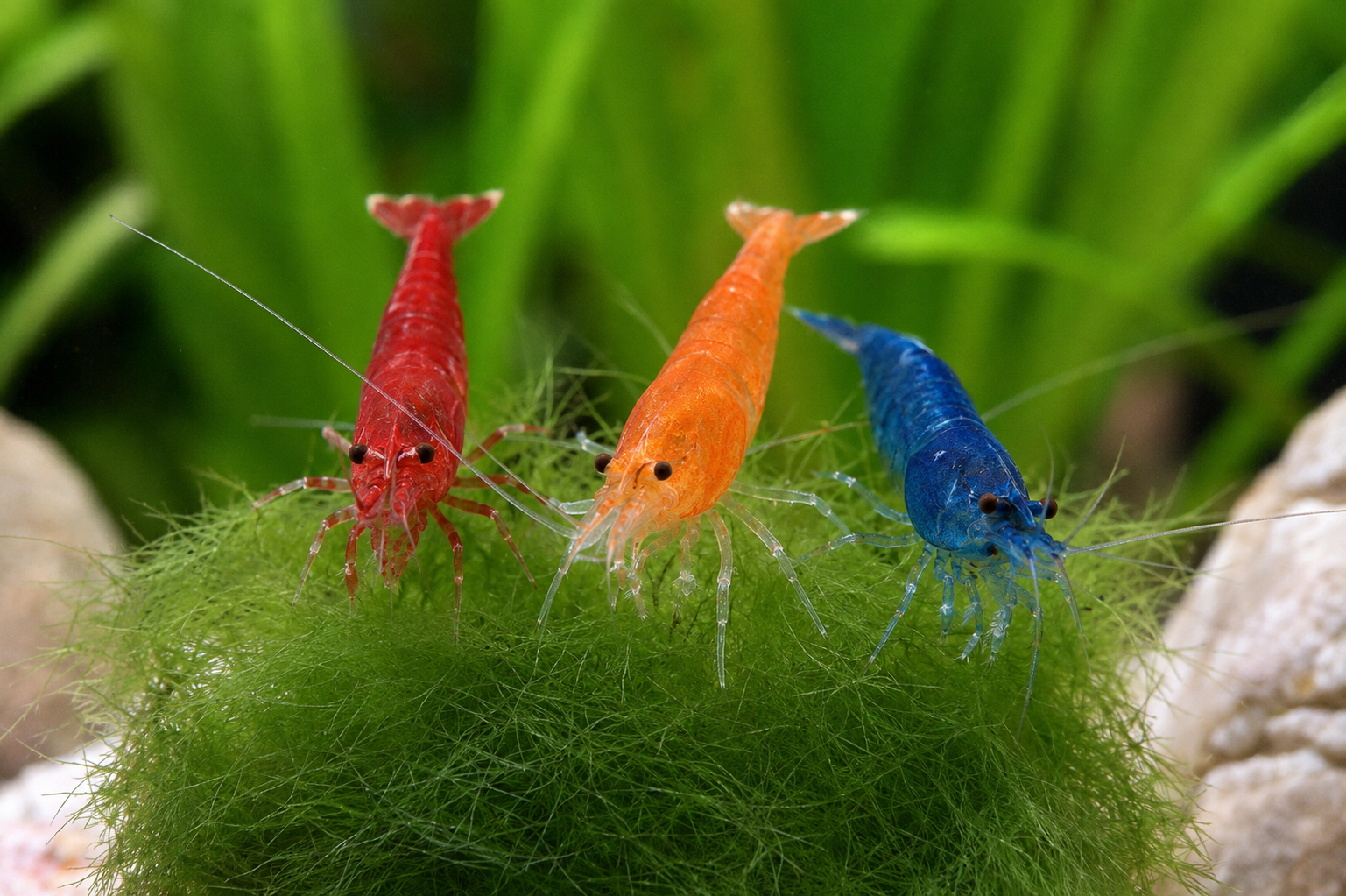
Shrimp lean on plants in a way most fish don’t. A betta or tetra treats plants as scenery and occasional cover; a shrimp colony treats them as a grazing surface, a nursery, and a place to hide from the world during the most vulnerable hours of its life — right after a molt. Plant a shrimp tank right and the colony does most of the rest of the work itself.
Why plants matter so much here
- Biofilm and grazing surface. Shrimp spend most of their day picking biofilm — the thin layer of microorganisms that colonizes any submerged surface — off plant leaves and stems. More surface area, especially fine-textured plants, means more constant food.
- Molting cover. A freshly molted shrimp is soft-shelled and defenseless for hours. Dense plant cover gives it somewhere to disappear until the new shell hardens.
- Shrimplet refuge. Baby shrimp are prey to almost everything, including adult shrimp. Fine, tangled plant structure is what lets a shrimplet survive long enough to grow up.
- Stable water. Heavily planted tanks buffer the swings in ammonia and pH that shrimp are notably less tolerant of than most fish.
Moss: the single best category for shrimp
- Java Moss — the baseline. Attaches to anything, hosts constant biofilm, and needs zero care.
- Taiwan Moss — a finer-leaved alternative with even more surface area per square inch than Java Moss — arguably the single best grazing material you can add to a shrimp tank.
Tie a portion to driftwood or a piece of mesh and let it fill in. A shrimp tank without moss somewhere is missing its most productive feature.
Floating plants for cover and shrimplet survival
- Guppy Grass — floats naturally, and its tangled stems and dangling roots are one of the best shrimplet refuges available.
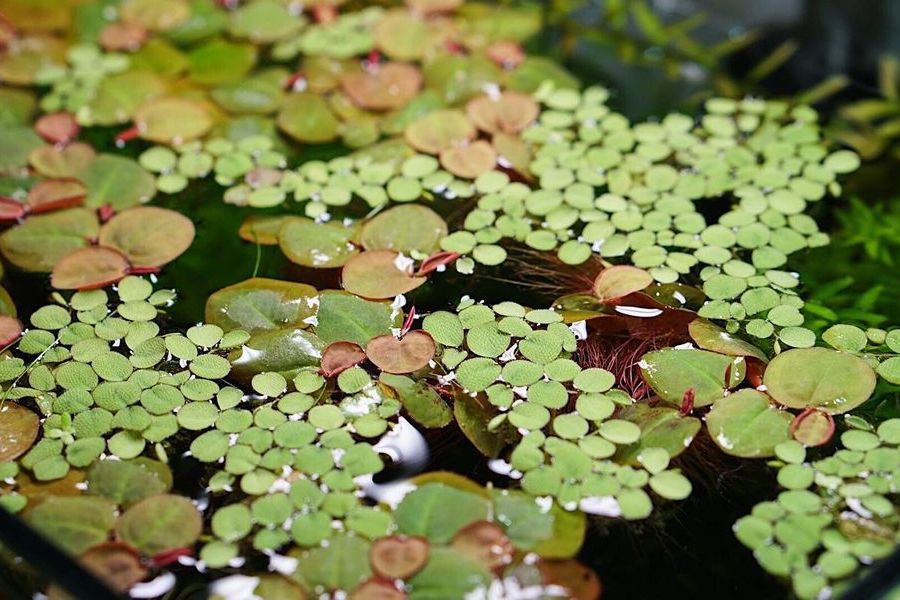
- Amazon Frogbit and Water Lettuce — both trail long root systems that shrimp graze constantly and shrimplets hide in.
- Salvinia and Giant Duckweed — fast surface cover that also keeps light (and algae) in check.
For a deeper look at this category, see our complete guide to floating plants.
Rooted plants for structure
- Java Fern and Anubias — broad, tough leaves that host biofilm without ever needing to be replanted; attach both to hardscape rather than substrate.
- Pennywort — round, lily-pad leaves that work planted, floating, or trimmed low, and are a favorite hiding spot for shrimp specifically.
A low, dense floor beats a high-tech carpet
You don’t need a demanding carpet like HC Mini or Glossostigma to give shrimp a foraging floor — those need CO2 and high light to perform, and shrimp don’t care either way. A patch of Staurogyne Repens or Samolus Parviflorus kept low and trimmed gives the same grazing benefit without the maintenance overhead of a competition-style carpet.
A note on fertilizer
Routine liquid fertilizer dosed at label rates — Seachem Flourish included — is standard practice in planted shrimp tanks and doesn’t pose a risk at normal doses. What actually harms shrimp is copper-based algaecides and medications, which are acutely toxic to invertebrates at levels harmless to fish. Read labels on anything marketed to treat algae or fish disease before dosing a tank that holds shrimp.
Putting a haven together
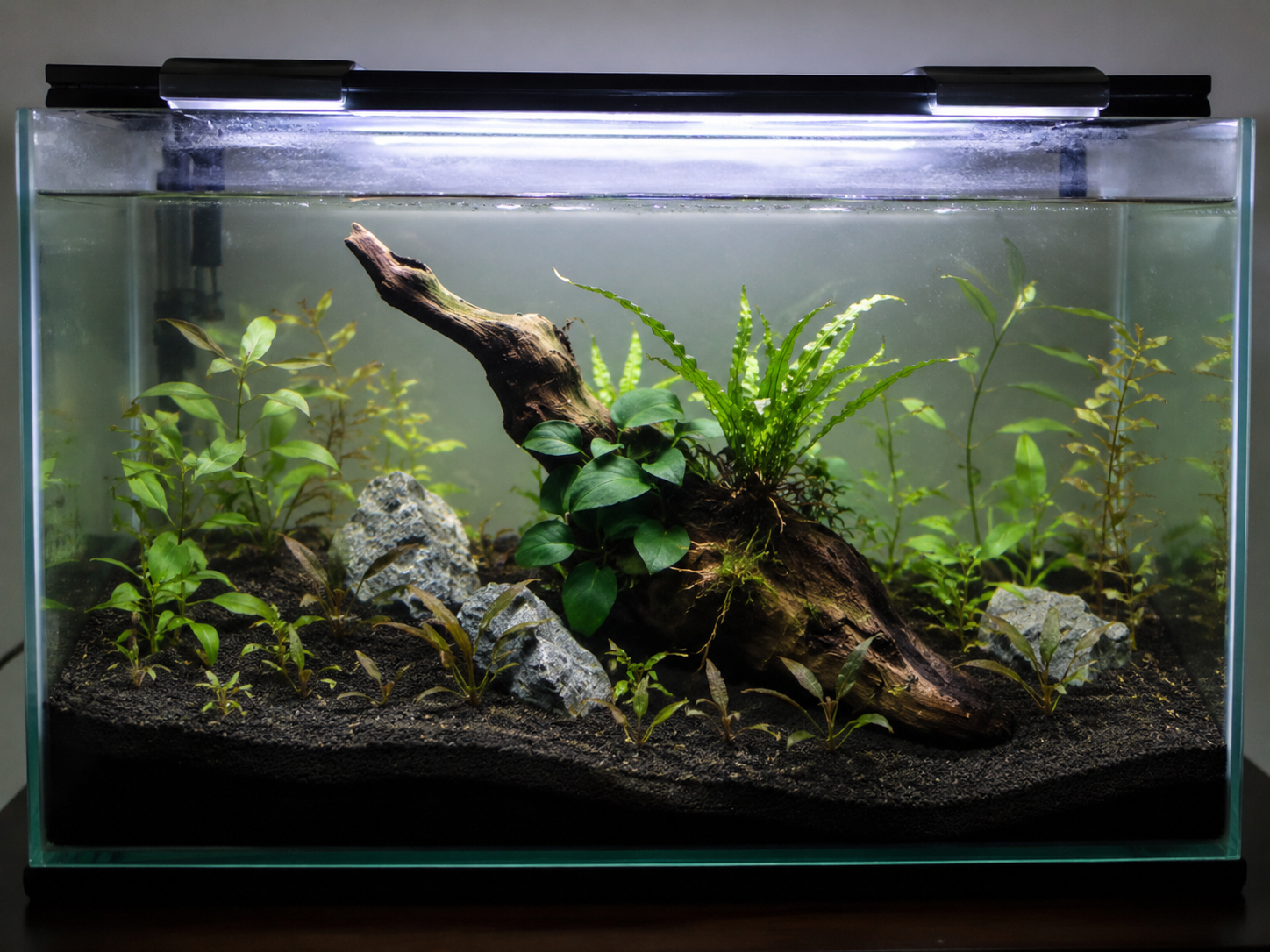
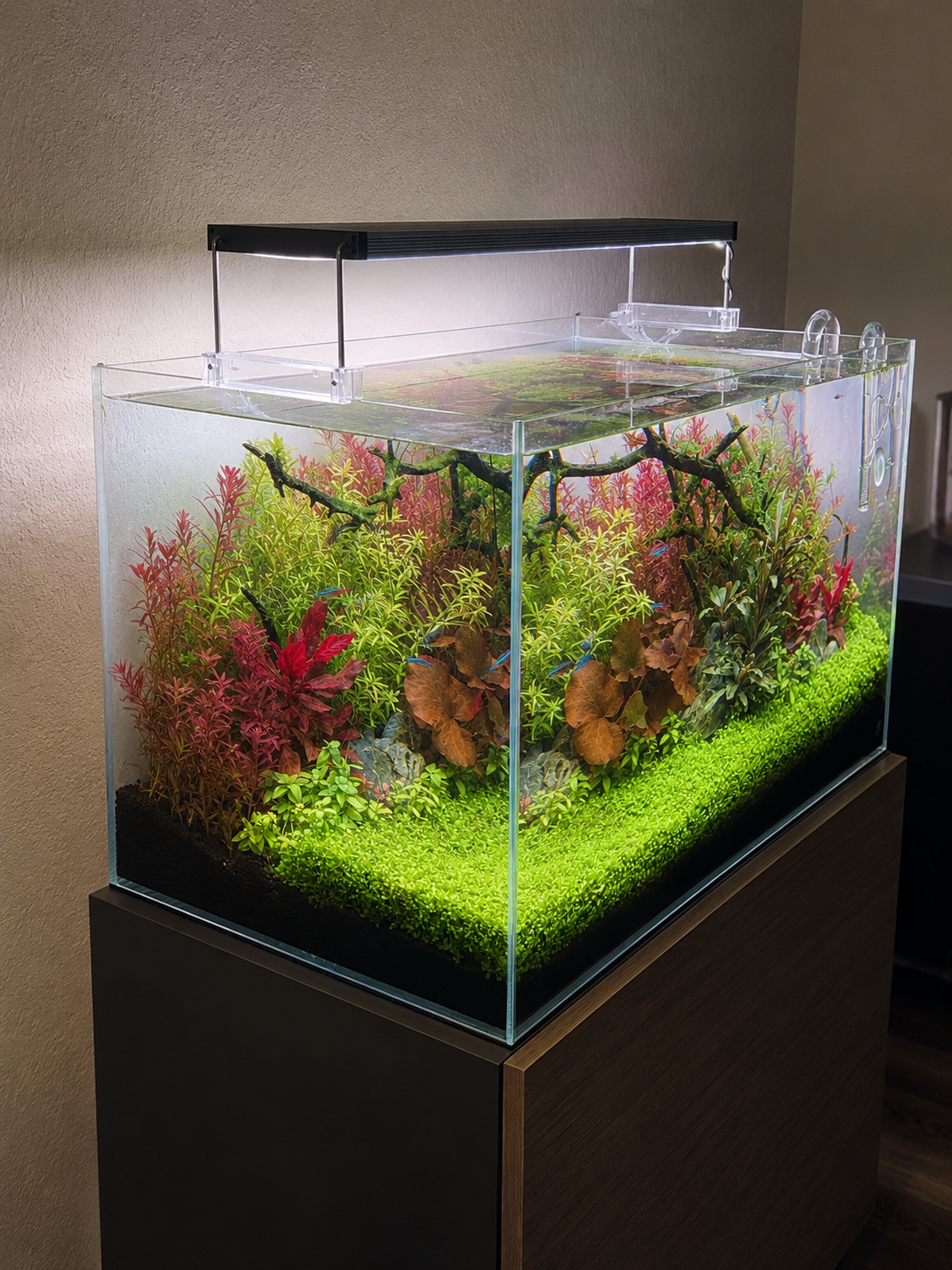
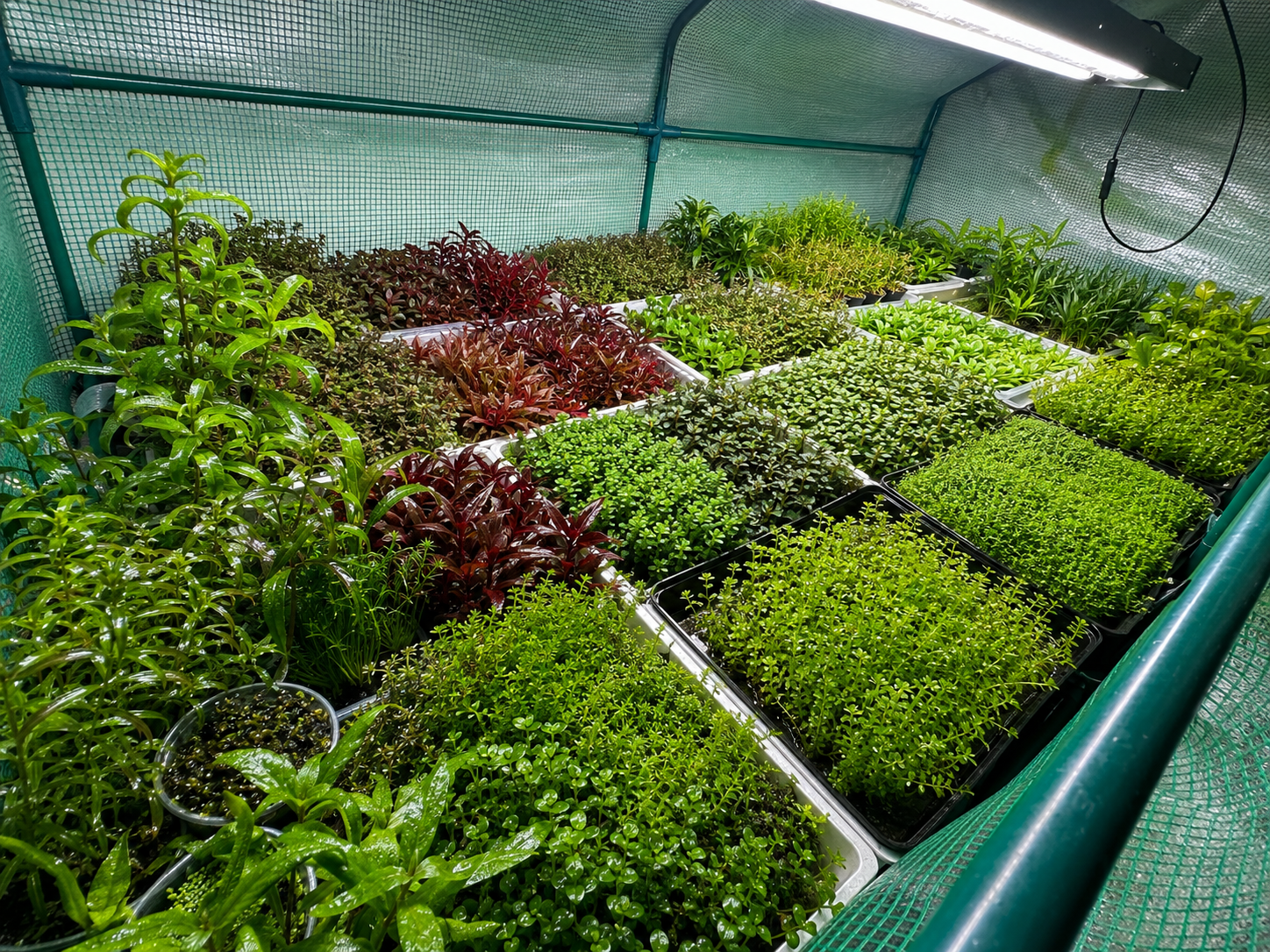
A well-planted shrimp tank isn’t complicated: a piece of moss-covered driftwood, a floating layer for cover and grazing, a rooted anchor plant or two, and a low, dense patch of foreground growth. All of the plants above are grown emersed and shipped snail-free — worth knowing given how sensitive a shrimp colony is to unwanted hitchhikers riding in on new plants. If you’re curious why that matters, see our guide to emersed-grown plants.