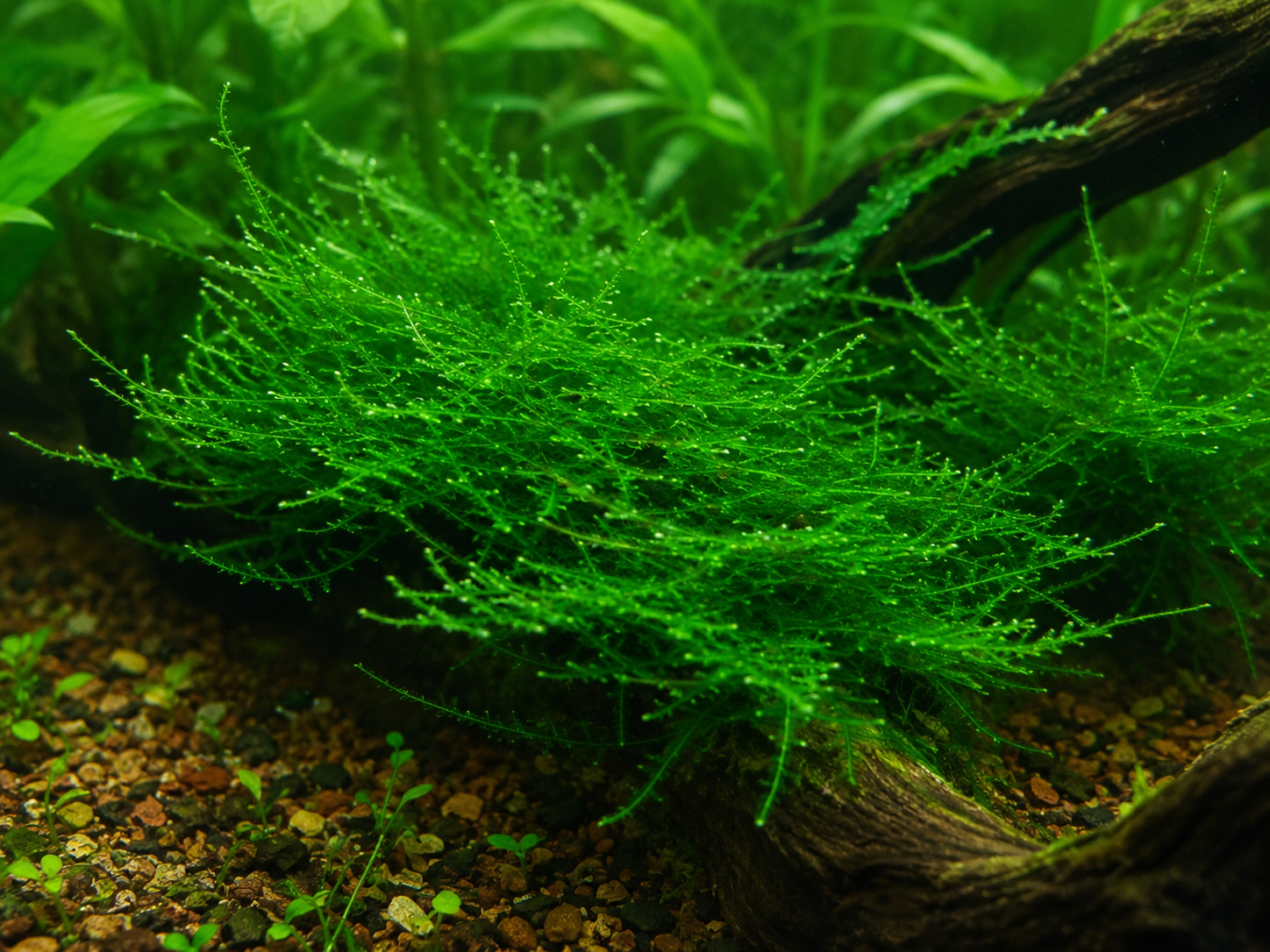

Taxiphyllum barbieri — Java Moss — was first described from specimens collected in Vietnam and has since become the most widely kept aquarium plant in the world. Native to humid riparian areas across Southeast Asia, it grows attached to rocks, roots, and submerged wood in slow streams and along river margins. In the aquarium, it’s a foundational plant for good reason: it works everywhere, tolerates anything, and does more ecological work than almost any other plant you can add.
Attachment and Placement
Java Moss attaches to surfaces using fine rhizoids — not true roots — and will colonize any rough surface over time: rocks, driftwood, mesh, ceramic, filter intakes. It doesn’t need substrate and never should be buried. Tie or glue it to hardscape and it will gradually self-attach over 2–4 weeks.
Common uses:
- Tied to driftwood for a classic natural look
- Spread on a mesh mat as a carpet
- Packed into a corner as a moss mound
- Loose in the tank as floating cover for fry and shrimp
Ecology in the Tank
Java Moss becomes one of the most biologically active surfaces in the aquarium. Biofilm colonizes the fine leaves; microorganisms populate the interior. For shrimp, this is a constant natural food source — healthy shrimp colonies thrive with Java Moss present. For fry, the dense structure provides refuge from adult fish. For bettas, it creates an additional surface to inspect and territory to defend.
Water Parameters
Java Moss is exceptionally tolerant: 60–82°F (16–28°C) and a wide pH and hardness range. A standard weekly 20–25% water change is plenty, though this plant will survive far longer stretches of neglect than most.
Care
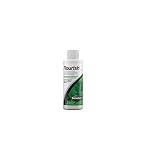
No CO2 required. Low light is sufficient, though moderate light produces faster, denser growth. Seachem Flourish dosed weekly noticeably accelerates growth and keeps the moss a vibrant dark green rather than the brownish, slow-growing look it can develop in depleted water.
Trimming
Trim overgrown sections with scissors. Cut directly into the mass — the trimmed portions will either reattach or float free and can be removed. Unlike most plants, Java Moss doesn’t die from heavy trimming; it simply regrows from the base.
Overgrown moss that accumulates debris in its interior can be thinned to improve flow-through and prevent anaerobic pockets.
Propagation
Java Moss propagates simply by fragmentation — any trimmed piece, even a small one, will continue growing and can be tied to new hardscape. There’s no special technique needed; this is one of the easiest plants in the hobby to share or multiply.
How to Plant
Java Moss does not go in substrate — it attaches to surfaces. Cut a portion and either tie it to driftwood or a rock with thin cotton thread or fishing line, or attach it with a small dab of aquarium-safe super glue gel (cyanoacrylate). Press the moss flat against the surface for 30 seconds until the glue sets. Cotton thread dissolves harmlessly over four to six weeks; by that point the moss has self-attached via its own rhizoids. For a carpet, sandwich a thin layer of moss between two pieces of mesh, tie the edges together, and lay flat on the substrate. Dose Seachem Flourish weekly from the start to fuel early attachment and growth.
Common Problems
- Browning or dull color. Usually low flow trapping debris inside the mass, or a fertilizing gap — thin the moss and add weekly liquid fertilizer.
- Anaerobic, smelly patches inside a thick mat. Trapped detritus in old, dense moss; thin it out periodically to restore water flow-through.
- Hitchhiker snails. The single most common moss-specific issue — its dense structure is an ideal place for snail eggs to hide on store-bought stock. Rinse and inspect thoroughly before adding it to a snail-free tank.
Pests
Aside from hitchhiker snails riding in on new stock, Java Moss has no pest problems of its own — its texture is if anything a magnet for beneficial microfauna rather than anything harmful.