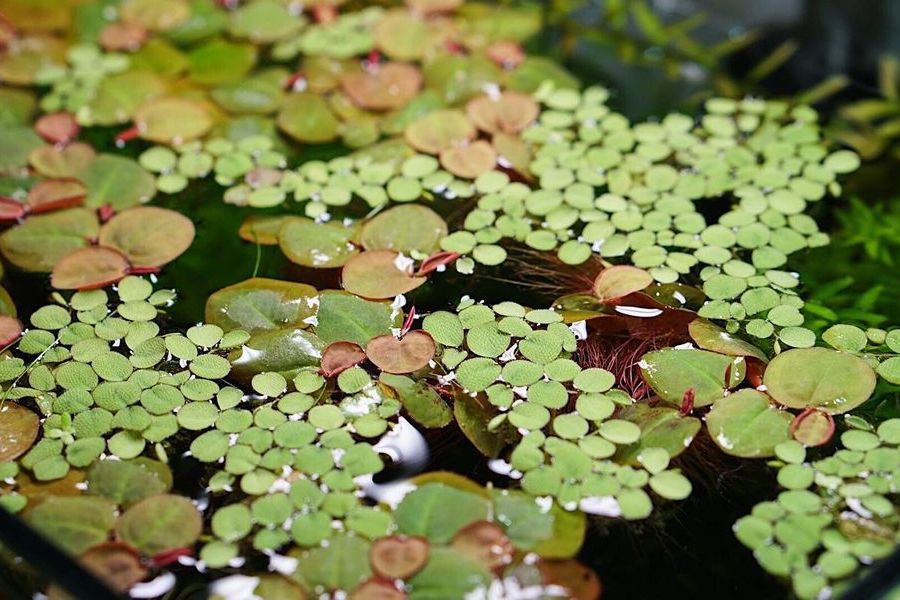
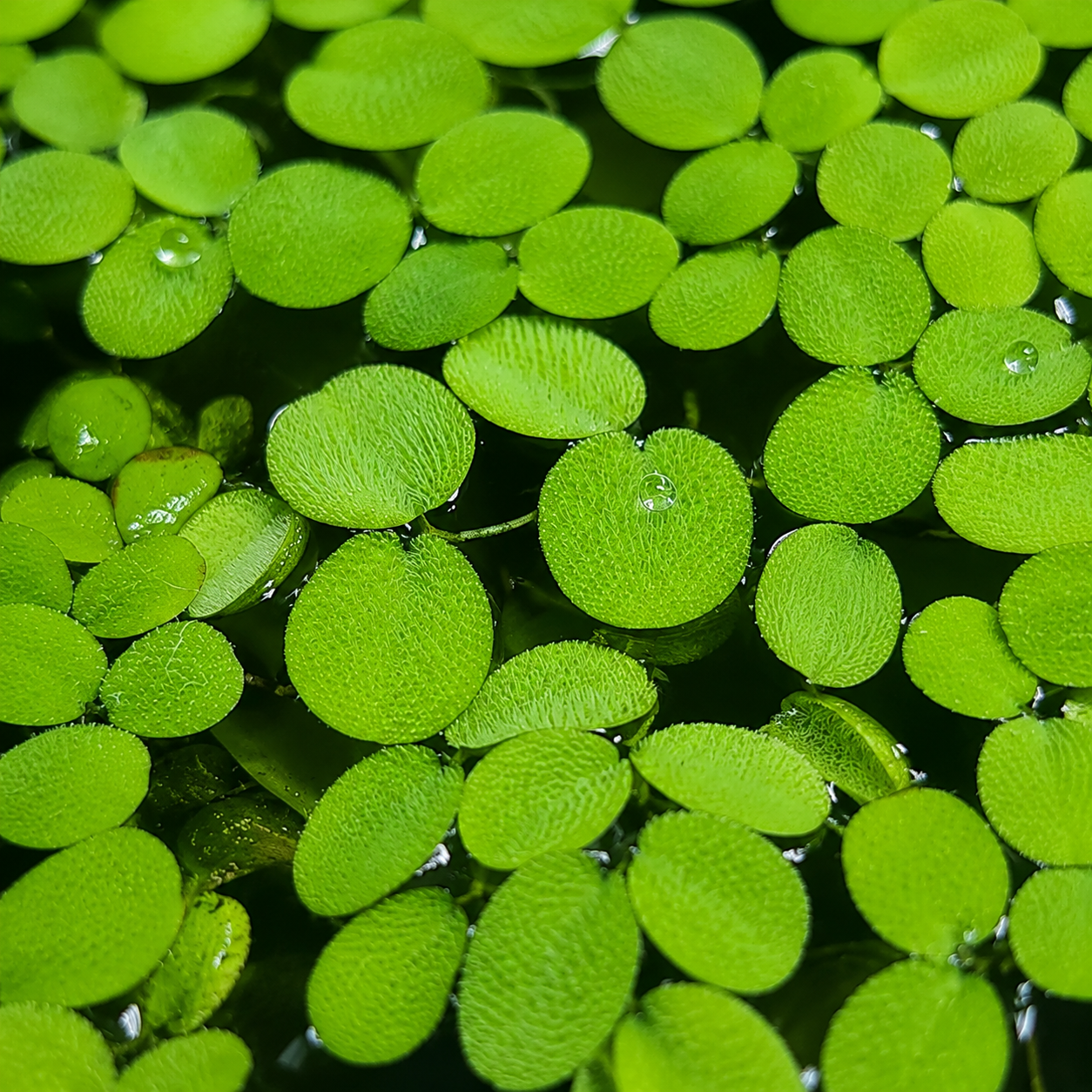
Salvinia species are floating ferns — not true flowering plants — which is part of why they look so different from other aquarium floaters. The leaves are covered in tiny, water-repelling hairs that trap air bubbles, giving them their distinctive velvety texture. They reproduce by vegetative fragmentation, meaning a single plant becomes dozens in a matter of weeks under good conditions.
Minima vs. Cucullata
Salvinia minima is native to the southeastern United States and Central America. It produces flat, oval leaves about 1–2 cm across, arranged in pairs along a central stem. Under strong light the leaves are bright green; under low light they turn slightly yellowish-green. Flat-growing and moderate spreading rate.
Salvinia cucullata is from Southeast Asia — Thailand, Bangladesh, Laos, and neighboring regions. Its leaves are distinctively cupped or hooded (cucullata = “hooded”) rather than flat, creating a three-dimensional, sculptural look at the surface. Slightly smaller leaves than minima, equally easy to grow.
Both produce submerged root-like fronds (actually highly modified leaves) that hang into the water and provide excellent cover for fry and shrimp.
Why Use Floating Plants
- Betta cover: Bettas rest near the surface and benefit greatly from floating plant shade and refuge.
- Nitrate control: Floating plants pull nutrients from the water column at high rates; they’re among the most efficient biological nitrate removers.
- Algae suppression: Surface cover reduces light penetration, discouraging benthic algae in the tank below.
- No planting required: Just place on the water surface and keep still water (or low flow) — they do the rest.
Water Parameters
Both species are tolerant: 68–86°F (20–30°C) and a wide pH range. The main environmental factor that matters more than any specific number is surface calm — see the care section below.
Feeding
Salvinia pulls all its nutrition from the water — Seachem Flourish dosed weekly keeps it growing vigorously and prevents the pale, yellowish color that indicates nutrient deficiency. It’s a fast grower that can exhaust available nutrients if the tank is already low in dissolved nutrients.
Control
Both species spread quickly. Scoop out portions regularly — weekly in warmer tanks — before they cover the entire surface completely. Partial surface coverage (50–70%) is the sweet spot for most setups.
How to Plant
No substrate planting needed — simply place Salvinia fronds on the water surface. The plants orient themselves automatically with the leaf face upward. Keep surface flow minimal so they can spread freely. In tanks with a strong filter outlet, angle the flow along the back wall rather than directly at the surface, or use a spray bar directed slightly below the waterline to reduce turbulence at the surface. Dose Seachem Flourish weekly immediately after adding — floating plants depend entirely on the water column for nutrition.
Common Problems
- Drifting away from where you want it. Reduce surface agitation; Salvinia has no way to anchor itself and moves with any current.
- Pale or yellowing fronds. A nutrient deficiency — increase liquid fertilizer dosing.
- Overrunning the tank surface. Scoop out excess weekly rather than letting it reach full coverage, which would cut light to plants below.
Pests
No specific pest issues. As a fully floating plant it doesn’t carry the hitchhiker-snail risk that substrate or moss-grown plants do.