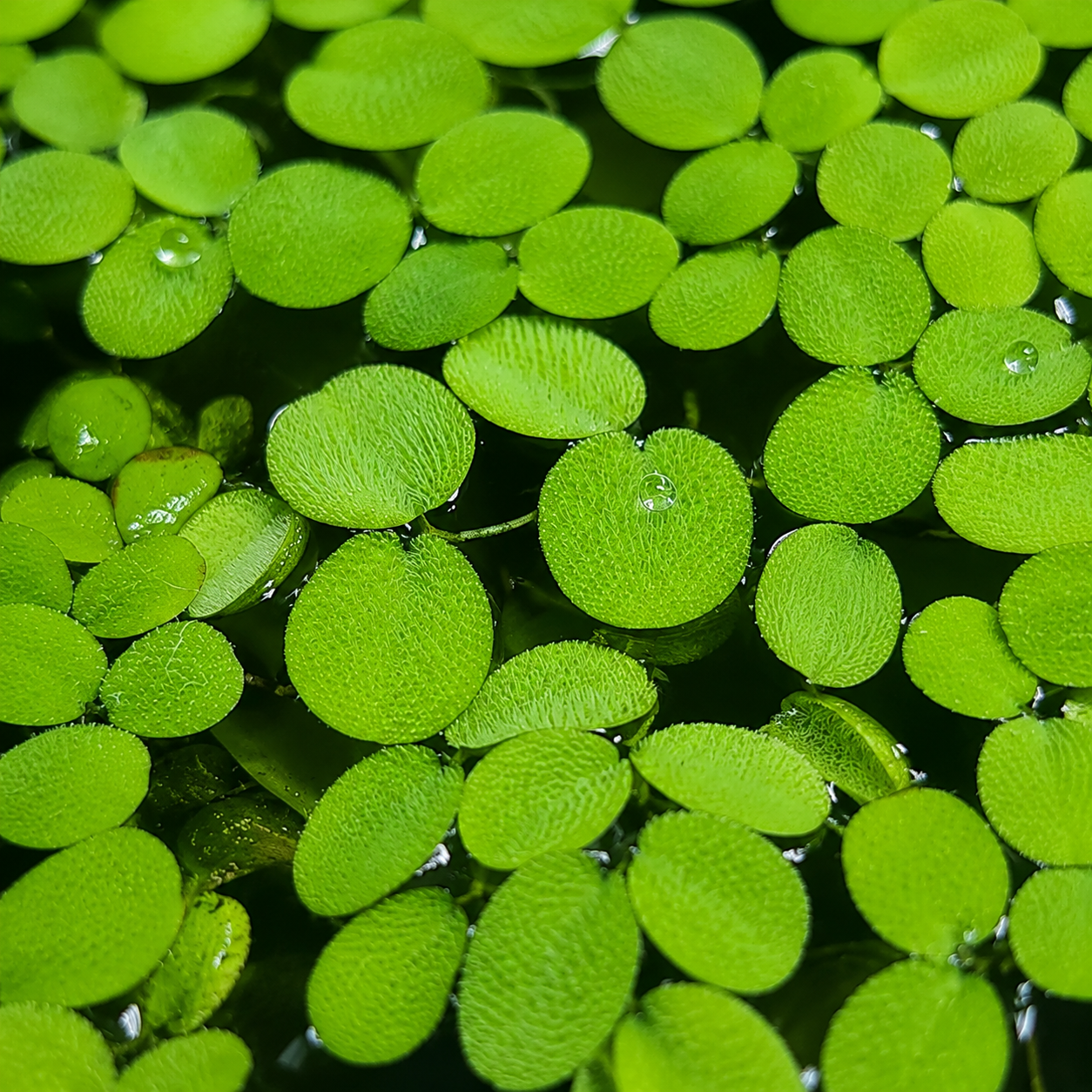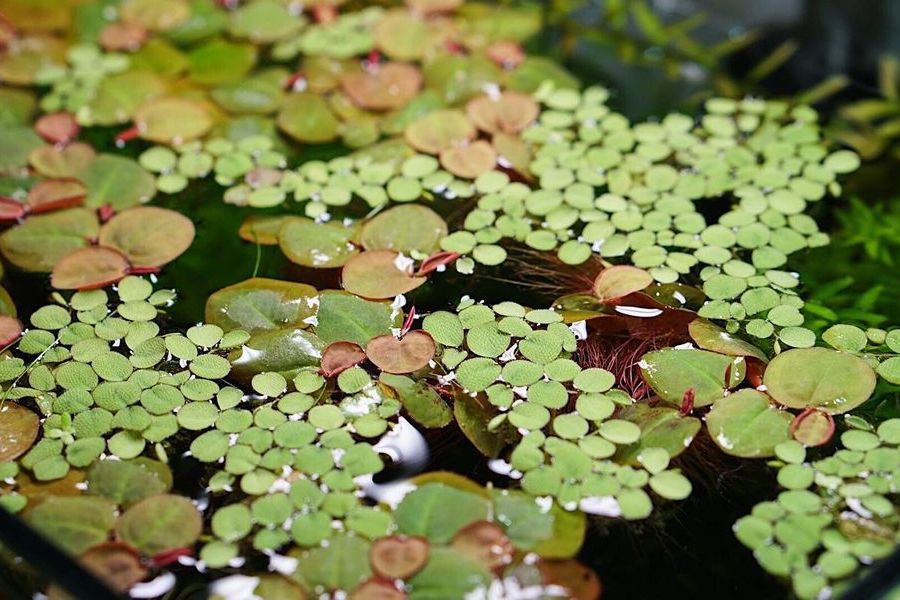

Pistia stratiotes — Water Lettuce — is one of the most recognizable aquatic plants in the world. It grows wild across tropical and subtropical regions on every continent, thriving in slow-moving rivers, ponds, flooded fields, and irrigation channels. In warm climates it’s considered invasive; in the aquarium it’s one of the most useful floating plants you can keep.
Appearance
Each plant is a rosette of 4–10 pale to medium green leaves arranged in a fan. The leaves have a distinctive ribbed, quilted texture and are covered in tiny hairs that make them velvety to the touch and highly water-repellent. Individual plants range from 5 cm to over 20 cm across under optimal conditions. Below the rosette hangs a dense mass of feathery white roots — sometimes 15 cm or more long — that creates an extraordinary refuge for fry and a natural hunting ground for shrimp.
Why It’s Ideal for Bettas
Bettas are naturally shallow-water fish that rest near the surface. Water lettuce creates exactly the kind of shaded, sheltered surface environment they prefer. The dense root mass and floating canopy reduce surface light, soften the tank’s appearance, and give bettas somewhere to retreat. It’s rare to have a betta tank with Water Lettuce and NOT see the betta spending more time near the surface.
Water Parameters
Given its pantropical range, Water Lettuce tolerates a wide span: 68–86°F (20–30°C), and a broad pH and hardness range. Light above the tank matters more than any water chemistry number — see below.
Nutrient Removal
Water lettuce is an aggressive nutrient absorber — nitrogen, phosphorus, and micronutrients are all pulled from the water rapidly. In a stocked tank this translates to noticeably lower nitrate readings. It earns its keep even without any aesthetic consideration.
Feeding
Heavy feeder. Seachem Flourish dosed weekly prevents the outer leaves yellowing that signals nutrient deficiency. Under-fertilized Water Lettuce becomes pale, stunted, and eventually loses leaves from the outside of the rosette inward.
Light and Size
Water lettuce needs significant light above the water surface to thrive — it is a surface plant and relies on air light, not tank lighting. It does not do well under very low ambient light. Given good window light or a strong lamp placed above the tank, it will produce large, lush rosettes and runner plants.
Control
Runners spread quickly under good conditions. Remove extra rosettes weekly; don’t let it cover the entire tank surface, as this will suffocate underwater plants from light deprivation.
How to Plant
Place rosettes directly on the water surface with roots hanging freely into the water. No anchoring or substrate is needed. Water lettuce requires still or slow-moving water — surface agitation flips rosettes and allows water into the leaf cups where it causes rot. Keep the filter outflow aimed below the waterline rather than creating surface ripples. In open-top tanks with dry ambient air, leaf margins tend to brown; a partially closed lid or high-humidity environment keeps the plant healthier. Dose Seachem Flourish weekly immediately after adding.
Common Problems
- Pale, stunted rosettes. Check both light above the tank and fertilizing frequency — this plant is demanding on both fronts compared to other floaters.
- Flipped or rotting rosettes. Surface agitation is the usual cause; still water keeps rosettes upright and dry on top.
- Overrunning the surface. Remove excess weekly rather than letting coverage reach 100%, which starves plants below of light.
Pests
No specific pest issues. As a fully floating plant it doesn’t carry the hitchhiker-snail risk that substrate or moss-grown plants do.