
Limnobium laevigatum — Amazon Frogbit — is native to South America, distributed across the Amazon basin and neighboring river systems in Brazil, Peru, Colombia, and surrounding countries. It floats on calm water surfaces in backwaters, oxbow lakes, and flooded forest margins — exactly the kind of still, warm, humid environment that many betta fish originate from as well.
Appearance
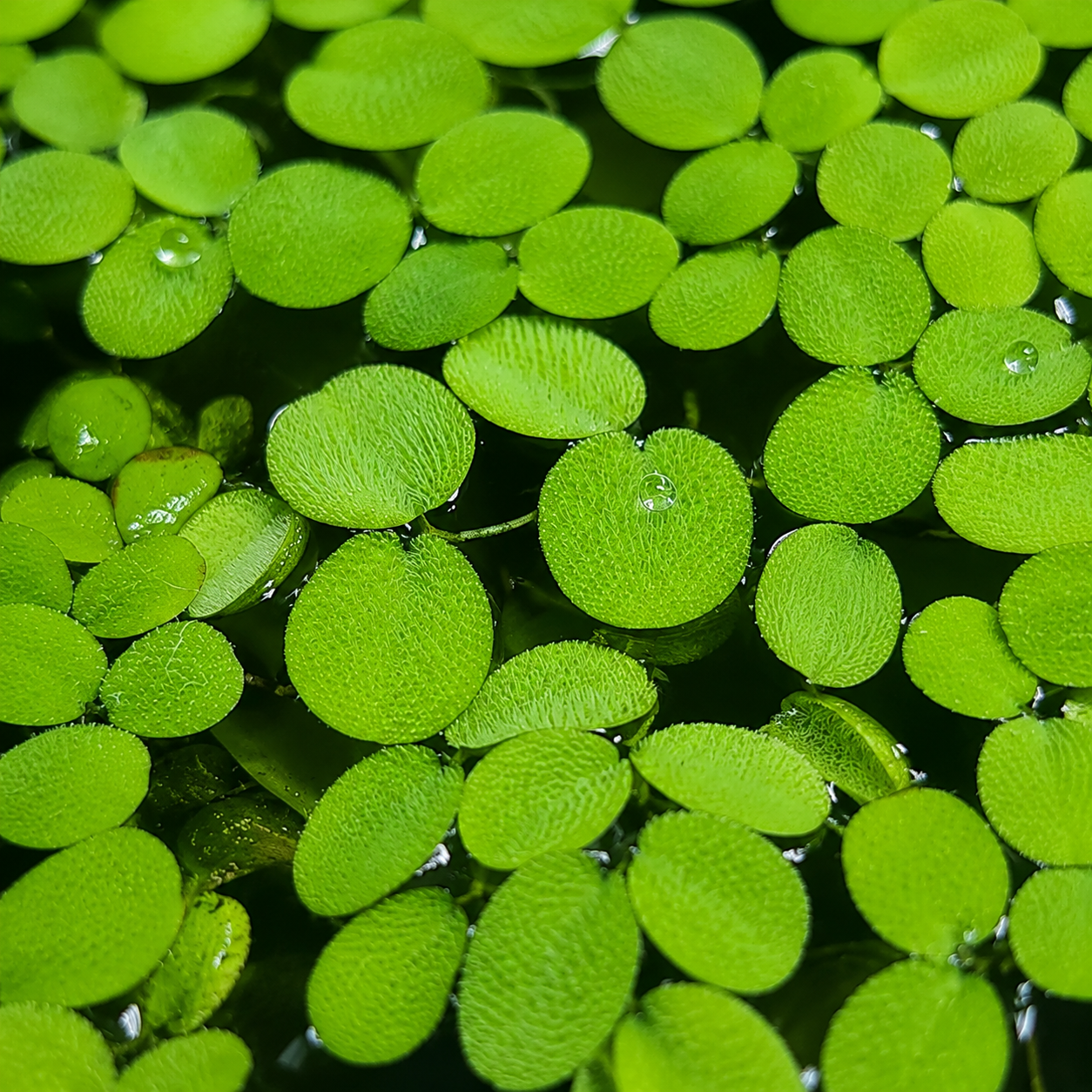
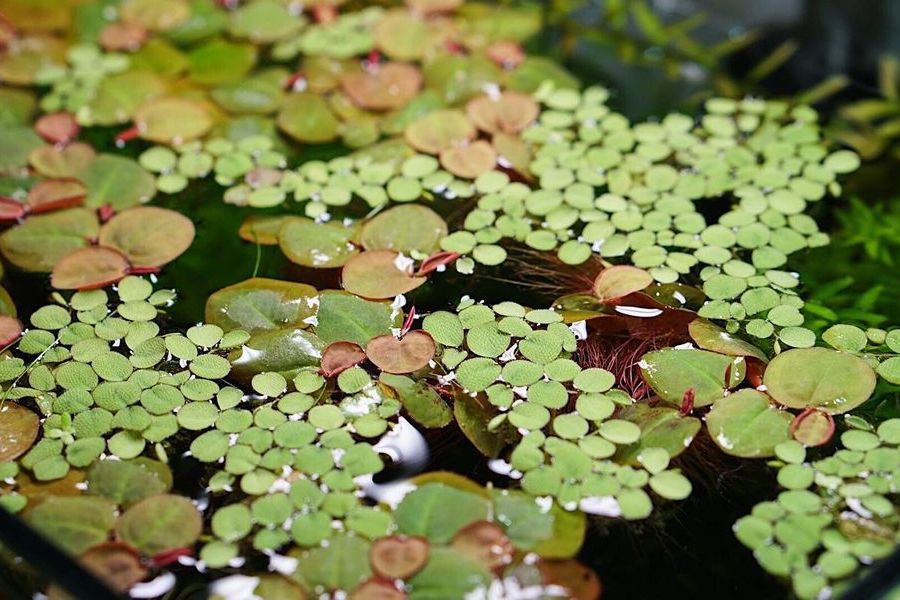
Frogbit produces rosettes of rounded leaves, each 2–6 cm across, on short petioles that rise from a central crown. Young plants sit almost flat on the surface; more mature, well-fed specimens develop a slightly arched, cup-shaped leaf that holds water droplets in an attractive way. The underside of the leaves is slightly spongy due to aerenchyma tissue that helps it float.
Below each plant hangs a cluster of fine white roots — when healthy, these can reach 5–15 cm and create a curtain effect below the surface that provides excellent cover for small fish, fry, and shrimp.
Comparison to European Frogbit
Amazon Frogbit (L. laevigatum) has larger, more rounded leaves than European Frogbit (Hydrocharis morsus-ranae) and is better suited to warm tropical tanks. Both are easy; Amazon Frogbit is the standard choice for heated aquariums.
Water Parameters
Warm South American backwater conditions suit it best: 72–82°F (22–28°C), with a wide pH tolerance. Humidity above the surface matters as much as anything in the water itself — see the care section below.
Benefits
- Betta cover: Bettas naturally rest and sleep near the surface. Frogbit provides exactly the kind of floating leaf canopy they seek out in the wild.
- Nitrate control: Active grower that removes nitrogen from the water continuously.
- Natural appearance: The rounded leaves and hanging roots create a natural, convincing riparian surface aesthetic.
Feeding
Seachem Flourish dosed weekly maintains the deep green color and large leaf size. Nutrient-deficient Frogbit produces progressively smaller, yellower leaves. The plant takes all nutrition from the water, so regular liquid fertilization is the whole feeding program.
Care
Still to very slow water surface only — surface agitation damages and rots the leaves quickly. Keep the lid closed or partially closed to maintain humidity above the water. Under dry air conditions, leaves develop brown, papery margins.
Control
Runners connect daughter plants to the mother in a chain. Snap off extra rosettes once they have 3–4 leaves of their own. Don’t let them cover the entire surface; 30–60% coverage is ideal for most tanks.
How to Plant
Place rosettes directly on the still water surface with roots hanging freely into the water column — no anchoring needed. Frogbit is sensitive to surface agitation; even moderate ripple will damage the leaves and prevent spreading. Keep the filter outflow submerged and directed away from the surface. In open-top tanks with airflow, the leaves dry out at the margins; a partially closed lid maintains the humidity the plant prefers. Dose Seachem Flourish weekly from the first day — it is the plant’s only source of nutrition.
Common Problems
- Browning, papery leaf margins. Low humidity above the tank — partially cover the top to hold in moisture.
- Melting or rotting leaves. Surface agitation is the usual cause; this plant needs genuinely still water.
- Overcrowding the surface. Remove daughter rosettes regularly rather than letting the colony reach full coverage.
Pests
No specific pest issues. As a fully floating plant it doesn’t carry the hitchhiker-snail risk that substrate or moss-grown plants do.