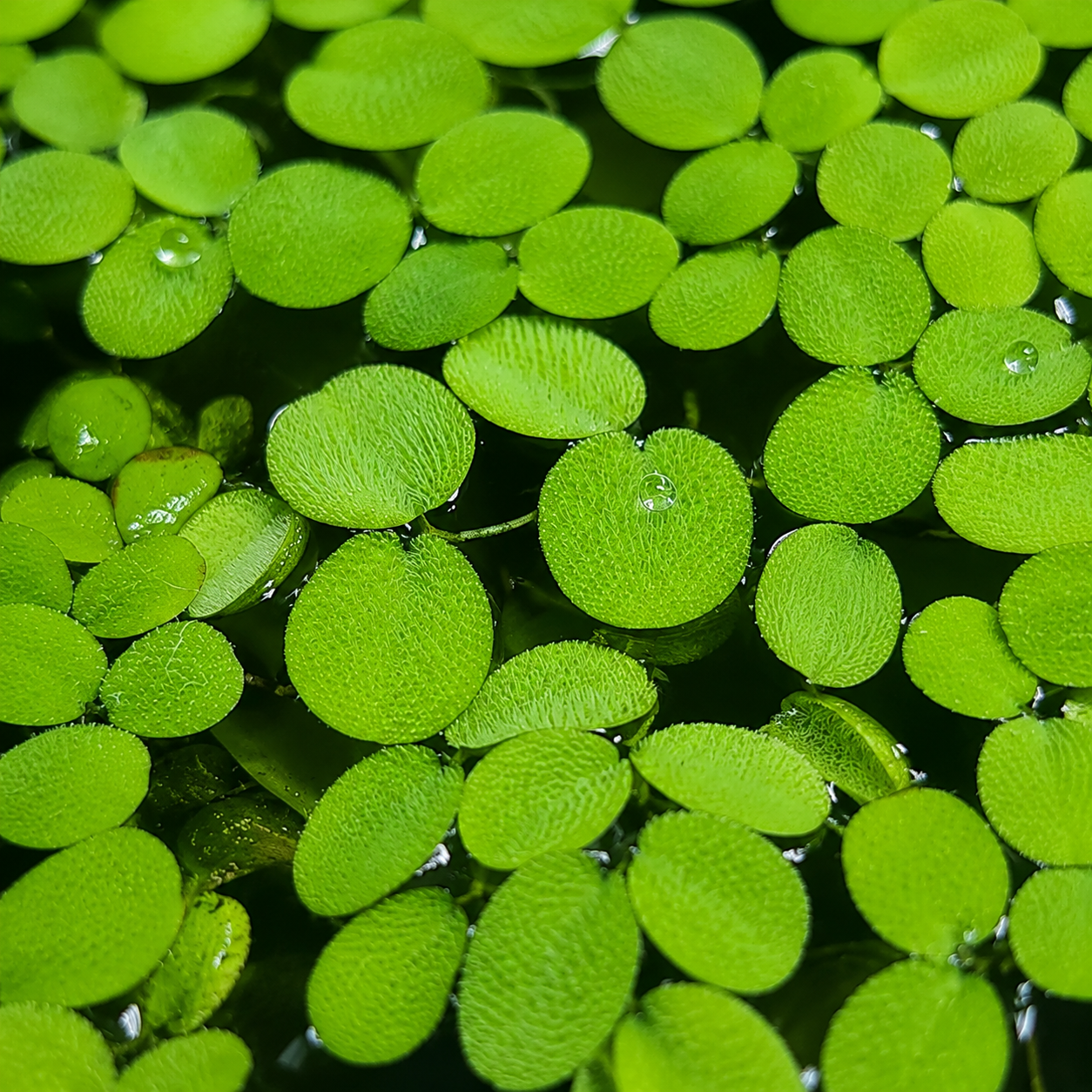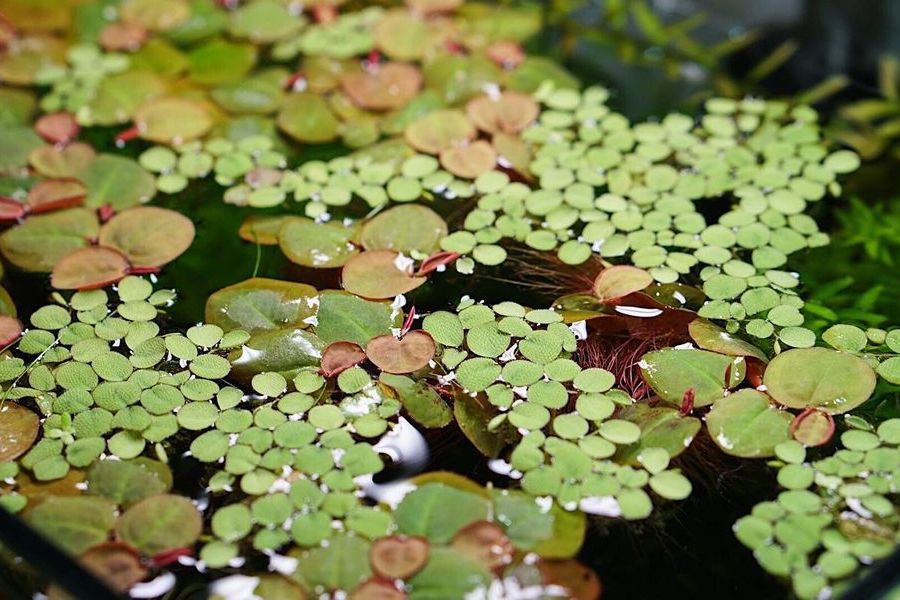

Spirodela polyrhiza — Giant Duckweed — is technically misnamed; it’s only “giant” compared to common duckweed (Lemna minor). Individual fronds are still just 4–10 mm across — but that’s 3–4 times the size of standard duckweed, and the difference is immediately visible. It grows worldwide, in ponds, slow rivers, and ditches across every continent except Antarctica, typically in nutrient-rich, still or slowly moving water.
What Makes It Different From Common Duckweed
Giant duckweed produces multiple roots per frond (7–21 fine roots hanging downward), compared to the single root of Lemna minor. This root mass creates better habitat for microorganisms and provides more surface area for feeding. The fronds themselves are rounder and darker green, often with a reddish or purple underside.
Benefits in the Aquarium
Nutrient removal: Duckweed grows rapidly and absorbs nitrogen compounds at a high rate. A healthy mat of Giant Duckweed will measurably reduce nitrate levels, which is useful for densely stocked tanks or tanks with limited water changes.
Surface cover: The dangling root mass provides excellent refuge for bettas, labyrinth fish, and small fry. It reduces evaporation and cuts down surface gas exchange — worth noting if you have sensitive oxygen requirements.
Shrimp and feeding: The hanging roots of Giant Duckweed become colonized by biofilm and infusoria, making them natural feeding stations for shrimp and fry.
Water Parameters
Given its worldwide distribution, Giant Duckweed tolerates almost any freshwater condition: 60–86°F (16–30°C), a wide pH range, and both soft and hard water. It’s genuinely one of the least fussy plants in this entire lineup.
Feeding
Like all floating plants, Giant Duckweed gets all its nutrition from the water. Seachem Flourish dosed weekly keeps it a healthy dark green. In under-fertilized tanks the fronds may turn yellowish — a sign of nitrogen or micronutrient deficiency.
Control
Giant Duckweed is easier to manage than common duckweed because the larger fronds are easier to net out. Scoop out portions weekly to prevent total surface coverage. It does not invade planted areas the way small duckweed can.
How to Plant
No planting required — simply place fronds on the water surface and they spread on their own. For tanks with a filter outlet positioned at the surface, form a small containment ring from airline tubing and secure it against one corner of the tank with suction cups; this keeps the colony from being pulled continuously into the filter intake. Dose Seachem Flourish weekly from day one to keep the fronds a healthy dark green and prevent the yellowing that signals nutrient deficiency.
Common Problems
- Yellowing fronds. Almost always a nutrient deficiency — increase liquid fertilizer dosing.
- Complete surface coverage. Left unchecked, it will cover the whole tank and cut light to plants below — net out excess weekly rather than letting it run unchecked.
- Fronds pulled into the filter intake. A containment ring made from airline tubing keeps the colony away from strong intake flow.
Pests
No specific pest issues. Since it’s a fully floating plant with no substrate contact, it doesn’t carry the hitchhiker-snail risk that potted or moss-grown plants do, though a quick rinse before adding new stock is still good practice.