Floating plants are the most underrated category in the freshwater hobby. They don’t need substrate, they don’t need planting, and most of them don’t need CO2 or even particularly strong light. Drop them on the surface and they do the rest. Here’s everything worth knowing before you add a handful to your tank.
Why keep floating plants
- Nitrate removal. Floaters draw nutrients directly from the water column and grow fast enough to out-compete algae for the same resources — they’re some of the most efficient nitrate exporters available to a home aquarist.
- Light diffusion. A layer of floating cover softens harsh overhead lighting, which surface-dwelling and shade-loving fish (bettas especially) appreciate.
- Surface cover and refuge. Bettas rest near the surface and gulp air there; fry and shrimp use the hanging root systems as a place to hide from predators. See our guide to building a shrimp haven for more on that angle.
- Algae suppression. Less light reaching the water column below means less fuel for algae growing on glass and hardscape.
The one rule that applies to all of them
Floating plants need still or slow water. Every species below struggles under surface agitation — strong flow breaks up leaves, prevents spreading, and in some cases (Red Root Floater especially) damages the plant outright. Angle filter outflow along the back wall or just below the surface rather than straight across it, and keep powerheads pointed elsewhere.
Species roundup
- Amazon Frogbit — round, lily-pad-like leaves with dangling white roots; the easiest all-around floater for calm, low-tech tanks.
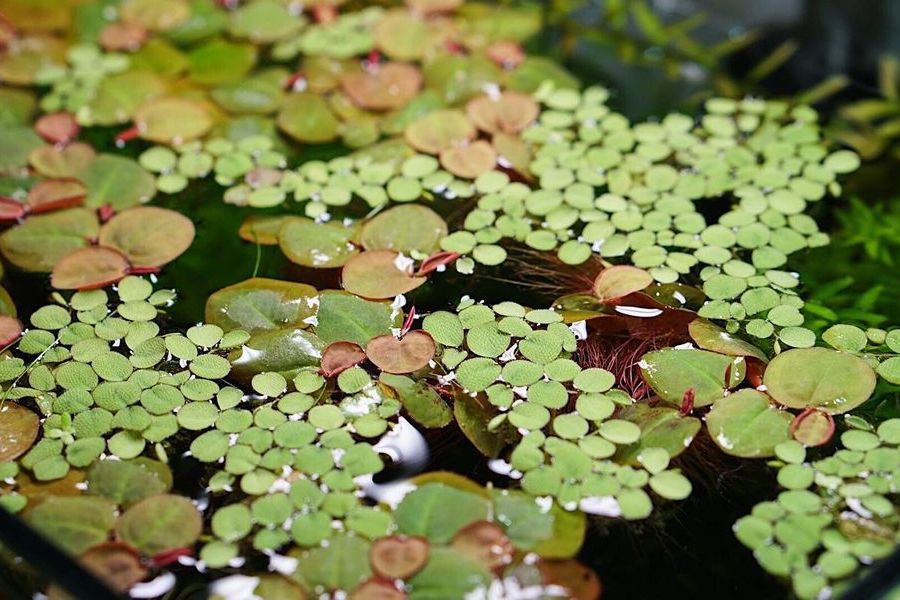
- Red Root Floater — the showiest option in the hobby, with vivid crimson roots and leaves that flush red under strong light. Pairs naturally with the species in our guide to getting red plants to actually turn red.
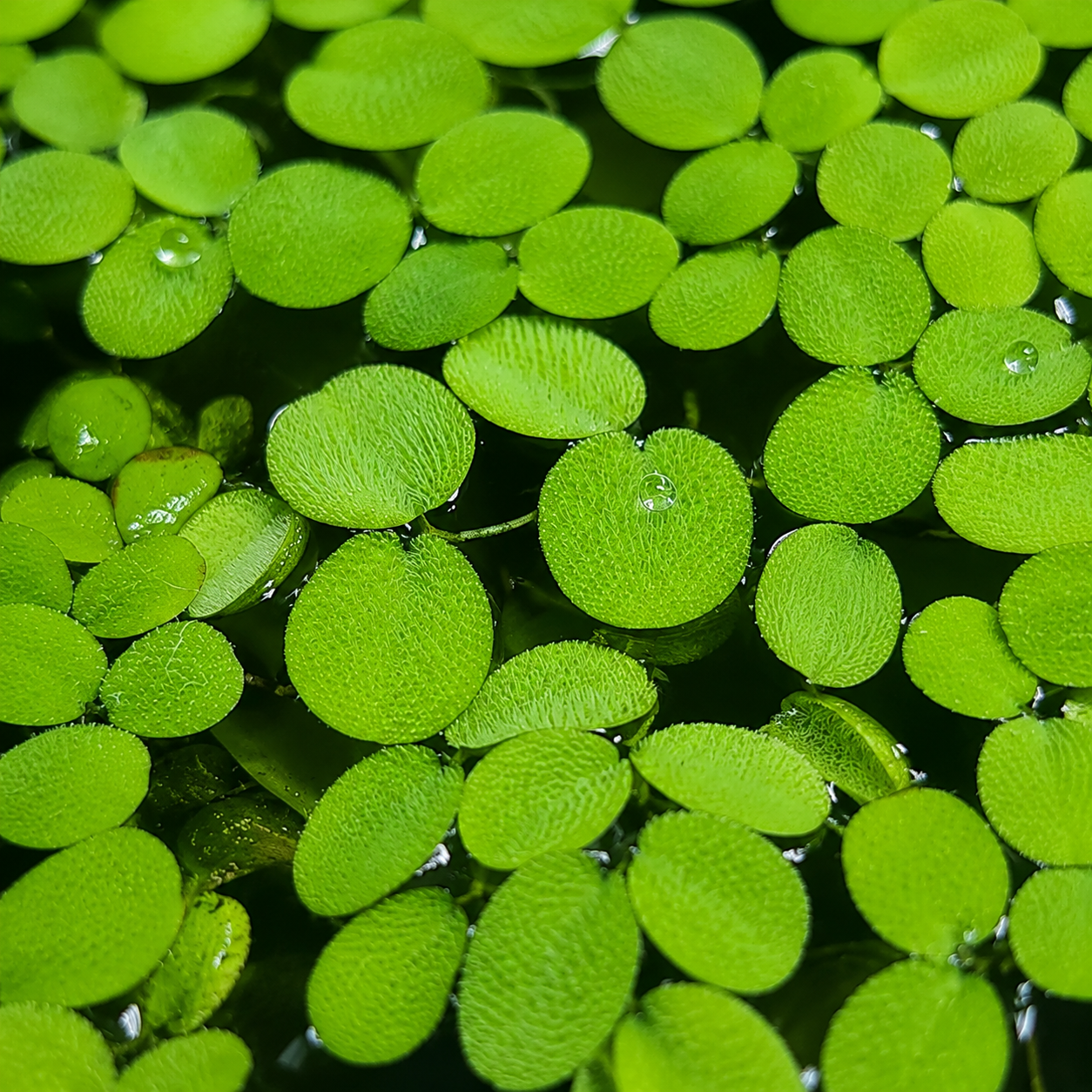
- Salvinia (Minima & Cucullata) — floating ferns with a distinctive velvety texture; two species, both effectively zero-effort.
- Giant Duckweed — the fastest nutrient vacuum on this list, though it spreads aggressively and needs regular thinning.
- Water Lettuce — rosettes of velvety green leaves with an enormous hanging root mass that fry and shrimp treat like a jungle gym.
- Guppy Grass — usually grown planted, but it floats just as readily, forming a dense tangle that small fish and shrimp can hide in.
How much coverage is right
Somewhere between 50–70% surface coverage is the sweet spot for most tanks — enough to soften light and export nutrients without starving submerged plants of light entirely or blocking gas exchange at the surface. Full coverage works in dedicated betta or shrimp-breeding setups where submerged plant growth isn’t the priority, but for a mixed planted tank, leave open water.
Feeding floaters
Every plant on this list gets 100% of its nutrition from the water column — there’s no substrate to root into. A weekly dose of Seachem Flourish is the single most important input; without it, floaters pale, yellow at the margins, and eventually stall out even in otherwise healthy water.
Keeping them under control
Fast growers — duckweed, Salvinia, guppy grass — will cover a tank within weeks if left unchecked. Scoop out excess weekly with a net or your hand, and don’t be shy about it: the plants replace what you remove within days. If a species is spreading faster than you can manage, that’s usually a sign of surplus nutrients, so removing plant mass is a legitimate (and free) way to control nitrate alongside water changes.
Building a floating layer
The most visually interesting tanks often mix a fine-textured floater (Salvinia or duckweed) with a larger structural one (Frogbit or Water Lettuce) for contrast, plus a colored accent like Red Root Floater. All of the species above are available in our shop, homegrown and shipped snail-free — a small handful is enough to establish a self-sustaining floating layer within a month.