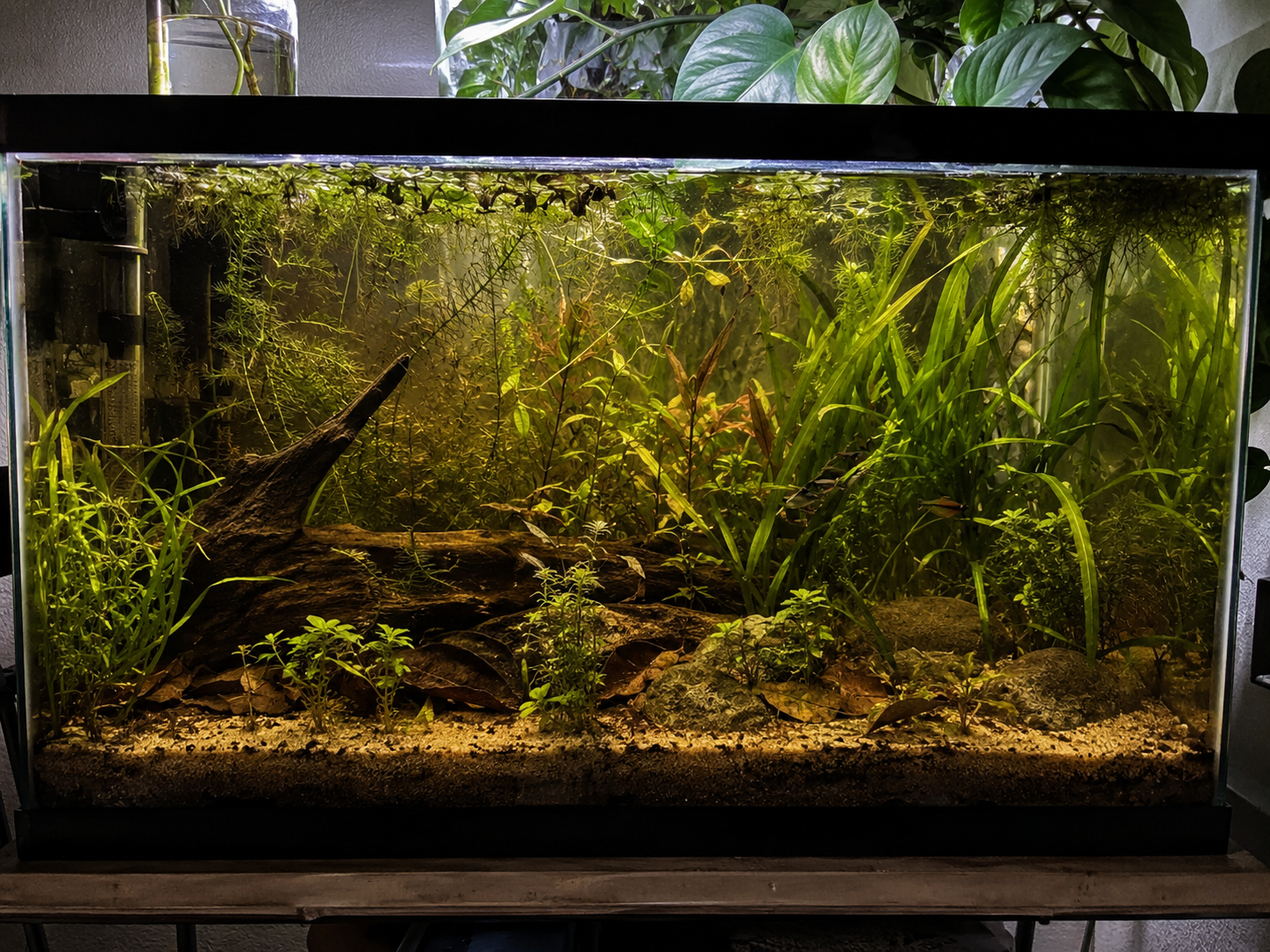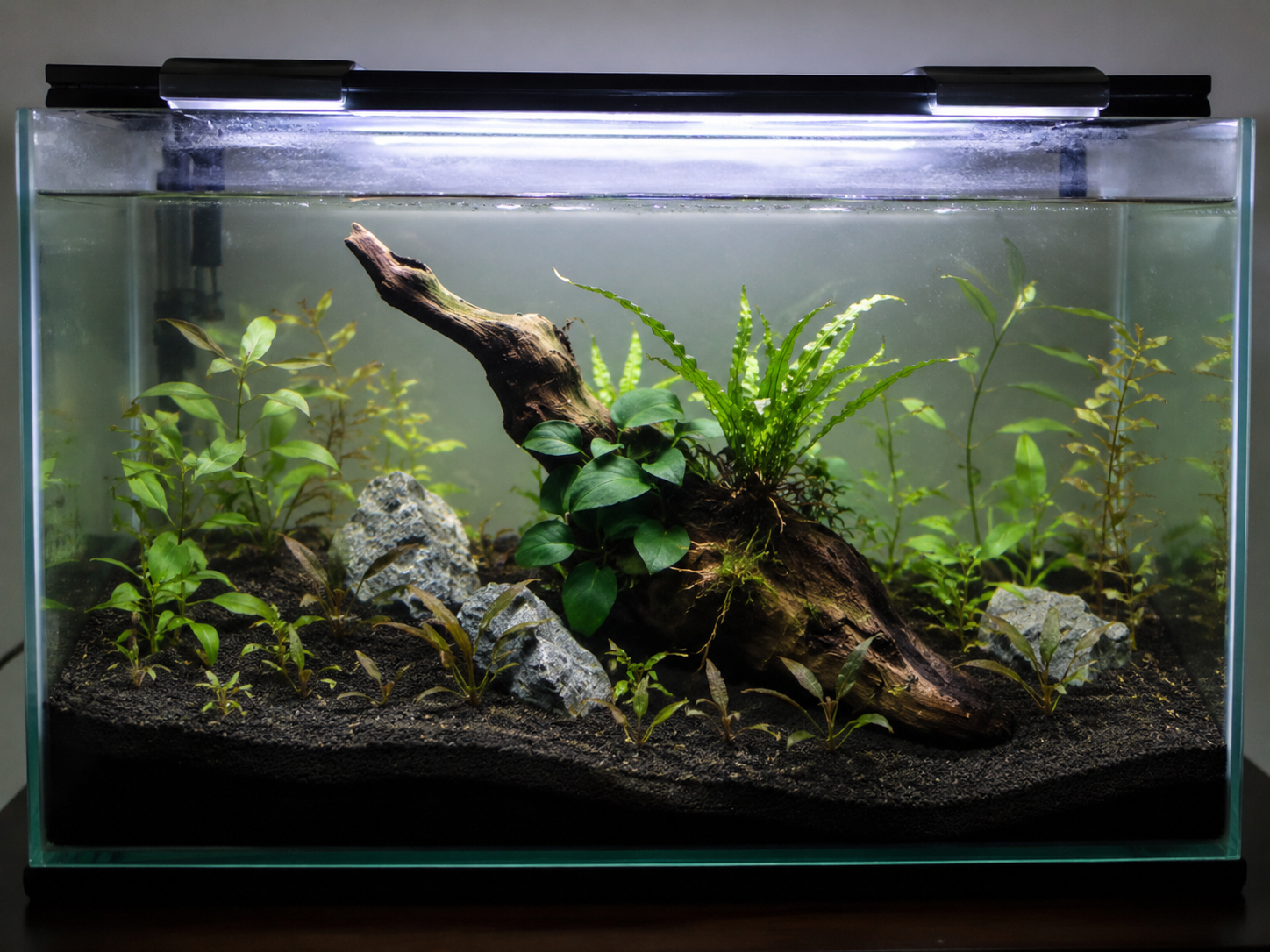
Short answer: no, not in the sense that a betta will die without them. But “does it need it to survive” is the wrong bar. Bettas evolved in shallow, densely vegetated rice paddies and slow-moving water across Southeast Asia — dense plant cover isn’t decoration to them, it’s the environment they’re built for. A bare tank isn’t dangerous, but it’s a meaningfully different (and less comfortable) place for a betta to live than a planted one.
What Plants Actually Do for a Betta
Cover and reduced stress. Bettas are territorial, easily stressed fish, and in a bare tank there’s nowhere to retreat when something startles them — a hand near the glass, a light turning on, another fish. Dense planting gives them somewhere to disappear to, which measurably reduces stress-related behavior like fin-nipping at their own tail or excessive hiding.
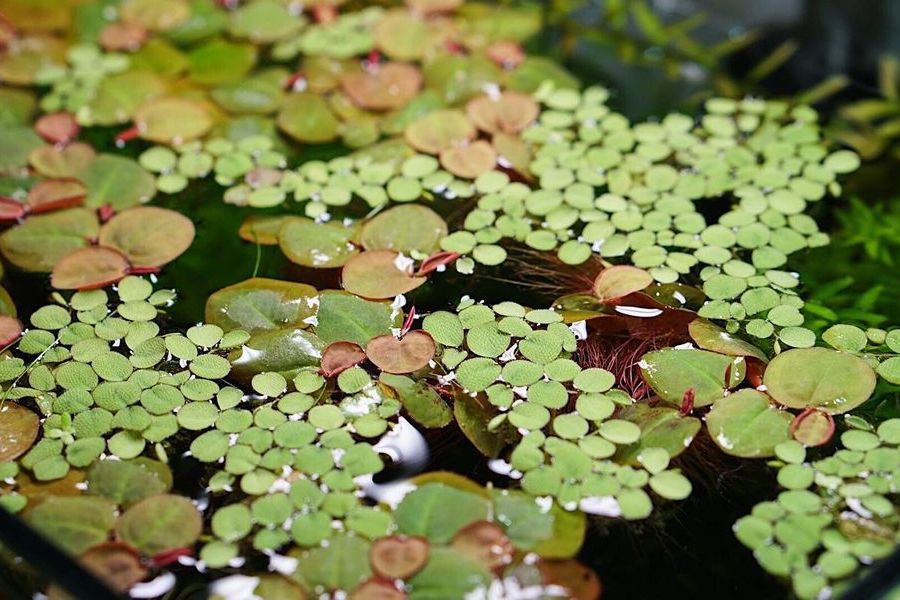
Resting spots near the surface. Bettas are labyrinth fish — they breathe atmospheric air at the surface as well as through their gills, and they naturally spend a lot of time in the top few inches of water. Broad-leaved plants like Anubias and Java Fern positioned near the surface, along with floating plants, give them something to rest on instead of hovering in open water constantly.
Bubble nests. In the wild, male bettas build bubble nests — clusters of saliva-coated bubbles at the surface — anchored to floating plants and leaf litter. You’ll sometimes see this same behavior in a home tank when floating plants are present, even without a female around. It’s a small but genuine sign the tank is giving the fish what it expects from its environment.
Water quality. Plants absorb ammonia and nitrate directly from the water as they grow, which means a well-planted tank generally holds better water quality between changes than a bare one carrying the same fish load.
Fin safety. This is where live plants have a real, practical edge over decor. Hard plastic plants often have stiff or slightly sharp edges that can tear a betta’s long, delicate fins over time — something that happens gradually enough that it’s easy to miss until the damage is done. Live plants (or soft silk alternatives, if live isn’t an option) don’t carry that risk.
What If Live Plants Aren’t an Option?
If keeping live plants genuinely isn’t workable for your setup, soft silk plants are the right substitute — they provide the same cover and resting spots without the fin-safety risk that hard plastic decor carries. But live plants aren’t actually more work than people assume: the plants most commonly recommended for a betta tank — Java Fern, Anubias, and floaters like guppy grass — need no CO2, no special lighting, and minimal fertilizing. They’re genuinely close to zero extra effort once established.
Getting Started
If you’re setting up a betta tank from scratch, our 5-gallon and 20-gallon betta tank setup guides walk through a complete build at each size, and the best low-tech plants for a betta tank covers the full plant list if you already have a tank running and just want to add greenery to it.
A betta will survive in a bare tank. It won’t be the same fish in one that’s actually planted for it.