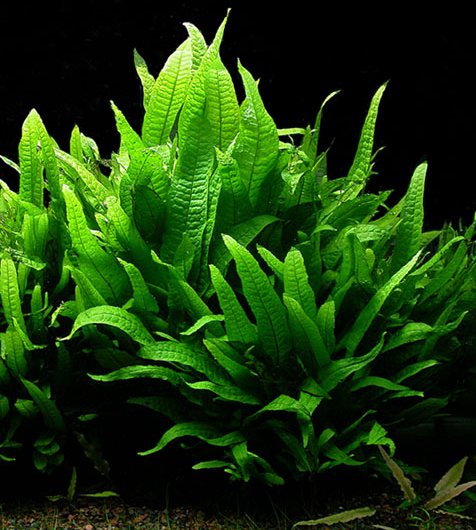
Leptochilus pteropus (sold universally as Java Fern, synonym Microsorum pteropus) is native to Malaysia, Thailand, northeastern India, and southern China, where it grows attached to rocks and roots along riparian margins — partially submerged, partially out of water. It’s a fern, not a flowering plant, which gives it a completely different growth structure and care logic than most aquarium plants.
In terms of importance to the hobby, Java Fern is probably second only to Java Moss. You’ll find it in community tanks, betta tanks, shrimp tanks, and high-tech scapes alike — it works in literally every setup.
Native Range and Natural Habitat
Java Fern grows wild along slow-moving rivers and streams across Southeast Asia — Malaysia, Thailand, Vietnam, northeastern India, and parts of southern China. In the wild it lives in the splash zone: rhizomes gripping rocks and driftwood right at the waterline, leaves reaching both above and below the surface depending on the season’s water level. That amphibious background is exactly why it tolerates being fully submerged in an aquarium indefinitely without ever needing to breach the surface.
Anatomy: Rhizome, Roots, and Leaves
Three parts make up the plant, and understanding what each one does explains almost every care rule below:
- The rhizome is the thick, dark green horizontal stem that everything else grows from. It absorbs the bulk of the plant’s nutrition directly from the water column.
- The roots are thin, dark, wiry threads whose job is anchoring the plant to hardscape — not feeding it. This is the opposite of most aquarium plants and the reason Java Fern never goes in substrate.
- The leaves are leathery and dark green, reaching 8–13 inches on a mature specimen. They’re also the reproductive structure — new plantlets form directly on the leaf surface (more on that below).
Varieties
The classic Java Fern has lance-shaped leaves 10–25 cm long. Several cultivars are available with different textures, all sharing identical care requirements:
- Narrow Leaf: finer, more elegant silhouette
- Windelov: trident-shaped, lacy leaf tips
- Needle Leaf: extremely fine, grass-like leaves
- Trident: feathery, needle-like fronds that sway noticeably in flow
- Philippine: broad leaves with a distinctive hammered texture; less common in the trade
Planting: The One Rule
Java Fern grows from a rhizome, and the rhizome must never be buried. Plant it in gravel or substrate and it will rot within weeks — this is the single most common mistake new keepers make, and nearly every other care issue traces back to it.
The correct method: hold the rhizome against a piece of driftwood or rock and tie it in place with thin cotton thread or fishing line, loose enough to hold contact without cutting in. Alternatively, dab a small amount of aquarium-safe cyanoacrylate gel on the rhizome, press it to the hardscape, and hold for 30–60 seconds. Cotton thread rots away harmlessly in four to six weeks; by then the roots have gripped the surface on their own. Within three to four weeks you’ll see fine new roots spreading across the hardscape.
If a rhizome does end up buried, dig it up immediately, trim away any soft or discolored tissue, and reattach it above the substrate — caught early, the plant recovers completely.
Light and Placement
Java Fern is a true low-light plant, and that’s not just tolerance — it’s a preference. Under strong light, leaves develop brown spots and patches, which is nutrient deficiency accelerated by high light demand rather than literal light burn. Under low to medium light it grows slowly but cleanly. See choosing a planted tank light if you’re shopping for a fixture — this is one of the few plants that genuinely does better under a dimmer setup. Placement-wise it works midground to background; a large, mature specimen also makes a good standalone focal point tied to a central piece of driftwood.
Water Parameters
Java Fern is forgiving on chemistry, which is a big part of why it’s so beginner-friendly:
- Temperature: 70–78°F is ideal; it tolerates a wider range (roughly 60–83°F) without real damage, though growth slows at the extremes.
- pH: 6.0–7.5 covers nearly every home aquarium. It’s not fussy about hardness either, tolerating soft to moderately hard water.
- Water changes: a standard 20–25% weekly change is plenty. Java Fern doesn’t demand pristine water, but it does poorly in tanks that go long stretches without any maintenance at all, since nutrient swings and film-forming bacteria are the main triggers for melt (see below).
Feeding
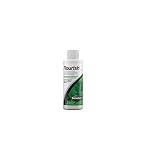
Since the roots don’t feed the plant, the water column is its only nutrition source. Seachem Flourish dosed weekly is essentially the entire fertilizer program, and it makes a visible difference — well-fed Java Fern produces large, dark, glossy leaves, while an unfertilized plant in a low-bioload tank slowly produces smaller, paler growth over months. Root tabs do nothing for this plant since it has no substrate contact; skip them here and save them for rooted species. (More on the general logic in root tabs vs. liquid fertilizer.)
Growth and Maintenance
Java Fern is slow-growing, so maintenance is minimal. Every few months, snip off the largest, oldest leaves near the rhizome with a pair of curved scissors — this redirects energy into new growth rather than propping up leaves that are already declining. Don’t over-prune; removing one or two of the biggest leaves at a time is enough. As the rhizome widens over the years, it can be cut into sections with a clean blade and re-tied to new hardscape, effectively turning one plant into several.
Propagation
Java Fern propagates on its own in two ways. The most visible is adventitious plantlets: small ferns that form directly on the surface of older leaves, sometimes several to a leaf. Once a plantlet has 3–5 leaves and a small visible rhizome of its own, gently twist or snip it free and tie it to new hardscape — it’s already a fully independent plant. The rhizome also simply widens with age, producing more leaves and eventually splitting naturally or by hand as described above.
Common Problems: Java Fern Melt
“Melt” is the term for leaves turning translucent, mushy, or developing large black or brown patches before dissolving. It’s the one real ailment this plant gets, and it has a short list of causes:
- New tank transition stress. A small amount of melt in the first two weeks after planting is normal and not a sign of failure — the plant is shedding growth that developed in different conditions. Leave it alone; new growth will be adapted to your tank.
- Cyanobacteria (blue-green algae). A slimy film forming over the rhizome and leaves is a bacterial bloom, not true algae, and it’s driven by poor nutrient balance. Peel the film off by hand, change 25–50% of the water, and get a fertilizing routine going.
- Excess light. Counterintuitively, too much light — not too little — causes the worst melt in this species. If leaves are going translucent under a bright fixture, prune the damaged leaves, dial the light back, and consider a few days of complete darkness (lights off, filter running) to let it recover.
- Poor overall nutrition. Consistent under-fertilizing over months shows up as gradual yellowing and weak new leaves rather than sudden melt — the fix is simply starting a regular dosing routine.
Melt can look alarming, but it’s rarely fatal. Trim the affected leaves and address the underlying cause, and the rhizome will push out new growth within a few weeks. For a step-by-step walkthrough of diagnosing exactly which cause you’re looking at, see why is my Java Fern melting?
Pests
Java Fern doesn’t attract insect pests, and its tough, leathery leaves mean most fish leave it alone entirely — it’s genuinely rare to see fin or mouth damage on it. The one pest issue worth watching for is hitchhiker snails, which love clinging to the leaves of store-bought specimens. A quick rinse and visual check before adding a new plant catches most of them; if snails still show up, a single assassin snail will clean up small pest snails without bothering the fern itself.