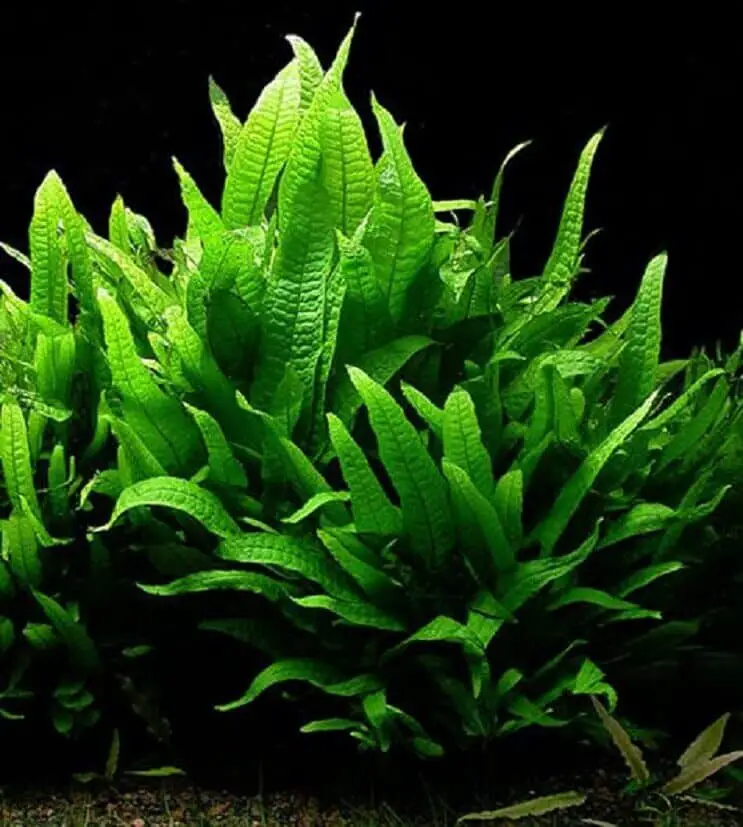
If you’ve searched this, you’re probably looking at a Java Fern leaf that’s gone translucent, mushy, or developed spreading black or brown patches, and you want to know whether it’s normal or a sign something’s wrong. The good news: melt has a short, specific list of causes, and figuring out which one you’re dealing with is usually straightforward.
This is a deeper, dedicated walkthrough of the melt section in our full Java Fern care guide — start there for general care if you haven’t already.
First: Check the Rhizome
Before diagnosing the cause, check the one thing that actually matters for the plant’s survival: the rhizome (the thick horizontal stem the leaves grow from). If it’s still firm and green or tan, the plant is fine regardless of how much leaf damage you’re seeing — new leaves will grow back. Only genuine concern is a rhizome that’s turned soft, dark, and mushy itself, which is a different, more serious problem (usually from being buried in substrate) covered in the main guide.
Cause 1: New Tank Transition Stress
What it looks like: Melt appearing within the first one to two weeks after planting, usually starting with the oldest or most damaged-looking leaves first.
Why it happens: Most Java Fern sold in stores is grown emersed (above water) at the nursery. Those emersed-form leaves often can’t survive being fully submerged, and they melt away as the plant transitions to submerged growth.
What to do: Nothing, other than trim the affected leaves once they’re clearly beyond recovery. New leaves that grow in afterward will be adapted to full submersion and won’t repeat the problem.
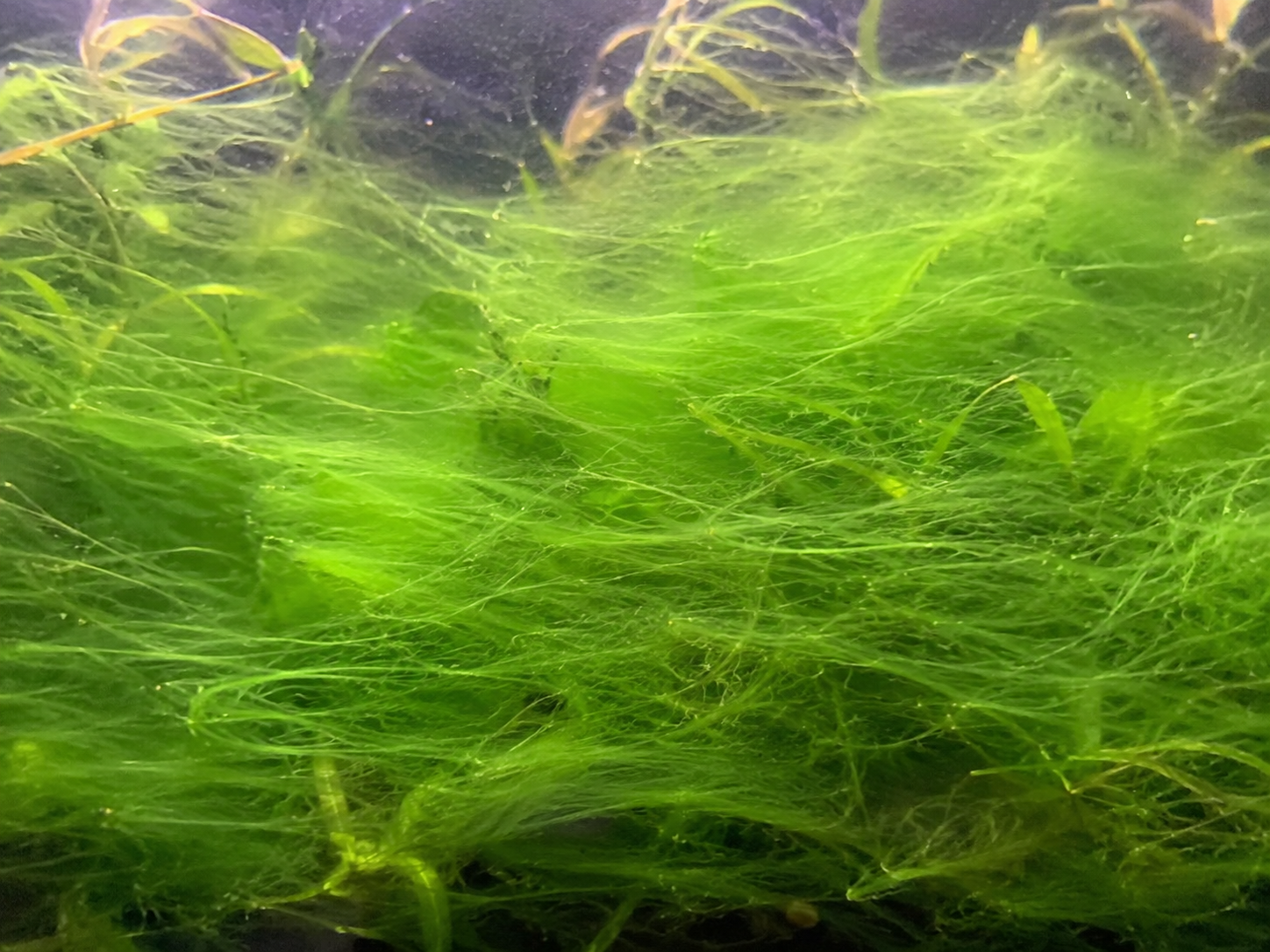
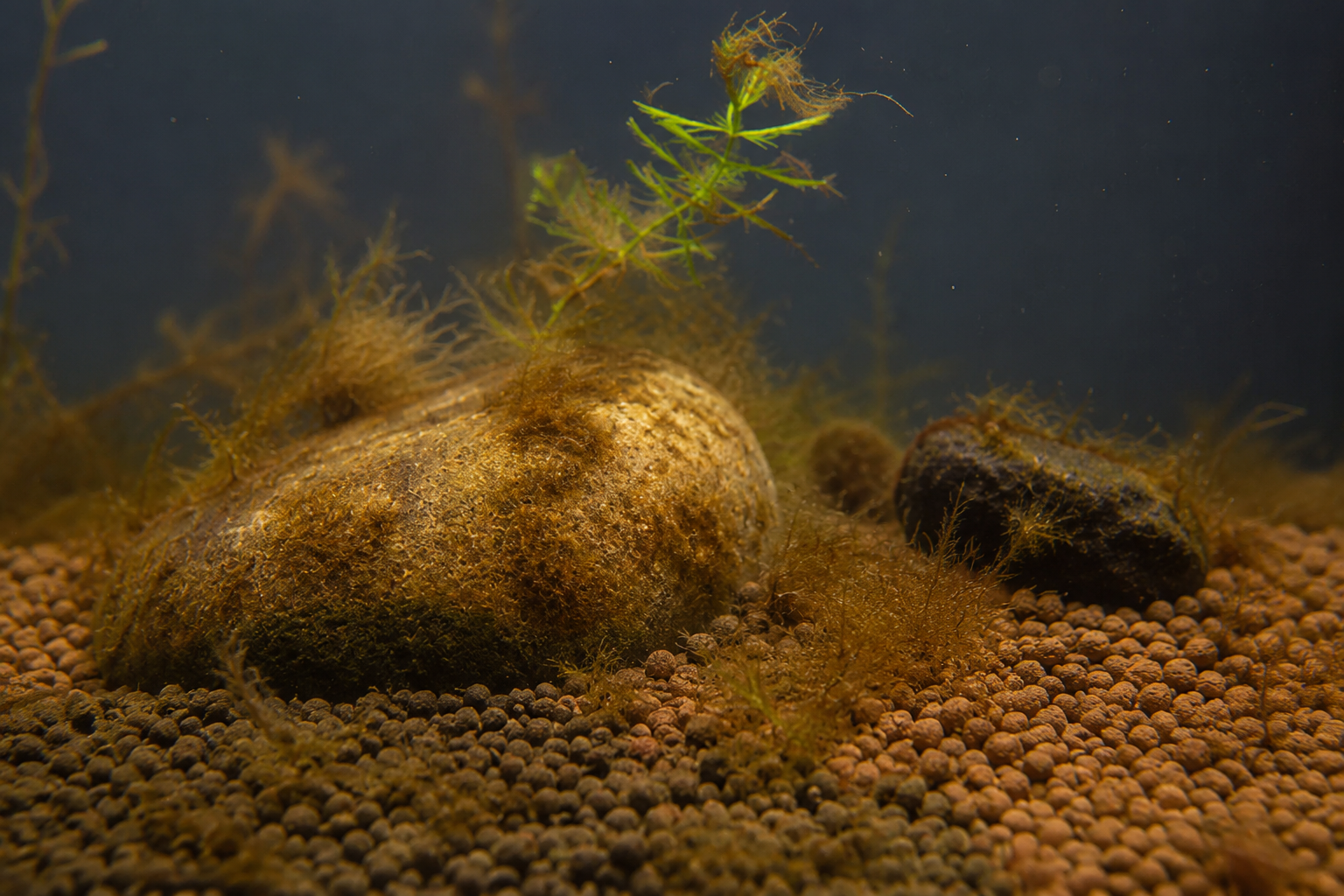
Cause 2: Cyanobacteria (Blue-Green Algae)
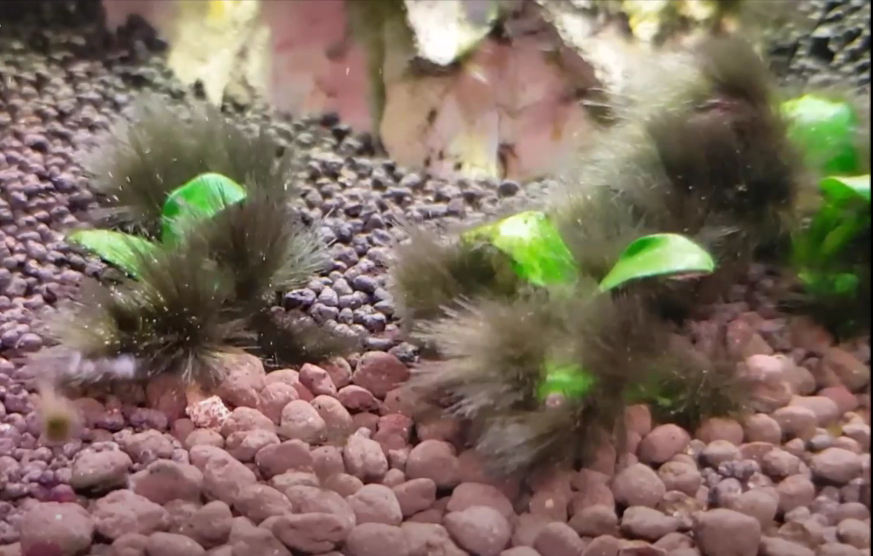
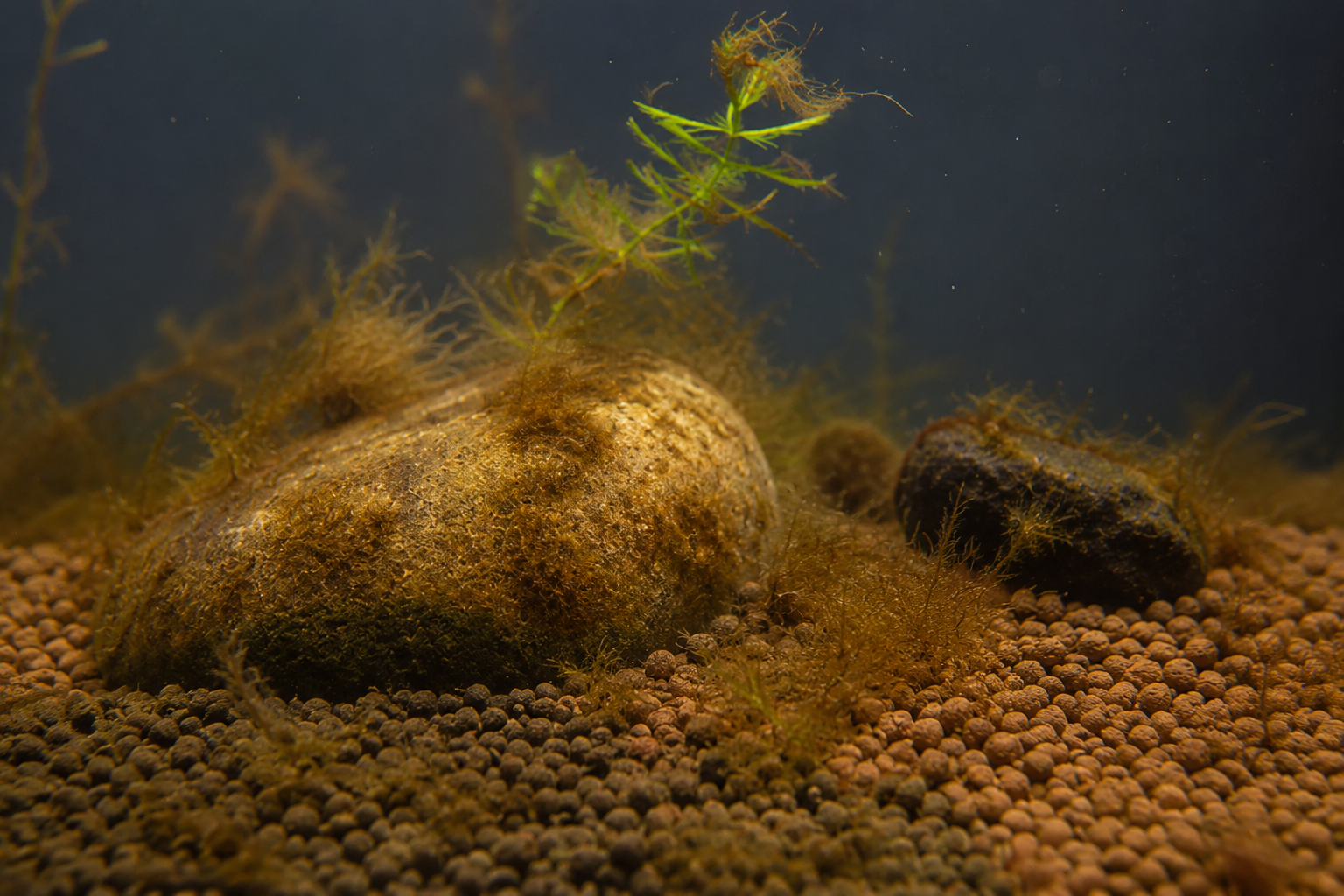
What it looks like: A slimy, filmy coating over the rhizome and leaves, often with a blue-green or dark tint, usually accompanied by an unpleasant smell.
Why it happens: This is a bacterial bloom, not true algae, and it’s driven by poor nutrient balance in the tank rather than anything about the plant itself.
What to do: Physically peel the film off by hand, change 25-50% of the tank’s water, and start or improve a regular fertilizing routine. This won’t resolve on its own without addressing the underlying nutrient issue.
Cause 3: Excess Light
What it looks like: Leaves going translucent or thin-looking, often starting from the tips or edges, in a tank with strong lighting.
Why it happens: Counterintuitively, too much light causes more melt in this species than too little — Java Fern is a genuine low-light plant, and intense light stresses it rather than helping it grow.
What to do: Reduce light intensity or duration. In more severe cases, trim the damaged leaves and give the plant several days of complete darkness (lights off, filter still running) to recover before resuming normal lighting.
Cause 4: Poor Nutrition
What it looks like: Gradual, slow yellowing and shrinking of new leaves over weeks or months, rather than sudden melt — this one is a slower decline than the other three causes.
Why it happens: Java Fern feeds entirely through the water column since its roots only anchor it, not feed it. In a low-bioload or infrequently fertilized tank, it simply runs short on nutrients over time.
What to do: Start a weekly liquid fertilizing routine — see our Java Fern guide for specifics. Improvement takes a few weeks to become visible since it’s a slow-developing problem.
Quick Diagnosis Checklist
- Happened right after planting, rhizome is fine? → Transition stress. Wait it out.
- Slimy film, bad smell? → Cyanobacteria. Clean and fertilize.
- Strong light, translucent leaves? → Too much light. Dial it back.
- Slow yellowing over weeks, no film or smell? → Nutrient deficiency. Start fertilizing.
When to Actually Worry
Melt itself is rarely fatal to a healthy rhizome. The one genuine red flag is a rhizome that’s gone soft or mushy rather than just leaves being affected — that indicates rot, usually from being buried in substrate, and it needs the rhizome dug up, trimmed of affected tissue, and reattached above the substrate to recover.
For everything else — trim what’s clearly not coming back, address whichever cause matches what you’re seeing, and give it a few weeks. Java Fern is one of the most forgiving plants in the hobby once the underlying cause is handled.