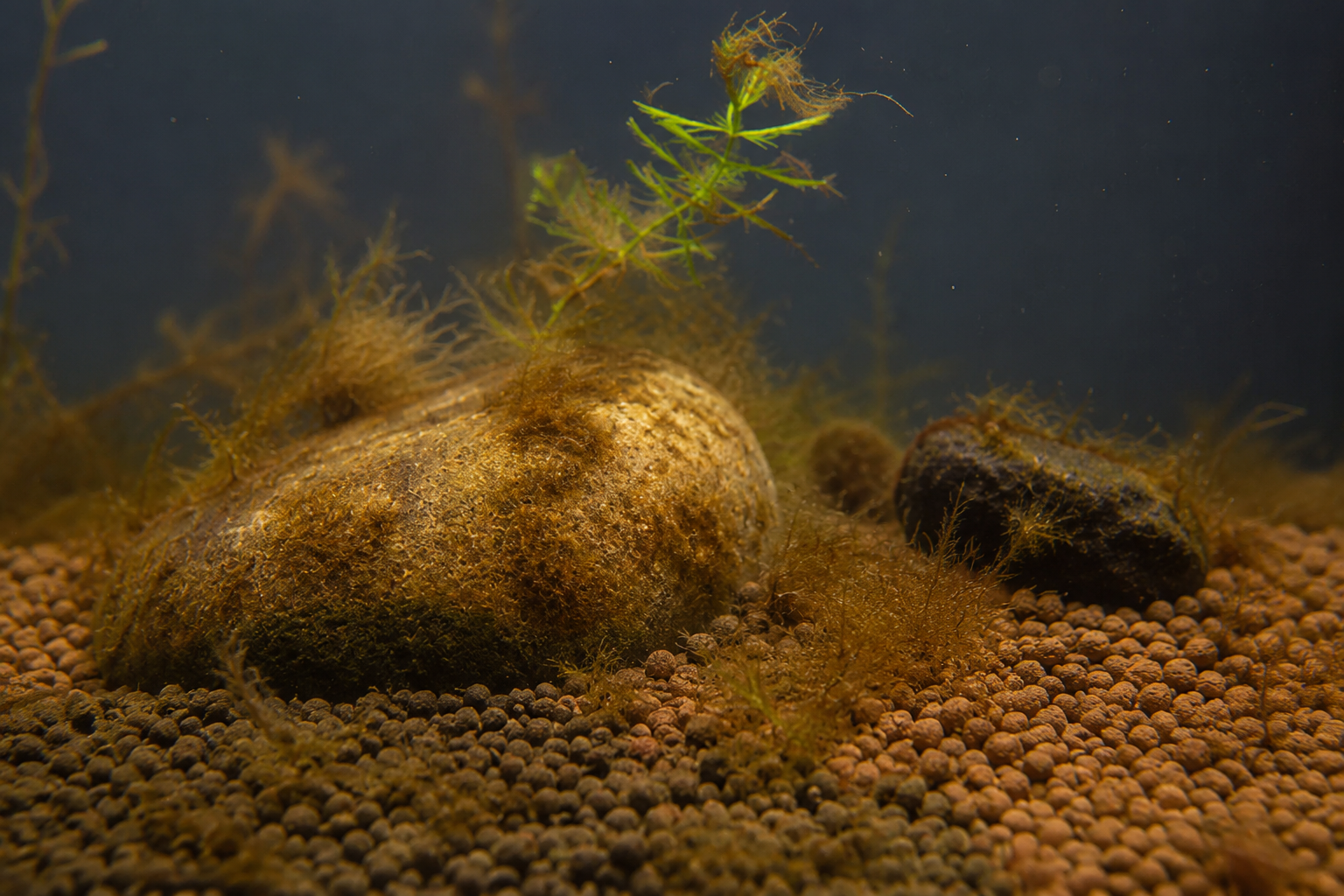
“Brown” covers a lot of ground, and the fix depends entirely on which kind of brown you’re actually looking at. This is a narrower, symptom-specific companion to our broader why is my aquarium plant dying guide — start there if brown is just one of several things going on. If browning is the main symptom, here’s how to tell the causes apart.
First: Is It On the Leaf, or Part of the Leaf?
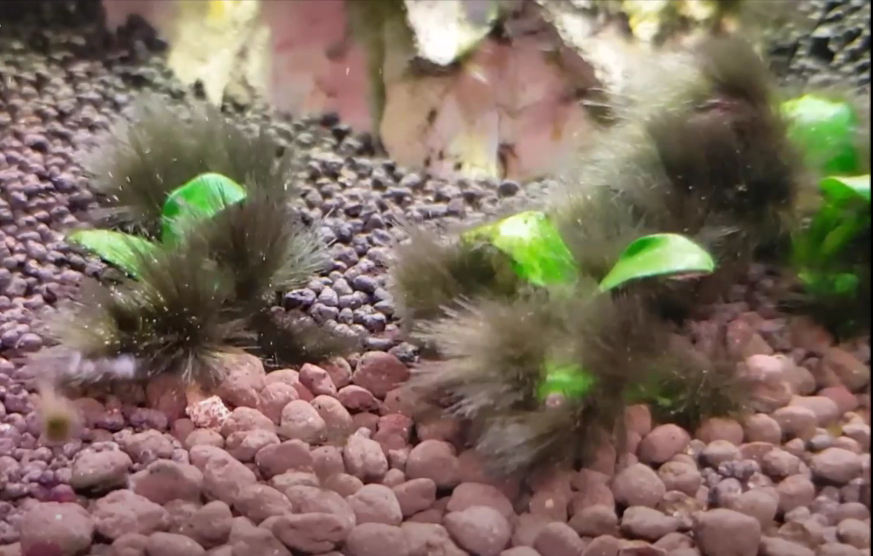
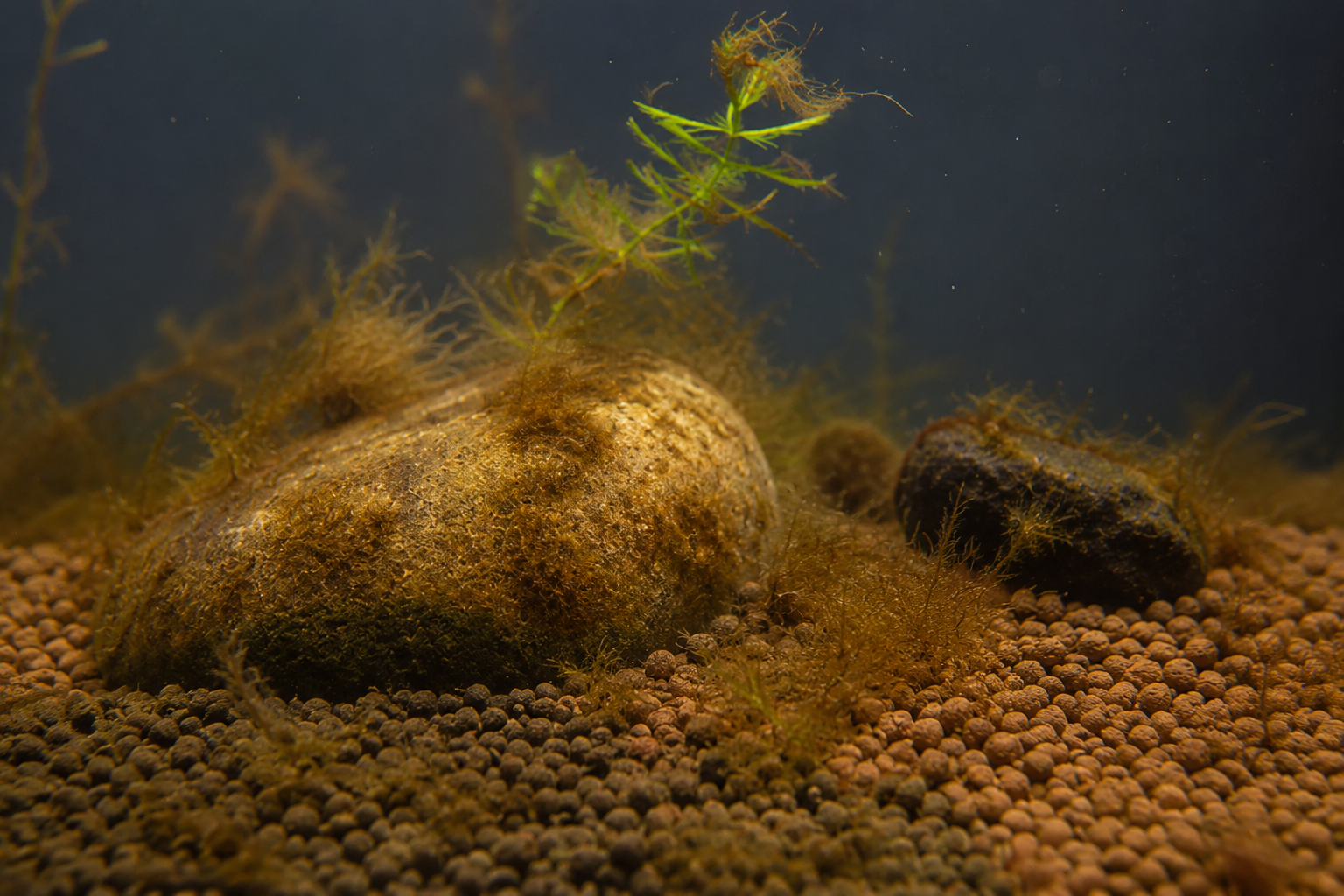
This is the single most useful diagnostic question. Run a finger or soft brush across an affected leaf. If a dusty brown coating wipes away, you’re looking at something growing on the leaf surface — almost always brown algae. If the brown color doesn’t wipe off because it’s the leaf tissue itself that’s discolored, the cause is inside the plant, not sitting on top of it.
Cause 1: Brown Algae (Diatoms)
What it looks like: A dusty, brownish film coating leaves, glass, and hardscape, especially common in tanks under a few months old.
Why it happens: Diatoms are an early-tank algae that thrives on silicates and the general nutrient instability of a new setup. It’s covered in full in our brown algae guide, but the short version: it’s harmless and self-limiting.
What to do: Wipe it off leaves and glass as needed; it typically fades on its own within a few weeks to a couple of months as the tank matures. No treatment is usually necessary.
Cause 2: Normal Old-Leaf Turnover
What it looks like: Only the oldest leaves on a plant browning and dying, while new growth looks healthy and green.
Why it happens: This is just how plants age — a leaf has a lifespan, and browning-then-dropping is a normal part of it, not necessarily a sign of a health problem.
What to do: Trim off the affected leaves at the base. If new growth continues to look healthy, there’s nothing else to address.
Cause 3: Nutrient Deficiency (Brown Spotting)
What it looks like: Small brown or necrotic spots, or pinhole-like damage, scattered across otherwise green leaves — distinct from the general pale yellowing that a nitrogen deficiency causes.
Why it happens: This pattern is characteristic of a potassium deficiency specifically, though other micronutrient shortfalls can produce similar spotting.
What to do: Start or increase a balanced liquid fertilizing routine — see root tabs vs. liquid fertilizer for which your plants actually need. Improvement takes a few weeks since new growth needs time to come in properly fed.
Cause 4: Light Burn
What it looks like: Brown, scorched-looking patches concentrated on the leaves closest to the light source, especially on plants positioned right under a strong fixture.
Why it happens: Exactly what it sounds like — light intensity that’s more than the plant can handle at that distance, essentially sunburn.
What to do: Move the plant lower in the tank, further from the light, or reduce overall intensity. See choosing a planted tank light if you’re not sure whether your fixture is simply too strong for what you’re growing.
Cause 5: Physical Damage
What it looks like: Isolated brown scarring or dead patches with an irregular shape, often on just one or two leaves rather than spread evenly across the plant.
Why it happens: Handling during maintenance, fish or snails grazing, or being bumped by a net or equipment all leave physical damage that browns and dies rather than healing like fresh tissue.
What to do: Trim the damaged leaf if it’s significantly affected; new growth is unaffected and there’s nothing systemic to fix.
Quick Diagnosis
- Wipes off? → Brown algae. Wipe and wait it out.
- Only the oldest leaves? → Normal turnover. Trim and move on.
- Small spots or pinholes on otherwise green leaves? → Nutrient deficiency. Start fertilizing.
- Scorched patches near the light? → Light burn. Move it back or dial down intensity.
- One or two isolated damaged spots? → Physical damage. Trim and ignore.
Brown is rarely a single diagnosis, which is exactly why it’s worth slowing down and checking texture and pattern before assuming the worst — most of what shows up brown in a planted tank is either cosmetic, normal aging, or a quick fertilizing fix rather than a plant in real trouble.