Why Is My Aquarium Plant Dying? A Troubleshooting Guide
Every planted tank keeper has had this moment: you check the tank and a plant that looked fine yesterday now has a yellow leaf, a mushy stem, or a hole where a leaf used to be. Before you panic, it helps to know that a lot of what looks like “dying” is actually completely normal. This guide walks through how to tell the difference, and what — if anything — to do about it.
First: Is This Just Transition Melt?
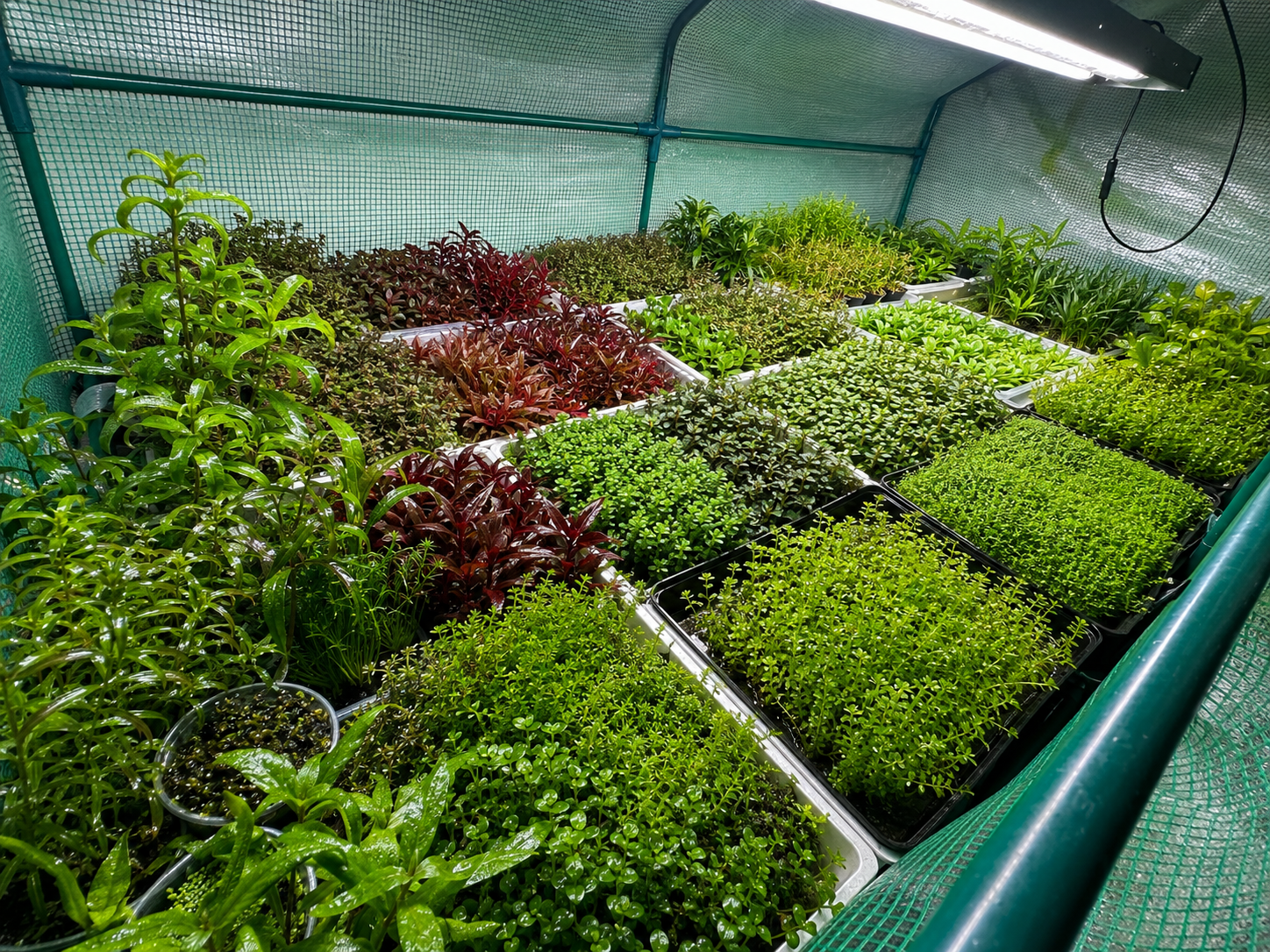
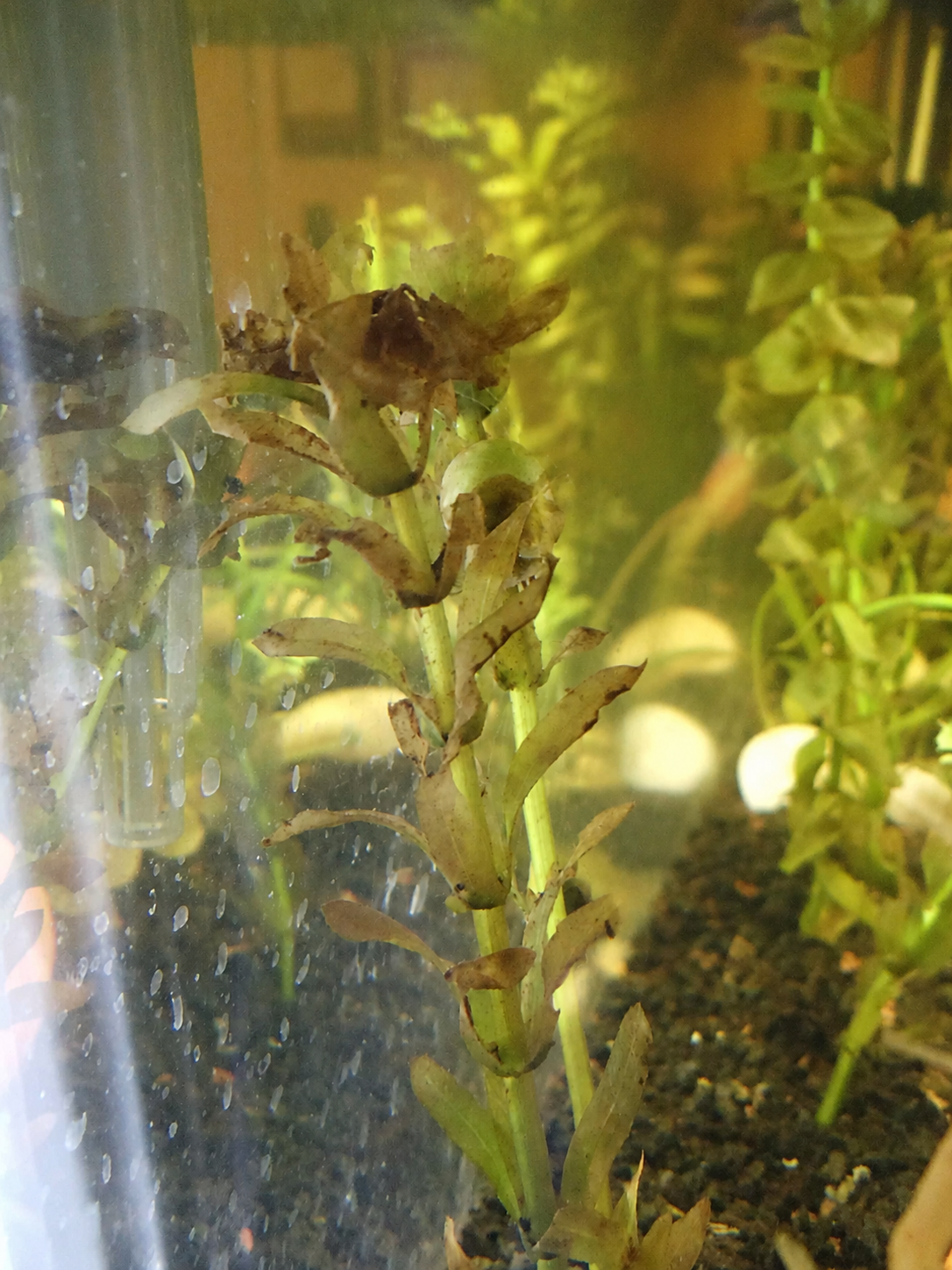
New plants shed their old growth. That’s not a euphemism, it’s just biology. Most aquarium plants sold today are grown emersed — above water, in open air — because it produces tougher, healthier stock. Once you submerge that plant, the old emersed leaves are the wrong shape and texture for underwater life, and the plant drops them while it grows new submersed leaves in their place.
Expect this to look like:
- Lower or older leaves yellowing and dropping first, newer growth staying green
- It happening in the first 1-3 weeks after planting, then stopping
- New, different-looking leaves emerging from the crown or stem tips at the same time
→ For the full explanation of why this happens and how to manage it, see our emersed-grown plants guide.
Cryptocoryne owners, take note: crypts are famous for “crypt melt” — a sudden, near-total collapse of all their leaves within days of being moved to a new tank, even one they’ve lived in for months if water parameters shift. It looks catastrophic and it usually isn’t. As long as the rhizome and roots stay firm, crypts almost always regrow from the base within a few weeks. See our Cryptocoryne care guide for what normal recovery looks like.
Second: Is It Actually in Decline?
If the melting doesn’t stop after three or four weeks, or new growth never appears, something else is going on. Here’s how to narrow it down.
Yellowing that doesn’t stop
Persistent yellowing — especially in new leaves, or in a pattern that spreads rather than settling down — usually points to a nutrient deficiency, not transition stress. Aquarium water alone often can’t supply enough iron, potassium, or micronutrients for fast-growing stems. A liquid fertilizer dosed weekly, plus root tabs for anything rooted in substrate, closes that gap for most tanks.
Black, mushy tissue at the base
This is different from yellowing — it’s rot, and it’s a texture problem, not a color problem. If you press a leaf or rhizome and it feels soft and slimy rather than firm, that tissue is dead and won’t recover. The most common cause by far is planting the rhizome of a plant like Anubias directly into the substrate. Anubias and similar rhizome plants breathe through the rhizome itself; buried, it suffocates and rots. The fix is mechanical, not chemical: trim the mushy section back to firm tissue and re-attach the rhizome to hardscape, sitting on top of the substrate, not in it. See our Anubias care guide for planting technique.
Melting in demanding plants under low light or no CO2
Some plants simply aren’t built for a low-tech setup, and no amount of patience fixes that. Carpeting plants like HC Cuba are the textbook example — they need strong light and injected CO2 to hold their tiny leaf structure, and without it they’ll melt indefinitely rather than just adjusting. See our HC Mini care guide for what that plant actually demands. If you’re seeing ongoing melt in a demanding species, the honest fix is usually to upgrade the setup or swap to an easier plant — not to keep dosing fertilizer at it.
Pale, washed-out, or faded color
If leaves aren’t yellowing or rotting but just look duller or paler than they should, that’s often a light issue rather than a health crisis — some species need stronger or more specific light spectrum to hold their color. Our guide to red plant color covers this in more depth if color, not survival, is the actual concern.
When it’s not the plant at all
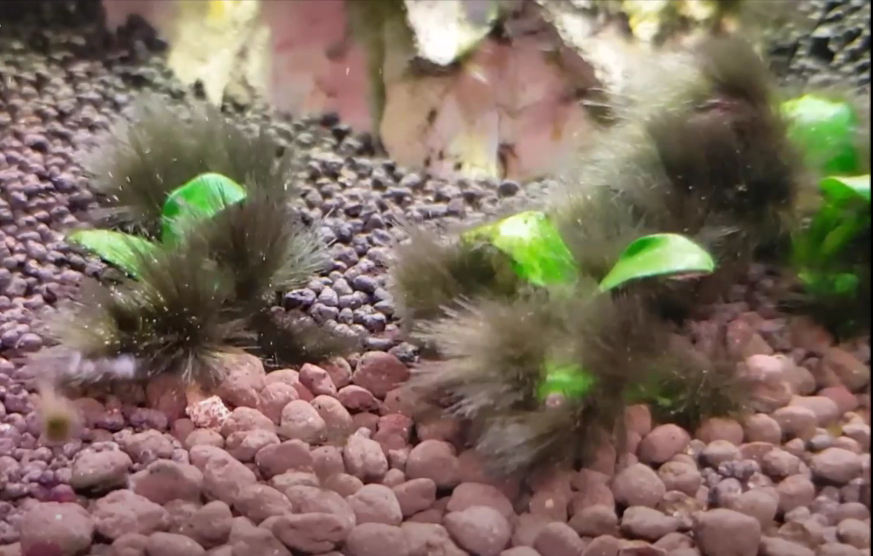
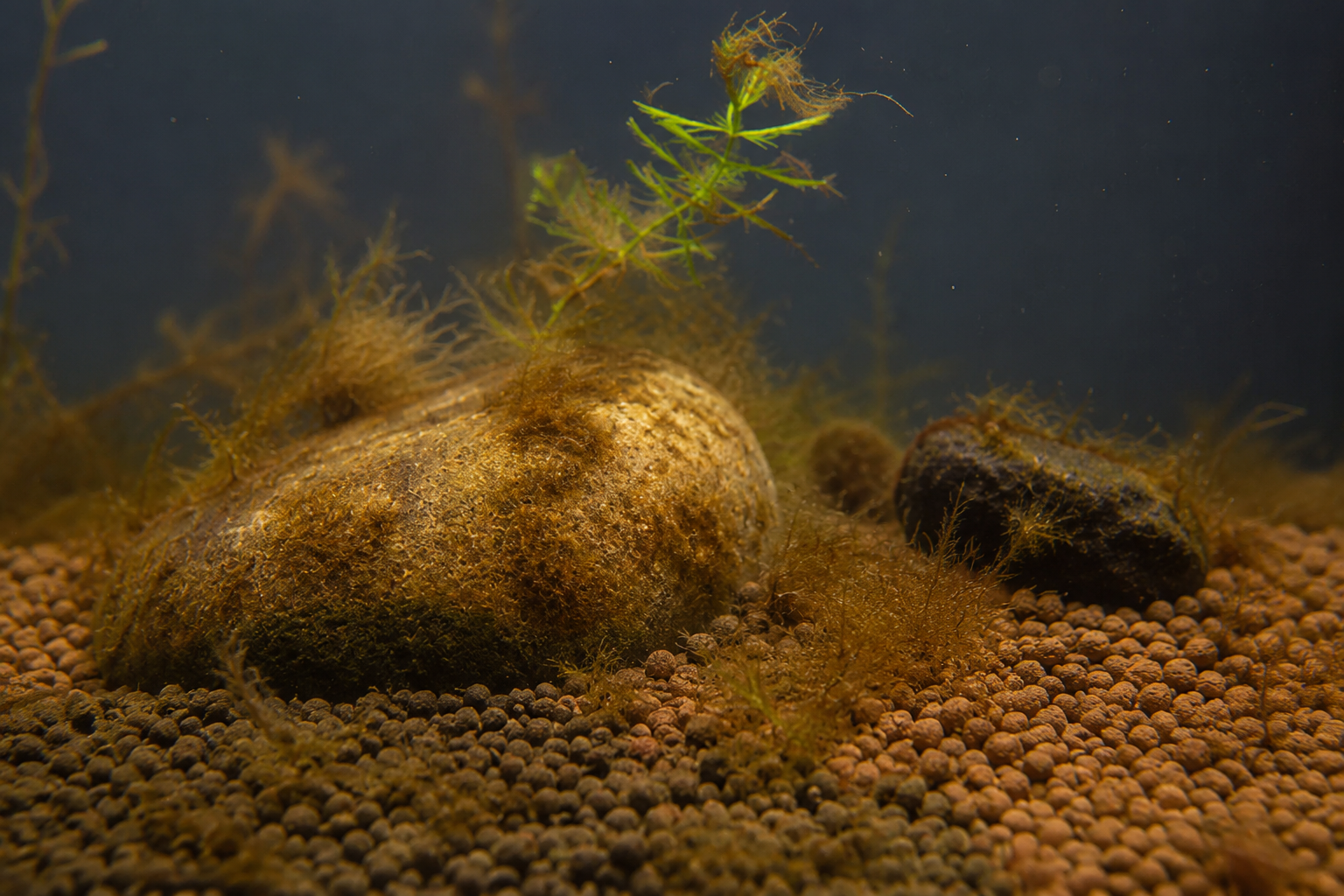
Occasionally what looks like a dying plant is actually algae growing on a perfectly healthy leaf — a dusting of green spot or green dust algae can make leaves look diseased when the plant underneath is fine. If you’re seeing a filmy or spotty coating rather than true leaf damage, check our guide on beating algae naturally before assuming the plant itself is failing.
The Decision Framework
Wait it out if:
- The plant is new (under 3 weeks in the tank)
- Only older/lower leaves are affected
- New growth is already appearing
- The rhizome, crown, or stem tips are firm and green
Act now if:
- Melting continues past week three with no new growth
- Tissue is soft, slimy, or black rather than just discolored
- The plant is a known high-light/CO2 species in a low-tech tank
- Yellowing is spreading rather than stabilizing
Most of the time, the right move is to do less, not more — resist the urge to fertilize, trim, or replant a plant that’s simply mid-transition. Save the intervention for the cases above where waiting genuinely won’t fix it.