
If duckweed showed up in your tank uninvited, you’re not alone — it’s one of the most common accidental arrivals in the hobby, and one of the fastest-spreading. Unlike most of what’s covered in our algae identification series, duckweed isn’t algae at all — it’s a genuine flowering plant, just one that most people encounter as an unwanted hitchhiker rather than something they chose to grow. (If you’re looking to grow a larger, more manageable floating plant on purpose, see Giant Duckweed instead — this guide is specifically about clearing out unwanted common duckweed.)
How It Got There
Nearly every duckweed outbreak traces back to the same source: it hitchhiked in on a new plant, on decor, or in water transferred from another tank or a pond. The fronds are tiny — a couple of millimeters — and a single one clinging to a plant’s leaves is easy to miss entirely. Once in your tank, it reproduces exponentially in the right conditions, and a barely-noticeable handful can cover the surface within a few weeks.
Why It’s Hard to Clear Out in One Pass
The core problem is fragment size. Any piece left behind — even one too small to easily spot — regrows into a new colony. This is why a single netting session rarely finishes the job; it takes repeated passes over several weeks to actually exhaust the population.
Manual Removal That Actually Works
Daily netting. A fine-mesh net skimmed across the surface catches the bulk of it. Do this consistently rather than waiting until it’s built back up.
The paper towel trick. For the fine fragments a net misses, lay a paper towel flat on the water surface for a few seconds — duckweed sticks to the wet paper — then lift it off. This catches the pieces that make netting alone feel like it’s not working.
Reduce what spreads it around. Strong surface agitation from a filter outlet or powerhead pushes duckweed into corners and crevices where it’s harder to reach. Where possible, aim flow to keep it concentrated in one accessible area rather than distributed across the whole surface.
Does Anything Eat It?
Some fish and livestock will pick at duckweed, but nothing reliably controls a real outbreak through grazing alone — treat any fish interest as a minor bonus, not a removal strategy. Competing it out with a larger floating plant you actually want (like Amazon Frogbit or Water Lettuce) can help by shading it out over time, but manual removal is still doing most of the real work.
Preventing It From Coming Back
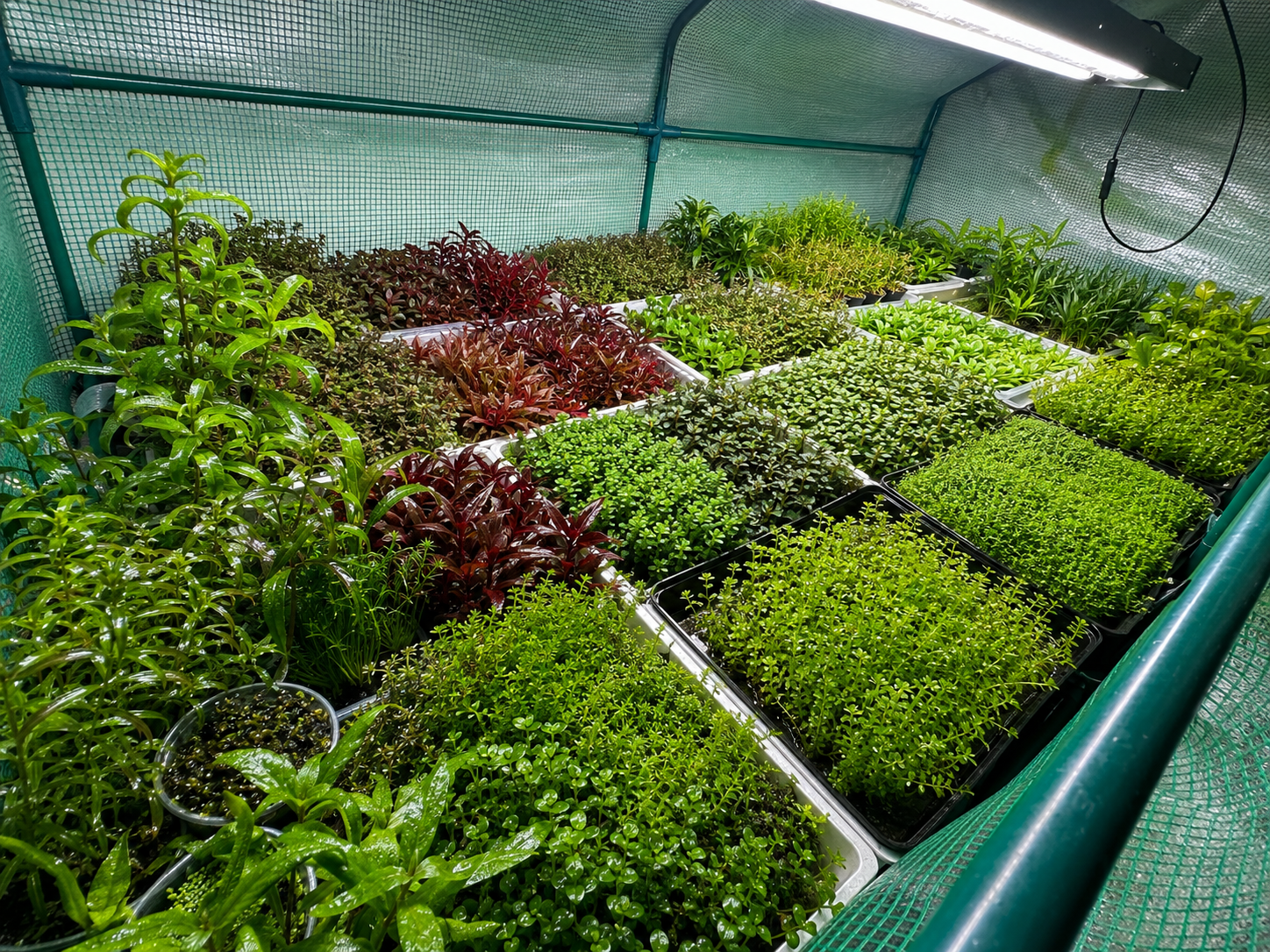
This is the part that actually matters long-term: duckweed gets into a tank on something else, so preventing re-introduction is more effective than any removal technique. Rinse and visually inspect any new plant before it goes in your tank — the same practice that guards against hitchhiker snails works here too. If you’re buying from a seller whose plants are grown emersed rather than submerged, that’s also a meaningfully lower-risk source, since floating pests like duckweed can’t establish on a plant that’s never touched aquarium water. See where to buy live aquarium plants online for more on what to look for.
Realistic Timeline
Expect a genuine outbreak to take two to four weeks of consistent netting and paper-towel passes to fully clear, not a single cleanout. Each pass removes visible material, but fragments too small to see will keep regrowing for a couple of cycles before the population is actually exhausted. Stay consistent and it does end — this isn’t a permanent fixture unless new fragments keep arriving from somewhere.
If you’d rather work with duckweed than against it, it’s a genuinely effective nutrient exporter and surface cover — Giant Duckweed is the easier-to-manage version worth considering on purpose.