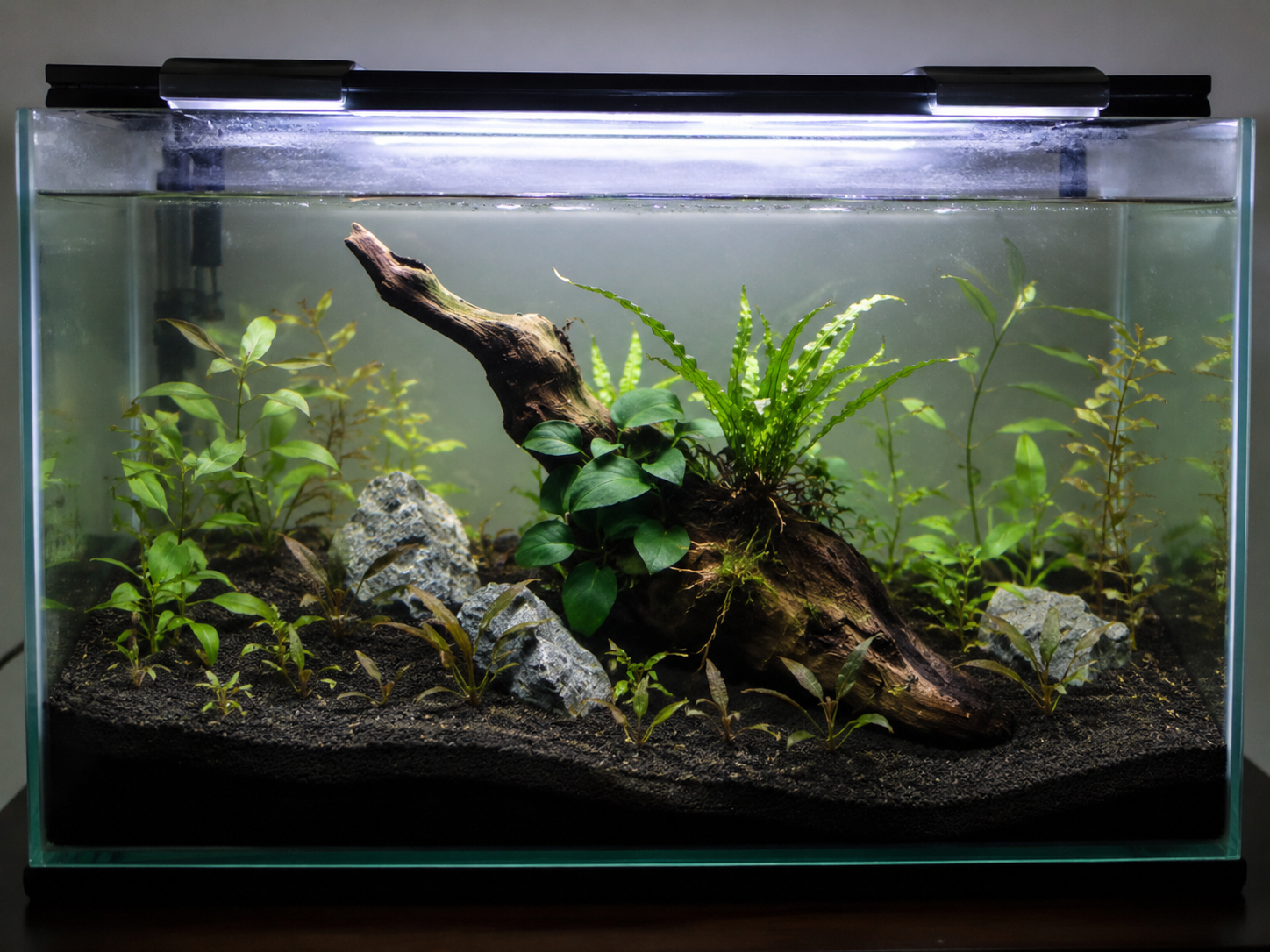
Algae isn’t a moral failing — it’s a symptom. In almost every case, it means there’s more light or more nutrients in the tank than your plants are actively using, and something is cashing in on the surplus. The fix isn’t a bottle of algaecide and a prayer. It’s giving your plants the edge back.
Why plants win
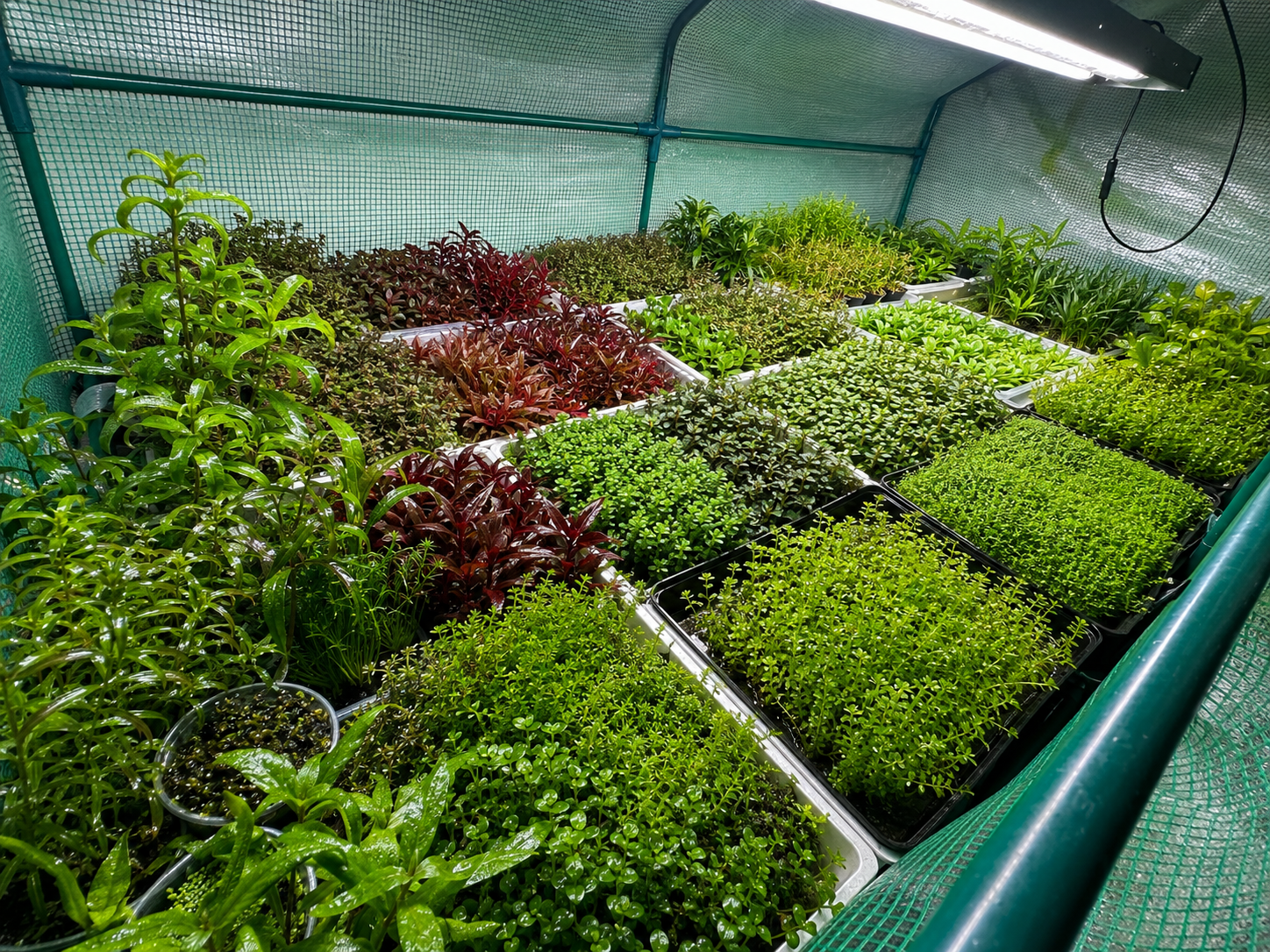
Algae and aquarium plants want exactly the same things: light and nutrients. Stock the tank with fast growers and keep conditions stable, and the plants out-compete algae for those same resources until the algae simply runs out of fuel.
- Floating plants are the MVPs here. Frogbit, Red Root Floater, and the rest of the floating lineup pull nitrates fast and shade the water column, cutting the light algae needs to grow.
- Stem plants grow quickly and can be trimmed and replanted constantly, keeping nutrient-hungry biomass high without needing to buy anything new.
The four levers
- Reduce light duration. Drop your photoperiod to 6–7 hours on a timer. Consistency matters more than intensity — algae responds to both excess duration and unpredictable schedules.
- Add fast growers. More actively-growing plant mass means less surplus nutrient sitting in the water for algae to use.
- Don’t overfeed. Uneaten fish food is a direct nutrient source for algae — feed only what’s eaten in two minutes.
- Water changes. A weekly 25–30% change resets accumulated nutrients while your plant mass catches up. (Once a tank is genuinely overplanted, you can lean on this less — see our piece on running a tank with almost no water changes.)
Give the tank a few weeks after adding plants and adjusting light. As the plants take over, algae fades on its own — no chemicals, no scrubbing arms race. A balanced, densely planted tank (the philosophy behind the Walstad Method) is a self-defending one.
What liquid carbon is actually for
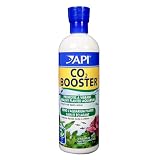
“Liquid CO2” products like API CO2 Booster and Seachem Excel get lumped in with fertilizers, but that’s not really what they’re doing. The active ingredient is glutaraldehyde, a disinfectant that’s directly toxic to algae cells on contact — it isn’t primarily a carbon supplement that helps your plants grow faster, even though some plants can use trace amounts of it that way. In practice, hobbyists use it as a targeted algaecide: turn the filter off, pipette or syringe it directly onto the algae, let it sit for several minutes to an hour, then turn the filter back on. This is the standard, well-documented spot-treatment for hair algae, staghorn algae, and black beard algae specifically — it’s not an effective treatment for green spot, green dust, green water, or diatoms, which respond better to the nutrient and light fixes covered in each of those guides.
A safety warning: it burns plants too, not just algae
Because glutaraldehyde is toxic to plant tissue as well as algae, some species are far more sensitive to it than others and can melt or bleach even at normal label doses:
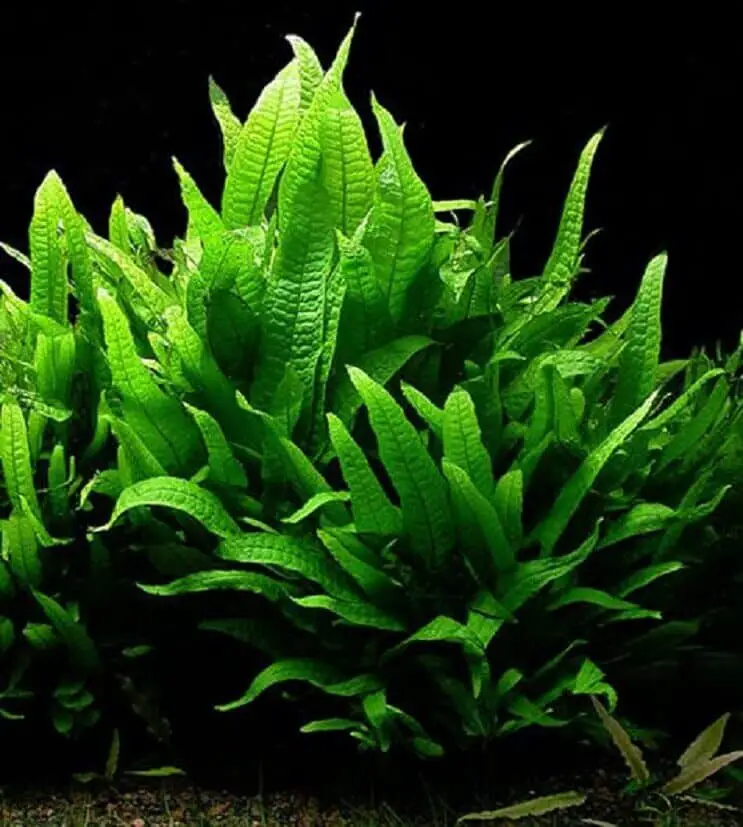
- Vallisneria is the single most commonly reported casualty — even light, indirect exposure can trigger a total melt. See our Vallisneria Americana care guide for more on this specific sensitivity.
- Anacharis / Egeria densa reacts almost as badly.
- Riccia fluitans and other liverworts have a very low tolerance and can melt at low concentrations.
- Fissidens and other fine mosses are frequently reported as sensitive, though tolerance varies by species.
- Cryptocoryne and Limnophila are more tolerant but can still react poorly to moderate-to-heavy dosing — see our Cryptocoryne and Limnophila Sessiliflora guides.
If any of these are in your tank, dose at half the label rate to start, spot-treat away from sensitive plants rather than dosing the whole tank, and watch closely for melting or holes in the first day after treatment.
Identify your algae first
The four levers above work on every type of algae, but each one also has its own specific trigger — and knowing which one you’re looking at saves weeks of guessing. Here’s the full rundown:
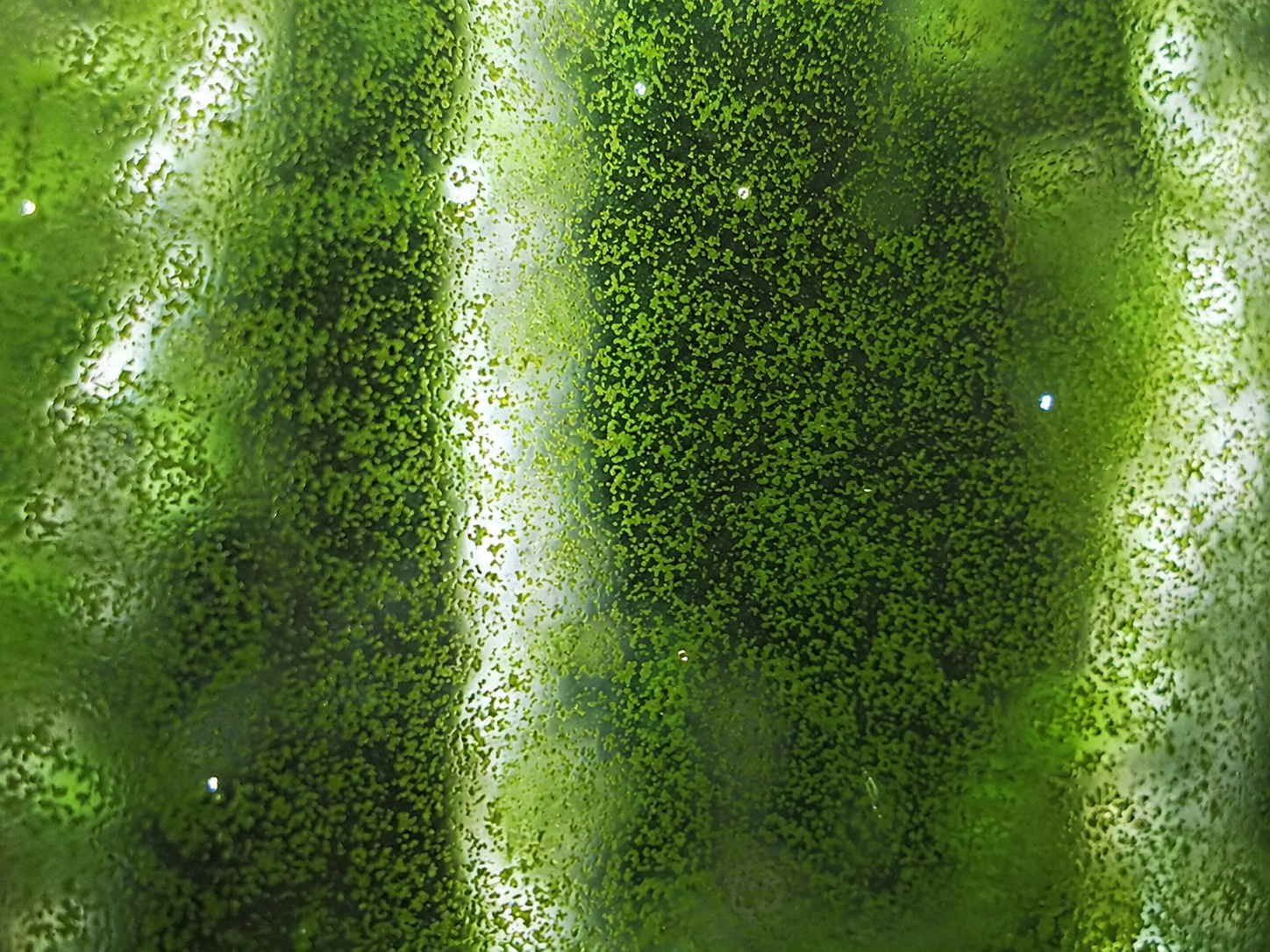
- Green Spot Algae — hard, round green dots stuck to glass, hardscape, and slow-growing leaves.
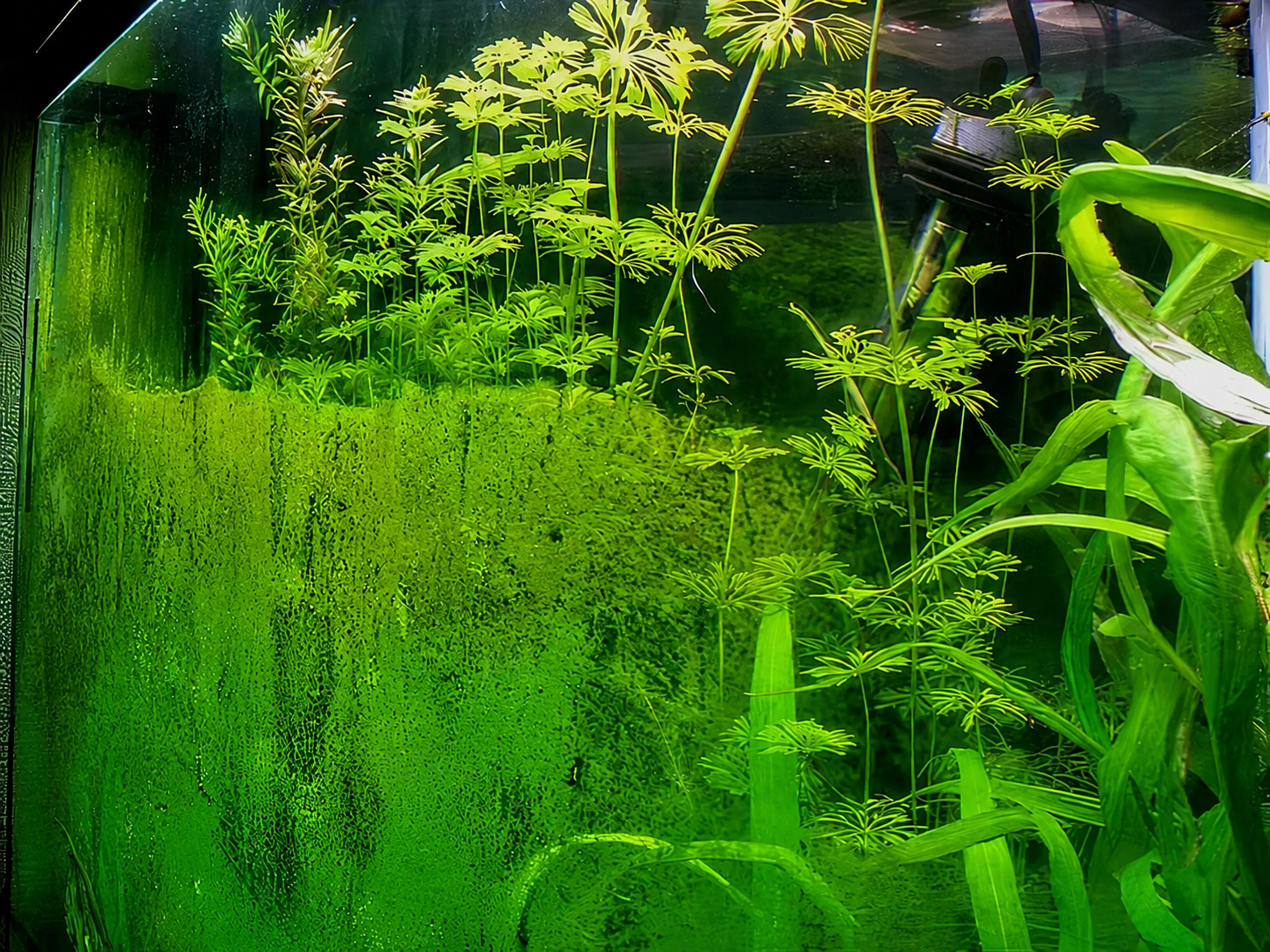
- Green Dust Algae — a fine green haze on the glass that wipes off easily and clouds the water when disturbed.
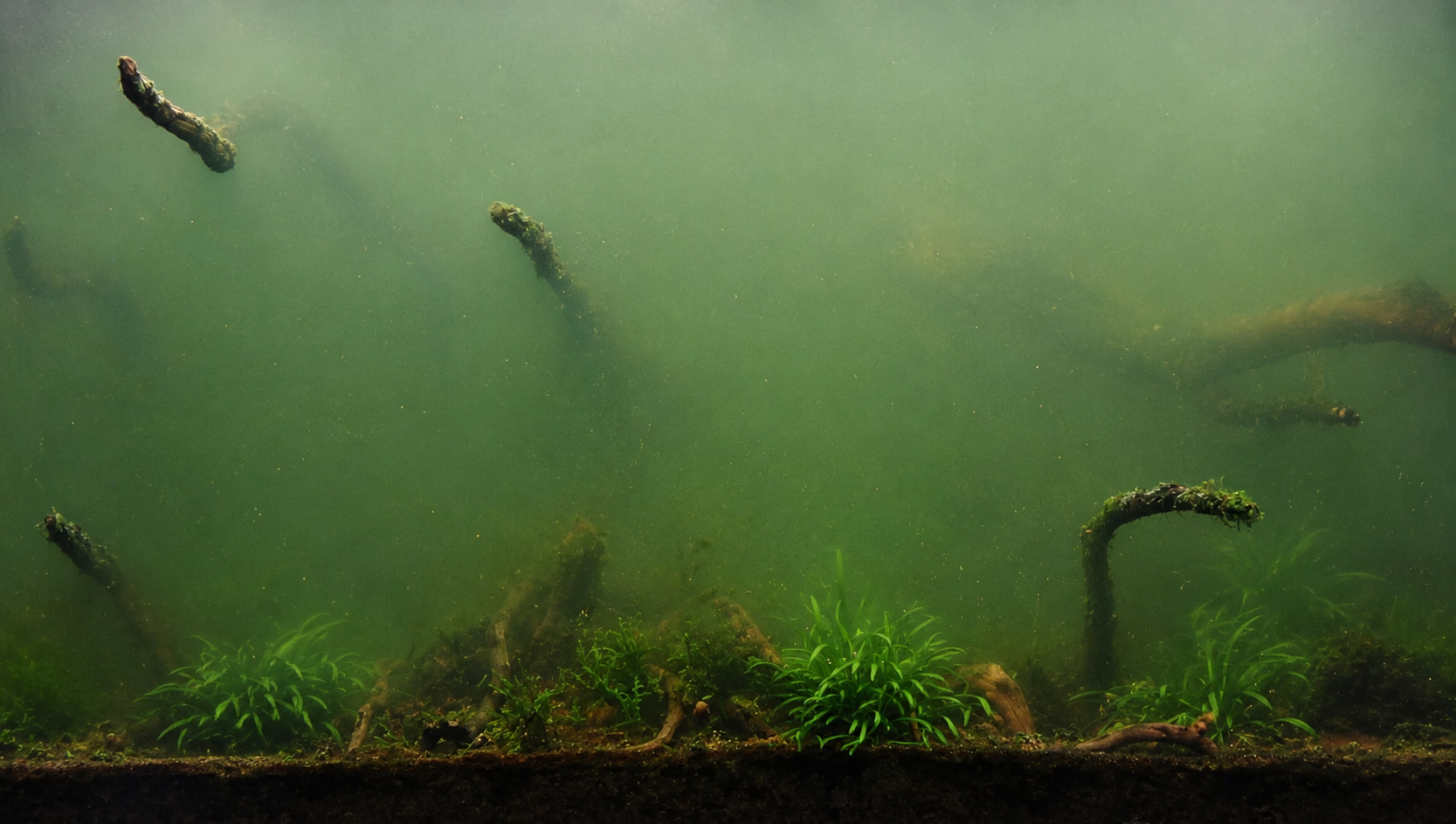
- Green Water — a sudden “pea soup” bloom that turns the entire tank cloudy green.
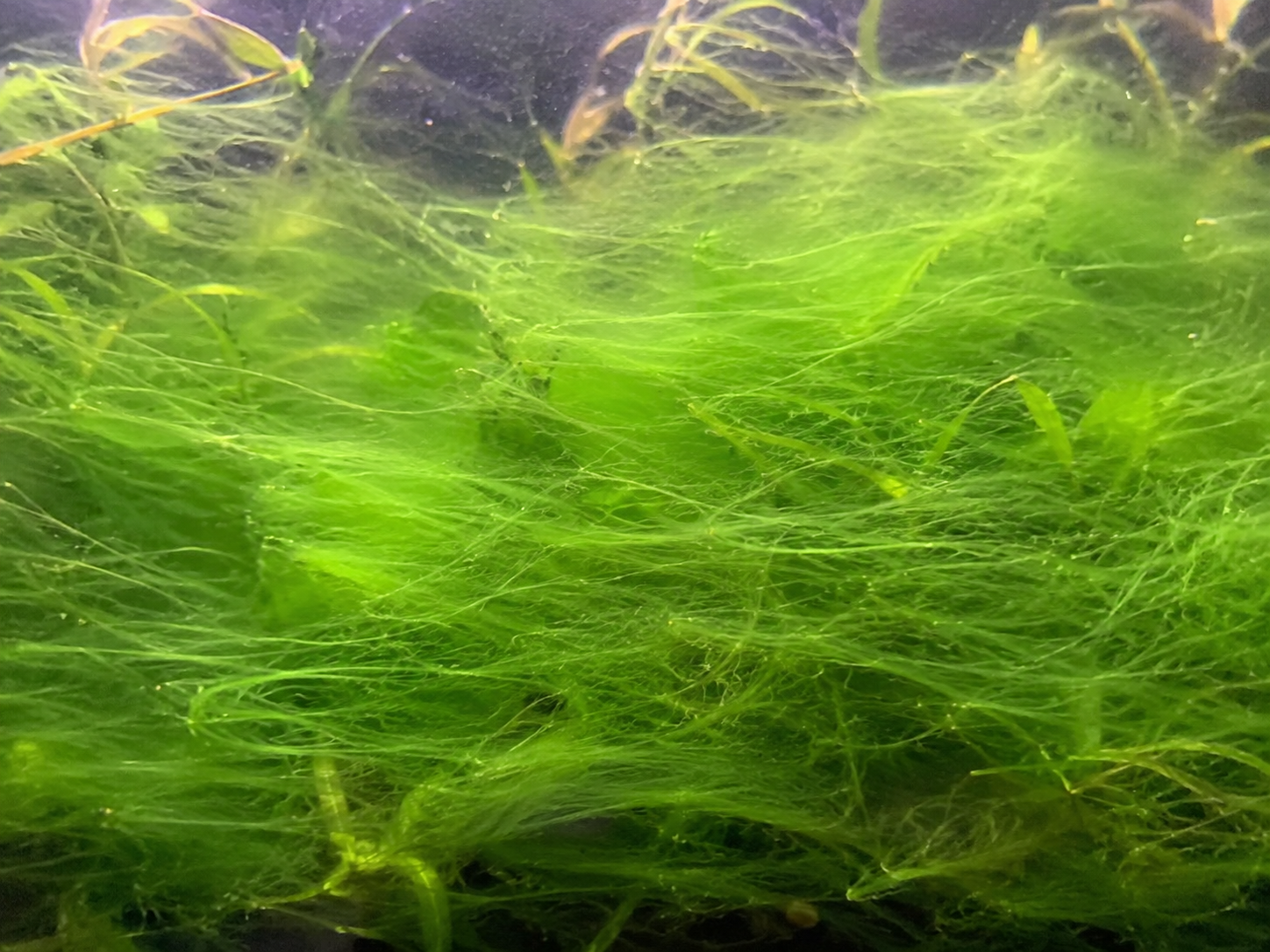
- Hair Algae — long, fine green threads tangled through plants and hardscape.
- Staghorn Algae — stiff, gray-green branching tufts that look like tiny antlers on leaf edges.
- Black Beard Algae (BBA) — dark, bristly tufts on leaf margins and hardscape; the most notorious algae in the hobby.
- Brown Algae (Diatoms) — a brown dusty film that’s almost always a new-tank problem, not a mistake.
Each guide covers the specific cause behind that type and exactly how to clear it — on top of the general plants-first approach above.