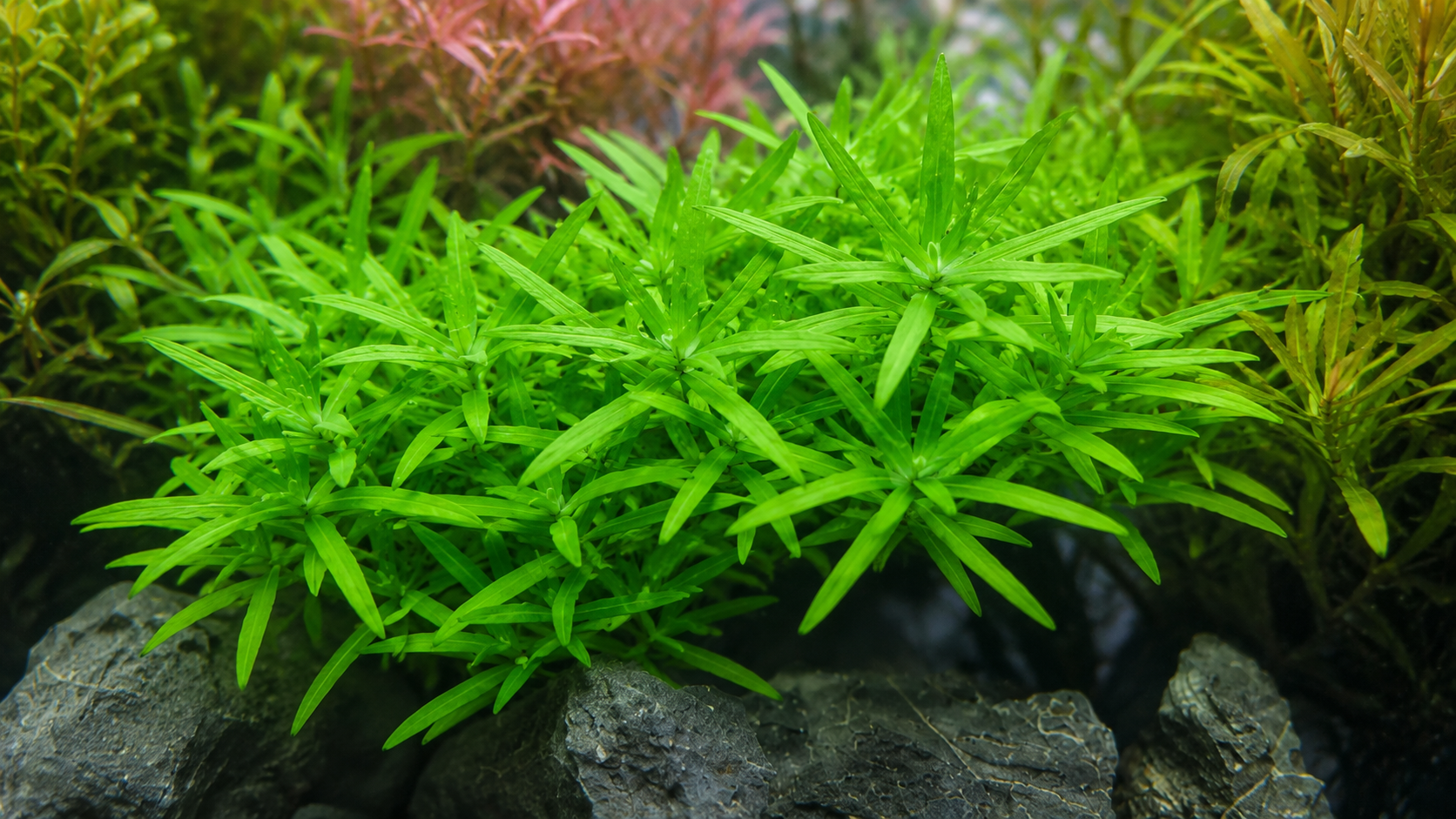
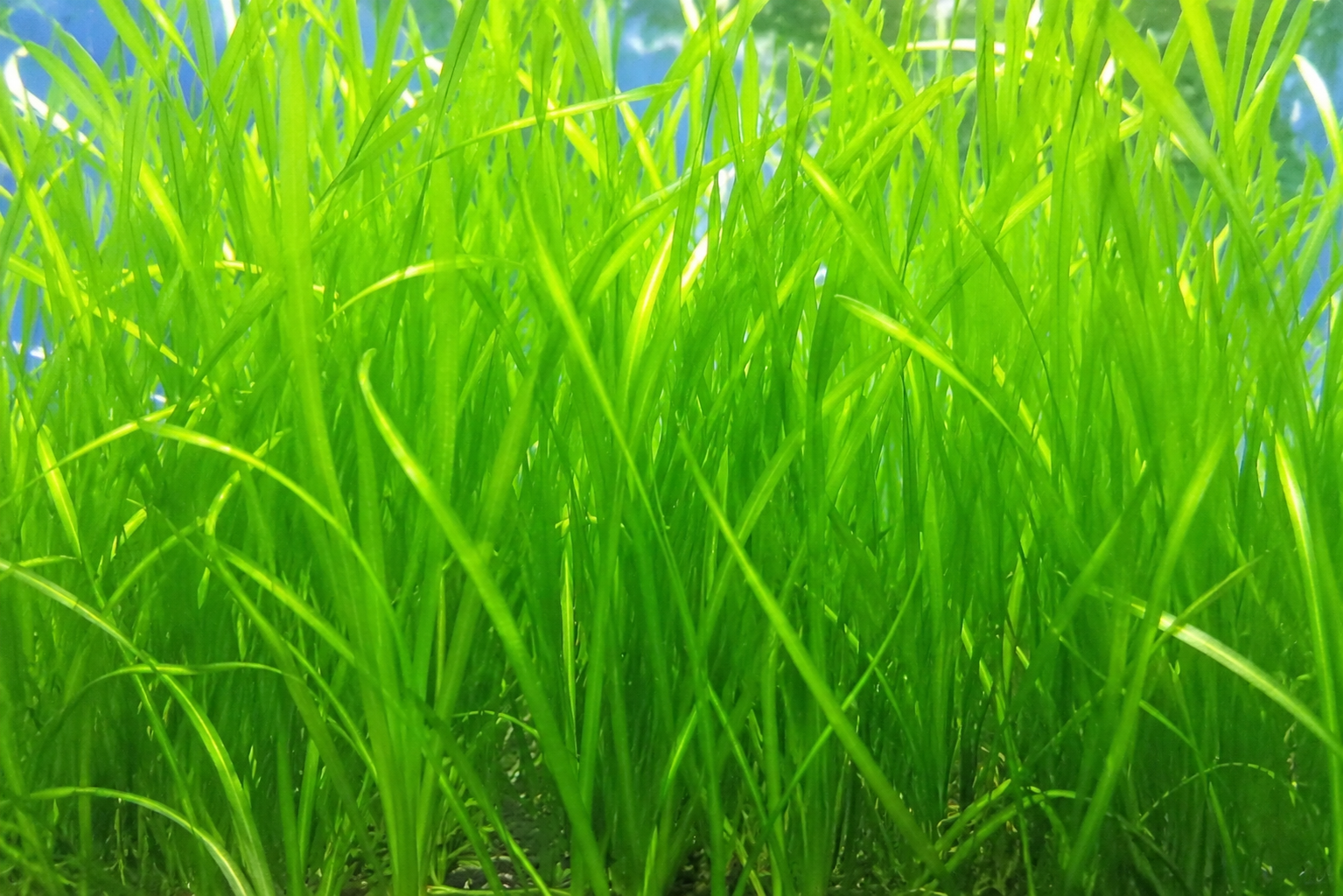
Vallisneria americana — American Eelgrass or Tape Grass — is native to North and Central America, growing in rivers, lakes, ponds, and brackish coastal estuaries from Canada to Mexico. It’s one of the few aquarium plants actually native to North America, and its natural toughness translates directly into ease of care in the home aquarium.
The plant produces long, ribbon-like leaves that rise from a central crown rooted in the substrate. In moving water, the leaves flow gracefully with the current; in still water they stand more upright. Either way, a background planted with Vallisneria has a distinctively natural, graceful look that’s difficult to replicate with other plants.
Leaf Width and Forms
V. americana is highly variable. Standard forms produce leaves 1–2 cm wide and can reach 60–100 cm in length — true background plants that will grow to the surface and fold over. Narrower forms (sometimes sold as V. americana ‘Straight’) stay 0.5–1 cm wide and look more grass-like. The exact form you receive can vary, but all share the same care requirements.
Color
Medium to bright green throughout. No red or bronze forms. Color doesn’t change significantly with light intensity, though stronger light produces slightly greener, more robust leaves.
Water Parameters
Vallisneria is one of the more water-chemistry-flexible plants here, but it’s worth noting it comes from North American waters that often run moderately hard and alkaline: 68–82°F (20–28°C), pH 6.5–8.0, and it genuinely does well in harder tap water that some South American plants dislike. A standard weekly 20–25% water change is enough.
Root Nutrition Is Critical
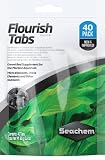
Vallisneria is a heavy root feeder — arguably the most root-dependent common aquarium plant. Seachem Flourish Tabs are close to mandatory for this plant in inert substrates. Place one tab within a few centimeters of each plant’s crown every 3 months. The difference between fertilized and unfertilized Vallisneria is dramatic: fertilized plants produce wide, dark green leaves and runners constantly; unfertilized plants produce narrow, pale leaves and rarely spread.
Seachem Flourish liquid weekly supplements the water column nutrition and supports healthy runner production.
One Caution: CO2 Sensitivity
Vallisneria can react poorly to liquid CO2 additives (like Seachem Excel). If you use liquid carbon, watch the plants — if leaves develop holes or melt, reduce or eliminate the liquid carbon dose. Vallisneria generally prefers natural CO2 from fish and plants over chemical carbon sources.
Propagation
Runners extend horizontally from the mother plant and produce daughter plants at intervals. Allow daughters to establish (3–4 leaves, visible root system) before separating. Each daughter can be moved to a new position or left to form a spreading colony.
How to Plant
Vallisneria is planted like all rosette plants: the roots go in, the crown stays out. Use tweezers to grip the plant just above the root mass and lower the roots into the substrate, pushing them in firmly without burying the base of the leaves. The crown — where the ribbon leaves emerge — must stay at or above the substrate surface or it will rot. Space plants 5–8 cm apart to give runners room to spread between them. Plant along the back and sides of the tank where the long ribbon leaves can arch freely. Push a Seachem Flourish Tab within 3–5 cm of each plant immediately at planting — it is the single biggest improvement you can make to Vallisneria performance in inert substrate.
Common Problems
- Narrow, pale leaves that won’t spread. The classic unfertilized-Vallisneria symptom — a root tab near the crown resolves it within weeks.
- Holes or melting after using liquid carbon. A known sensitivity for this species — cut back or stop liquid carbon dosing near it.
- Crown rot. Caused by planting too deep and burying the crown; replant with the crown fully exposed above the substrate.
Pests
No specific pest issues. Rinse new plants and check for hitchhiker snails before adding them to an established tank.