
Ceratopteris thalictroides — Water Sprite — is native across a huge swath of the tropics and subtropics, from Korea in the north down to western Australia, growing in rice paddies, ditches, and slow-moving ponds throughout Asia, Africa, and Oceania. In the aquarium it’s valued for something genuinely uncommon: it thrives equally well rooted in substrate or fully floating, and it’s easy either way.
One Plant, Two Jobs
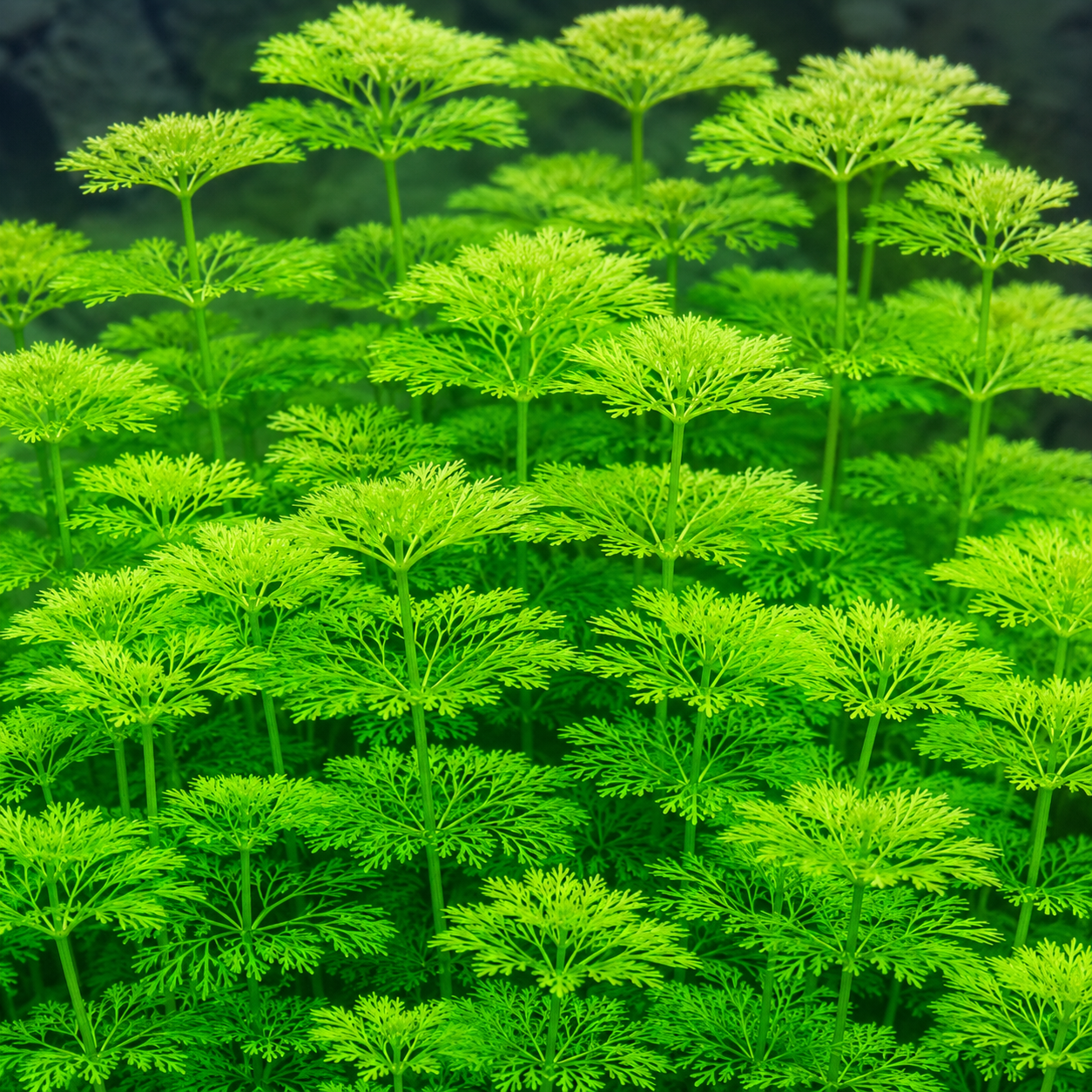
Most plants are built for one role. Water Sprite is comfortable doing both: planted in substrate, it grows into a fast, bushy background plant with a distinctive feathery, deeply divided leaf shape. Left floating on the surface, it forms a dense mat with long hanging roots that’s excellent cover for fry, shrimp, and bettas — closer in role to a true floating plant like guppy grass than a rooted stem. The leaf shape itself shifts depending on which mode it’s in: broader and less divided when floating or under low light, more finely feathered when rooted under stronger light. Both forms are entirely normal for the same plant.
Size and Growth
Fast-growing and genuinely large given the chance — rooted specimens can reach 30-50cm, with individual fronds spreading wide. This makes it a strong background anchor in a mid-size to large tank, though regular trimming keeps it from overwhelming a smaller footprint.
Water Parameters
Tropical, pantropical origins make it broadly tolerant: 68–82°F (20–28°C), pH 6.0–7.5, and adaptable to soft or moderately hard water. A standard weekly 20–25% water change is enough.
Feeding
Whichever mode you grow it in, Seachem Flourish dosed weekly is the core of its nutrition — as a fast grower, it pulls a meaningful amount from the water column regardless of whether it’s rooted. If you’re growing it planted rather than floating, Seachem Flourish Tabs near the root base add a noticeable boost to growth rate and leaf size.
Propagation
This is where Water Sprite is genuinely distinctive: it’s a true fern, and like many ferns it produces small plantlets directly on the margins of its own mature leaves. These tiny plants eventually detach and float free, rooting wherever they land or continuing to float and grow on their own. Left alone, a single healthy plant will seed new ones around the tank without any intervention — if you don’t want it spreading, remove plantlets as they appear.
How to Plant
Rooted: strip any lower leaves and push the base 2-3cm into the substrate, pressing firmly enough to anchor it against buoyancy — the fronds have some natural lift and can work loose before roots establish. Push a Seachem Flourish Tab nearby at planting.
Floating: simply place it on the surface. No anchoring is needed; it orients itself naturally and the roots hang down into the water column on their own.
Common Problems
- Leaves tearing or shredding easily. The fronds are relatively delicate — handle gently during maintenance and water changes.
- Melting after purchase. Some leaf loss in the first one to two weeks is normal, especially with stock transitioning from emersed nursery growth to your tank’s specific conditions.
- Overrunning the tank when floating. Given its fast growth, thin out excess regularly — a full surface mat blocks light to everything growing below it.
Pests
No specific pest issues. Rinse and check new plants for hitchhiker snails before adding them to an established tank.
Water Sprite is one of the more genuinely flexible plants available — a good pick when you’re not sure yet whether you want a background anchor or floating cover, since it can become either one.