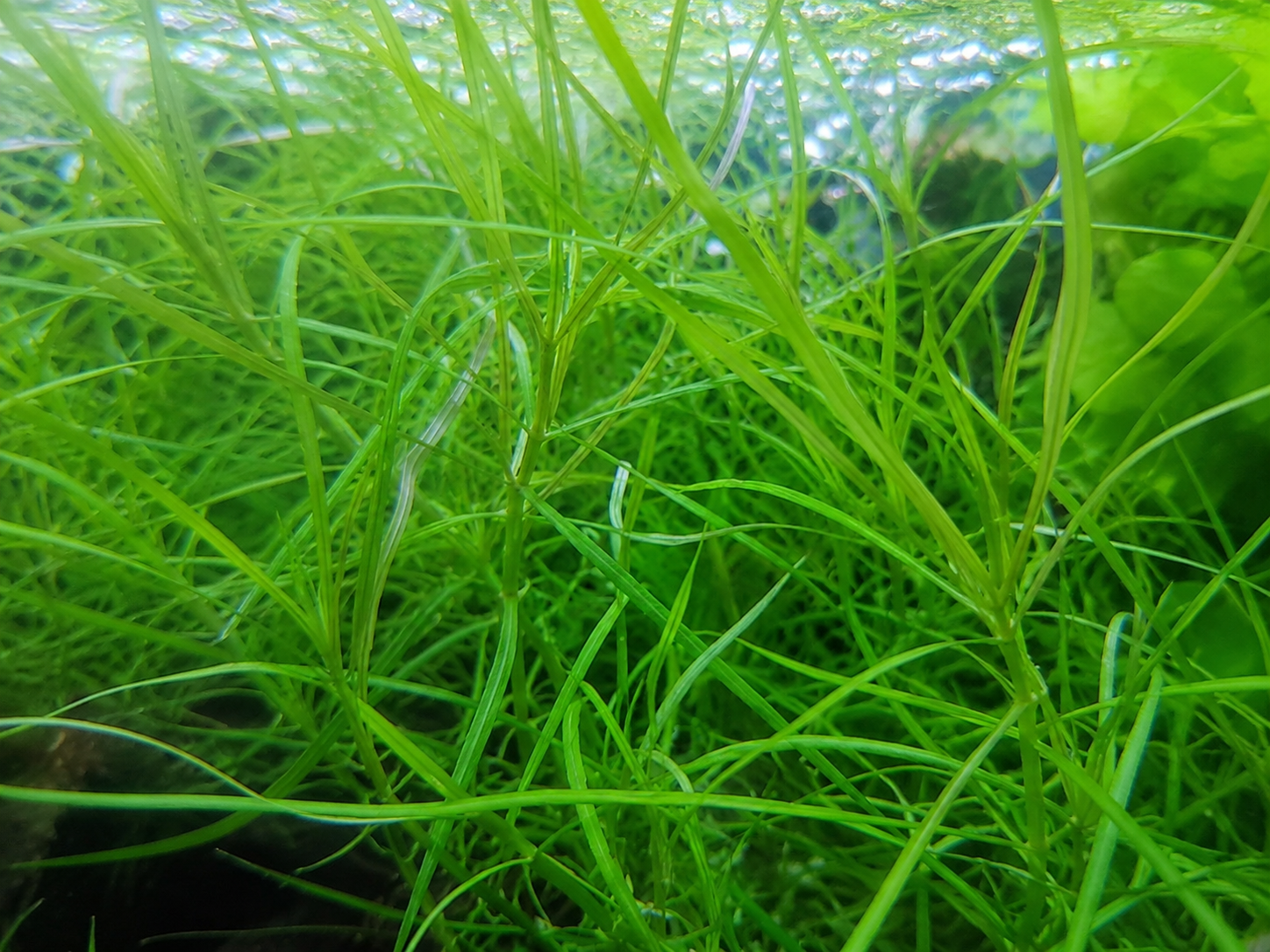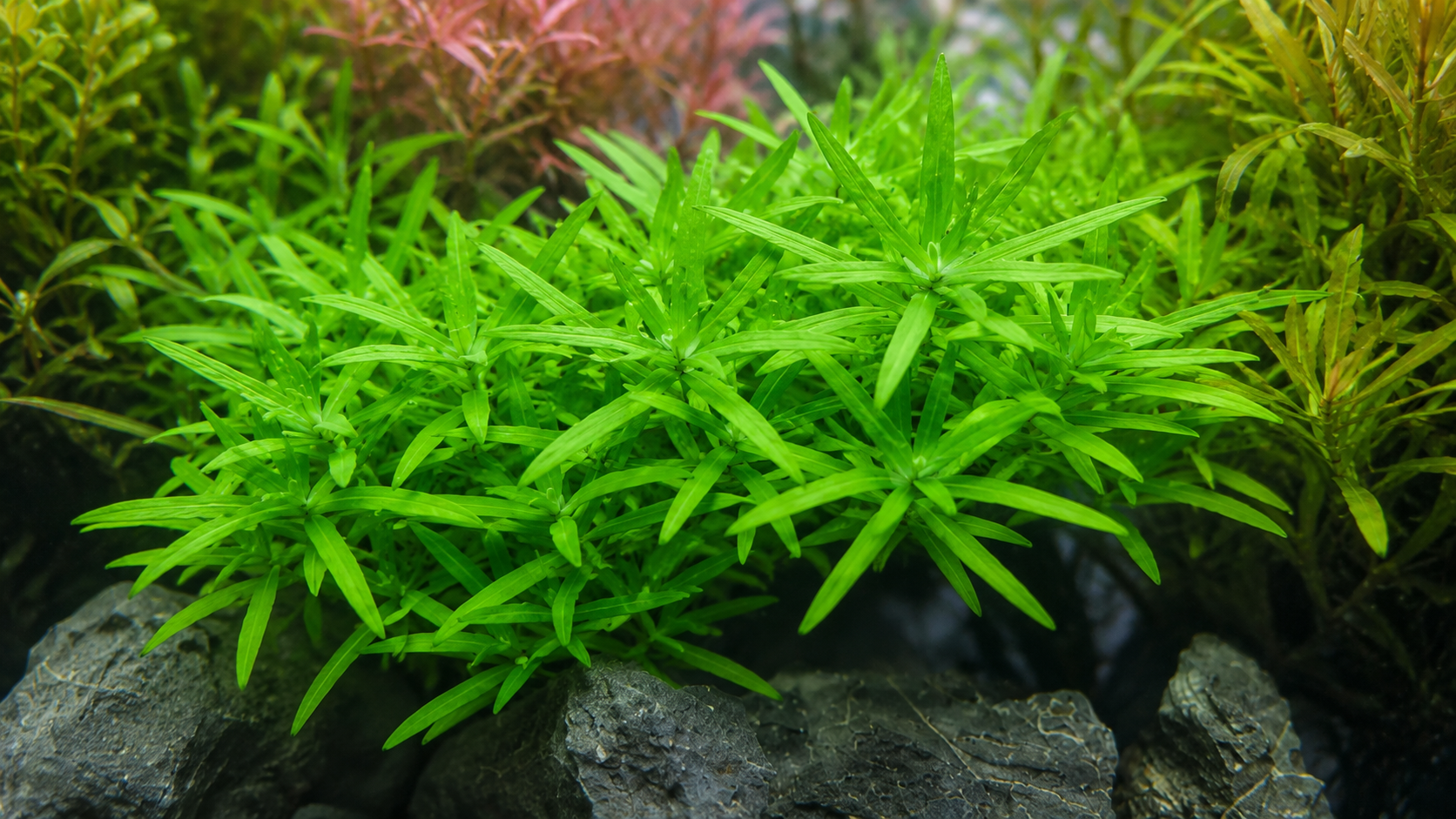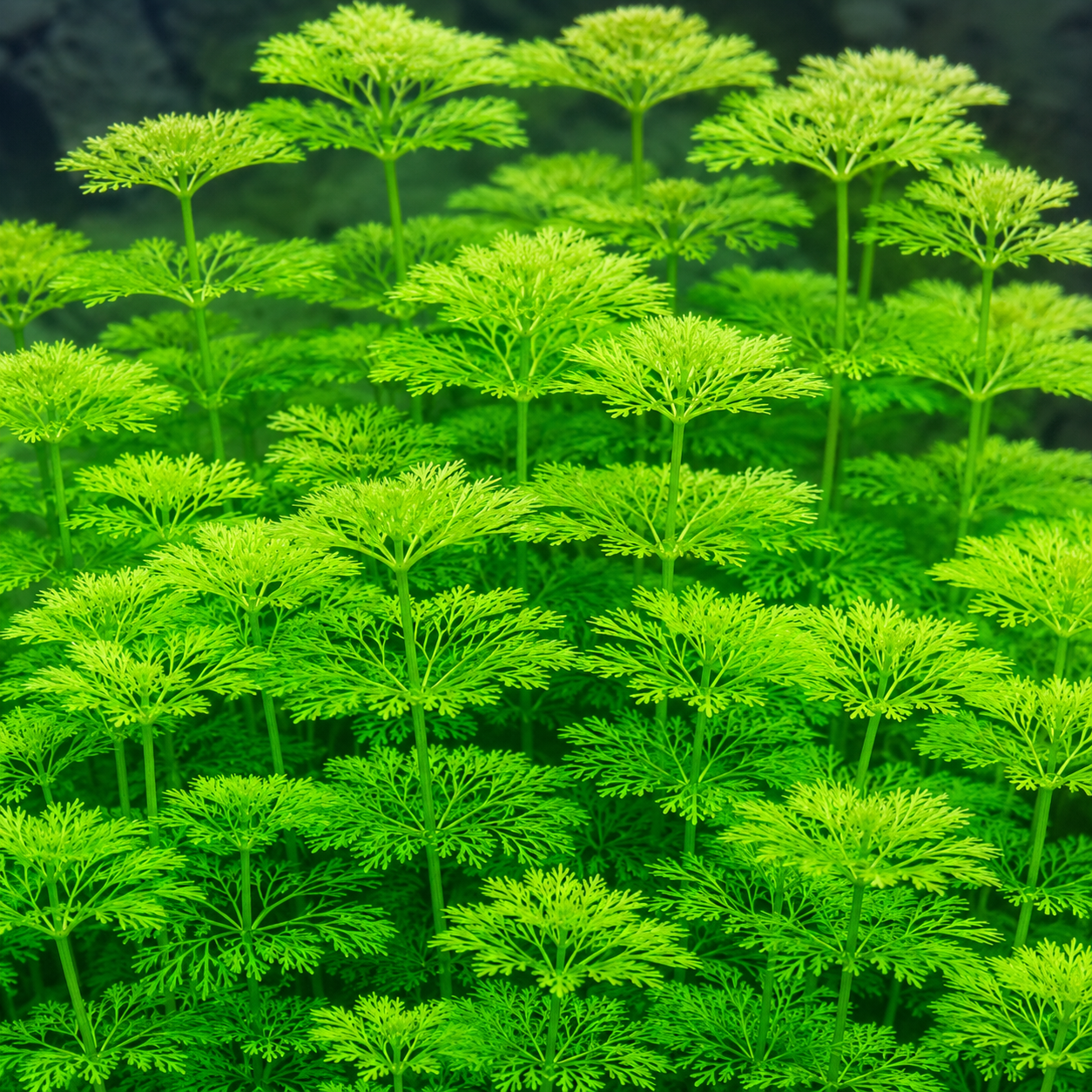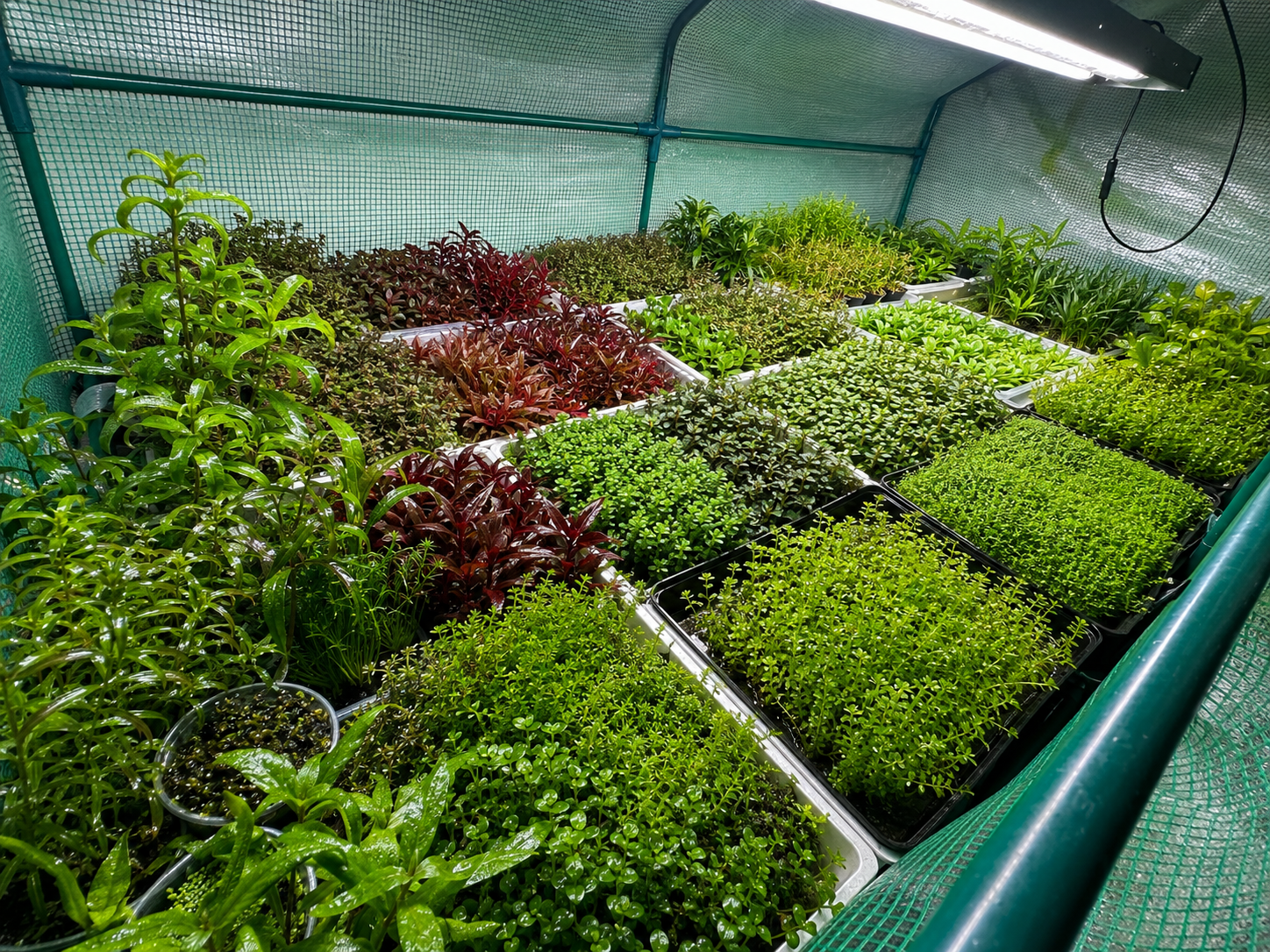

Hygrophila corymbosa — commonly called “Giant Hygrophila” or “Temple Plant” — is one of the most practically useful plants in the freshwater hobby. Native to Southeast Asia, it grows naturally in still and slowly moving water across India, Sri Lanka, and throughout the Indo-Pacific, reaching enormous size in nutrient-rich environments. In an aquarium it adapts to whatever space it’s given, but given room to grow it creates a bold, lush background that few other plants can match.
Size and Placement
This is unambiguously a background plant. Stems reach 30–60 cm, with broad lance-shaped leaves up to 10 cm long. In tanks shorter than 40 cm it’ll quickly reach the surface; in taller setups it creates a dramatic wall of green foliage. The thick stems look architectural against smaller, finer-leaved plants in the midground.
There are several popular varieties — ‘Siamensis’ has smaller, more compact growth; ‘Kompakt’ stays shorter still. The base species and most varieties are sold interchangeably in the hobby.
Color
Under low light, H. corymbosa is uniformly dark green with slightly pale veins. Under stronger light it brightens to a vivid medium-green and produces more compact internodes. It does not produce red or pink tones — this is a structural green plant.
Water Parameters
Corymbosa tolerates a broad range: 72–82°F (22–28°C), pH 6.0–7.5, and it isn’t picky about hardness. A standard weekly 20–25% water change keeps it healthy, though as a fast, heavy feeder it also benefits from a tank that isn’t left too long between changes.
Feeding
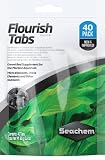
Corymbosa is a fast, hungry grower. Seachem Flourish Tabs near the stem base make a visible difference in leaf size and stem thickness, particularly in inert substrates like plain gravel. Seachem Flourish liquid dosed weekly keeps the overall plant healthy and prevents nitrogen deficiency (the first sign of which is yellowing lower leaves).
Propagation and Trimming
Cut stems at any height and replant the tops. The original stem will send out multiple side shoots from the upper nodes. Hygrophila corymbosa is one of the plants that will essentially become a bush after a few trimming cycles — roots anchor it firmly, side shoots multiply, and within a month a single stem becomes a dense stand.
How to Plant
Hygrophila corymbosa is a large, vigorous plant — push stems firmly 4–5 cm into the substrate using stout tweezers or your fingers. Strip the lower two or three leaf pairs first so the buried nodes can root quickly. Plant in groups of 3–5 stems, spacing them 5 cm apart to leave room for the broad leaves to spread. Position the group against the back glass or in corners. Push a Seachem Flourish Tab near each stem cluster immediately — given the plant’s fast growth rate, early root nutrition makes a quick and visible difference.
Common Problems
- Outgrowing the tank. By far the most common issue — this plant is large and fast, and it will reach the surface and start flopping over in a short tank if left untrimmed. Trim before this happens rather than after.
- Bare lower stems. As with most fast Hygrophila, older leaves near the base yellow and drop with age or insufficient light. Cutting and replanting the top resets growth from a clean base.
- Transplant melt. A little leaf drop in the first week or two after planting is normal, especially with emersed-grown stock — new growth afterward will be adapted to submerged conditions.
Pests
No specific pest issues. Rinse and check new stems for hitchhiker snails before adding them to an established tank, as with any plant purchase.