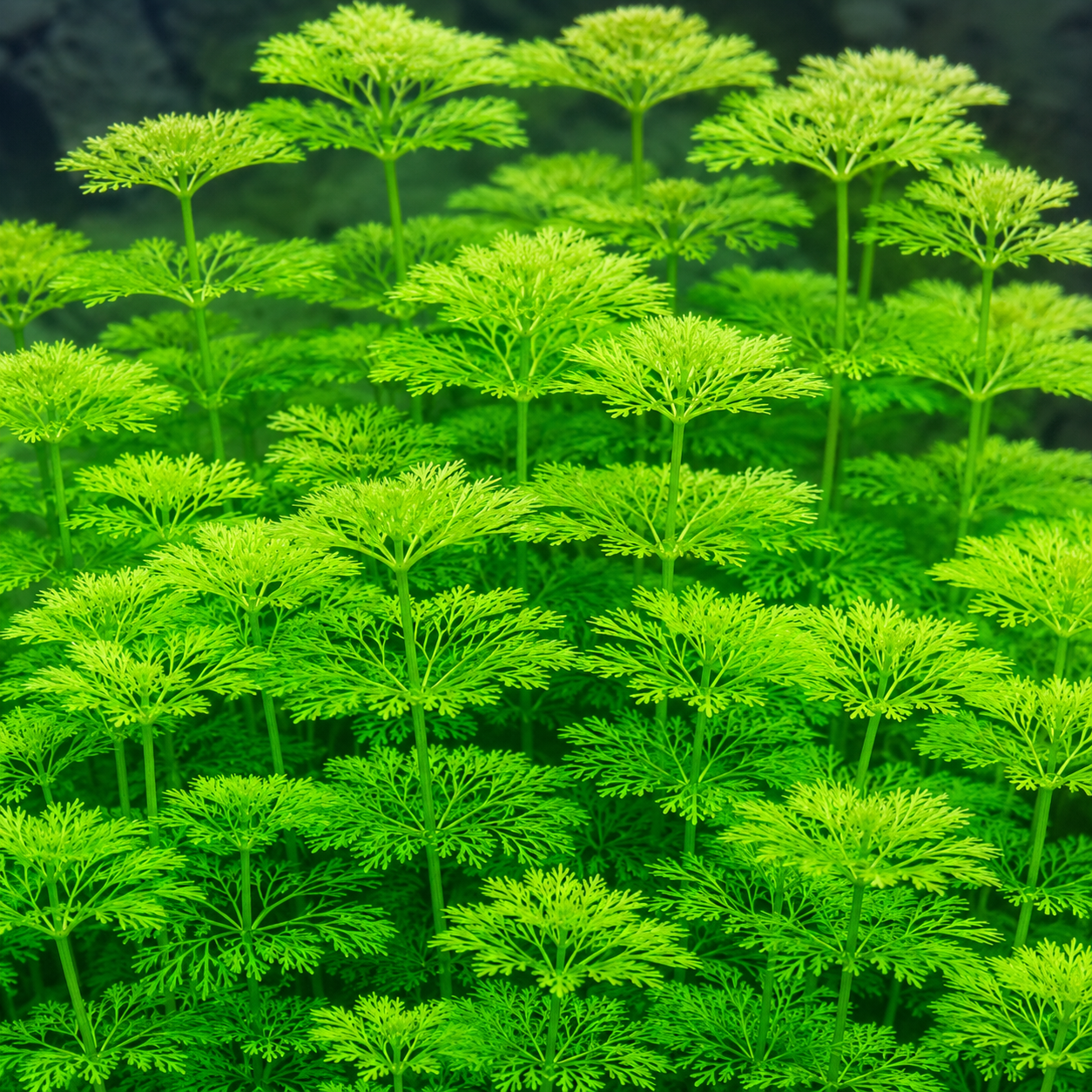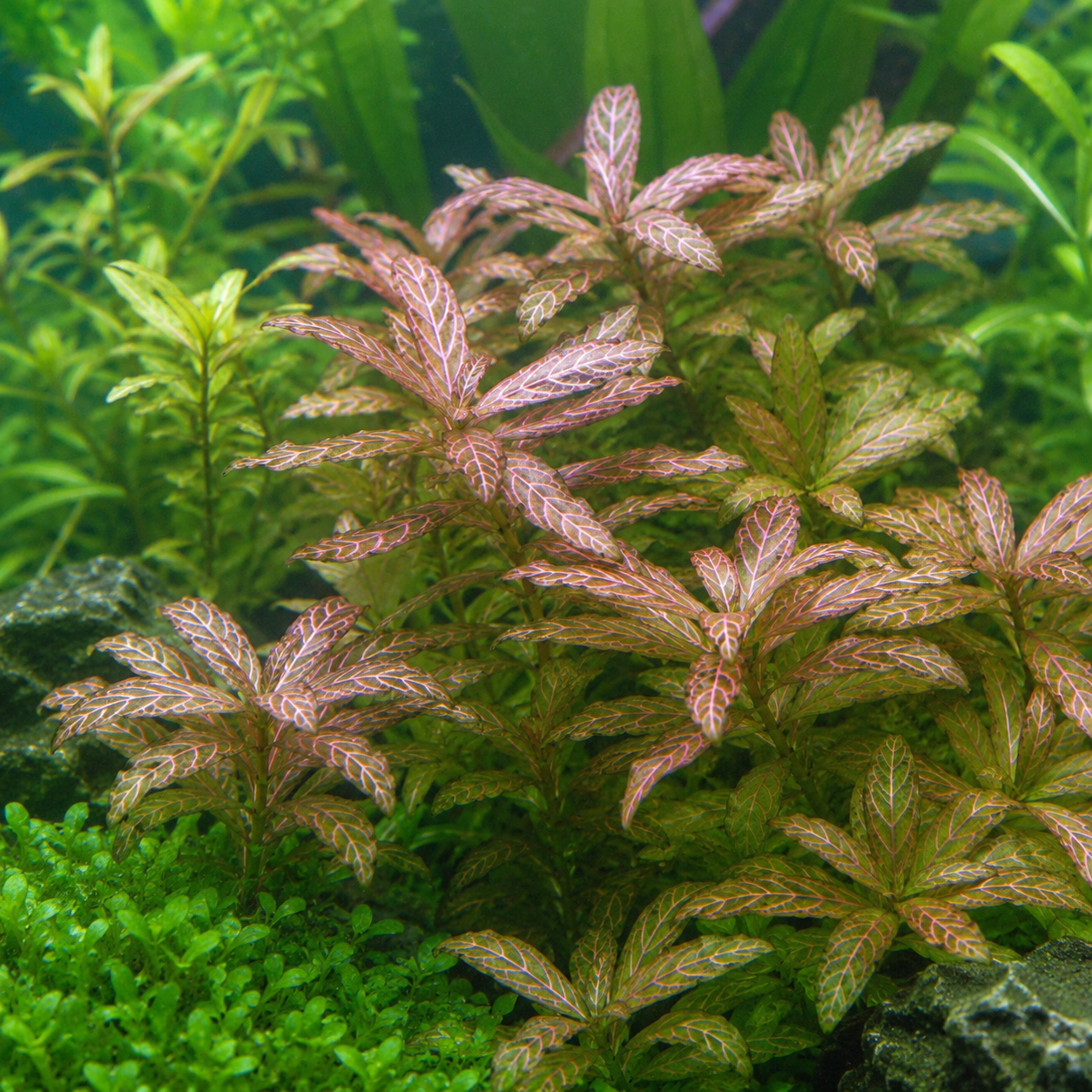
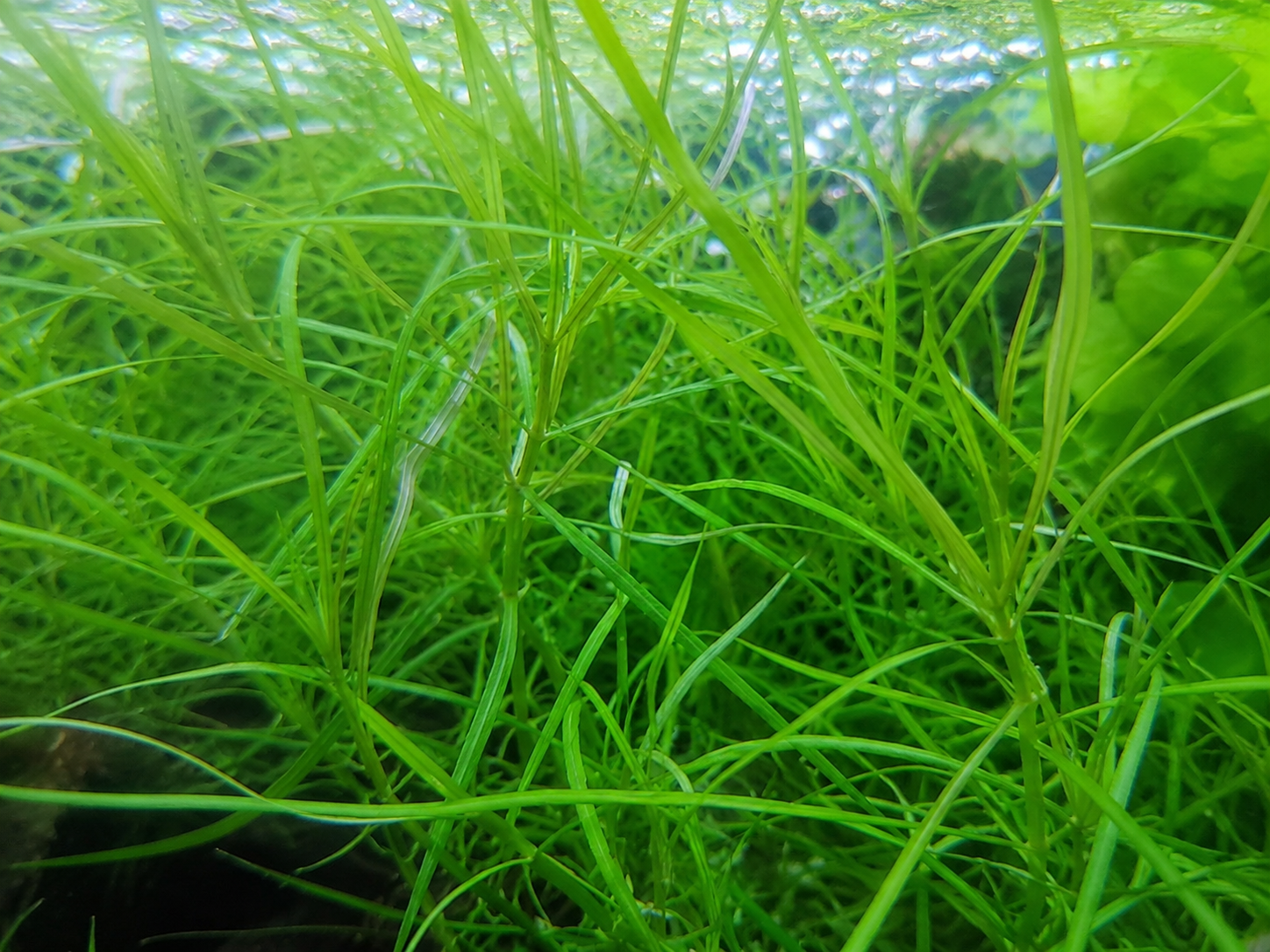
Pogostemon stellatus “Octopus” is a naturally occurring form of Pogostemon stellatus from Southeast Asia — found across India, Sri Lanka, Bangladesh, and into the broader Indo-Pacific region. The “Octopus” name comes from the long, tentacle-like leaves that radiate outward in dramatic whorls from each node, resembling an octopus’s arms spreading in every direction.
What Makes It Stand Out
Most stem plants in the hobby have relatively modest, paired leaves. Pogostemon Octopus goes the opposite direction — the leaves at each node can be 5–10 cm long and up to a dozen per whorl, creating a sweeping, architectural statement that’s unlike anything else in a planted tank. A few stems together create an impressive display that draws the eye immediately.
Size and Placement
This is a tall background plant reaching 20–50 cm or more. Place it in the corners or along the back glass where its dramatic width won’t overshadow shorter plants. Don’t crowd it — give each stem group room to spread its whorls fully.
Color
Under low to moderate light: medium green with slightly translucent leaf tips. Under stronger light: warm green to yellow-green, with some forms developing pale pinkish tints on new growth. It’s not a strongly red plant, but the layered, sweeping whorls have their own visual impact.
Water Parameters
Tropical Southeast Asian conditions suit it well: 74–82°F (23–28°C), pH 6.0–7.5, and it isn’t fussy about hardness. A standard weekly 20–25% water change is enough, though as with most fine-leaved plants, stable nutrient levels matter more than any single parameter.
Care
Pogostemon stellatus “Octopus” is more forgiving than its dramatic appearance suggests. It doesn’t strictly require CO2 but grows faster and produces denser whorls with it. Under low tech, provide good light and consistent fertilization.
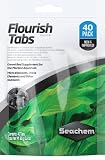
Seachem Flourish Tabs near the stem base support the root system. The fine, high-surface-area leaves absorb nutrients efficiently from the water column, so Seachem Flourish liquid dosed weekly is important — particularly for the micronutrients that drive leaf health and size.
Trimming
Cut stems at mid-height and replant tops. Original stems branch from the cut point. Because of the dramatic whorl size, even a few stems fill a lot of horizontal space — plan accordingly when placing.
How to Plant
Strip the lower two or three leaf whorls from each stem, then push 4–5 cm into the substrate with stout tweezers or your fingers. The dramatic whorl size means each stem occupies significant horizontal space — space stems at least 5 cm apart to prevent mutual shading. Plant in groups of 3–5 stems along the back glass, leaving more open space around the planting than you think you’ll need; the sweeping whorls expand considerably as the plant grows in. Push a Seachem Flourish Tab near each stem cluster immediately at planting.
Common Problems
- Small, unimpressive whorls. The most common disappointment with this plant, and it almost always traces back to light intensity or fertilizing being lower than what this species wants to really perform.
- Bare lower stems. Like most tall background stems, older growth can drop as the plant stretches upward — trim and replant the top to reset it.
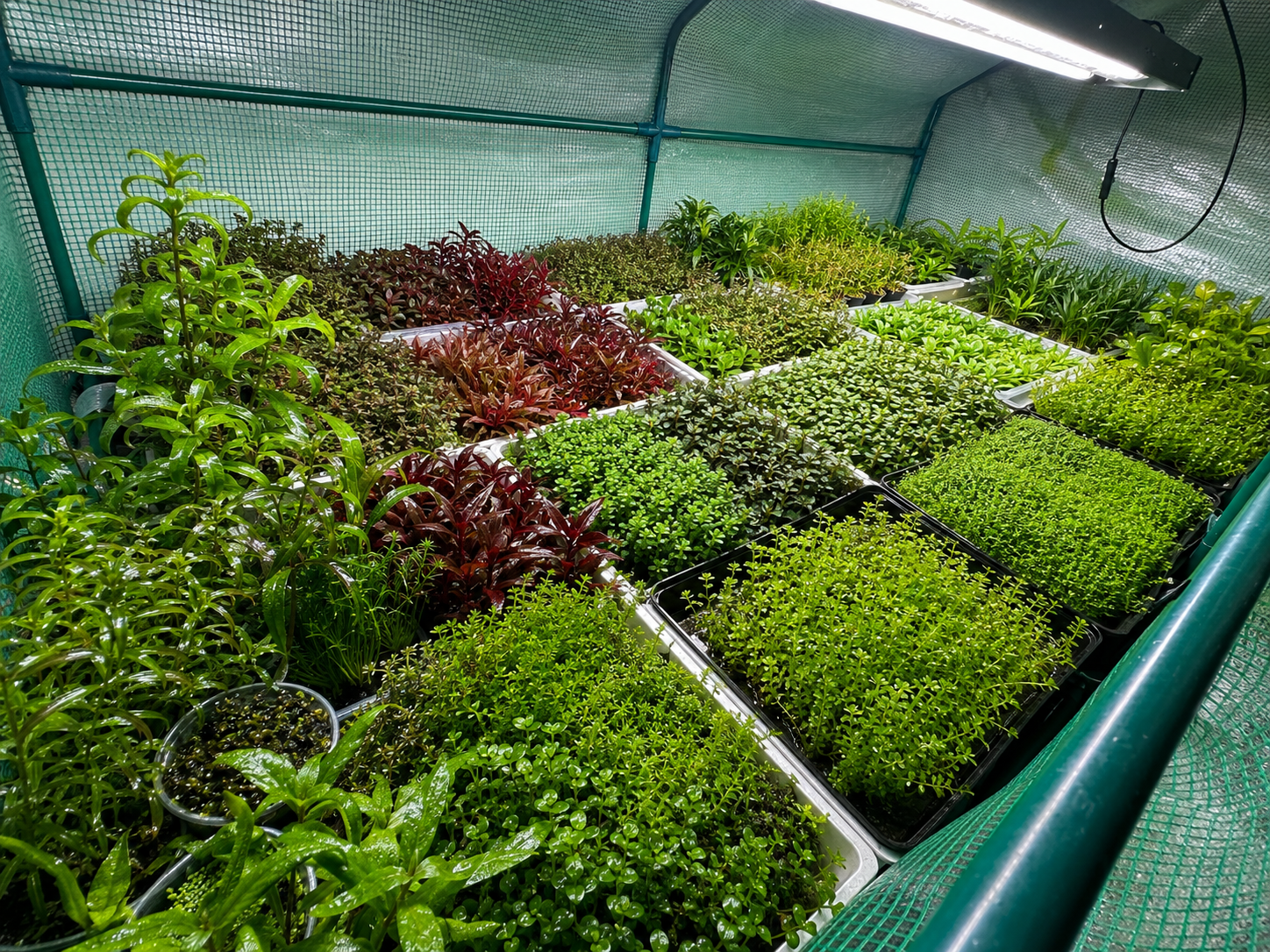
- Transplant melt. A little leaf loss in the first couple of weeks after planting is normal, especially with emersed-grown stock.
Pests
No specific pest issues. Rinse and check new stems for hitchhiker snails before adding them to an established tank.