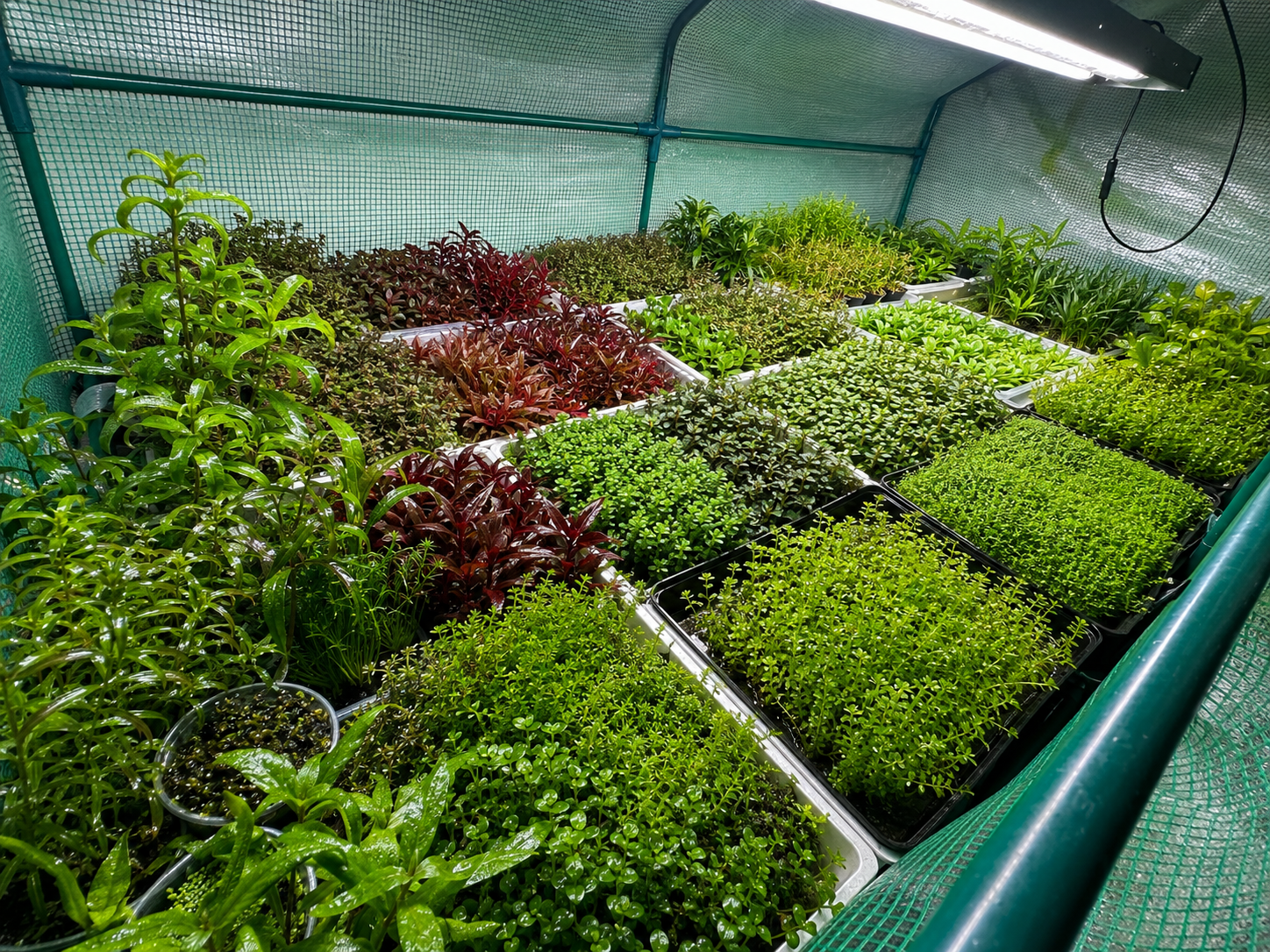

Egeria densa — almost universally sold as Anacharis — is one of the plants that introduced generations of aquarium and pond keepers to live plants in the first place. It’s native to South America (Brazil, Argentina, Uruguay), and it’s been cultivated and shipped worldwide for so long that it’s become a genuine invasive species across parts of North America, Europe, and elsewhere — worth knowing before you plant any of it outdoors.
A Naming Note
Anacharis is frequently used interchangeably with “Elodea” in casual conversation and even on some product listings, but they’re technically different (though closely related) genera — Egeria densa and Elodea canadensis. Both look similar, with narrow leaves arranged in whorls along a central stem, and both are cared for identically, so the distinction rarely matters in practice.
Appearance and Growth
Thin, upright stems carry whorls of narrow, bright green leaves — usually 3-6 leaves per whorl, densely packed along the stem’s length. It’s a fast, vigorous grower that can reach the surface of a mid-size tank within weeks under good conditions, making it one of the better background fillers for a new tank.
Why It’s Been a Staple for So Long
Anacharis is an efficient oxygenator and nutrient exporter, which is exactly why it shows up in decades of goldfish bowls, school science kits, and beginner setups — it does real, measurable work on water quality while asking for almost nothing back. It’s also unusually tolerant of cooler water compared to most tropical aquarium plants, which made it a natural fit for outdoor ponds and unheated tanks long before “low-tech planted tank” was a phrase anyone used.
Water Parameters
This is one of the most temperature-flexible plants in the hobby: 60–82°F (16–28°C), comfortable in both cooler unheated setups and standard heated tropical tanks. pH 6.5–7.5, and it tolerates hard water well — a useful option if your tap water runs harder than many South American plants prefer.
Light and Feeding
Anacharis grows across a wide light range, low to high, though moderate-to-strong light produces denser, more compact growth rather than long, sparse stems. Seachem Flourish dosed weekly is the core of its feeding — it absorbs nutrients efficiently through its leaves and doesn’t demand root tabs even when planted.
How to Plant
Anacharis can be planted in substrate or simply left floating — both work. To plant, strip the lowest inch or so of leaves from each stem and push it into the substrate; roots will develop at the buried nodes within a couple of weeks. Left floating, it grows just as well, simply drifting and absorbing nutrients directly from the water column.
Propagation
Any healthy cutting will root and grow into an independent plant — trim the tops as it reaches the surface and replant them to keep the original stems dense rather than tall and bare.
Common Problems
- Bare, leggy lower stems. The typical fast-grower issue — trim regularly and replant the tops to keep growth full from the base.
- Sudden die-back fouling the water. A large mass that dies off at once (from a sudden light or temperature change) can measurably affect water quality as it decomposes — remove dead material promptly rather than leaving it to break down in the tank.
- Melting after purchase. Some leaf loss in the first week or two is normal as it adjusts to your specific water.
Pests
No specific pest issues. Rinse and check new stems for hitchhiker snails before adding them to an established tank.
A Responsibility Worth Knowing
Because Anacharis propagates so readily from any cutting, it’s escaped cultivation and become a genuine invasive weed in waterways across much of North America, Europe, and beyond. Never release excess into a pond, lake, river, or storm drain — dispose of trimmings in the trash instead. Inside your own tank, that same toughness is exactly what makes it such a forgiving, reliable plant.