
Cryptocorynes are the most patient plants in the hobby. Plant them in substrate, push a root tab into the gravel nearby, and then leave them alone for a few weeks. They will melt, sulk, regrow, and eventually become some of the best-looking plants in your tank. All three species we carry at BettaPlants — Wendtii Bronze, Pygmy, and Undulata Red — follow exactly this arc.
Understanding crypt melt
Almost every crypt will “melt” after a move or a significant water change. Leaves go limp and transparent, sometimes completely disintegrating. New aquarists pull the plant out in a panic; experienced ones just wait. The rhizome underground is fine. Within two to four weeks, compact new leaves will push up from the base, often healthier than the originals.
What triggers melt: crypts react strongly to changes in water chemistry and CO2 levels. Keeping conditions stable after planting speeds recovery. Avoid large water changes in the first few weeks and don’t move the plant around. Glutaraldehyde-based liquid carbon products (Seachem Excel, API CO2 Booster) are a common trigger too — crypts tolerate them better than a true sensitive plant like Vallisneria, but moderate-to-heavy dosing can still set off a melt, so dose conservatively around established plants.
Root tabs are not optional
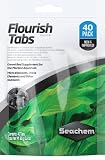
All three of these crypts are heavy root feeders. Unlike stem plants that absorb most nutrients through their leaves and stem, crypts prefer food delivered directly to the roots. Seachem Flourish Tabs pushed into the substrate near each plant every three to four months will produce noticeably thicker leaves, deeper color, and more prolific runner production.
Liquid fertilizers like Seachem Flourish supplement this well but won’t replace solid root nutrition for crypts. If your plants look pale or stunted after the initial melt, a fresh root tab is the first thing to try before changing anything else.
Species by species
Cryptocoryne wendtii ‘Bronze’ is native to slow-moving rivers and flooded rice paddies of Sri Lanka. It reaches 10–25 cm, placing it squarely in the midground. Under low light, leaves are olive to warm bronze. Under stronger light the undersides intensify to a reddish-brown, and the surface shows a distinctive hammered texture. It’s the most adaptable crypt for beginners and spreads via runners, slowly carpeting a section of substrate on its own.
Cryptocoryne parva (sold in the hobby as “Pygmy Crypt”) is the smallest crypt species, staying 3–8 cm. It grows in tight upright clusters and works beautifully as a foreground or nano tank plant. Growth is genuinely slow — expect weeks between new leaves — but once established it’s virtually indestructible. Unlike most crypts it does not change color with light level; it stays a clean, medium green regardless.
Cryptocoryne undulata ‘Red’ reaches 15–25 cm with distinctively wavy, undulating leaf margins. It is the most dramatic of the three visually. Under low light it holds a subdued brown-green. Under higher light it deepens to a warm brick red with brown-purple undersides. Like Wendtii, it spreads by runners and will slowly colonize the midground.
Quick reference
| Species | Height | Placement | Low light | High light |
|---|---|---|---|---|
| Wendtii Bronze | 10–25 cm | Midground | Olive-bronze | Bronze-red |
| Pygmy (C. parva) | 3–8 cm | Foreground | Green | Green |
| Undulata Red | 15–25 cm | Midground | Brown-green | Brick red |
None require CO2 injection. They will grow faster with it, but these are genuinely low-tech plants and among the most rewarding in that category — slow, structural, and completely self-sufficient once they settle in.
Propagation
Crypts reproduce by sending out horizontal runners along the substrate. Let daughter plants develop three or four leaves and a small root ball before separating them. Do not cut runners — trace them back to the mother plant and pull apart gently by hand. Divided this way, both plants establish cleanly.
How to plant
All three cryptocoryne species here are rosette plants and use the same method. Use tweezers to hold the plant just above the root ball, lower the roots into the substrate, and push them in while keeping the crown — the central point where leaves emerge — fully above the substrate. If the crown is buried even partially, the plant will rot at the base. For Wendtii and Undulata Red, space plants 8–10 cm apart to allow runners to spread between them. For Pygmy (C. parva), space 4–5 cm apart. Push a Seachem Flourish Tab 3–5 cm away from each plant immediately at planting.
Expect some leaf melt in the first one to two weeks — this is normal “crypt melt” triggered by the transition from one growing environment to another. The roots and crown remain healthy; new leaves emerge within two to three weeks. Leave melting leaves in place unless they are actively rotting, and trim away any fully decayed material as it appears.