This is part of our full algae identification and treatment series — start there if you’re not sure which algae you’re actually looking at.
What it looks like
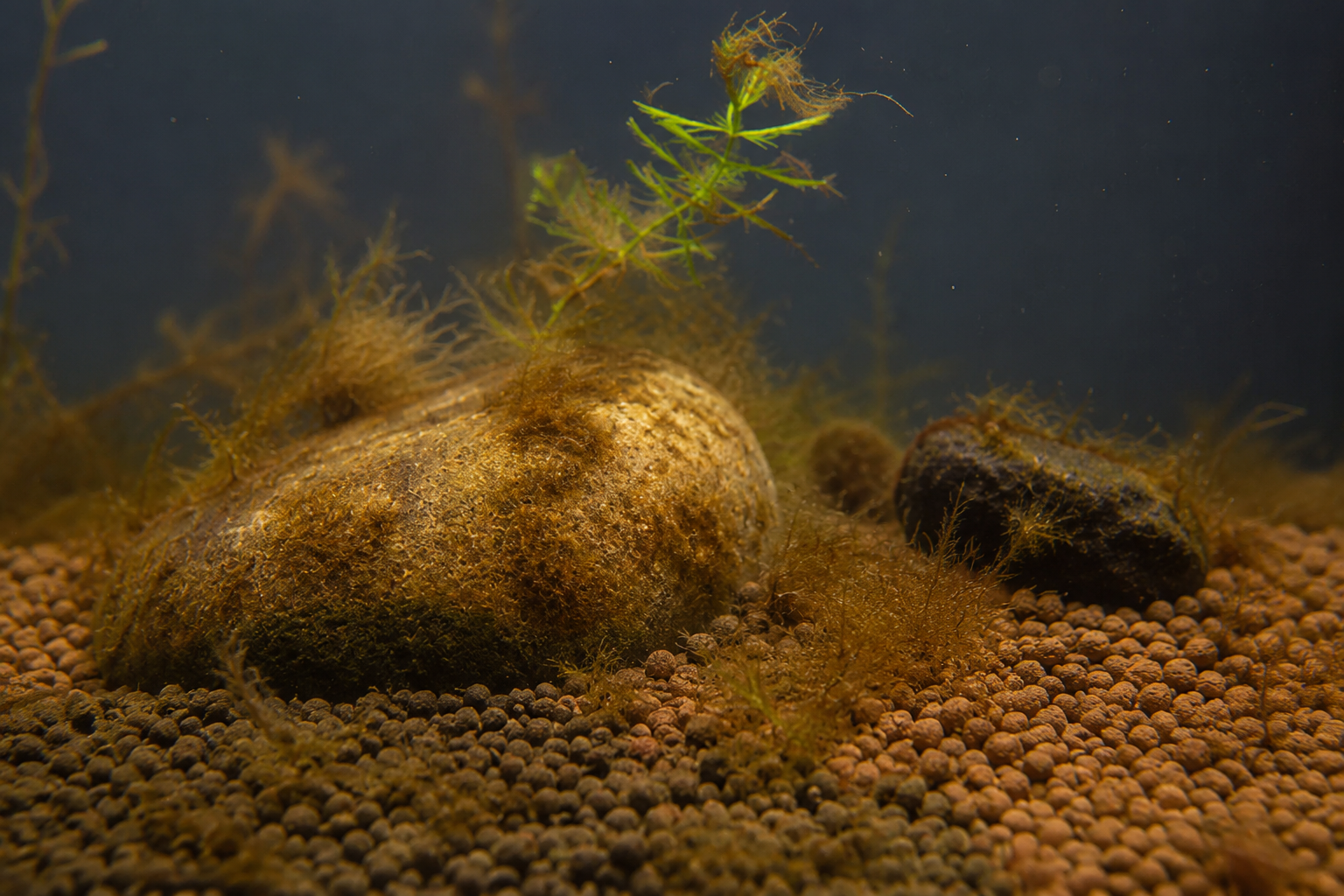
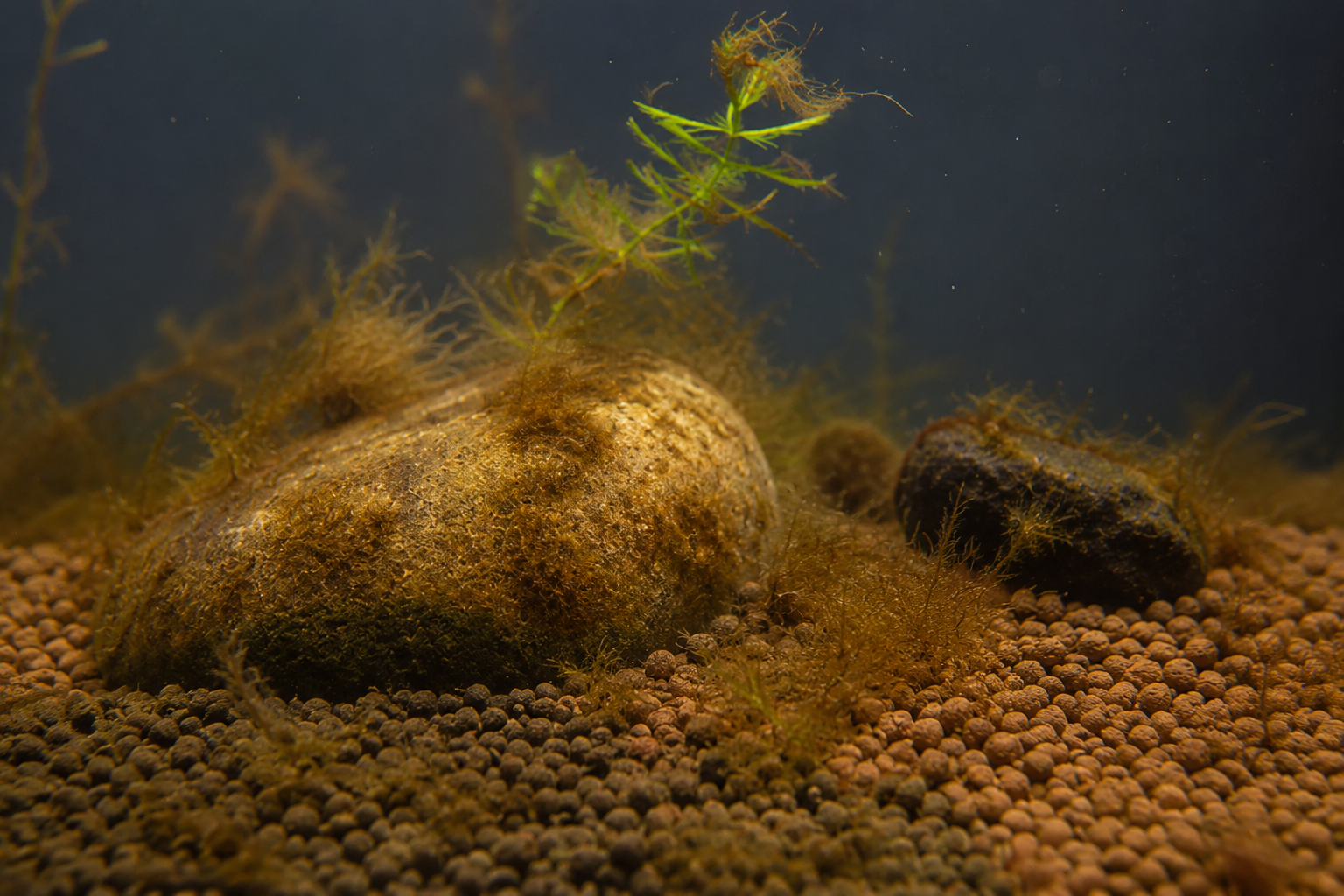
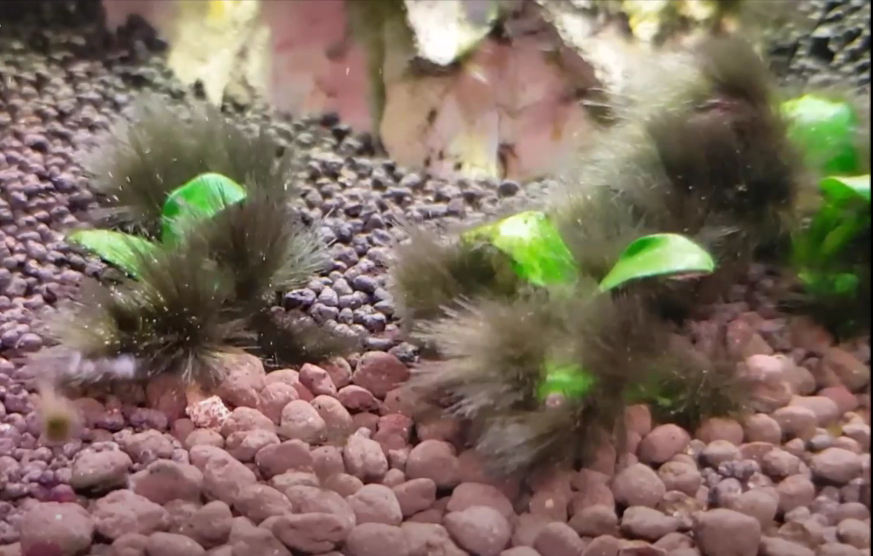
Dark, almost black-to-reddish bristly tufts that cling stubbornly to leaf edges, hardscape, and especially filter outflow and intake — anywhere with steady flow. It’s tougher and denser than staghorn, doesn’t rinse off, and is notorious for being one of the few algae types most fish and shrimp won’t touch.
Why it happens
Black Beard Algae (BBA) is the algae most consistently associated with unstable CO2 in the hobby — not necessarily low CO2 overall, but inconsistency: a CO2 system that fluctuates, shuts off overnight without adjusting the photoperiod, or a low-tech tank with irregular surface agitation. BBA also spreads easily on new plants and hardscape bought secondhand, since a single spore-bearing fragment is enough to start a new colony. “Old tank syndrome” — a mature tank that’s drifted out of a stable routine — is another common trigger.
How to clear it
- Stabilize CO2 above anything else. If you inject CO2, fix the timing so injection ramps up 1–2 hours before lights-on and holds a consistent level through the photoperiod — instability, not intensity, is what BBA exploits.
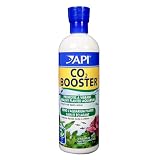
- Spot-treat with liquid carbon, undiluted. Turn off the filter, dose liquid carbon (like API CO2 Booster) directly onto affected leaves and hardscape with a syringe, wait 10–15 minutes, then restore flow. This is one of the most widely used and effective BBA treatments in the hobby — the glutaraldehyde in these products is directly toxic to algae on contact, which is why undiluted, direct application matters more than a tank-wide dose.
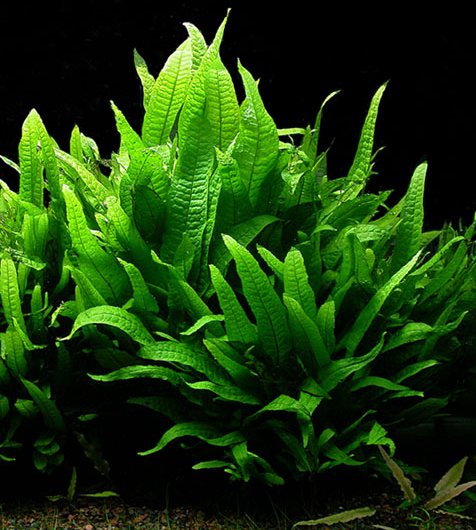
A caution before you dose: that same toxicity affects some plants, not just algae. Vallisneria is especially sensitive and can melt from even light exposure (see our Vallisneria Americana guide), and Anacharis, Riccia fluitans, and several fine mosses react badly too. Spot-treat away from sensitive plants rather than dosing the whole tank.
- Bleach-dip hardscape (not plants) if BBA has taken over rocks or wood — a short 2–3 minute dip in a diluted bleach solution, followed by thorough dechlorination and a long soak, kills it completely on inert surfaces.
- Add Siamese Algae Eaters or Amano shrimp, two of the only common species that will reliably eat BBA once it’s established.
- Quarantine and inspect new plants and hardscape before adding them to an established tank — this is how most BBA outbreaks start in a tank that was previously algae-free.
BBA is genuinely one of the harder algae types to eliminate completely, but it doesn’t return once CO2 is truly stable — most recurring “BBA problems” are actually a CO2 stability problem that never got fully resolved, not a sign that the spot-treatment failed.