This is part of our full algae identification and treatment series — start there if you’re not sure which algae you’re actually looking at.
What it looks like
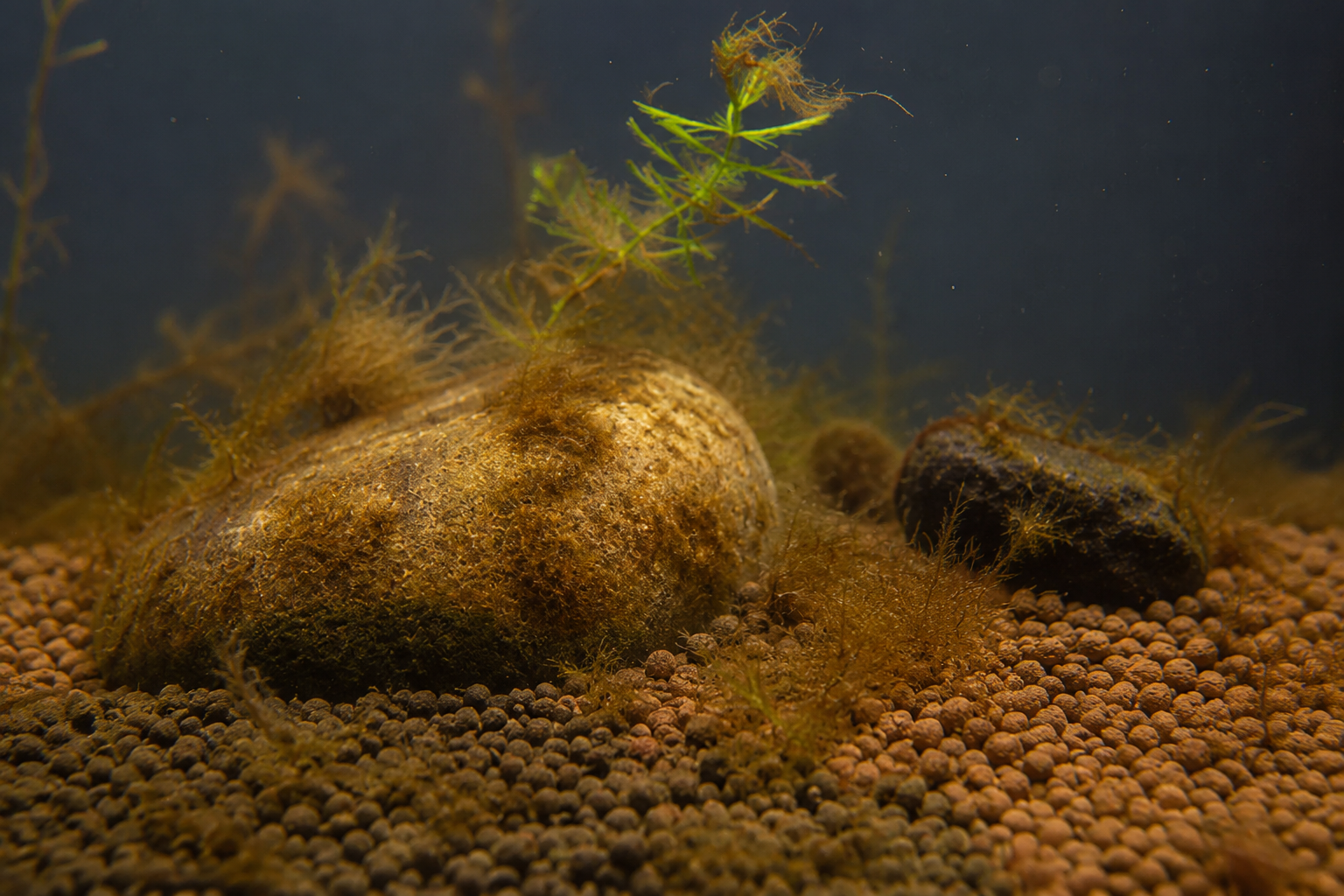
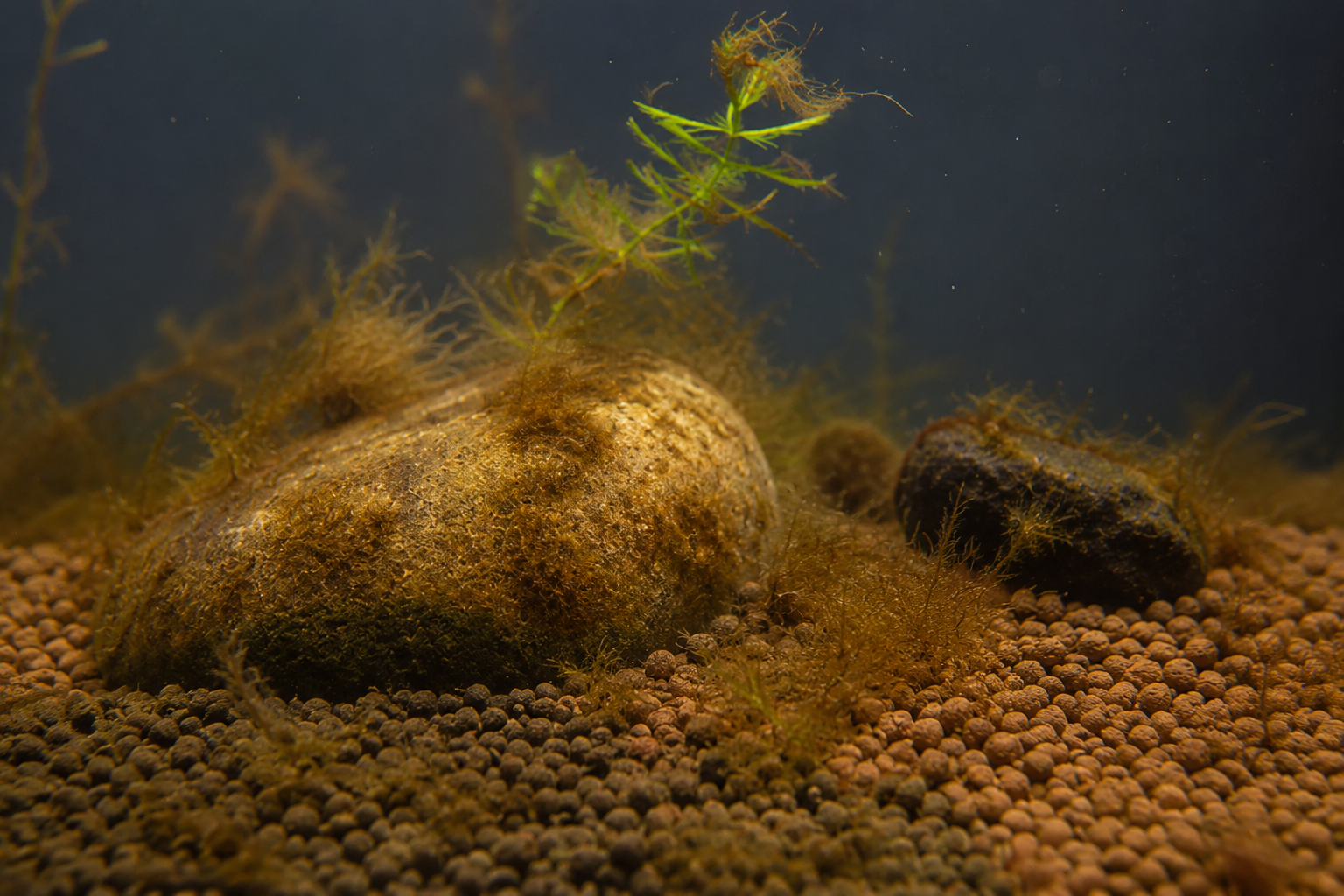
A soft, dusty brown film coating the glass, substrate, and slower-growing leaves — it wipes away easily with a finger, leaving a faint brown smudge behind. It’s most visible on the side or back glass rather than the high-traffic front pane, and it’s almost always seen within the first few weeks of a new setup.
Why it happens
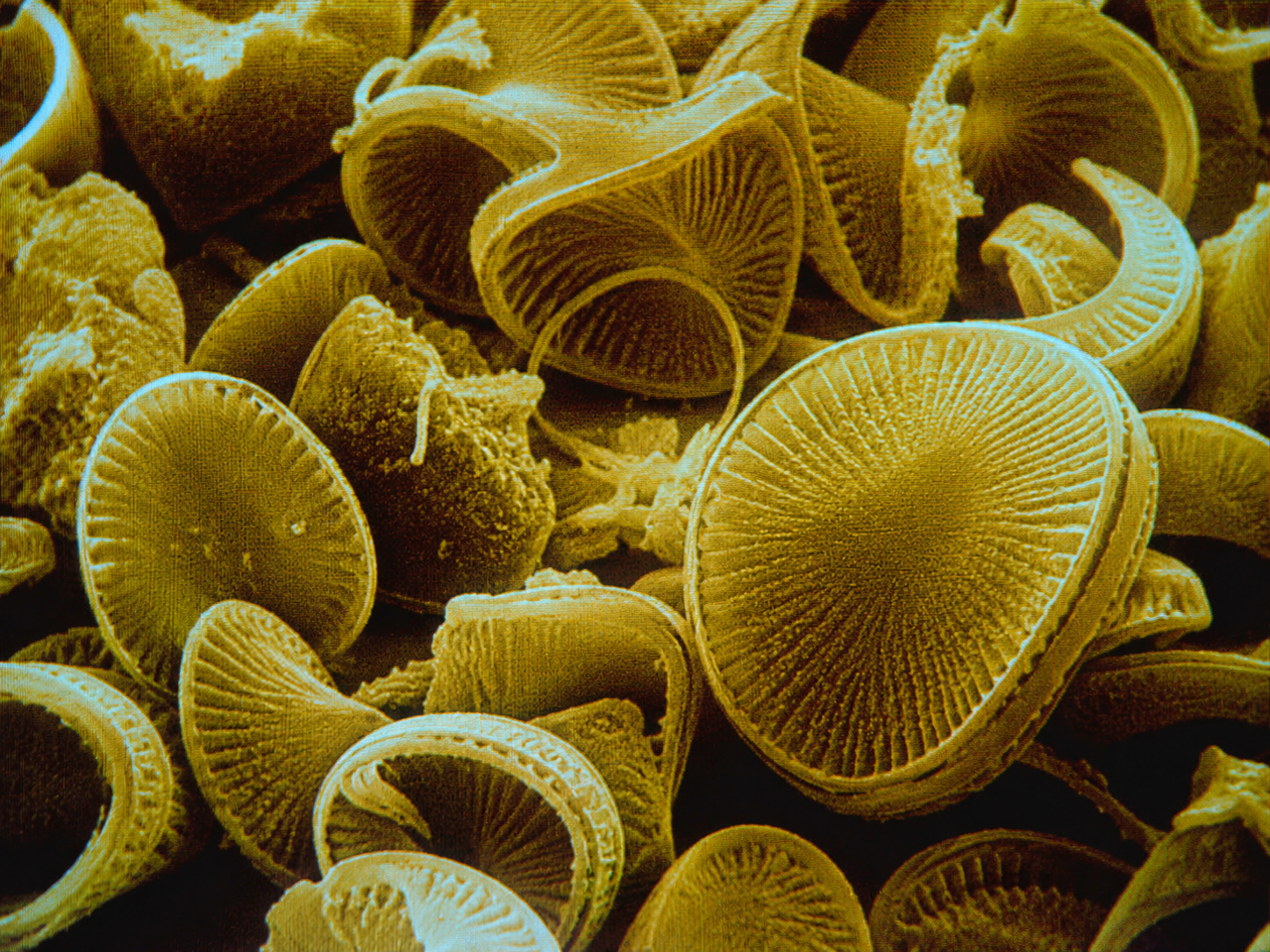
Brown algae is caused by diatoms — single-celled algae with silica-based cell walls — and it’s overwhelmingly a new-tank phenomenon. New substrate, new hardscape, and tap water all carry silicates, and diatoms are simply the first organism able to exploit that supply before a tank’s plant mass and bacterial colony have caught up. Diatoms also tend to thrive under the lower light levels common in a newly set-up tank, which is part of why they show up before other, light-hungrier algae types do.
How to clear it
- Don’t panic — it’s temporary. Diatoms are one of the few algae types that reliably resolve on their own, typically within four to six weeks, as silicate levels drop and plant and bacterial competition increases.
- Wipe it off regularly. It comes away easily and doesn’t require scraping — a soft cloth or your finger during routine maintenance keeps it from building up while the tank matures.
- Add otocinclus catfish or nerite snails. Both graze diatoms enthusiastically and are a mainstay solution for new-tank brown algae specifically.
- Get plants established as early as possible. The sooner plant mass is established and actively growing, the sooner diatoms lose their nutrient advantage.
- Rinse new substrate and hardscape thoroughly before setup — less silicate dust released into a new tank means a shorter, milder diatom bloom.
Of everything on this list, brown algae is the closest to a non-issue — it isn’t a sign anything is wrong with your setup, just a normal part of a tank finding its footing.