This is part of our full algae identification and treatment series — start there if you’re not sure which algae you’re actually looking at.
What it looks like
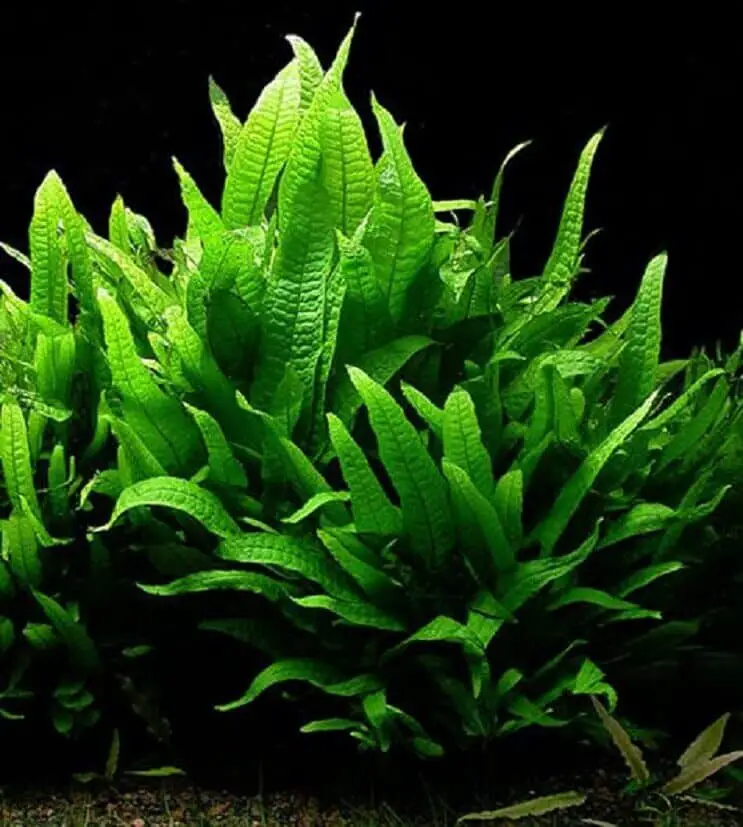
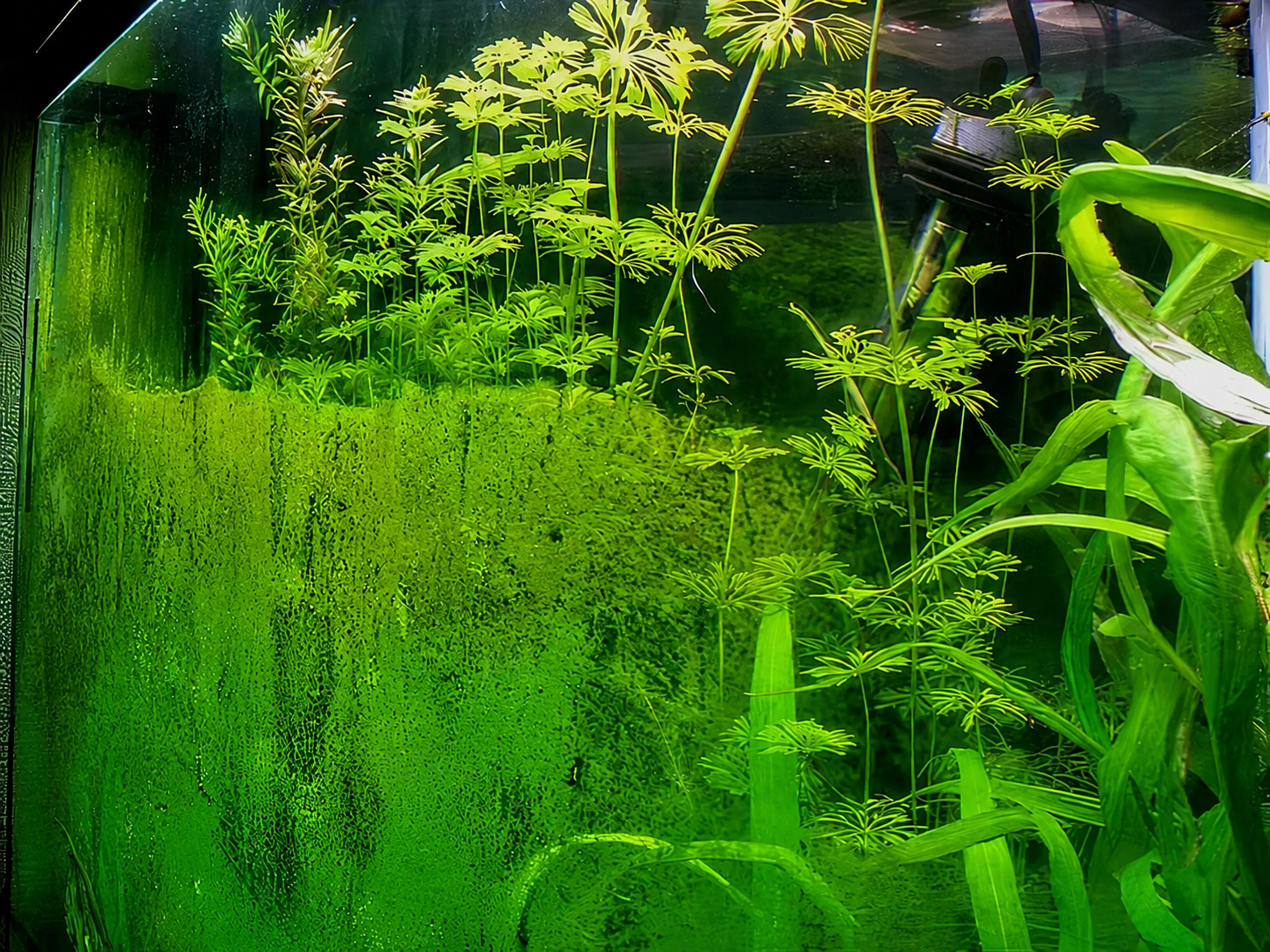
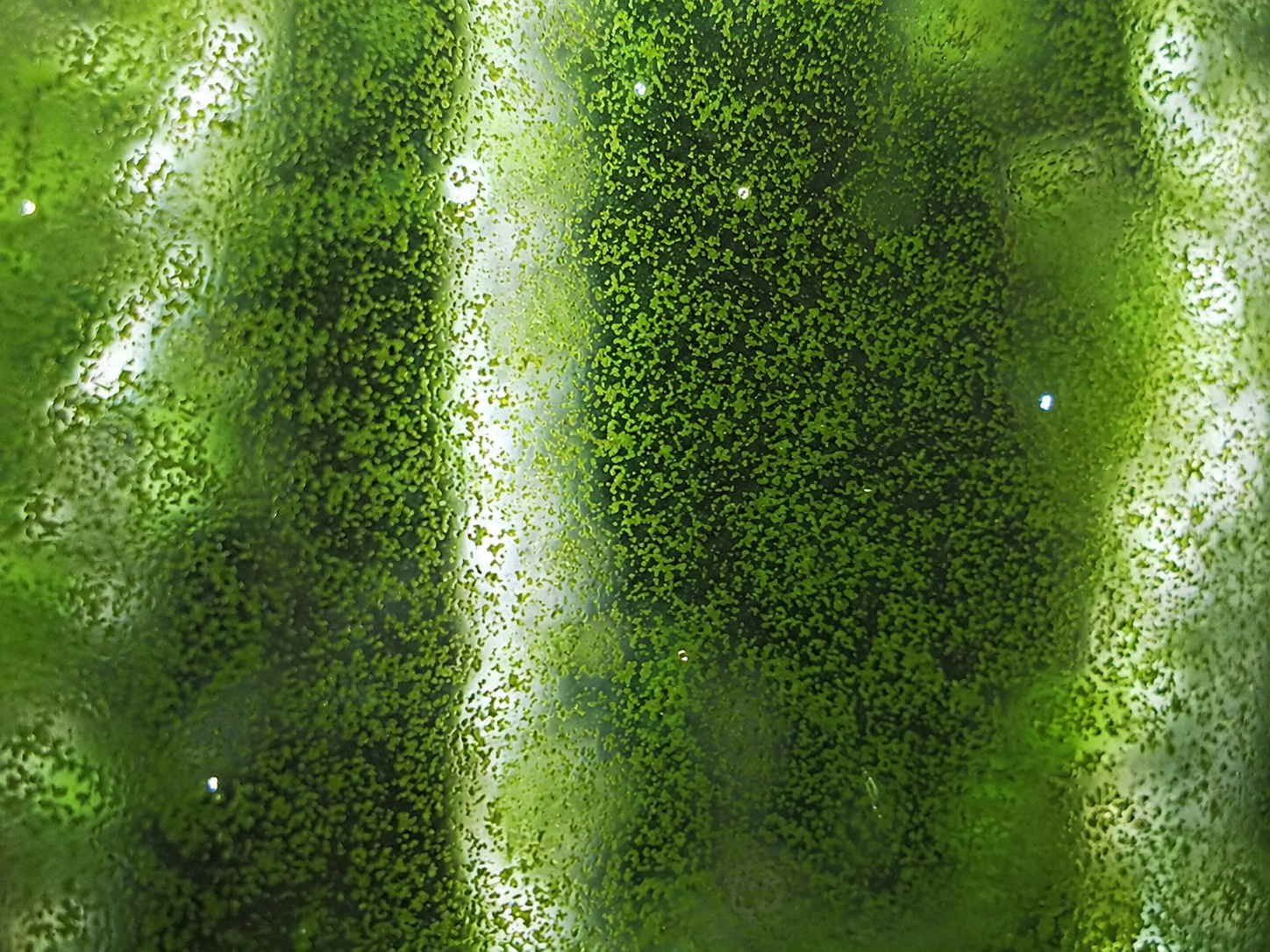
Small, hard, circular green dots stuck firmly to the glass, slow-growing leaves (Anubias and Java Fern are frequent targets), and hardscape. Unlike most algae, Green Spot Algae (GSA) doesn’t wipe off with a soft cloth — it needs a scraper or a fingernail, and it comes off in flat little discs.
Why it happens
GSA is strongly associated with low or inconsistent phosphate combined with strong, consistent light. When light is plentiful but phosphate is scarce, most fast-growing plants stall out — but GSA, which needs very little phosphate to get by, keeps going. It’s also common on the glass itself, since GSA can pull phosphate directly from the water rather than through roots, giving it a big advantage over rooted plants when phosphate runs short.
It also shows up disproportionately on slow growers like Anubias and Java Fern — not because those plants cause it, but because their leaves stick around long enough for GSA to establish, while a fast-growing stem plant’s leaves are gone before a spot has time to form.
How to clear it
- Dose phosphate deliberately rather than avoiding it. A common mistake is under-dosing phosphate out of fear of algae in general — GSA specifically thrives when phosphate is the limiting nutrient, not when it’s abundant. Seachem Flourish Phosphorus dosed on a regular schedule is the straightforward way to close that gap.
- Scrape the glass with a blade or pad on a regular schedule. GSA doesn’t come back instantly once nutrients are balanced, but existing spots need to be physically removed.
- Reduce light intensity or duration slightly if dosing changes don’t resolve it within a few weeks — GSA needs less light than a thriving stem plant to get by, so cutting the surplus removes its edge.
GSA is one of the more cosmetic algae types — it won’t harm fish or plants — but it’s also one of the slower ones to fully clear since existing spots are stubborn. Expect steady improvement over several weeks once phosphate dosing and light are both dialed in, not an overnight fix.