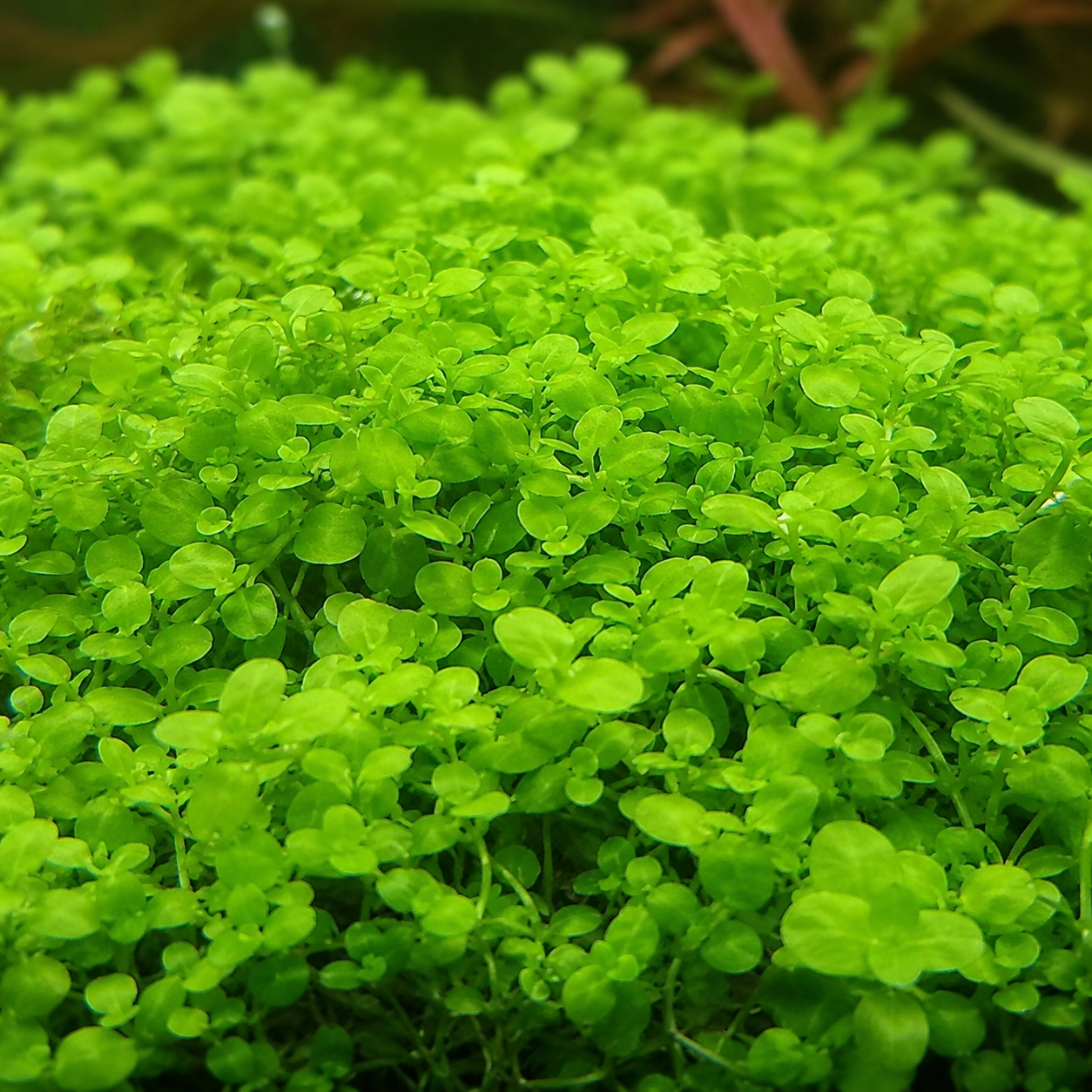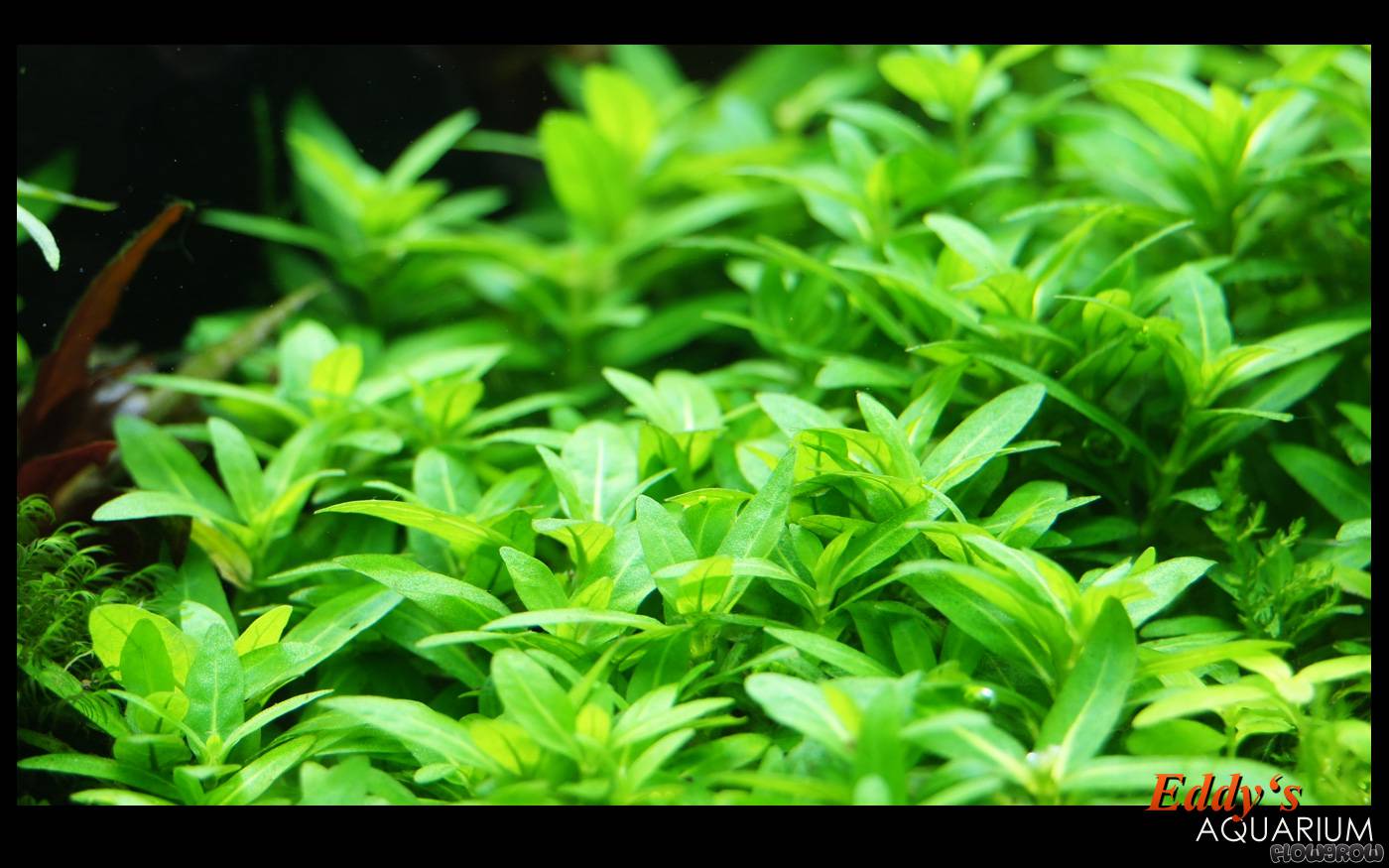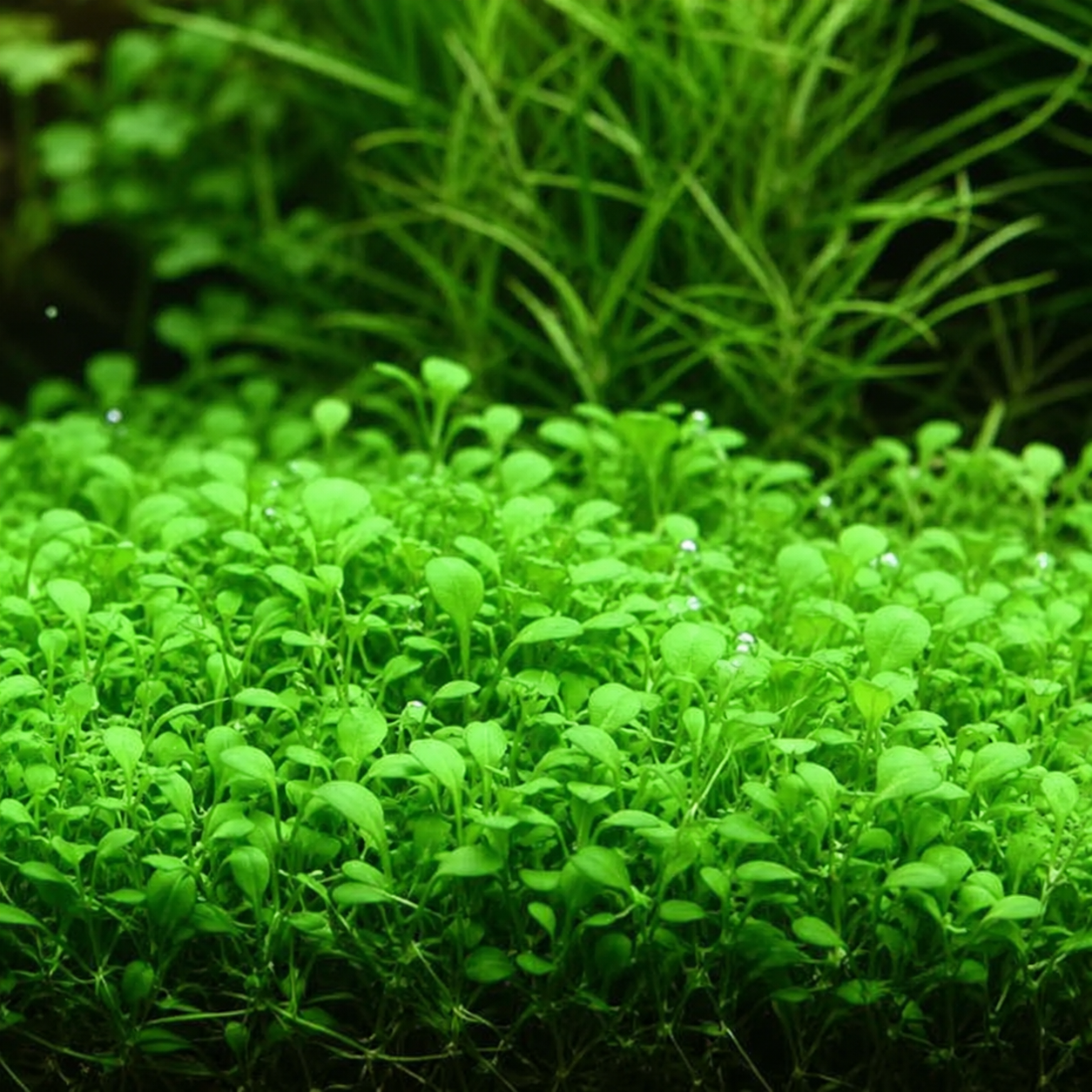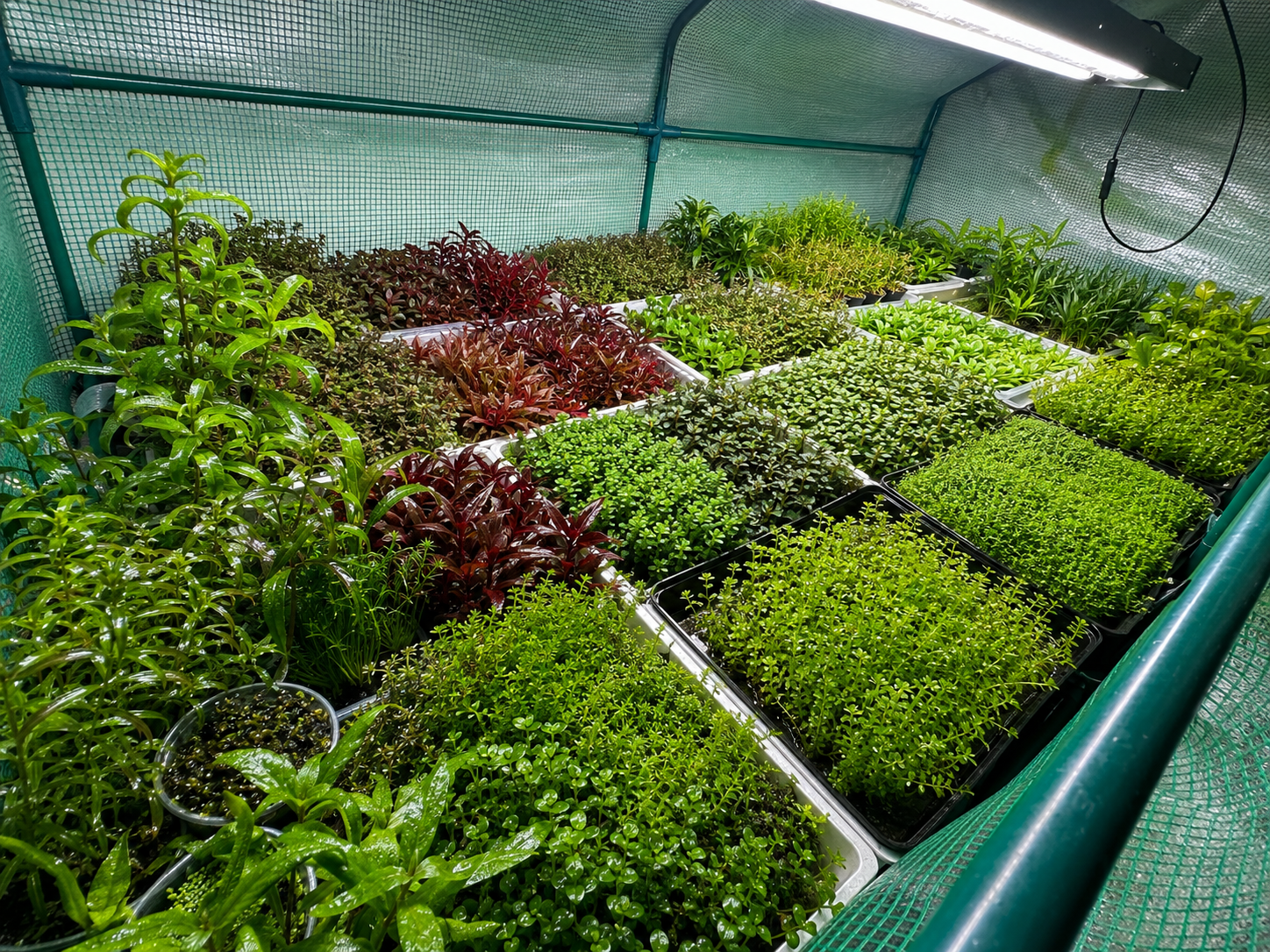
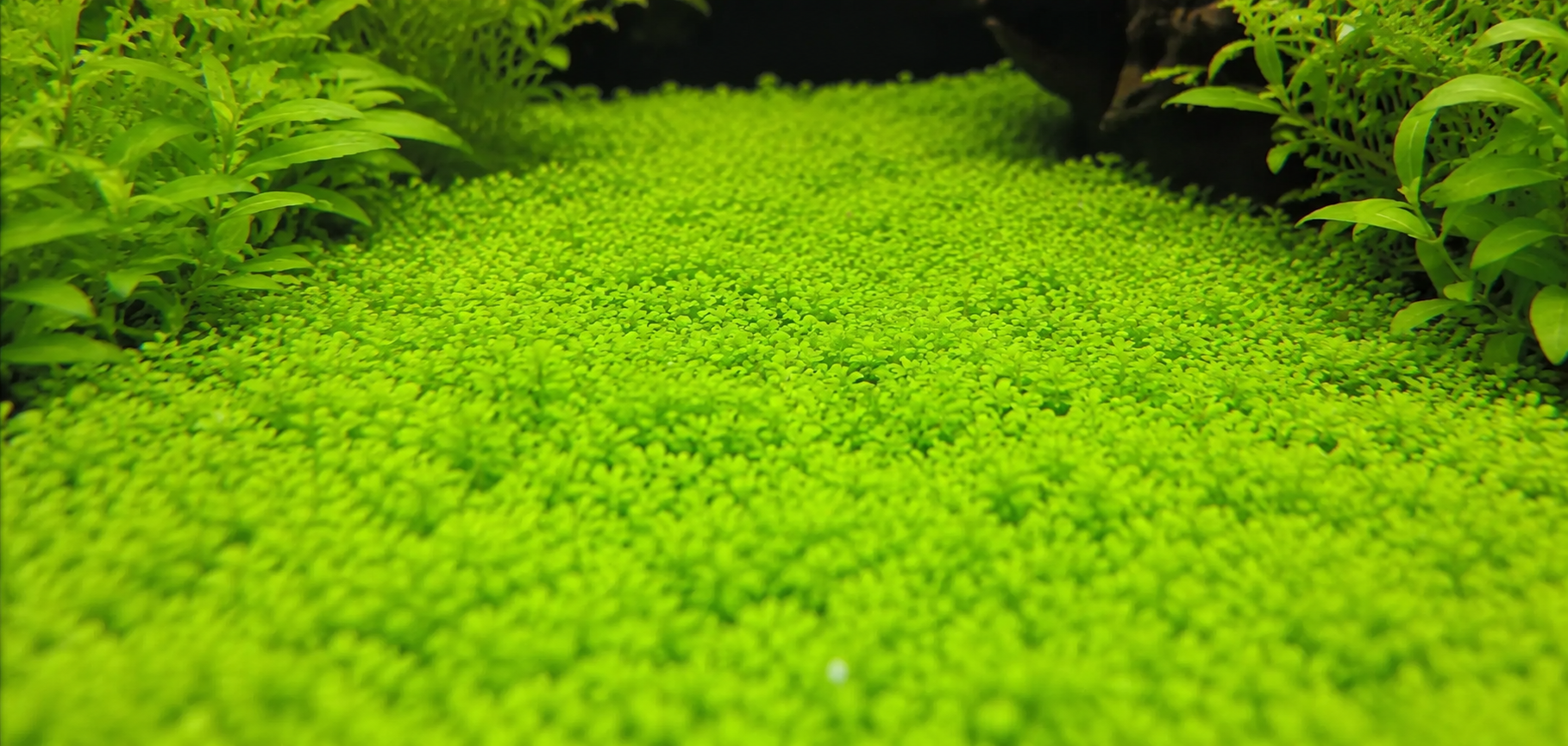
Hemianthus callitrichoides “Cuba” (HC Cuba, HC Mini) was first discovered on the northern coast of Cuba, growing in limestone stream channels in clear, mineral-rich, tropical water. It has the smallest leaves of any commonly available aquarium plant — individual leaves are roughly 1 mm across — and it forms a perfectly flat, dense green carpet that is the foundation of the most iconic Nature Aquarium and Dutch style layouts.
It is also the most demanding plant in common aquarium use. This is not a plant for beginners, and it is not a low-tech plant.
What HC Absolutely Requires
CO2 injection is mandatory. Without CO2, HC will not carpet. It will survive for a time but will grow upward, lose color, and eventually melt. There is no low-tech workaround for this plant.
High light is mandatory. Not just “decent” light — strong light that reaches the substrate level. HC grows on the tank floor, and if light intensity at substrate level drops below approximately 50 µmol PAR, it will not thrive.
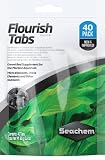
Root nutrition: Seachem Flourish Tabs placed in a dense grid across the planting area are critical. HC’s root system is fine and shallow — place tabs every 8–10 cm across the entire foreground zone, not just at the edges. Replace every 2–3 months as HC exhausts root-zone nutrients quickly. Seachem Flourish liquid dosed frequently (every 1–2 days during establishment, weekly once mature) maintains micronutrient levels.
Fine substrate: HC needs 1–3 mm grain size at maximum. In coarser gravel it cannot maintain surface contact and will float up rather than spread.
Water Parameters
Coming from clear, mineral-rich Cuban limestone streams, HC does best in stable, warm conditions: 72–82°F (22–28°C), pH 6.5–7.5. Stability during establishment matters as much as the exact numbers — this plant has very little tolerance for swings while it’s still rooting in.
Appearance
Under proper conditions: a uniformly 1–2 cm carpet of tiny, bright green leaves that looks like a perfectly manicured lawn. Individual plants are nearly indistinguishable in a dense mat. The “hilly” carpet effect — where the HC mounds slightly over rocks or substrate contours — is one of the signature visual elements of competition-level planted tanks.
How to Plant
Divide TC portions into very small sections (5–10 stems each) and press into fine substrate at 1 cm intervals. Do not compact the substrate — HC roots need some looseness to penetrate. Push Seachem Flourish Tabs under the substrate across the entire area at planting time.
Trimming
Trim with flat scissors when the carpet reaches 2–3 cm. Regular trimming (every 2–3 weeks) keeps it flat and promotes lateral spread. Trimming also reduces the buildup of dead organic matter beneath the carpet, which can cause anaerobic patches and carpet browning.
Common Problems
- Melting. The single most common outcome for this plant when any of its three requirements — CO2, high light, or root nutrition — falls short. Diagnose by checking each in turn rather than guessing.
- Growing up instead of spreading flat. A light or CO2 shortfall at substrate level specifically, even if light looks fine higher in the water column.
- Brown, anaerobic patches under a thick carpet. Trapped debris beneath dense growth; thin it out and improve flow at substrate level.
Pests
No specific pest issues, though thoroughly rinse tissue culture stock before planting given how densely it’s packed.
Realistic Expectations
A successful HC carpet in a high-tech tank is one of the most beautiful things in the planted tank hobby. It takes 4–8 weeks to fully establish, requires consistent daily attention for the first month, and rewards that investment with a result no other plant can replicate. If your tank is high tech and well-maintained, HC Cuba is worth the effort.