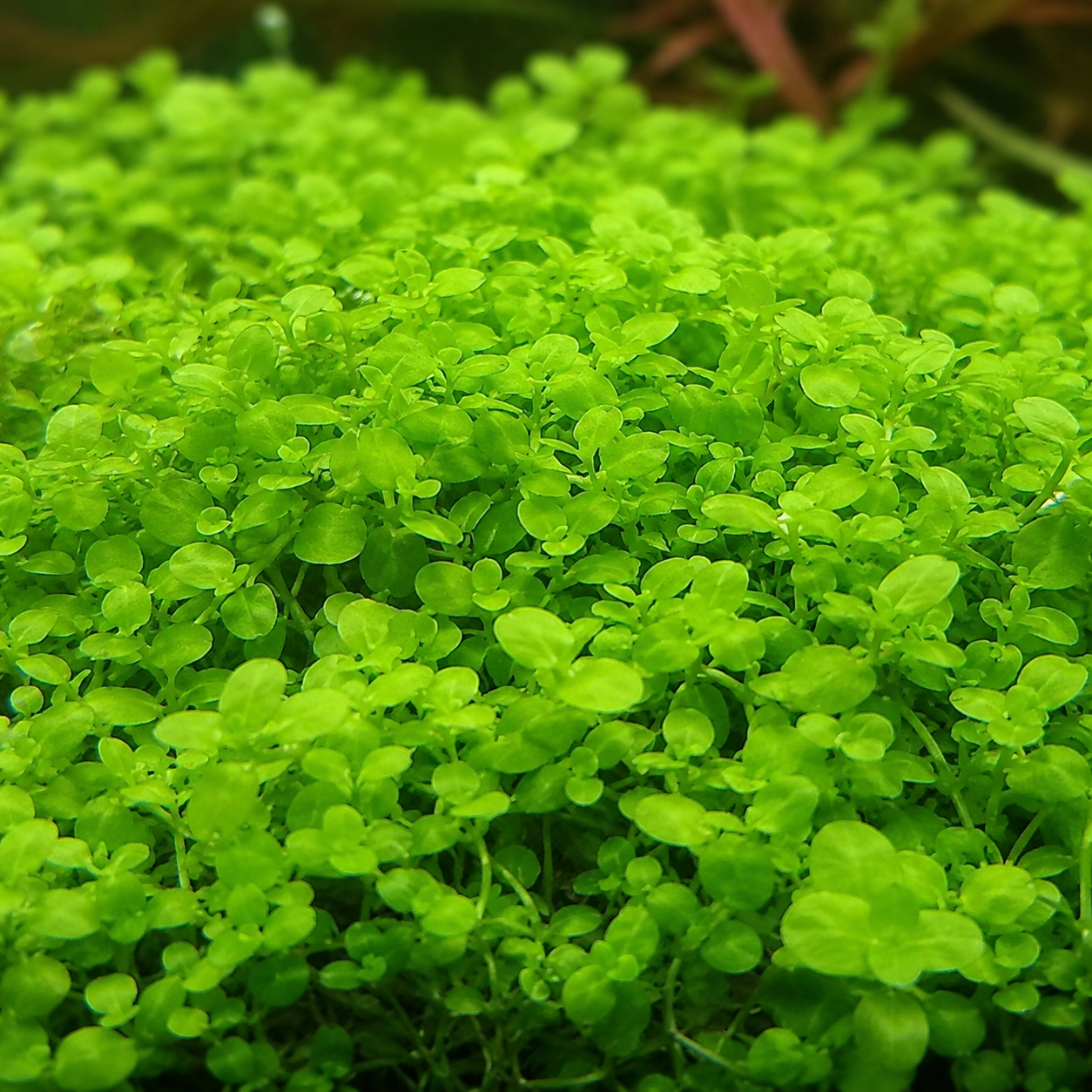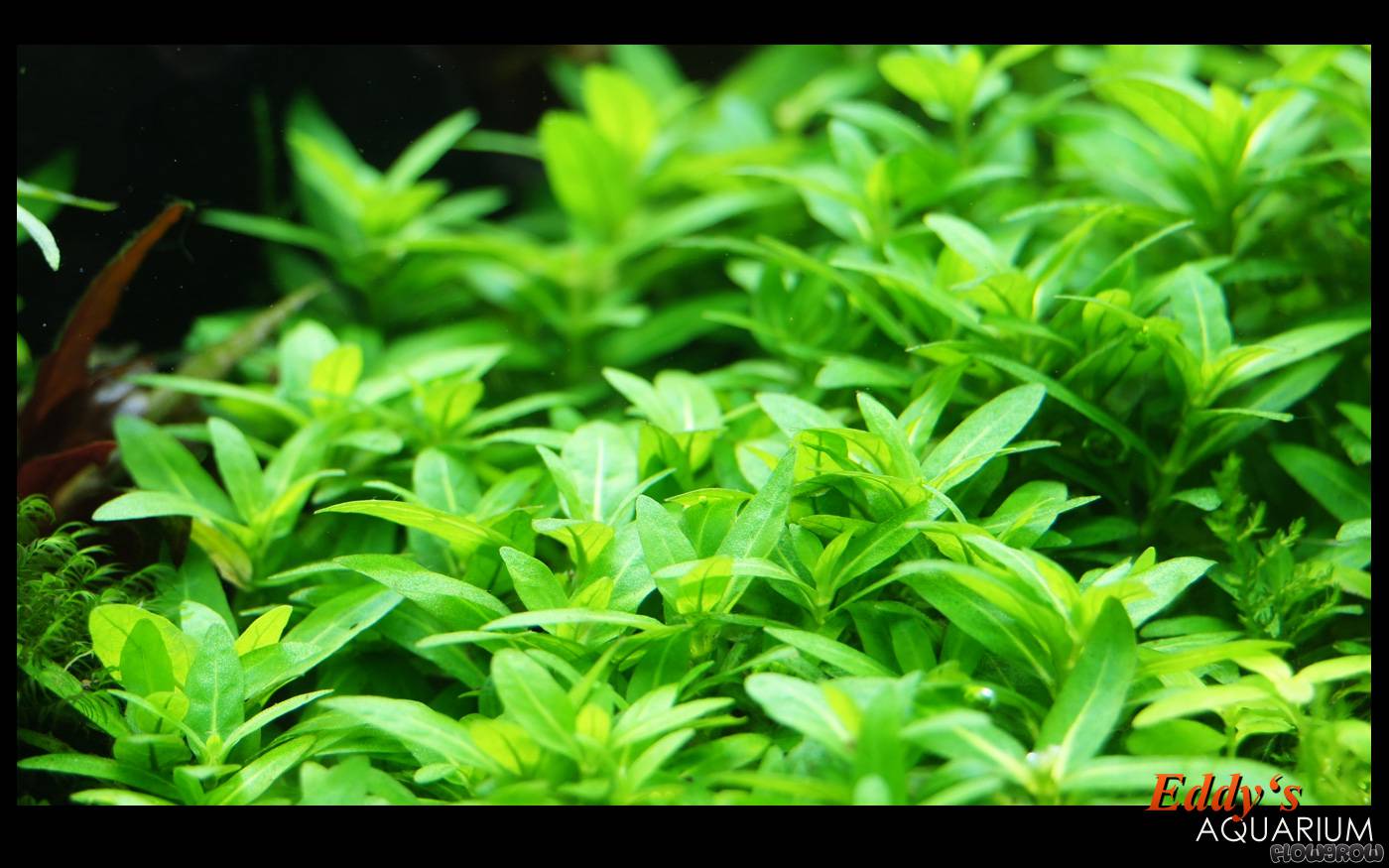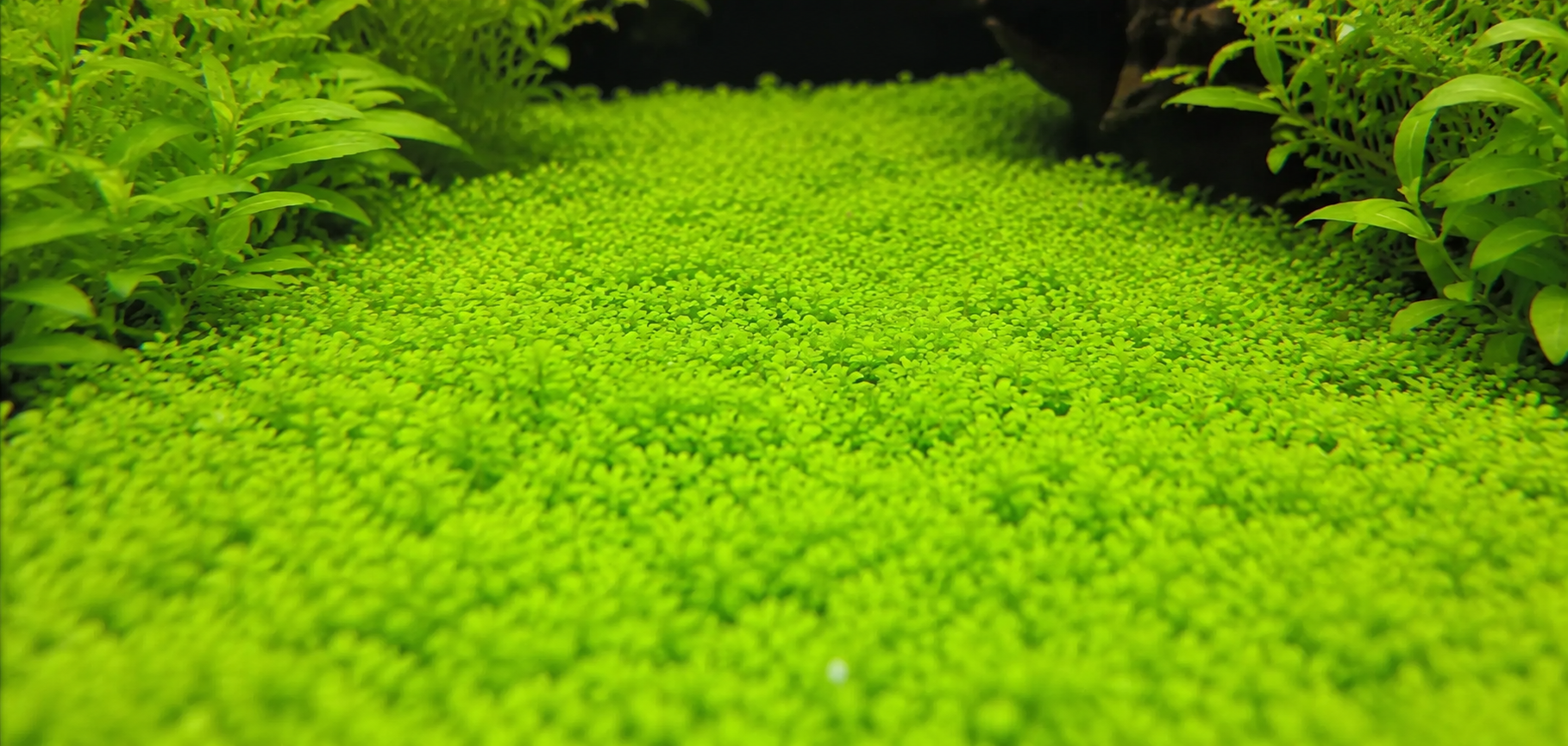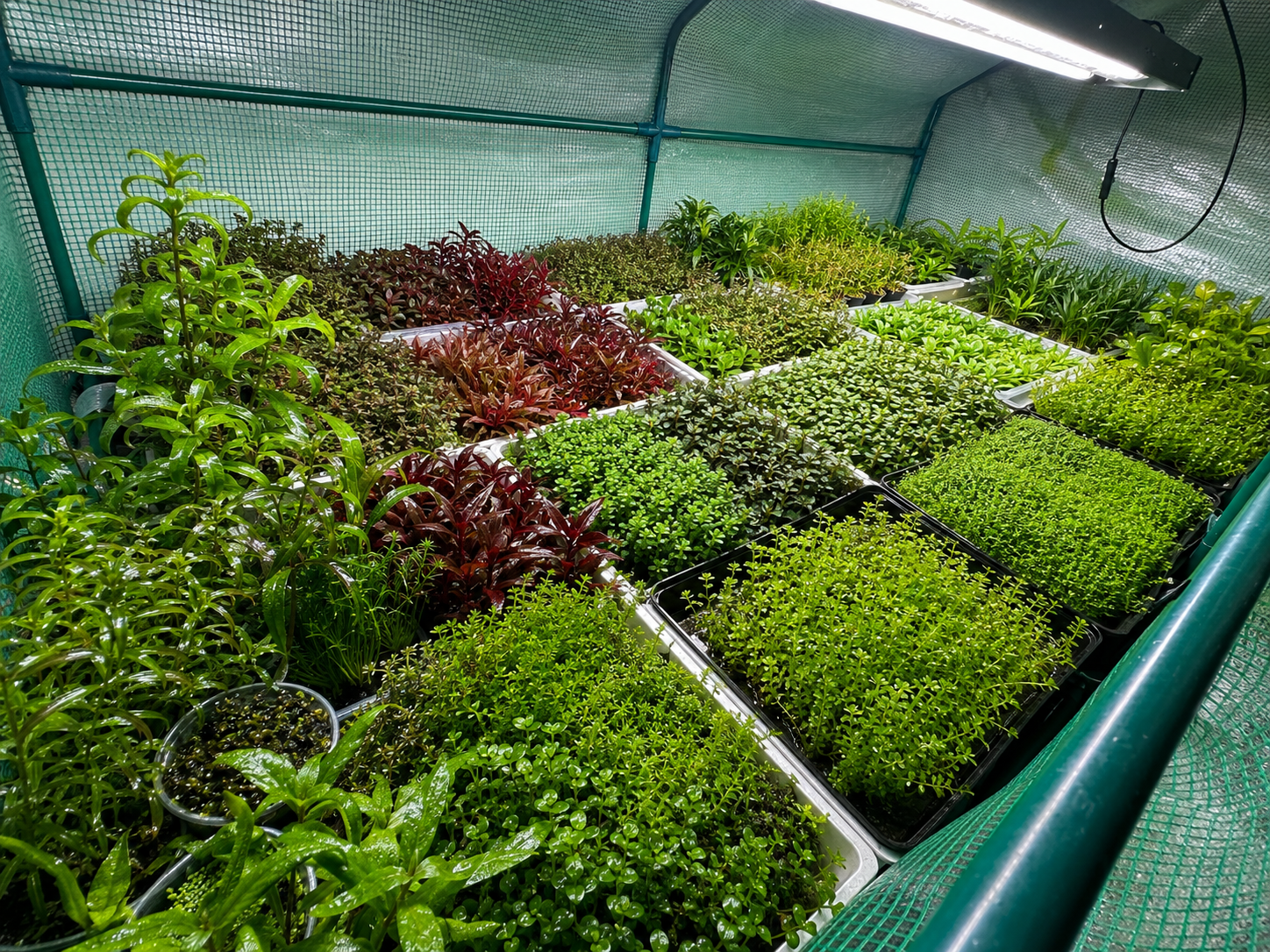
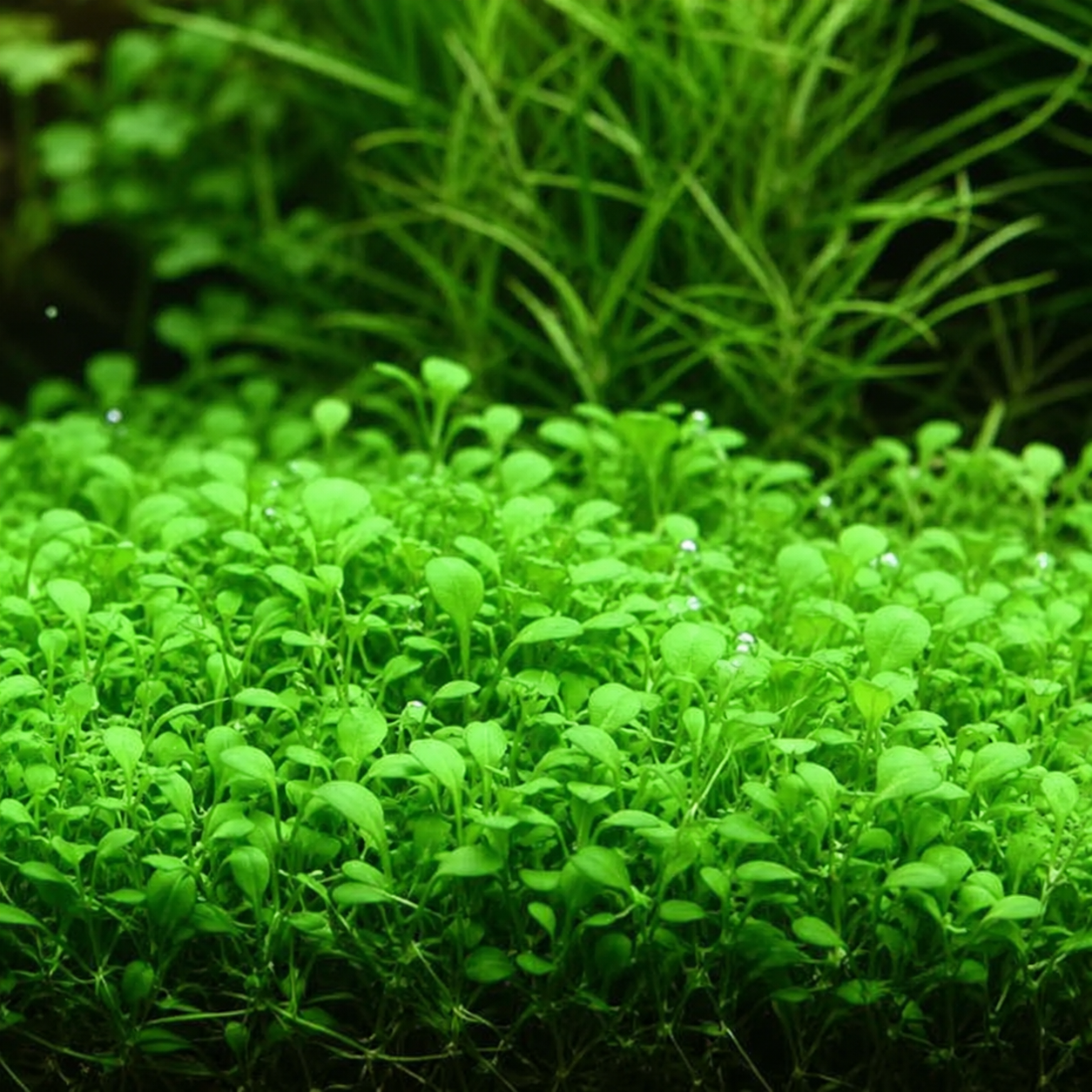
Glossostigma elatinoides is native to Australia and New Zealand, where it grows in shallow, clear water along stream margins and in seasonally flooded areas — typically in high-light, low-nutrient environments. In the aquarium hobby it became famous as one of the first plants used to create a true ground-level carpet, and it remains the benchmark for foreground carpet plants in traditional Nature Aquarium and iwagumi-style scapes.
It’s also one of the most demanding plants in common use. Be honest with yourself about your setup before choosing it.
What It Needs to Succeed
- High light: Strong light directed at the substrate level. Glossostigma grows toward the light — under low light it will grow upward rather than horizontally, producing tall stems rather than a flat carpet.
- CO2 injection: Without CO2, Glossostigma grows very slowly and often fails to spread horizontally. This is not a plant for low-tech tanks. It can survive without CO2 but it will not carpet.
- Root nutrition: Seachem Flourish Tabs placed in a grid across the carpet area are important — push multiple tabs at regular intervals across the planting zone, not just at the edges. The carpet’s running roots need nutrition throughout the entire area.
- Water column: Seachem Flourish liquid dosed regularly (daily or every other day during active growing phases) maintains the micronutrient levels the tiny leaves need.
Water Parameters
Coming from clear, mineral-rich Australasian streams, it does best in stable conditions: 68–78°F (20–26°C), pH 6.0–7.5. It’s not especially forgiving of large swings in any of these while establishing, so keep water changes consistent during the first month.
Appearance and Placement
Leaves are tiny — 2–4 mm — and spoon-shaped, produced on fine stolons that spread just above the substrate. A fully established carpet is 1–2 cm tall and uniformly bright green. It covers the foreground like turf.
How to Plant
Divide tissue culture or potted Glossostigma into small sections and press into fine substrate (grain size 1–3 mm is ideal) at 2 cm intervals across the foreground. Over several weeks under high light and CO2, the sections will spread and merge into a continuous carpet.
Trimming
Use sharp scissors to trim the surface of established carpets every 2–3 weeks. Trim flat across the top — the cut stimulates new lateral growth and keeps the carpet dense. Don’t let it get taller than 2 cm before trimming.
Common Problems
- Growing tall instead of carpeting. The defining Glossostigma problem — it means light and/or CO2 aren’t sufficient. There’s no substitute fix for this; both need to be dialed in.
- Melting or browning patches. Usually poor flow or a buildup of debris trapped under a thick carpet; thin out dense sections and improve circulation at substrate level.
- Algae growing through the carpet. A sign of a nutrient imbalance relative to light — this plant’s high light demand makes algae competition a real risk if fertilizing isn’t dialed in alongside it.
Pests
No specific pest issues. Rinse tissue culture or potted stock thoroughly before planting, as with any new plant.