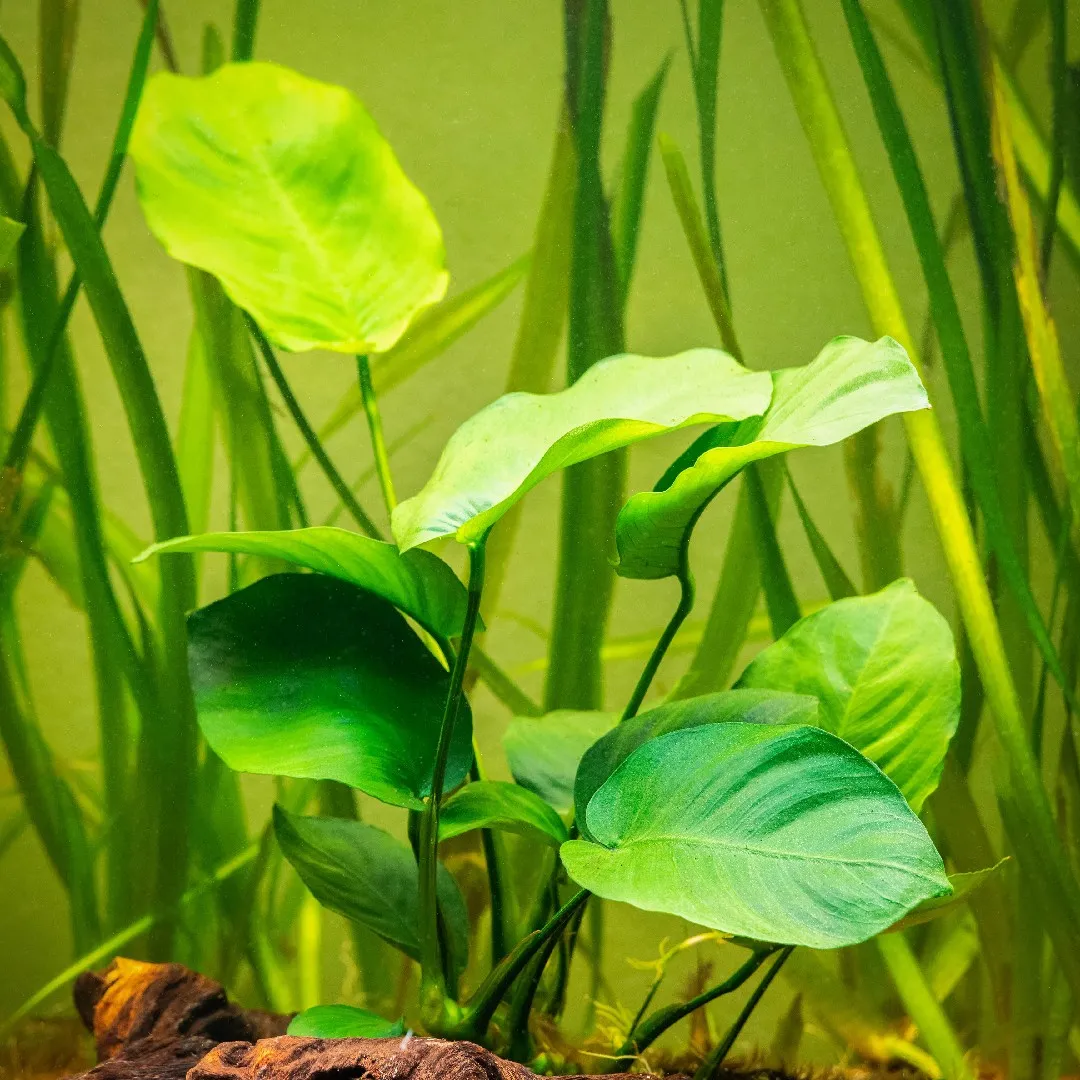
If there’s a single plant we’d hand to every new aquarist, it’s Anubias. It’s slow, it’s tough, and it asks for almost nothing. Attach it to a rock or a piece of driftwood, put it anywhere in the tank, and forget about it.
Native Range and Natural Habitat
Anubias comes from the rivers and streams of tropical West and Central Africa — Cameroon in particular is home to most of the species in the trade. In the wild it grows attached to rocks and submerged roots in shaded, slow-moving water under dense rainforest canopy, which is exactly why it’s such a committed low-light plant in an aquarium: strong, direct sun is simply not part of its native environment.
Anatomy: Rhizome, Roots, and Leaves
Anubias grows from a rhizome — a thick horizontal stem that both leaves and roots emerge from. The rhizome stores energy reserves, which is a big part of why the plant can coast through low light, missed water changes, or a move between tanks without missing a beat. The roots anchor it to hardscape rather than feed it, and the leaves themselves are thick, waxy, and dark — tough enough that most fish and snails leave them alone entirely.
Varieties Worth Knowing
- Anubias barteri — the classic, medium-sized broad leaf.
- Anubias nana / nana ‘petite’ — compact, perfect for foregrounds and nano tanks.
- Anubias coffeefolia — bronze new growth that ages to deep green, with a slightly ruffled leaf texture.
- Anubias frazeri — one of the larger varieties, with elongated leaves that reach well past a foot.
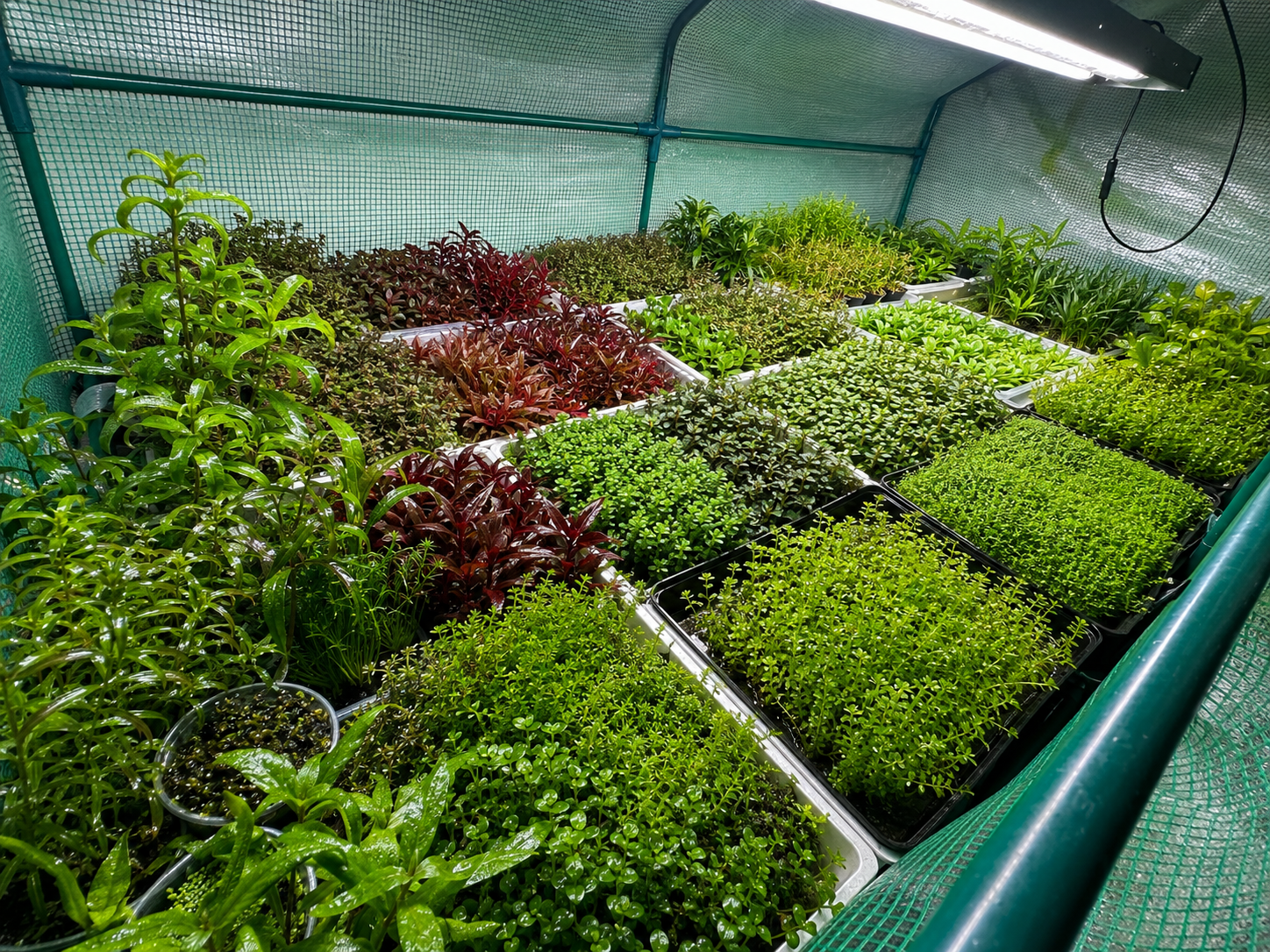
- Anubias barteri var. angustifolia — narrow, lance-shaped leaves for a different silhouette than the round-leaf types.
All of them ship well and transition out of the bag with barely any melt — which is exactly why they’re a staple in every pack we send out.
Planting: The One Rule That Matters
Do not bury the rhizome. Anubias attaches to hardscape — it should never be pushed into substrate. If the rhizome ends up covered, it will rot within weeks; only the roots should ever touch the substrate.
Hold the rhizome against a piece of driftwood or rock and tie it loosely in place with thin cotton thread, fishing line, or a plant anchor tie. Alternatively, apply a small dot of aquarium-safe super glue gel (cyanoacrylate) to the bottom of the rhizome, press it against the hardscape, and hold for 30–60 seconds. Cotton thread degrades harmlessly in water over four to six weeks; by then the roots have gripped the surface and the plant holds on its own.
Light and Placement
Position Anubias in a lower-light spot — partially shaded by taller plants, or simply away from the most direct overhead light. It actively prefers shade and is one of the few aquarium plants that genuinely performs better under reduced light. See choosing a planted tank light if you’re setting up a tank where Anubias needs to share space with brighter-loving plants — placing it low and shaded solves most conflicts.
Water Parameters
Anubias tolerates an unusually wide range of water chemistry without complaint:
- Temperature: 72–82°F is comfortable, with tolerance down to roughly 68°F and up to 84°F.
- pH: 6.0–7.5 covers almost every home aquarium, and it isn’t fussy about hardness either.
- Water changes: a standard 20–25% weekly or biweekly change is plenty — this plant doesn’t demand pristine water and won’t punish you for a missed week.
Feeding
Like most hardscape epiphytes, Anubias takes essentially no nutrition from the substrate — the water column is its only real food source. Seachem Flourish dosed weekly is genuinely the entire fertilizer program here. Root tabs do nothing for it since the roots aren’t feeding structures; save those for substrate-rooted plants. Growth is slow either way, but a fertilized Anubias produces noticeably larger, darker leaves than an unfertilized one over the course of months.
Growth and Maintenance
This is about as low-maintenance as aquarium plants get. Because it’s so slow-growing, Anubias rarely needs trimming — mostly you’re just removing the occasional yellowing or algae-covered leaf at the rhizome so the plant can put energy into new growth instead. Its tough leaves can also handle a gentle wipe or scrape to remove algae film without damage, which isn’t true of most softer-leaved plants.
Propagation
Propagation is entirely rhizome-based. As the rhizome lengthens over months, it develops new growth points and occasionally branches on its own. To propagate deliberately, cut a mature rhizome into sections with a clean blade, making sure each section keeps a few leaves and visible root growth, then tie or glue each piece to its own new hardscape. Both halves will continue growing independently.
Common Problems
Anubias has very few real ailments, but one issue comes up constantly:
- Algae on the leaves. This is by far the most common Anubias complaint, and it’s a direct consequence of how slowly it grows — new leaf tissue doesn’t outpace algae growth the way it does on faster plants, so green spot algae and sometimes black beard algae colonize older leaves under anything more than modest light. The fix is almost always to dial back light intensity or duration rather than to treat the algae directly; a gentle leaf wipe clears existing spots once the light is corrected.
- Rhizome rot. Covered above — if the rhizome ends up buried or is kept too tightly wrapped against hardscape without water flow, it can soften and rot. Trim away affected tissue and re-secure the healthy rhizome above the substrate.
- Slow, patchy yellowing. Usually a sign of long-term under-fertilizing rather than anything urgent; a regular liquid dosing routine resolves it over a few weeks.
Pests
Anubias attracts almost no pests directly — its thick, tough leaves are unappetizing to most fish and snails alike, which is part of why it survives so well in mixed community tanks. The one thing to watch for is hitchhiker snails riding in on store-bought specimens; a quick rinse and visual check before adding a new plant catches most of them.