
Bucephalandra — almost always just called “Buce” in the hobby — is a genus endemic to Borneo, growing on rocks in the fast-flowing, clear jungle streams of Kalimantan and Sarawak, often partially exposed right at the waterline. It’s become one of the most sought-after collector plants in the modern hobby, largely for one signature feature: many species and cultivars display an iridescent blue or metallic sheen across their leaves that shifts with the angle of light.
Why It Actually Shimmers
That blue sheen isn’t pigment — it’s structural color, produced by microscopic nanostructures in the leaf’s epidermal cells that are thought to help the plant capture more available light on the shaded forest floor of its native streams. It’s a genuinely unusual trait for an aquarium plant, and it’s the main reason Buce commands premium prices and collector attention that most low-tech hardscape plants don’t get.
A Taxonomy That’s Genuinely a Mess
Unlike Amazon Sword’s two-species mix-up, Bucephalandra’s naming situation is on another level entirely: dozens of trade names (“Wavy Green,” “Kedagang,” “Theia,” “Brownie,” and many more) circulate in the hobby, and a large number of them have never been formally described as distinct botanical species. In practice this means you’re buying a specific look and growth habit under a trade name rather than a cleanly defined species — and nearly all of them share essentially the same care requirements regardless of name.
Growth Habit
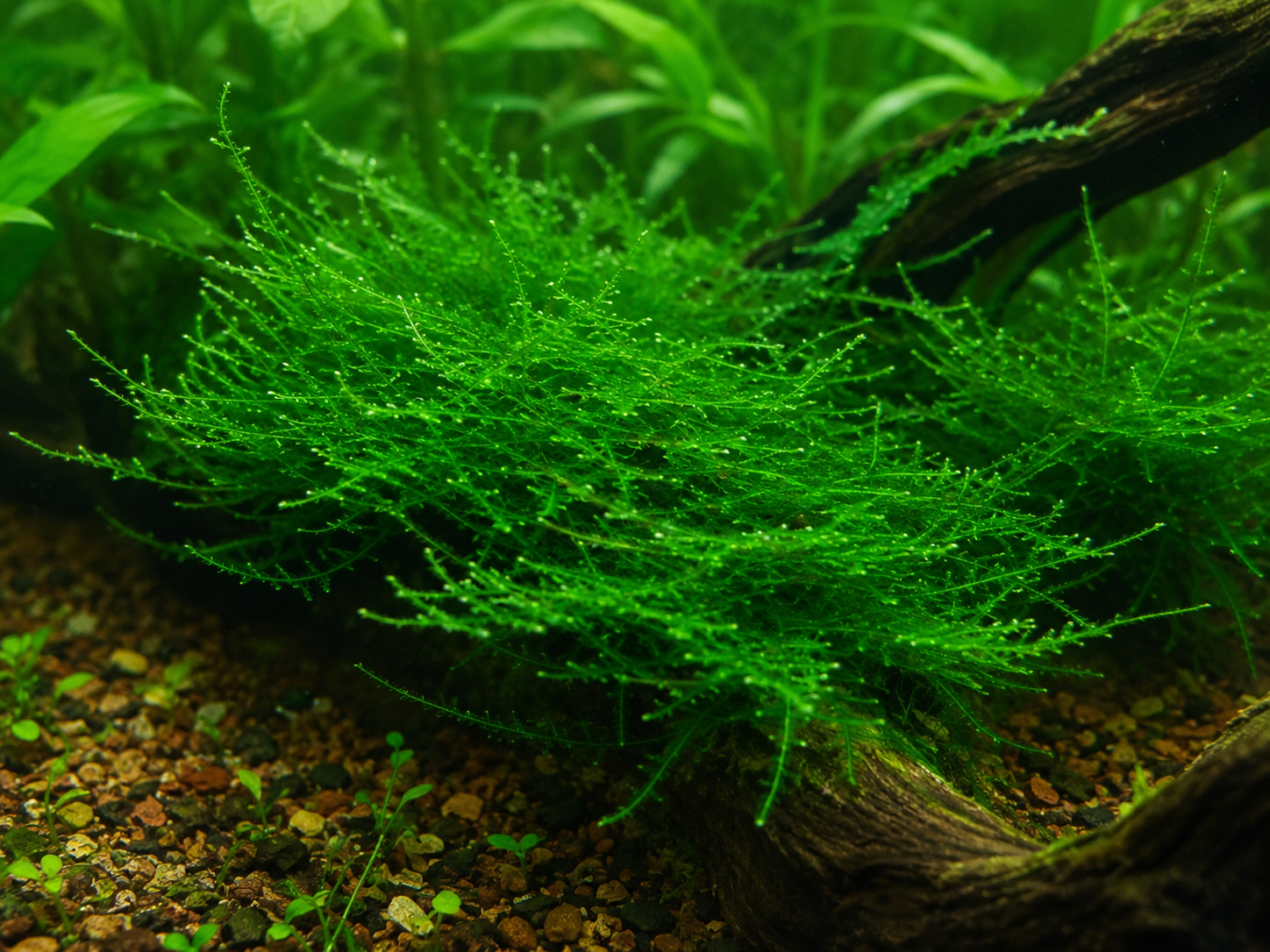
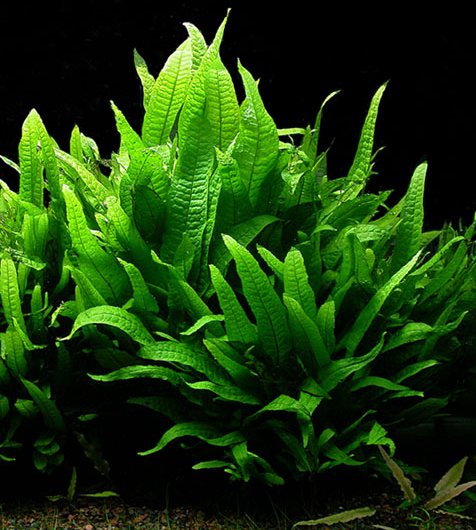
Like Java Fern and Anubias, Bucephalandra grows from a rhizome and attaches to hardscape rather than substrate — the rhizome should never be buried. It’s slower-growing than either of those two more common hardscape plants, which is part of why mature specimens carry a premium price; a small starter piece takes real time to fill in.
Light
Low to medium light suits it best, consistent with its shaded native habitat. Excess light can fade the signature blue sheen and stress the plant generally, so resist the urge to give it the brightest spot in the tank.
Water Quality Is the Real Demand
This is where Bucephalandra genuinely differs from Anubias despite the surface-level similarities. It comes from clean, stable, well-oxygenated jungle streams, and it shows stress from poor water quality more readily than most hardscape plants — inconsistent water changes or high nitrates are more likely to cause visible decline here than they would with Anubias. Keep a consistent weekly 20-25% water change routine with a dechlorinator like Seachem Prime, and treat this as the plant’s actual limiting factor rather than light or CO2.
Feeding
Since the roots only anchor it rather than feed it, Bucephalandra takes all its nutrition from the water column. Seachem Flourish dosed weekly is the entire fertilizer program — growth is slow either way, but a fed plant holds its color and produces fuller new leaves.
How to Attach It
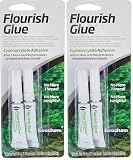
Tie the rhizome to a piece of driftwood or rock with thin cotton thread or fishing line, or use a small dab of aquarium-safe cyanoacrylate gel and hold it in place for 30-60 seconds. Given how slowly this plant grows, take extra care to secure it well the first time — repeated repositioning sets growth back further than it would for a faster-growing plant.
Propagation
Rhizome division, the same as Anubias — cut a mature rhizome into sections with a clean blade, each with a few leaves and visible roots, and tie each piece to its own hardscape. Given the slow growth rate, expect this to be a much longer process than dividing Anubias.
Common Problems
- Losing the blue sheen. Almost always a light or water-quality stress signal rather than a fixed trait — check both before assuming the plant is simply “less colorful” than advertised.
- Rot spreading along the rhizome. Usually from physical damage or being partially buried; trim affected tissue promptly with a clean blade to stop it from spreading further.
- Algae on the leaves. The same slow-growth-versus-algae dynamic covered in our Anubias guide — dial back light rather than treating the algae directly.
Pests
No specific pest issues beyond the usual hitchhiker snails on new stock — rinse and inspect before adding it to an established tank.
Bucephalandra rewards patience more than almost any other plant on this site — slow, particular about water quality, and priced accordingly, but genuinely unlike anything else you can put in a tank.