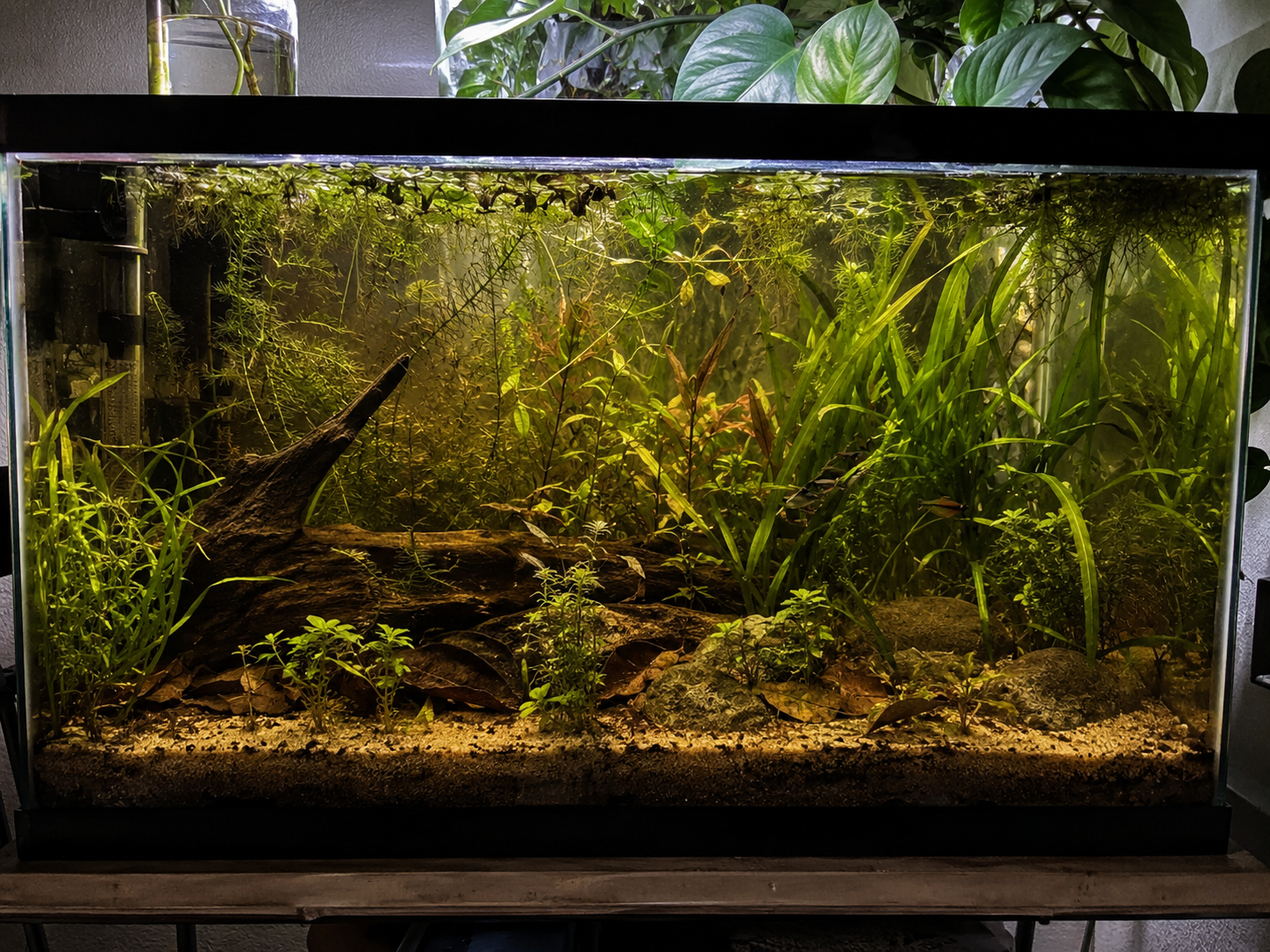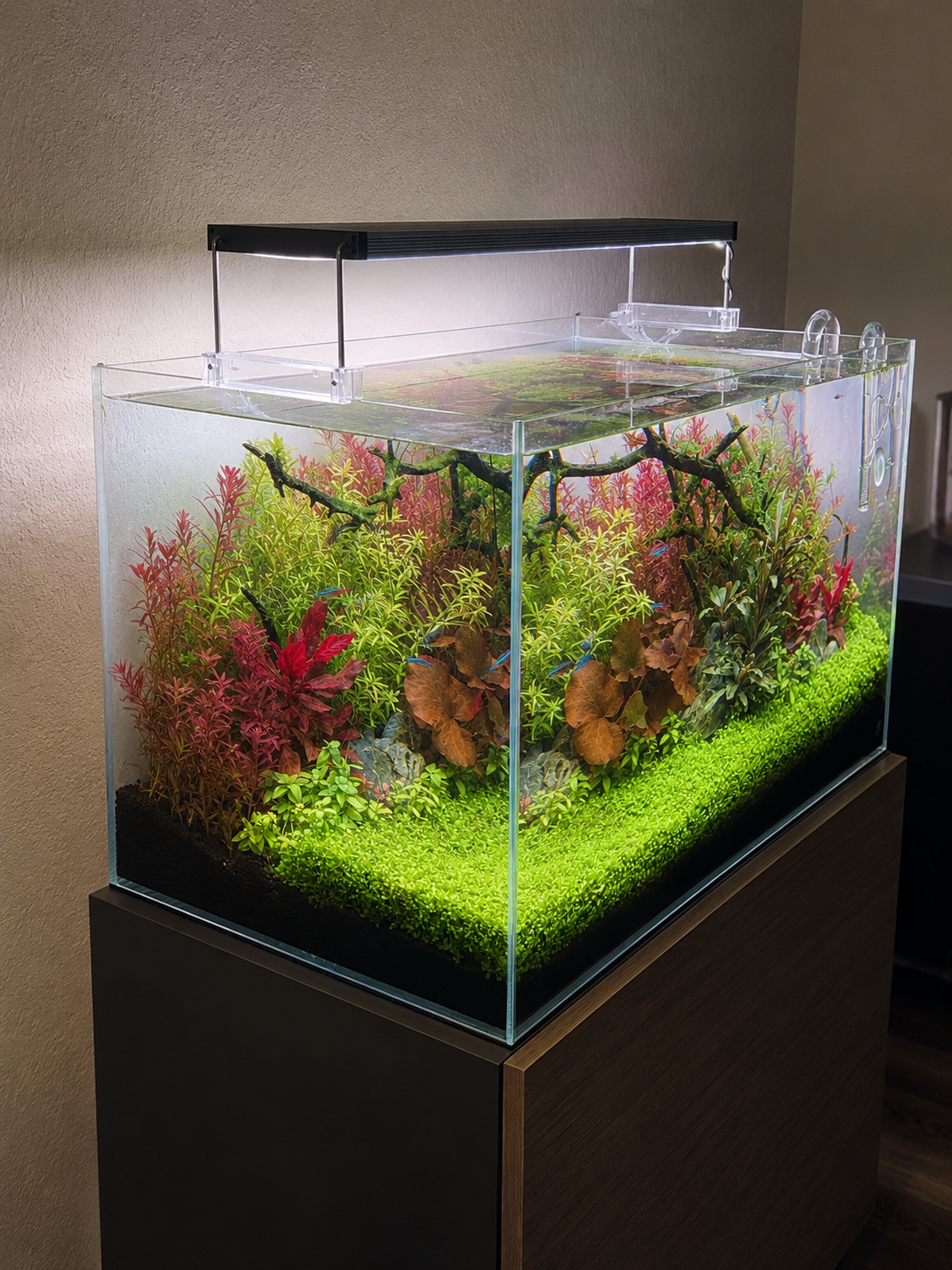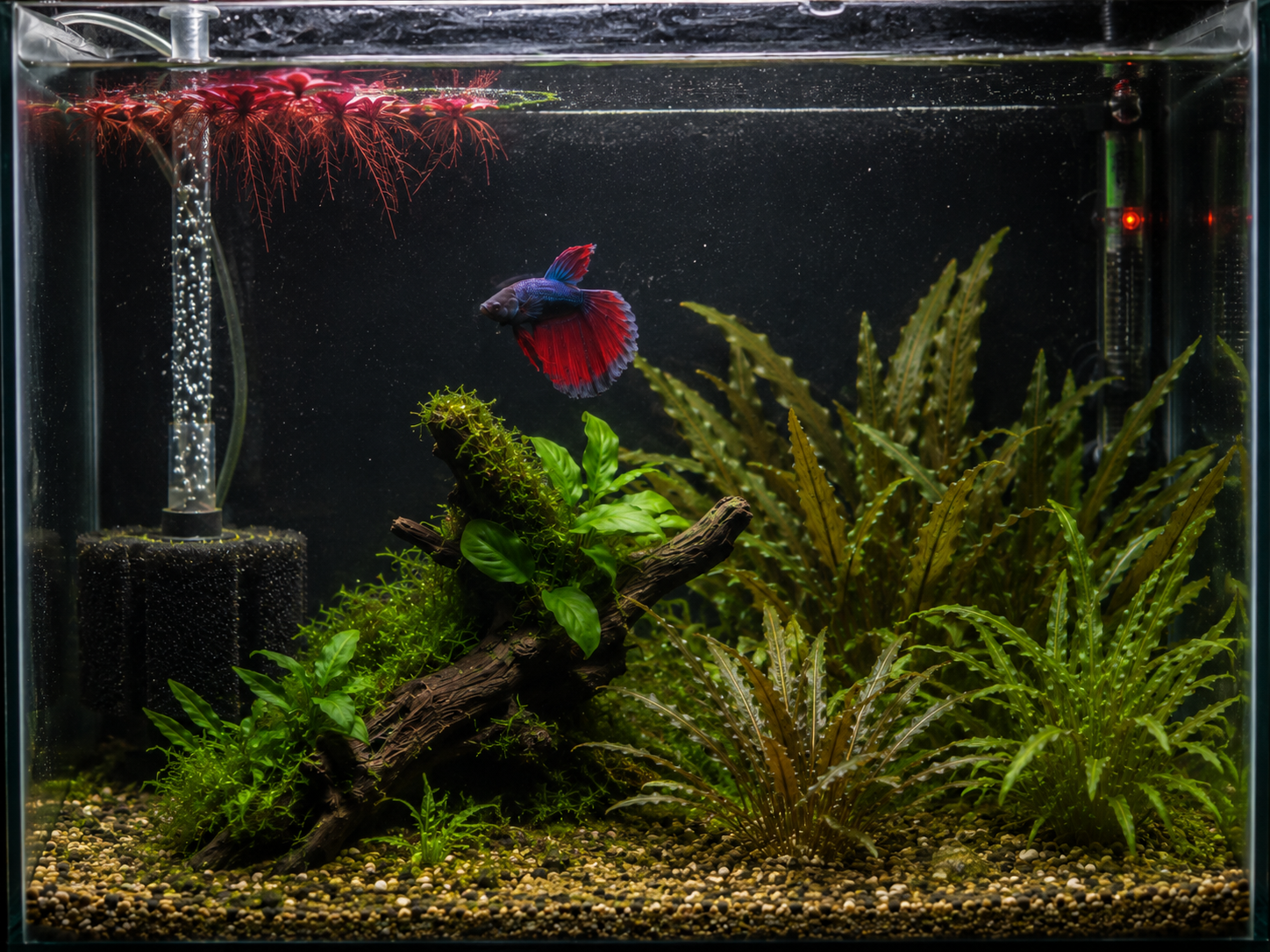
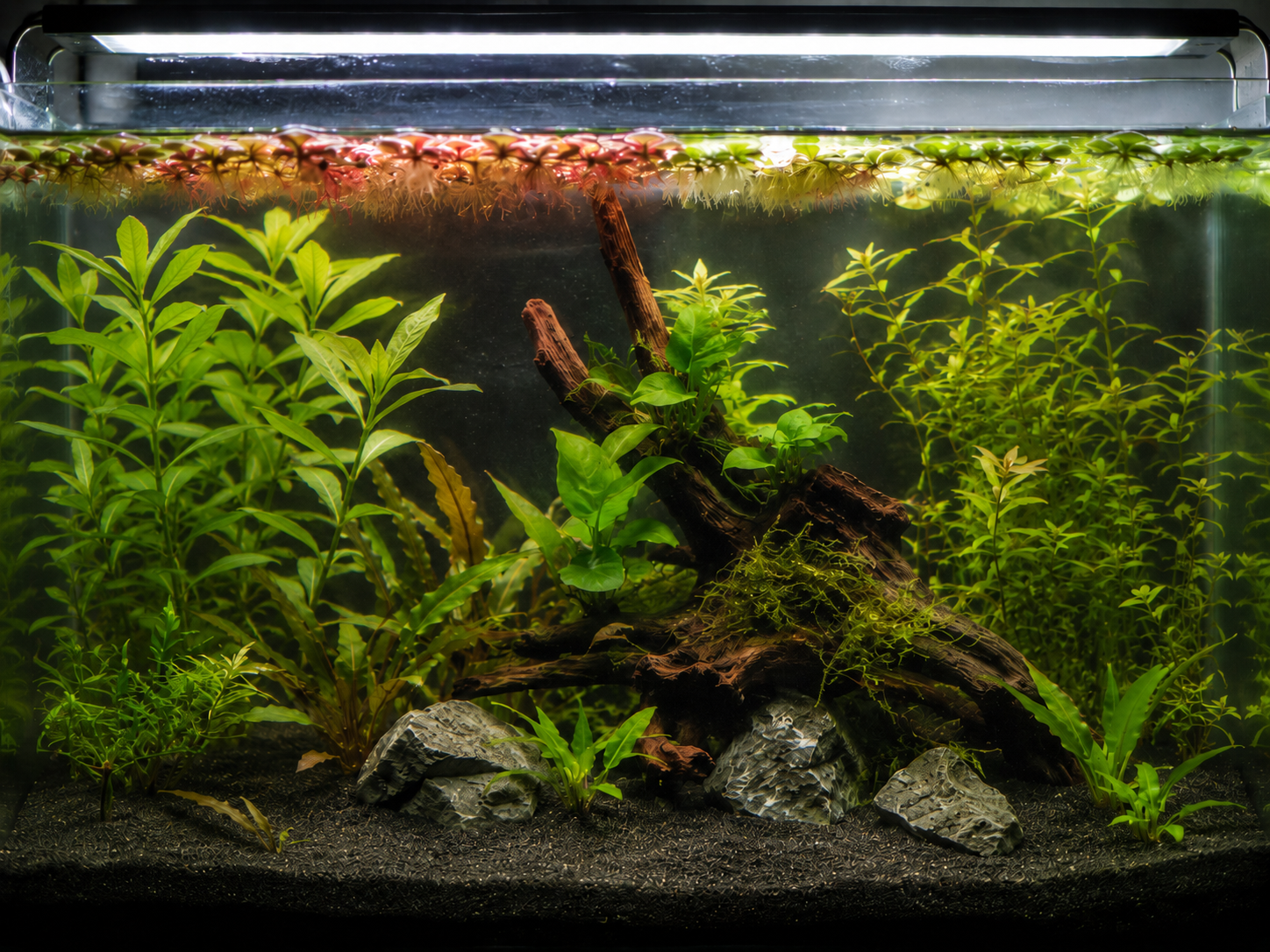
Once you go past a nano tank, a betta setup stops being just “a fish and a plant” and starts being a real aquascape. We wanted enough footprint to layer background, midground, and foreground plants, enough water volume that parameters barely wobble, and still no CO2 — here’s the 20-gallon we put together.
Why We Went With 20 Gallons
Twenty gallons buys stability — a heater hiccup or a missed water change barely registers compared to a nano tank — plus enough open water for the betta to actually patrol between plant clusters instead of just sitting next to one decoration. It’s the first size where a real layout, not just a handful of plants, made sense.
How We Laid It Out
- Background: we ran Hygrophila corymbosa along the back glass for height and quick nutrient export. → Hygrophila Corymbosa guide
- Midground: Java Fern and Anubias tied to a piece of driftwood, plus a Cryptocoryne cluster nearby for color and texture that isn’t fighting anything else for light. → Cryptocoryne care guide
- Foreground: we kept this low and forgiving with Pearlweed and a patch of Bacopa Monnieri — neither needs high light or CO2 to stay short. → Pearlweed guide · Bacopa Monnieri guide
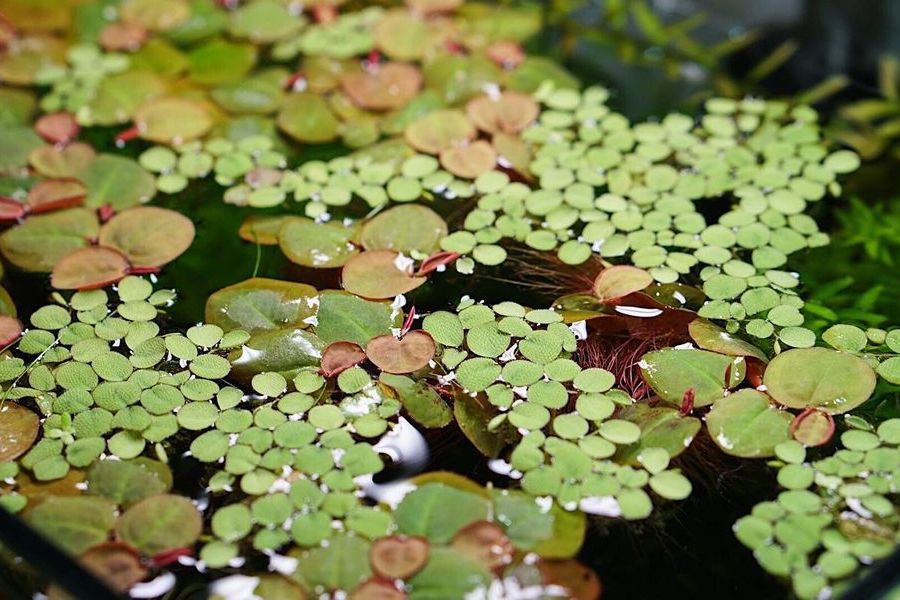
- Floating: Frogbit over roughly a quarter of the surface — enough to soften the light and give the betta cover without shading out everything below.
At this footprint you get real freedom in stocking density — see how many plants per gallon for the rule of thumb we used before buying anything.
The Hardscape
We used one larger branch with two smaller pieces crossing near the substrate, plus a few stones for structure. We deliberately left open swimming lanes through the middle — a dense, wall-to-wall layout looks great in photos but gives a betta nowhere to patrol.
Lighting and Fertilizing
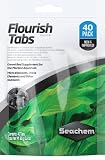
A 20-gallon needs a stronger fixture than a nano tank to reach the substrate through more water column — choosing a planted tank light covers the wattage math we used. We push a root tab under each stem cluster every 3–4 months and dose liquid fertilizer weekly for the stems and floater; the full tradeoffs are in root tabs vs. liquid fertilizer.
Filtration and Heating
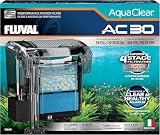
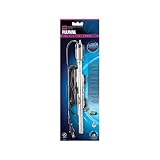
We’re running a hang-on-back filter on its lowest flow setting — a betta’s fins and the floating plants both do better without a direct current pushing them around. We positioned the output so it breaks against the Anubias leaves instead of blasting open water. A standard submersible heater holds this one at 76–80°F.
Maintenance Routine
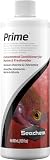
A weekly 25% water change with a dechlorinator, a trim on the stem plants whenever they near the surface, and root tabs on a 3–4 month cycle is genuinely all this tank has needed.
We’re setting up a second one of these to document from bare glass — real build photos coming soon.
Want to Start Smaller?
If 20 gallons is more than you’re ready to commit to, our 5-gallon betta tank setup covers the same approach scaled down. And if you’d rather skip bottled fertilizer entirely, the Walstad method is a soil-based low-tech alternative worth reading before you buy substrate.