CO2 vs. No-CO2 Planted Tanks: Which Is Right for You?
Every planted tank hobbyist eventually runs into the same fork in the road: do I inject CO2, or do I keep things simple? It’s one of the biggest decisions you’ll make for a new tank, because it shapes your plant list, your budget, and how much maintenance you’re signing up for. Here’s how to actually think about it.
What CO2 Injection Buys You
Plants use CO2 as their carbon source for photosynthesis, and in a normal aquarium, the only CO2 available is what your fish exhale and what diffuses in from the air — not much. Pressurized CO2 injection raises the available carbon dramatically, and the payoff is real:
- Faster growth across almost every species in the tank
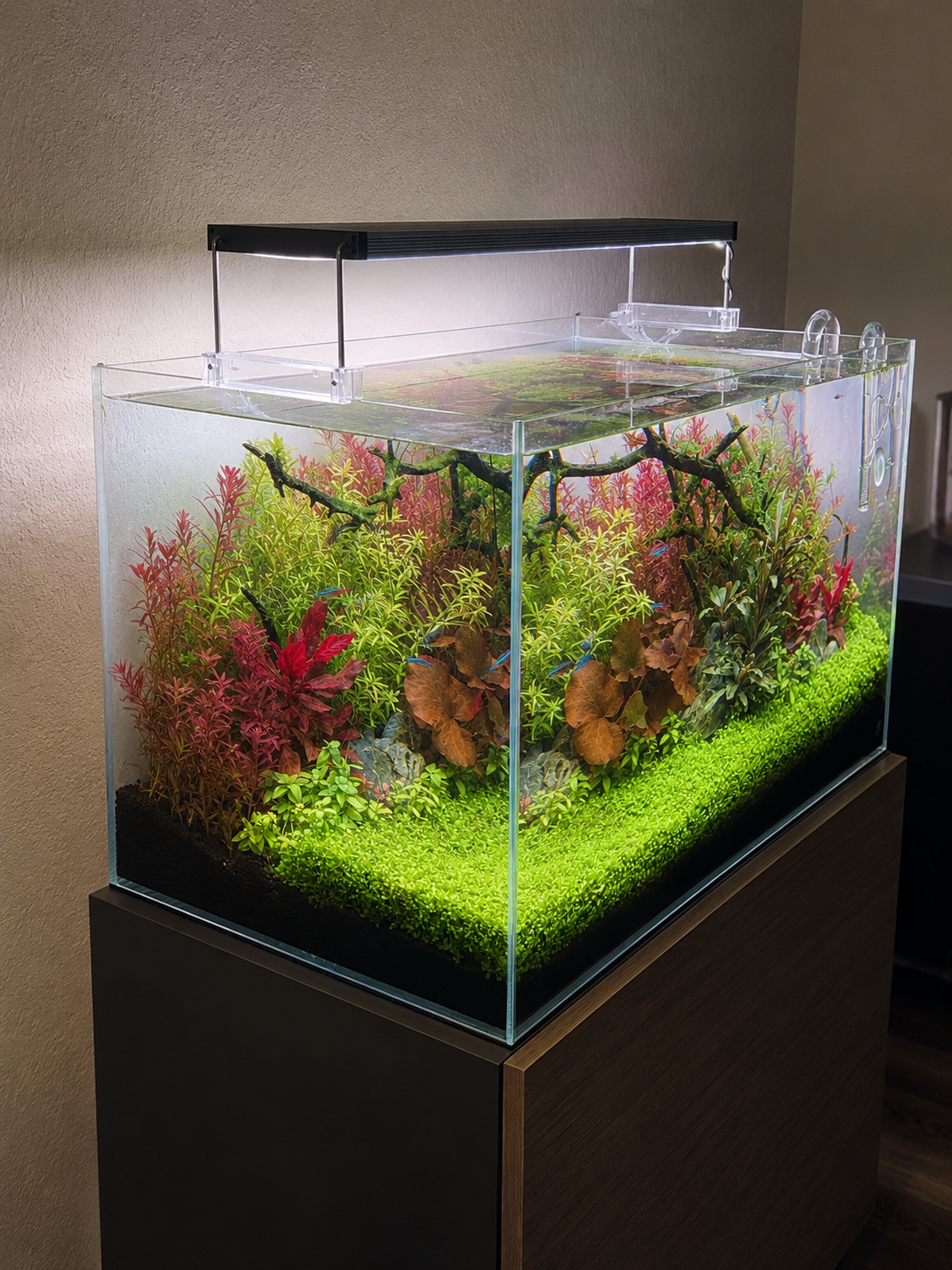
- Access to demanding carpet plants — something like HC Cuba (Hemianthus callitrichoides) simply will not thrive without injected CO2, full stop. It’s one of the clearest examples of a plant that has a hard CO2 requirement rather than just a preference.
- More vivid coloration, especially in red and orange stem plants, which color up far more intensely with high light and CO2 working together
- Denser growth overall, since plants aren’t bottlenecked on carbon and can fully use the light and nutrients you’re providing
If your goal is a lush, competition-tank-style aquascape with a pristine carpet and saturated color, CO2 is genuinely the only way to get there.
What It Costs You
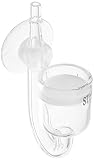
None of that comes for free. A pressurized CO2 setup means a cylinder, a regulator, a diffuser or reactor, drop checkers or a controller, and tubing running through your stand. That’s real upfront cost, plus refills or exchanges down the line.
It also adds complexity most people underestimate. CO2 has to be dialed in carefully — too little and you don’t get the benefit, too much and you risk CO2 poisoning your livestock, especially overnight when plants stop consuming it and it just keeps accumulating if your solenoid timer isn’t set correctly. This is the scenario that scares most beginners off, and rightly so: it’s the one part of this hobby where a misconfigured setup can kill your fish, not just your plants.
What a No-CO2 Tank Actually Gets You
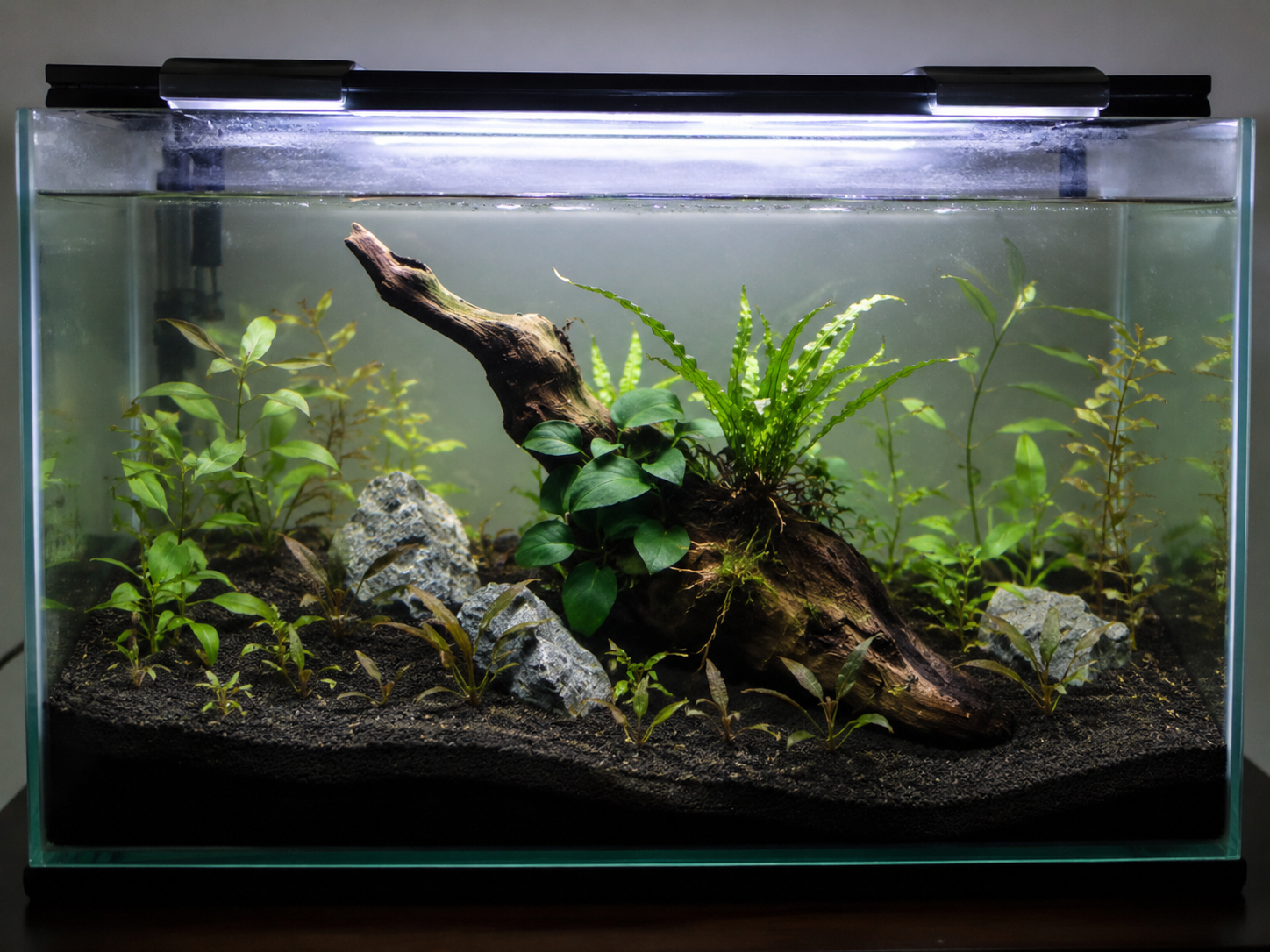
Skipping CO2 doesn’t mean skipping plants — it means choosing the right ones. A well-planned low-tech tank, using species that don’t have a hard carbon requirement, is a completely legitimate, good-looking style of aquarium. It’s just slower. Growth rates are more modest, and the plant list is narrower, but within that list you can still build something dense and mature-looking over time.
Our guide to carpeting a tank without CO2 is a good example — you won’t get an HC Cuba lawn, but you can absolutely get a full, green carpet using tougher, more forgiving species. Pair that with our list of the best low-tech plants for a betta tank and you have everything you need to build a genuinely full tank with zero injected carbon.
The trade-offs, in exchange for slower growth: far less equipment, far less cost, and a much more forgiving margin for error. There’s no solenoid to misconfigure, no drop checker to babysit, no risk of gassing your fish.
The Middle Ground Is the Worst Option
If there’s one mistake to avoid, it’s landing in between — running CO2 inconsistently, at low or unstable levels, without actually committing to dialing it in properly. Plants that get a taste of extra carbon but not a steady supply tend to struggle more than plants that never had any CO2 at all, and inconsistent CO2 is a well-known trigger for algae outbreaks like staghorn algae and black beard algae. A half-dosed, unstable CO2 setup is worse than no CO2 setup.
The Decision Framework
- Want carpet plants, vivid reds, and are fine investing in equipment and maintenance? Go CO2, and commit to running it properly and consistently.
- Want something low-maintenance, forgiving, and cheaper to run long-term? Skip CO2 entirely and build your plant list around species suited for it.
There’s no wrong answer here — just make sure whichever path you pick, you commit to it fully. Plants (and fish) do best with consistency, not half-measures.