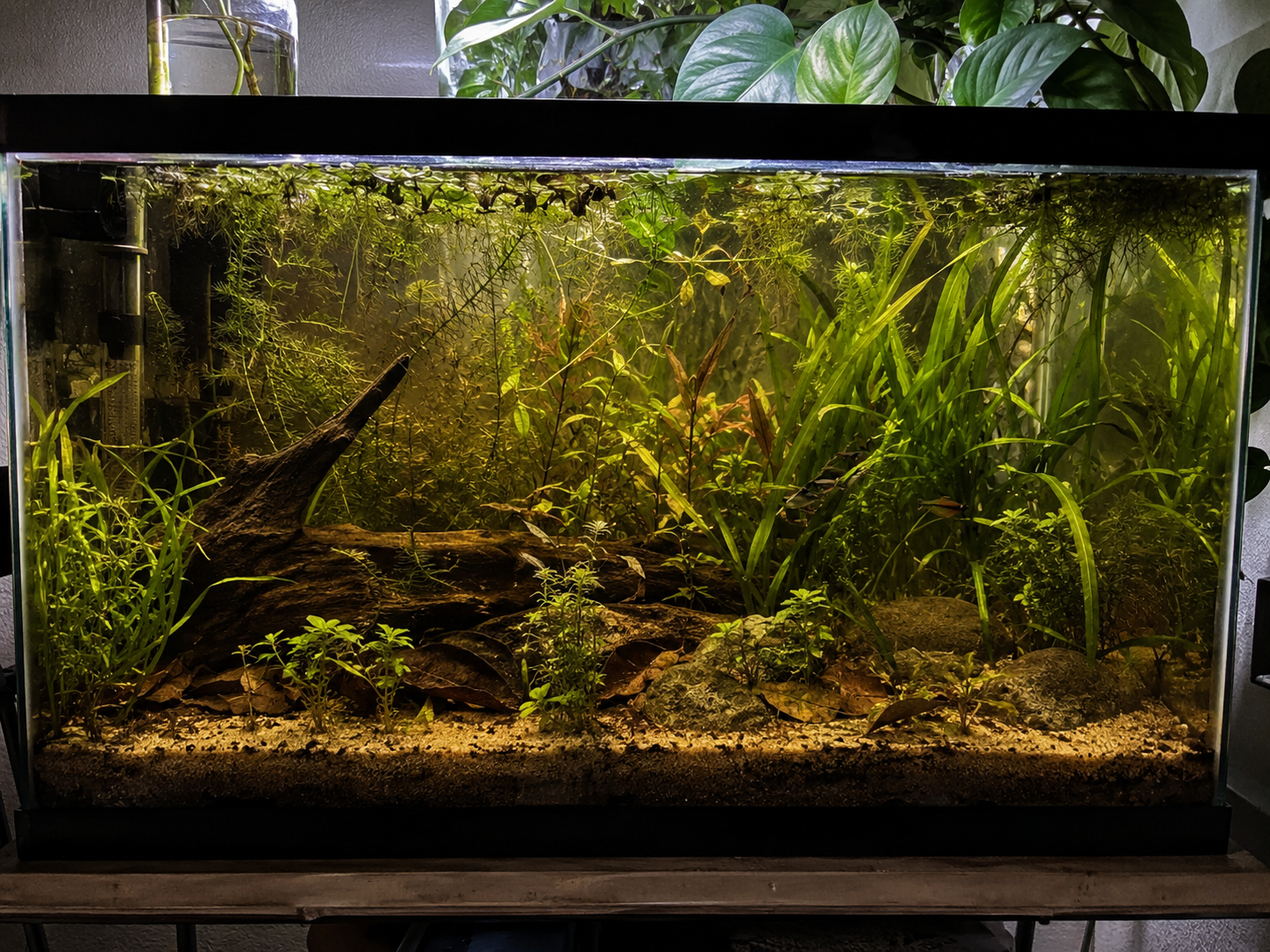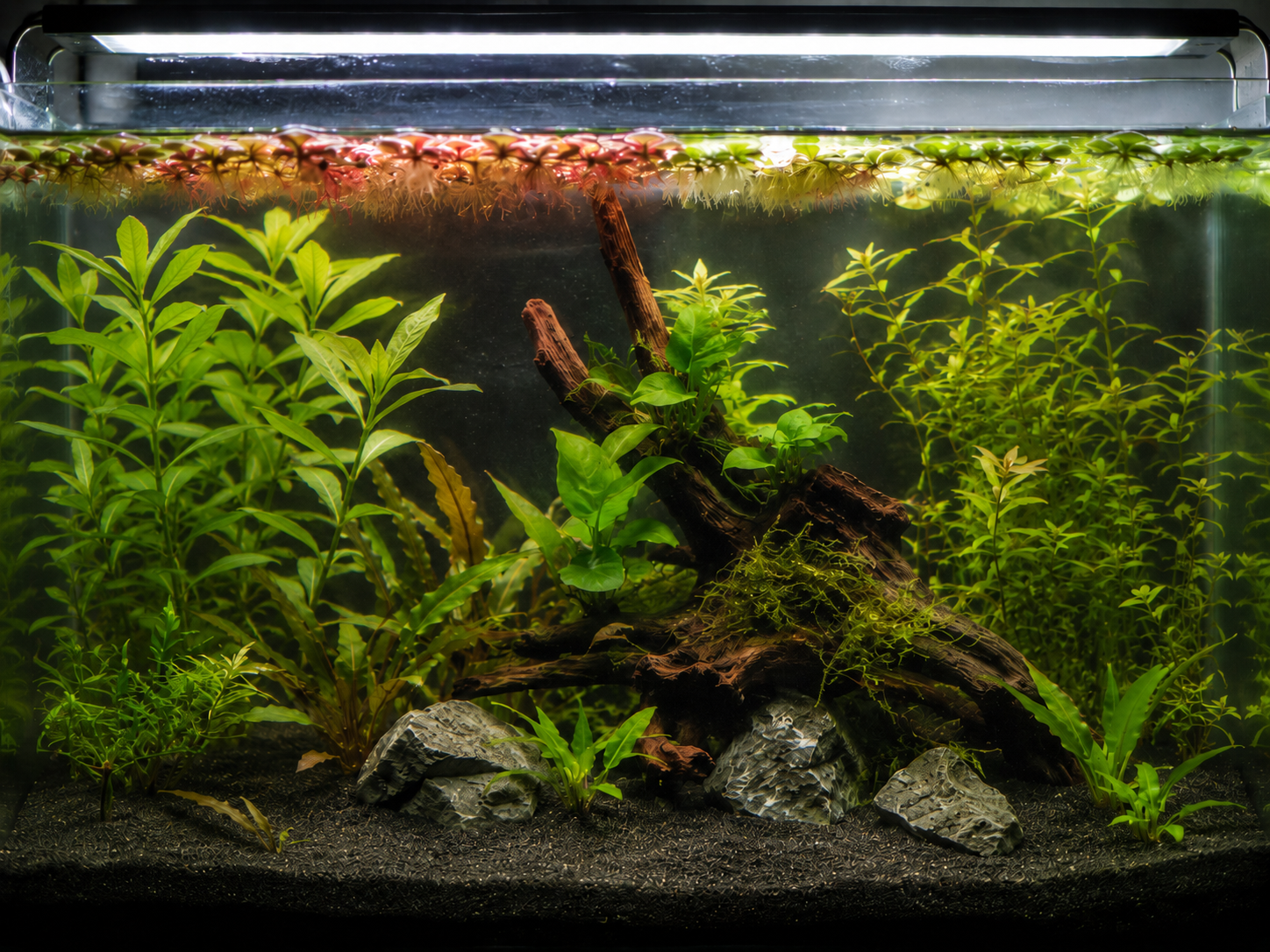
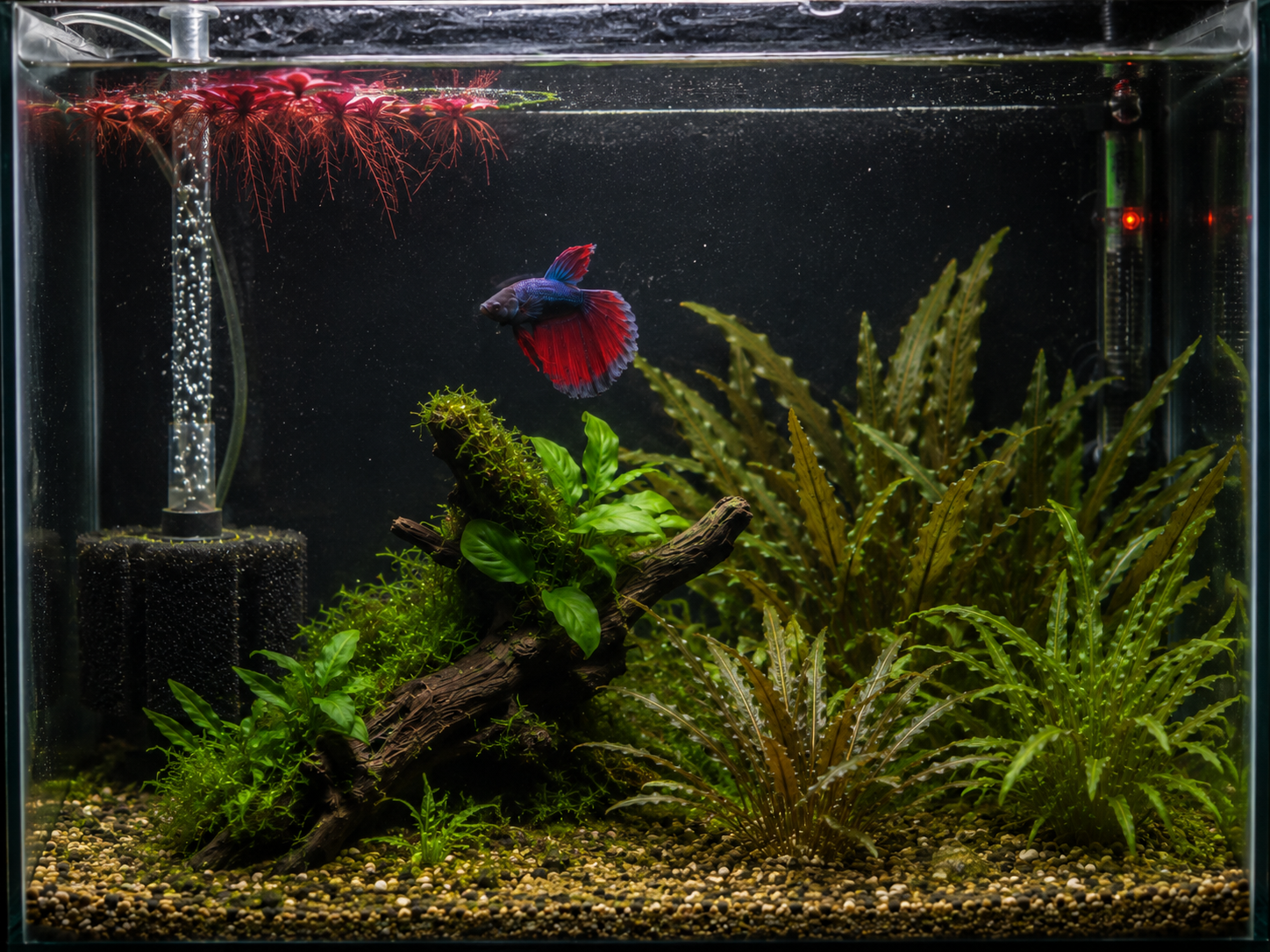
We wanted to see what a proper betta setup looks like at the smallest size we’d actually recommend: 5 gallons. Small enough for a desk, big enough to hold temperature and chemistry steady, and just roomy enough to plant it for real instead of dropping in one plastic hornwort. Here’s exactly what we built.
Why We Started at 5 Gallons
Anything smaller swings in temperature and ammonia too fast for a betta and live plants to both stay healthy. At 5 gallons, our heater holds steady, one water change a week is enough, and there’s just enough footprint to give the betta open water to patrol and a few real plants — we didn’t have to pick one or the other.
The Bones: Hardscape First
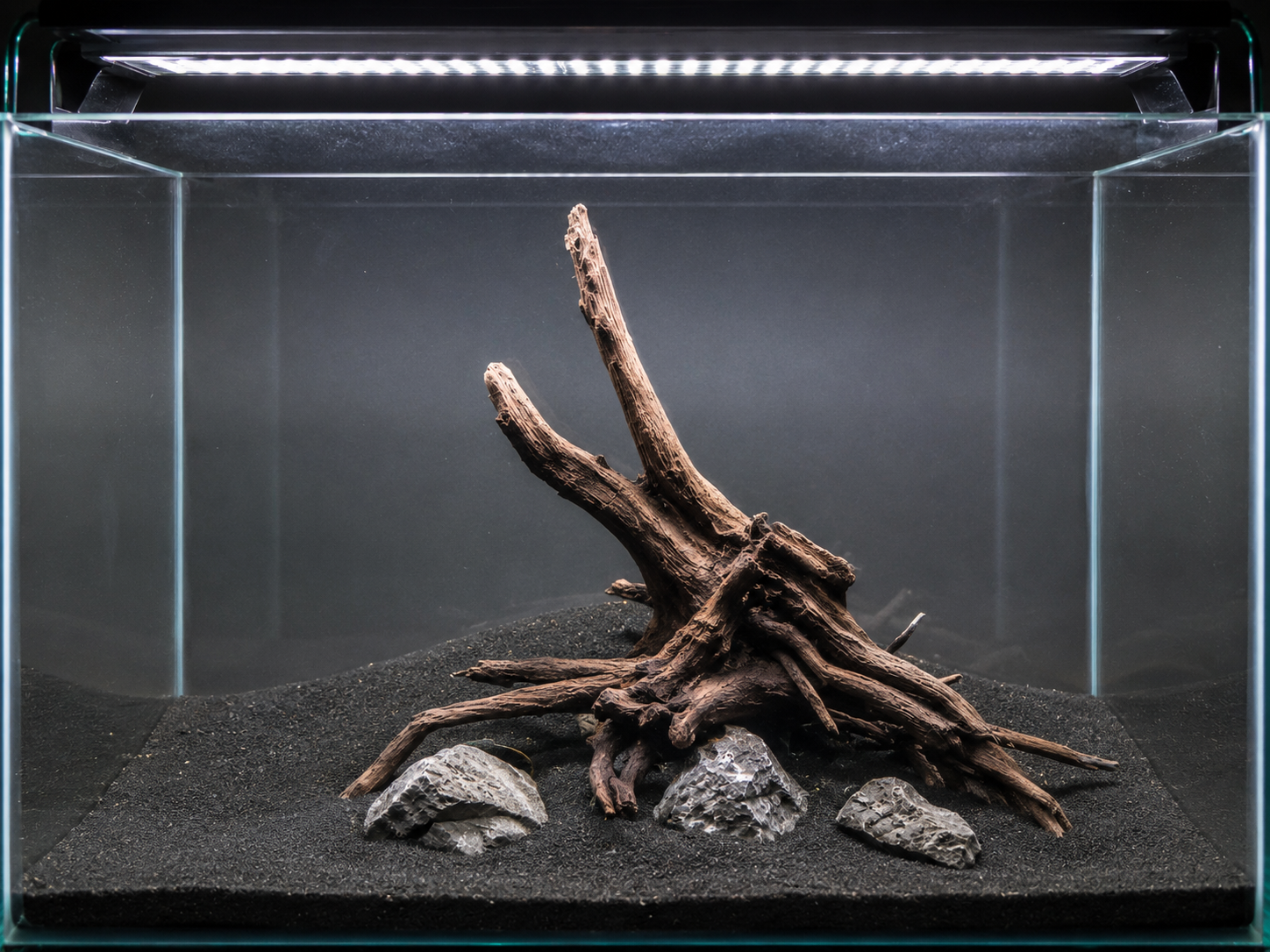
We kept it simple — one small piece of spider wood, set slightly off-center, plus a single stone to anchor it. Fine gravel underneath. We weren’t going for a dense aquascape here, just a couple of anchor points for plants and enough open water in the middle for the betta to actually swim through.
What We Planted
- Java Fern and Anubias Nana, tied to the driftwood with thread — no substrate needed. The broad, soft leaves became a resting spot ours used almost immediately. → Java Fern guide · Anubias guide
- One Cryptocoryne (wendtii), planted in the substrate near the wood. Slow enough that it isn’t competing with anything else in this small a footprint. → Cryptocoryne care guide
- A clump of Java Moss, tied to the wood. Not required, but it added texture and gave the betta something to nose around in. → Java Moss guide
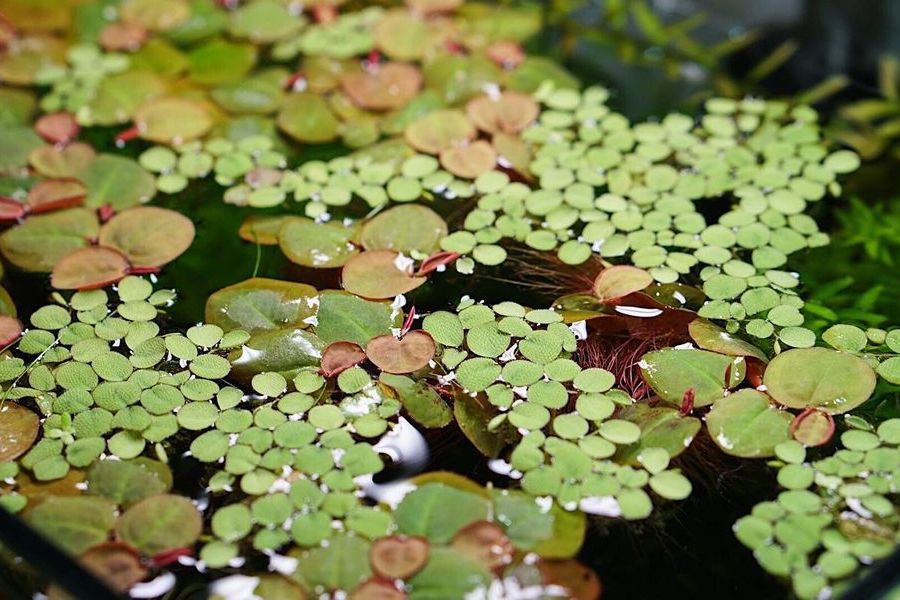
- Red Root Floater, across part of the surface. This ended up being the single best addition for the betta specifically — the roots hang down like a resting structure just under the waterline, and we kept coverage to about a third of the tank so it could still reach the surface easily. → Red Root Floater guide
We left fast stem plants like Hygrophila out of this one — at 5 gallons they’d have outgrown the tank in a couple of weeks and needed constant trimming. If you want the reasoning behind matching plant growth rate to tank size, see how many plants per gallon and our full low-tech plant list.
Lighting and Fertilizer
We’re running a small clip-on LED for about 6–7 hours a day — nothing on this list needed more than that. Choosing a planted tank light covers picking a fixture if you’re starting from scratch. We push a root tab under the crypt every 3–4 months and dose liquid fertilizer weekly for the floater and moss — more on when to use each in root tabs vs. liquid fertilizer.
Filtration, Heat, and Water Changes
We went with a gentle sponge filter over anything with real output — bettas have long, delicate fins, and a strong current just pins them in a corner. The heater holds 76–80°F, and we do a 25–30% water change with a dechlorinator every week.
Settling In
We saw some melting and yellowing in the first two weeks as the plants converted from emersed to submerged growth — completely normal, and it bounced back on its own. Full details in acclimating new aquarium plants.
If you want more room to work with, we also put together a 20-gallon betta tank using the same approach.