
How to Acclimate New Aquarium Plants When They Arrive
Your plants just arrived in the mail, and there’s a strong instinct to treat them like fish — floating bags, slow drip lines, an hour of careful acclimation before anything touches the tank. Good news: aquarium plants don’t need nearly that much ceremony. Here’s what actually matters when a new order shows up.
Unboxing
Open the package promptly rather than letting it sit — plants shipped bare-root or in damp paper can dry out or overheat if left in a hot mailbox or car. Unwrap each plant and give it a quick look over for anything obviously damaged: crushed stems, slimy patches, or leaves that have gone fully translucent and mushy. A few yellow or torn leaves are completely normal after transit and not a reason for concern.
Do Plants Need Drip Acclimation?
Short answer: no, not the way fish do. Drip or floating acclimation exists to slowly adjust livestock to differences in temperature, pH, and dissolved chemistry before they’re exposed to a whole new water body all at once — a process that can genuinely stress or kill a fish if done too fast. Plants don’t have gills or the same kind of osmotic sensitivity. In practice, most keepers get excellent results simply unwrapping the plant and getting it into the tank promptly, without any floating or dripping step at all.
That said, it’s still smart to check that your tank’s water isn’t wildly different from what the plant shipped in — see below — but “wildly different” is a much wider tolerance than any fish would allow.
Trim Before You Plant
Before anything goes into the tank, take a minute to clean each plant up:
- Roots: trim back any roots that are mushy, blackened, or dried out. Healthy roots are firm and pale; anything that doesn’t meet that description is dead weight that will just rot in the substrate.
- Leaves: snip off any leaves that are already yellow, torn, or slimy. This isn’t just cosmetic — removing dying tissue now means less decaying matter in your water and less algae food over the following weeks.
- Stems: if a stem plant’s lower section looks bare or damaged, cut just above the healthy portion and plant that section, discarding the bad end.
Planting Technique Basics
- Stem plants go in individually or in small groups of 3-5, pushed into the substrate deep enough to hold but without burying the lowest leaves.
- Rhizome plants (Anubias, most ferns) should never have their rhizome buried — tie or glue it to hardscape instead, with roots draping into or lightly touching the substrate.
- Rosette plants (crypts, swords) want just the root mass in the substrate with the crown sitting above the surface, not buried.
- Use tweezers for anything small or fine-rooted — it’s far gentler and more precise than fingers alone, especially in a tank that’s already full of hardscape.
Checking Water Parameters
It’s worth a quick check that your tank’s pH and temperature aren’t drastically different from the water the plant shipped in, since an extreme swing can add stress on top of the shipping process itself. But keep this in perspective: aquatic plants are far more tolerant of parameter differences than fish are, and small, normal variation between a shipping bag and a home aquarium is not something to lose sleep over.
Set Expectations for the First 1-3 Weeks
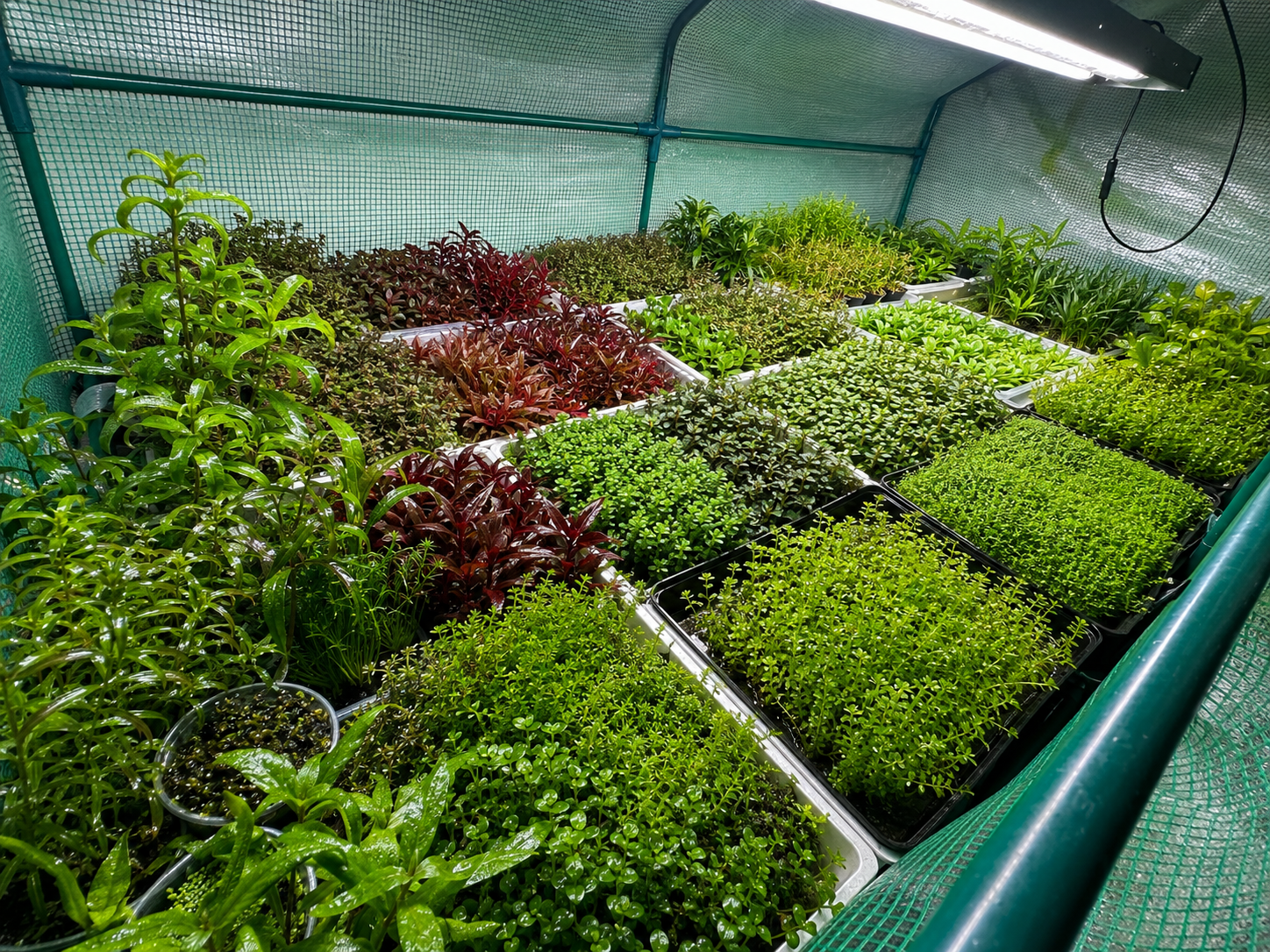
This is the part that trips up first-time buyers the most: your plants are probably going to look worse before they look better. Most aquarium plants are grown emersed — above water — and the leaves they arrive with are built for air, not submersion. Once planted, many species drop that old growth over the first one to three weeks while they redirect energy into new, thinner, submersed-form leaves. This is normal transition melt, not a sign the plant is failing.
→ Read our full breakdown of why emersed-grown plants melt and what to expect.
→ If a plant looks worse well past the three-week mark, or the decline doesn’t match a normal transition pattern, our troubleshooting guide for dying plants walks through how to tell ordinary melt apart from an actual problem.
Starting Your First Order
If you’re about to place a first order and aren’t sure what to pick, a mixed low-tech species pack takes the guesswork out of it — a handful of hardy, forgiving plants gives you real margin for error while you’re still learning to read what’s normal versus what’s not. Our guide to the best low-tech plants is a good place to see what belongs in that first order.