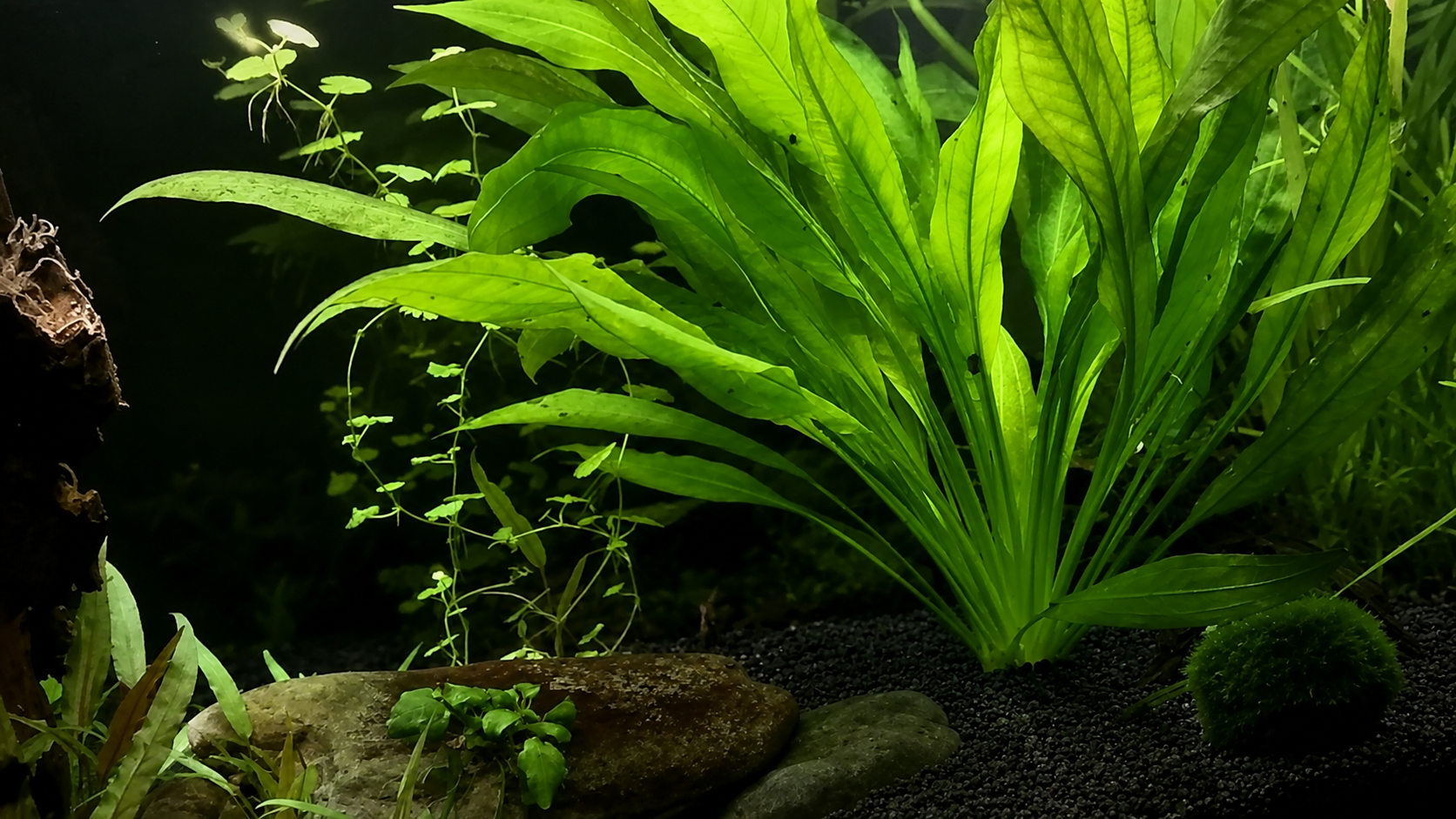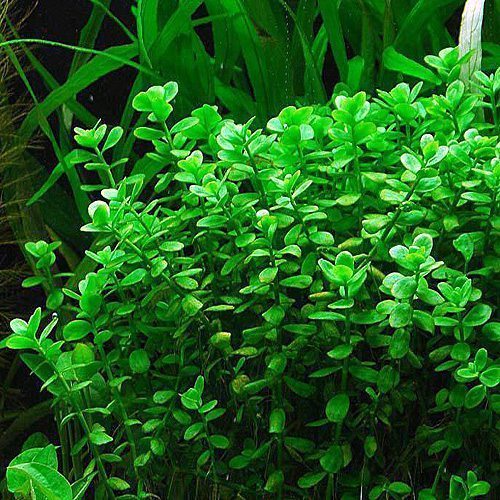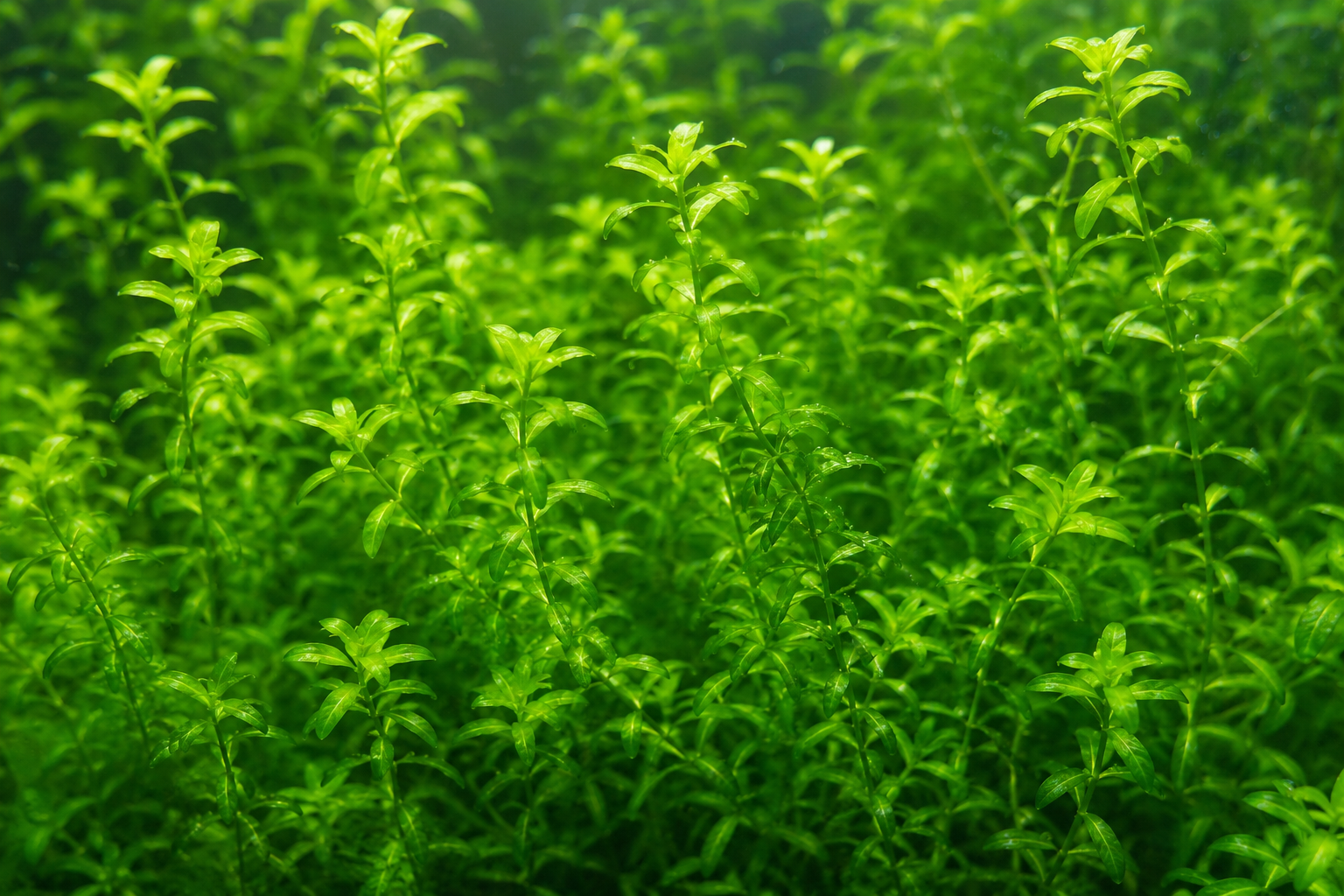
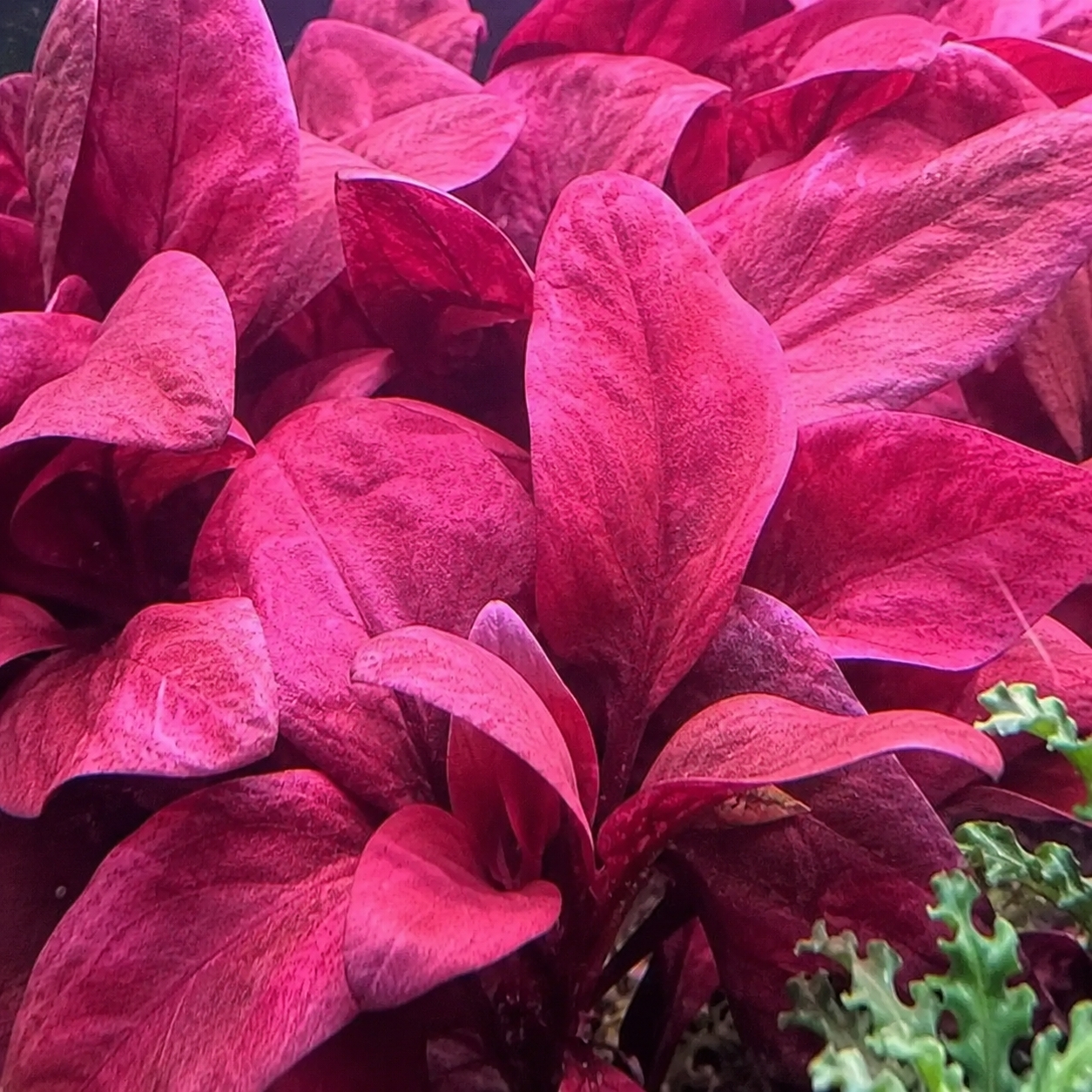
Samolus parviflorus — Water Cabbage — is a small rosette plant from the Americas, found from North America down through Central and South America in wet soils, stream margins, and shallow water. It’s related to Samolus valerandi, a similar species with a near-worldwide distribution. In the aquarium, it grows as a compact rosette of spoon-shaped leaves that radiates outward from a central crown.
It’s one of those plants that doesn’t get much attention but performs reliably in low-tech setups, making it an underappreciated option for aquarists who want structure and texture without demanding plants.
Growth Form and Placement
Samolus parviflorus stays small — typically 5–15 cm in diameter — with leaves forming a flat to slightly cupped rosette. This makes it best suited for the foreground to midground in standard-size tanks, or as a midground to background specimen in nano setups.
The rounded, spoon-shaped leaves are lime-green to medium green and have a slightly translucent, soft appearance. Under strong light the plant becomes more compact and the leaves thicker; under low light growth is slightly more open and elongated.
Water Parameters
It prefers cooler to warm temperatures — 64–78°F (18–26°C) — and tolerates a wide range of hardness and a pH of roughly 6.0–7.5. A standard weekly 20–25% water change keeps it healthy.
Rooted Feeding
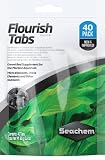
Being a rosette plant, Samolus feeds primarily through its roots. Seachem Flourish Tabs placed beside the plant every 3–4 months make a clear difference in rosette density and leaf size. Seachem Flourish liquid dosed weekly supplements water column nutrition. Without root tabs, the plant survives but grows slowly and produces fewer, smaller leaves.
Care Notes
It does not require CO2 or special lighting — moderate light is sufficient. One thing to avoid: burying the crown. Like Anubias, the crown of the rosette should remain visible above the substrate. Only the roots should be buried.
Propagation
Samolus occasionally produces offshoots from the base. Separate daughter rosettes once they have 3–4 leaves and their own small root system, and replant in nearby substrate.
How to Plant
Samolus is a rosette plant — plant it the same way as Cryptocoryne. Use tweezers to hold the rosette by the lower leaves just above the root ball, lower the roots into the substrate, and push them in while keeping the crown — the central growing point where leaves emerge — fully above the substrate level. If the crown is buried, the plant rots at the base. Space plants 5–8 cm apart to allow the rosettes room to spread. Push a Seachem Flourish Tab close to the roots at planting — as a root feeder, early substrate nutrition makes a measurable difference in how quickly the plant establishes and fills out.
Common Problems
- Crown rot. The main real risk with this plant, caused by burying the crown at planting — see the care notes above for how to fix it.
- Slow, small growth. Almost always a sign of missing root tabs rather than a health problem.
- Elongated, open growth. A light issue — under lower light the rosette grows looser and more open than the compact form seen under stronger light.
Pests
No specific pest issues. Rinse new plants and check for hitchhiker snails before adding them to an established tank.