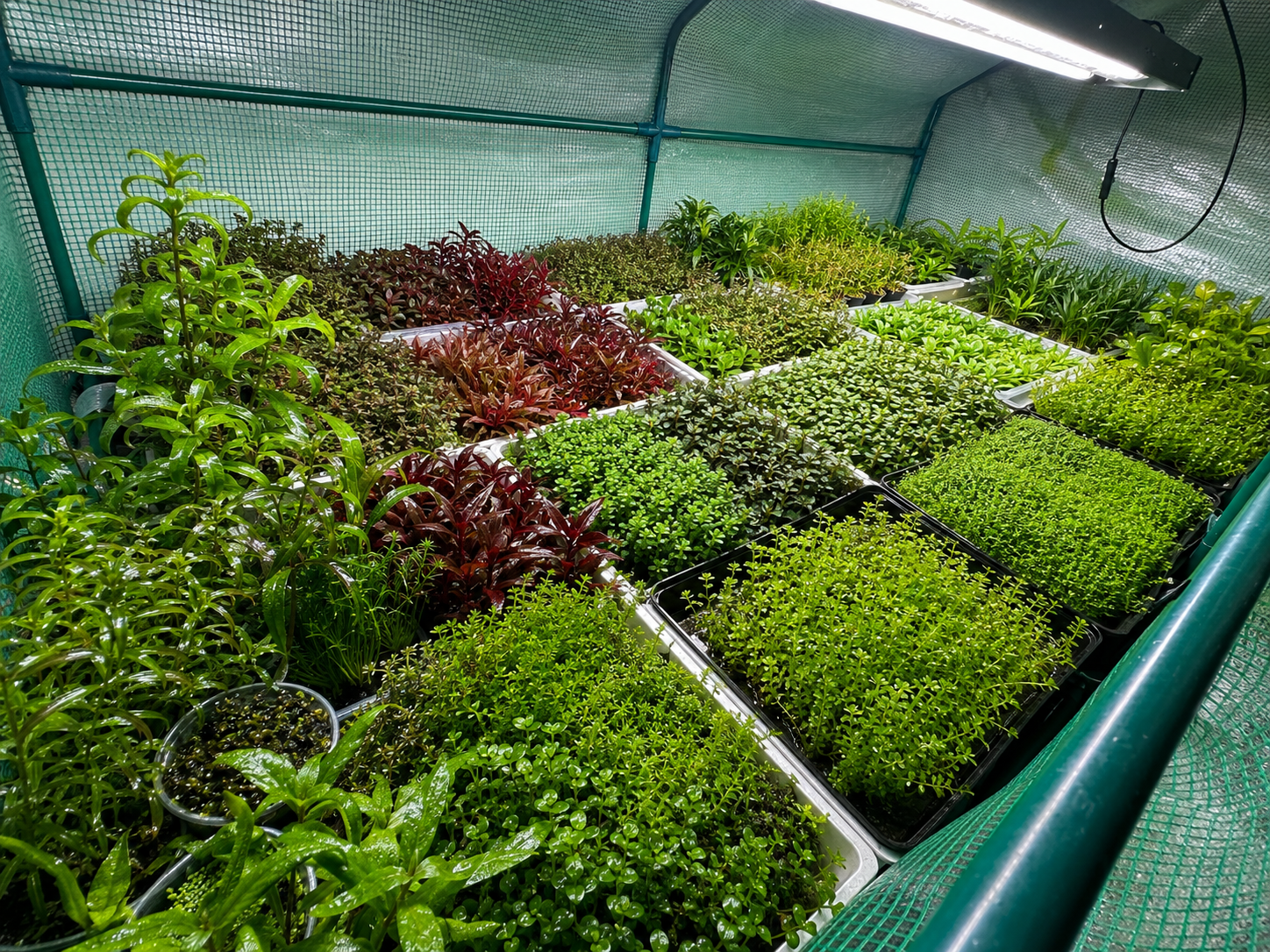
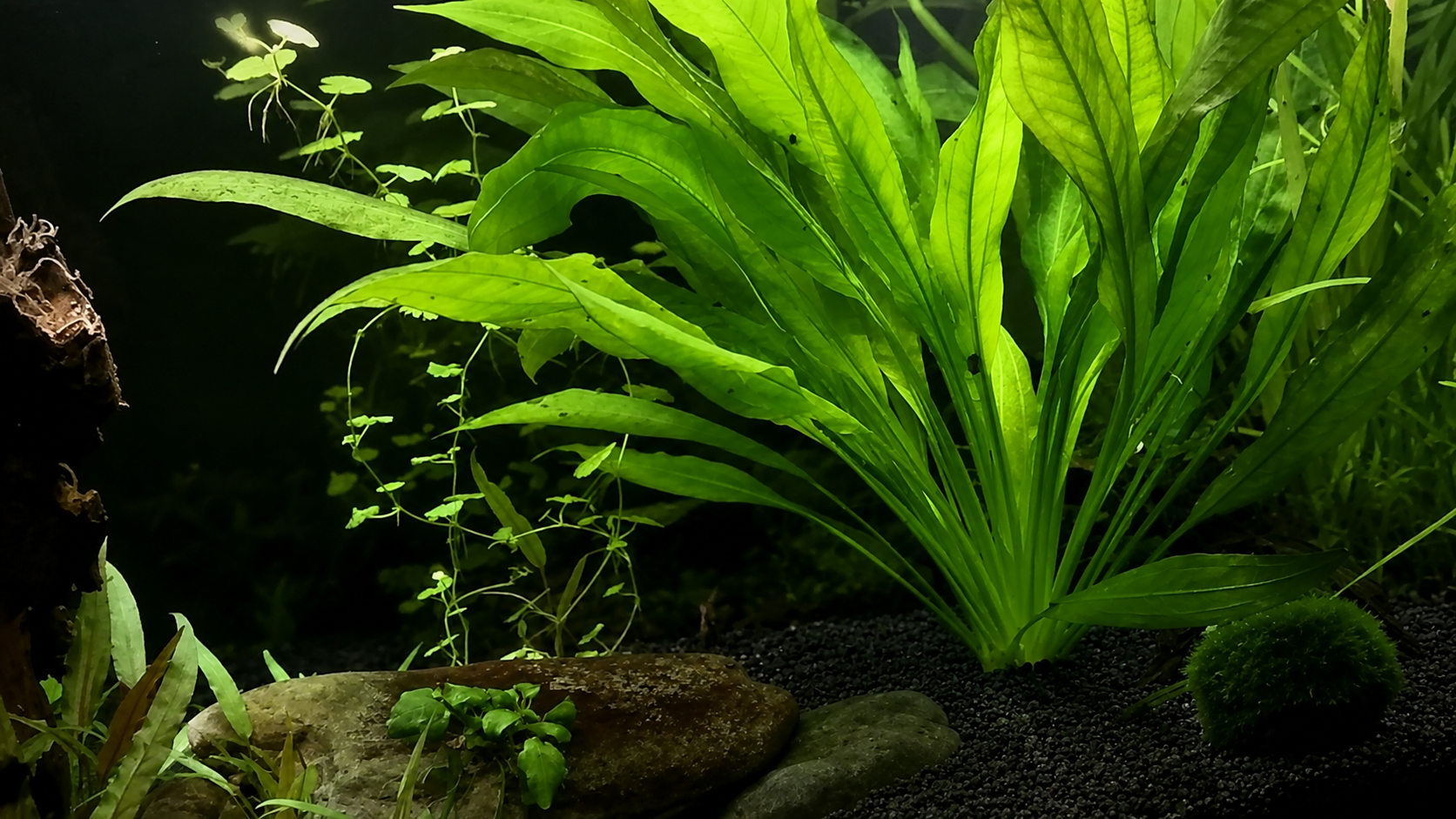
Echinodorus bleheri — the Amazon Sword — is one of the plants that shaped what people picture when they imagine a “planted tank” in the first place. Broad, sword-shaped leaves radiating from a central crown, big enough to anchor an entire aquascape on its own. It’s native to the Amazon basin across Brazil, Peru, Colombia, and Venezuela, where it grows as a marsh and shallow-water plant along slow rivers and flooded forest margins — able to grow both emersed (above water) and fully submerged, which is exactly why it adapts so well to aquarium life.
A Naming Note Worth Knowing
The Amazon Sword sold in most stores as Echinodorus bleheri is now often reclassified botanically as a form of Echinodorus grisebachii. To add to the confusion, a very similar species, Echinodorus amazonicus, is sold under the same common name and is frequently mislabeled or swapped with E. bleheri by growers and retailers. In practice this rarely matters — care requirements are identical between them, and even experienced aquarists often can’t tell them apart without flowering.
Anatomy and Growth Form
Amazon Sword grows from a central crown, sending out broad, lance-shaped leaves in a rosette pattern — no stem, no branching, just leaves radiating outward as the plant matures. The root system is thick and extensive, reflecting how much this plant relies on substrate nutrition rather than the water column. A single healthy plant can produce a dozen or more leaves and become the visual centerpiece of a tank on its own.
Size and Placement
This is a large plant — a mature specimen commonly reaches 12–20 inches tall and wide, sometimes more in ideal conditions. It needs real space: a 20-gallon tank or larger is a realistic minimum if you want it to reach full size without constant trimming. Position it as a background centerpiece or as a standalone focal point rather than grouping several together, since one full-grown plant already fills a significant footprint. See best aquarium plants by placement for how it fits alongside smaller foreground and midground plants.
Light and Water Parameters
Amazon Sword tolerates low to moderate light well, which is unusual for a plant this large and dramatic — most centerpiece-sized plants demand strong lighting. Moderate light produces fuller, greener leaves, but it will grow acceptably even under a basic fixture. Water-wise it’s flexible: 72–82°F (22–28°C), pH 6.5–7.5, and it tolerates a wide range of hardness. A standard weekly 20–25% water change is enough.
Root Feeding Is the Whole Game
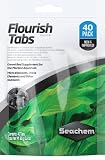
This is one of the heaviest root feeders commonly kept in aquariums. Seachem Flourish Tabs pushed into the substrate near the crown, replaced every 3–4 months, make a night-and-day difference — fed plants produce large, dark, glossy leaves, while unfed plants in an inert substrate stay small, pale, and slow. Weekly Seachem Flourish liquid supplements the water column, but for this species root tabs are doing most of the real work. See root tabs vs. liquid fertilizer for the full breakdown of when each matters most.
How to Plant
Like all rosette plants, only the roots go into the substrate — the crown, where the leaves emerge, must stay exposed above the surface or it will rot. Use tweezers or your fingers to spread the roots out and press them into the substrate, keeping the crown level with or slightly above the surface. Because of its eventual size, give it real room: at least 6–8 inches of clearance on every side from other plants or hardscape. Push a Seachem Flourish Tab near the roots at planting, and repeat every 3–4 months as the plant grows.
Maintenance and Trimming
As Amazon Sword grows, older outer leaves naturally yellow and die back — this is normal turnover, not a problem. Trim these off at the base with scissors to keep the plant tidy and redirect energy into new growth. Established plants benefit from having a few of their oldest, largest leaves removed periodically even when healthy, since this encourages fuller new growth from the crown.
Common Problems
- Melting after planting. By far the most common concern with this species, and almost always normal — see the FAQ above. Nursery-grown Amazon Swords are typically raised emersed, and the emersed-form leaves frequently can’t survive the transition underwater. As long as the crown stays firm and white/cream colored (not soft or brown), new submerged leaves will follow within a few weeks.
- Small, pale leaves that won’t grow larger. The classic sign of a missing root tab — this plant simply won’t reach its potential size on liquid fertilizer alone.
- Crown rot. Caused by planting too deep and burying the crown; dig it up, trim any soft tissue, and replant with the crown exposed.
Pests
No pest issues specific to this plant. Rinse and check new plants for hitchhiker snails before adding them to an established tank, as with any new arrival.
Amazon Sword ships and acclimates like most rosette plants — a little patience through the initial melt phase pays off in one of the most striking, low-maintenance centerpiece plants available. See acclimating new aquarium plants for what normal transition stress looks like across species, and how many plants per gallon for sizing a tank around a plant this large.