Best Aquarium Plants by Placement
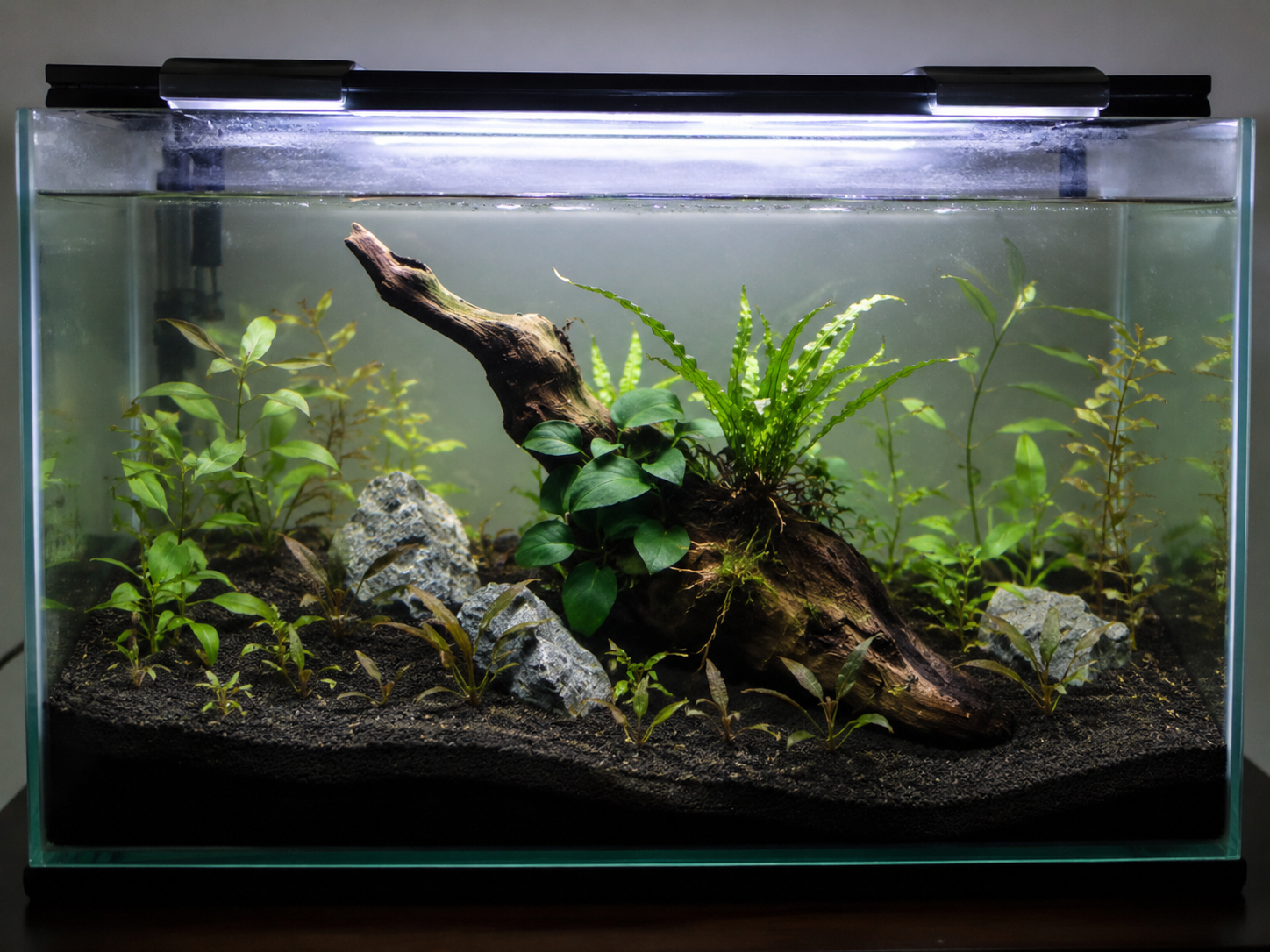
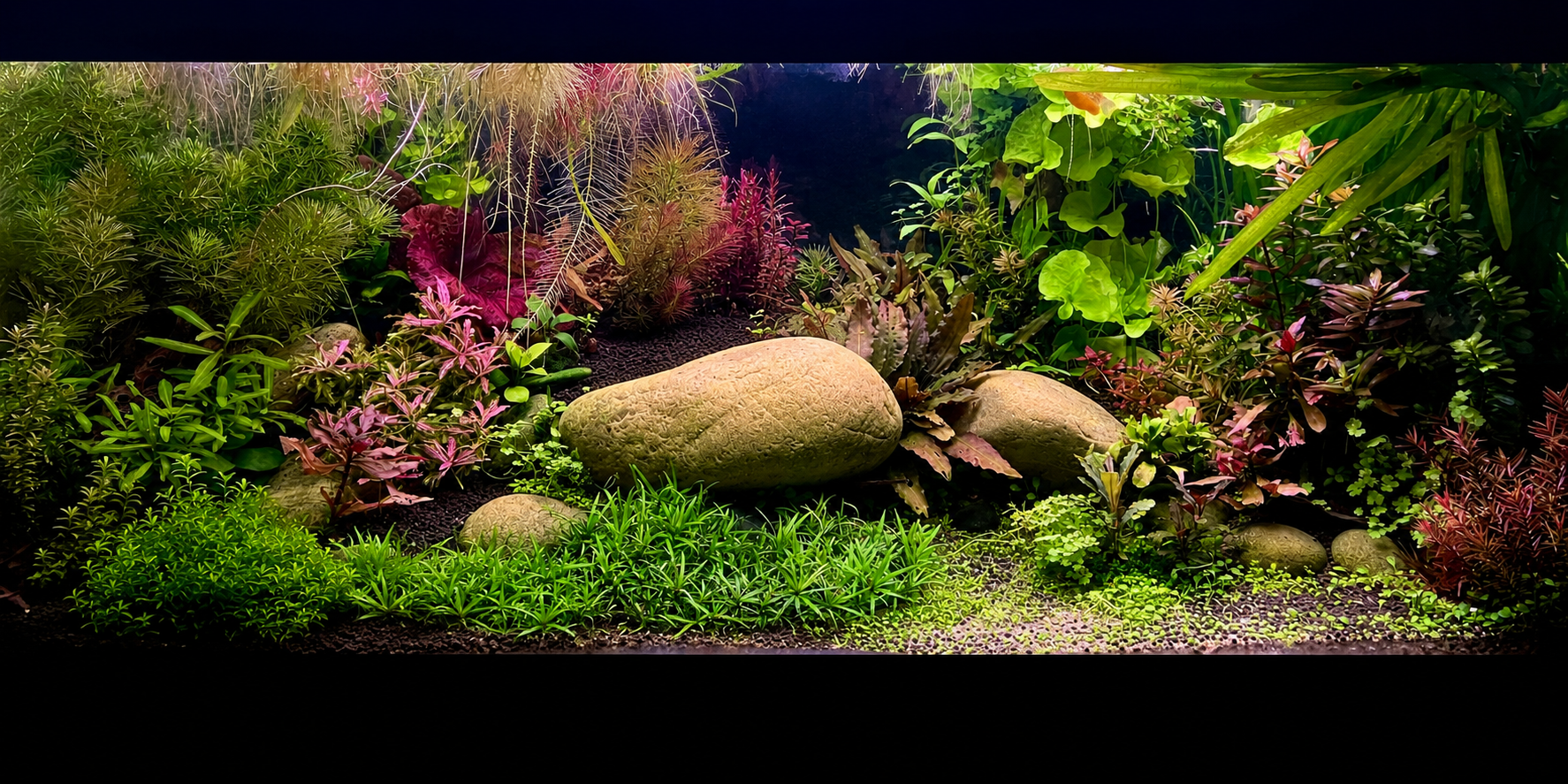
Most beginners pick plants one at a time based on what looks cool at the store, then get home and try to figure out where to put them. Experienced aquascapers do the opposite: they plan the layout first — background, midground, foreground — and then pick plants to fill each zone. It’s a much easier way to shop, and it’s the difference between a tank that looks like a coherent scene and one that looks like a random assortment of green.
Background: Tall, Dense, Hides Equipment
The back of the tank is where you want height and density. These plants should grow tall enough to screen heaters, filter intakes, and cords, and dense enough to give the whole layout a sense of depth.
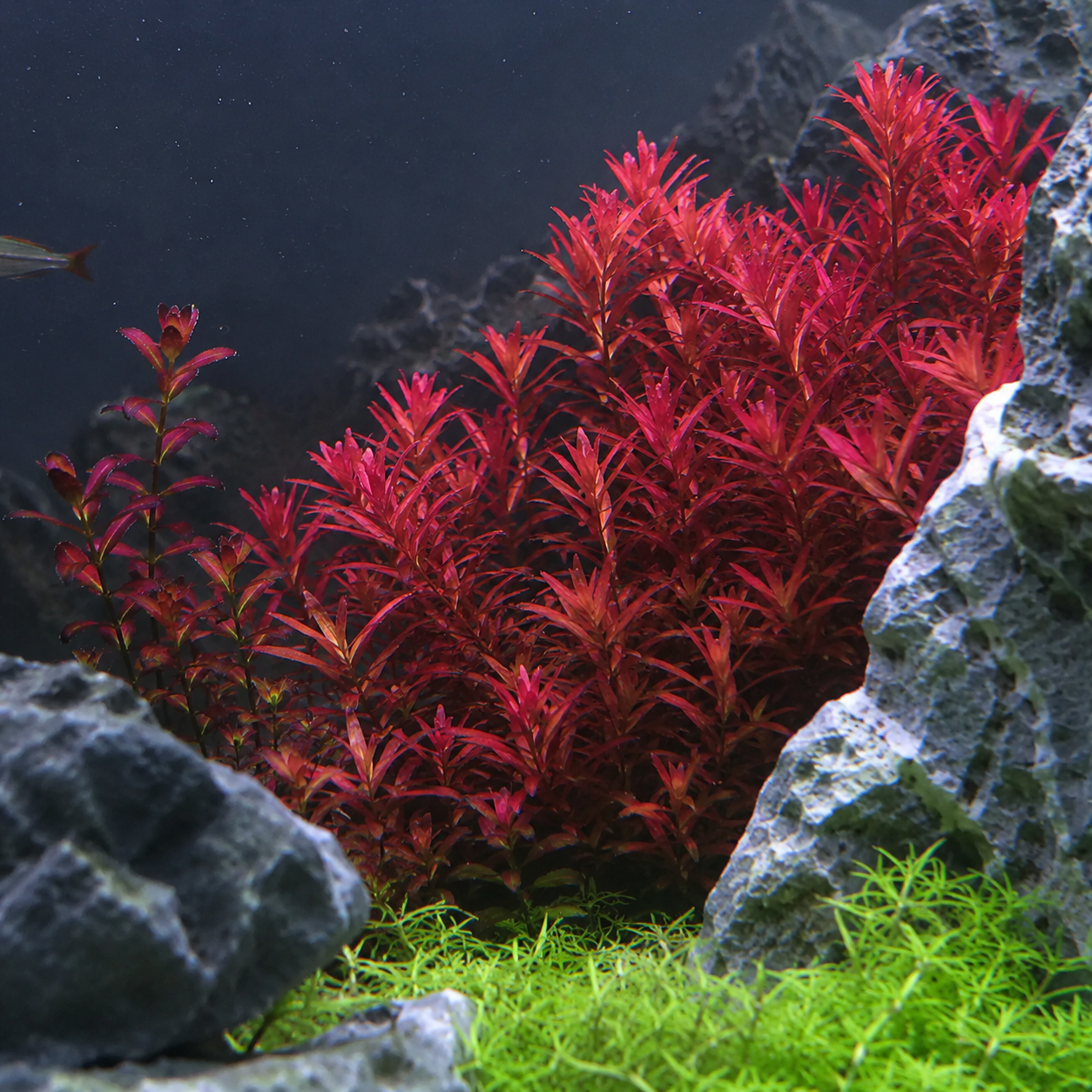
Ludwigia Repens
A reliable stem plant that grows upright in dense clusters, with leaves that pick up red-brown tones under decent light. Trim and replant the tops regularly to keep it thick rather than leggy.
→ Full Ludwigia Repens care guide
Hygrophila Corymbosa
One of the classic “wall of green” background plants — broad leaves, fast growth, and it tolerates a wide range of conditions. Great for a beginner’s first background planting.
→ Full Hygrophila Corymbosa care guide
Cabomba Caroliniana
Feathery, fine-textured foliage that gives background rows a softer look than broad-leaved stems. It’s a fast grower and works well planted in dense groups rather than as single stems.
→ Full Cabomba Caroliniana care guide
Vallisneria Americana
A rosette plant rather than a stem, but it earns its spot in the background through sheer height — its long, ribbon-like leaves can reach the surface and beyond in a tall tank, and it spreads via runners to fill in a back row on its own over time.
→ Full Vallisneria Americana care guide
Midground: Medium Height, Bridges the Transition
The midground is the zone people most often forget to plan for, and it shows — without it, tanks jump straight from a tall back wall to a short front carpet with nothing connecting the two. Midground plants should be noticeably shorter than the background but taller than the foreground.
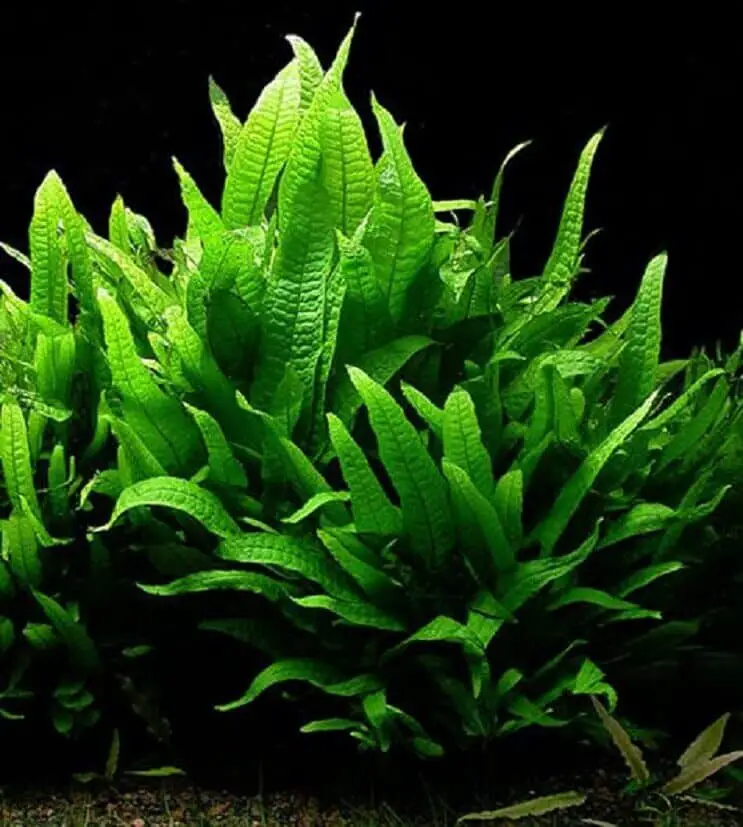
Hygrophila Pinnatifida
Distinctive textured, olive-to-copper leaves that stand out against plainer greens. It can be planted in substrate or attached to hardscape like an epiphyte, making it a flexible midground option.
→ Full Hygrophila Pinnatifida care guide
Bacopa Monnieri
A sturdy, thick-leaved stem plant that holds its shape well without constant trimming, making it a low-maintenance midground filler.
→ Full Bacopa Monnieri care guide
Cryptocoryne
Crypts sit naturally in the midground thanks to their moderate height and rosette shape, and they’re happy to be left alone for months at a time once established — ideal for the zone between a busy background and a manicured foreground.
→ Full Cryptocoryne care guide
Pearlweed
Small, bright green leaves on a plant that can be kept trimmed low as a midground filler or left to grow taller depending on where you place it, which makes it a genuinely flexible bridge plant.
Foreground: Short, Carpeting or Low Mounds
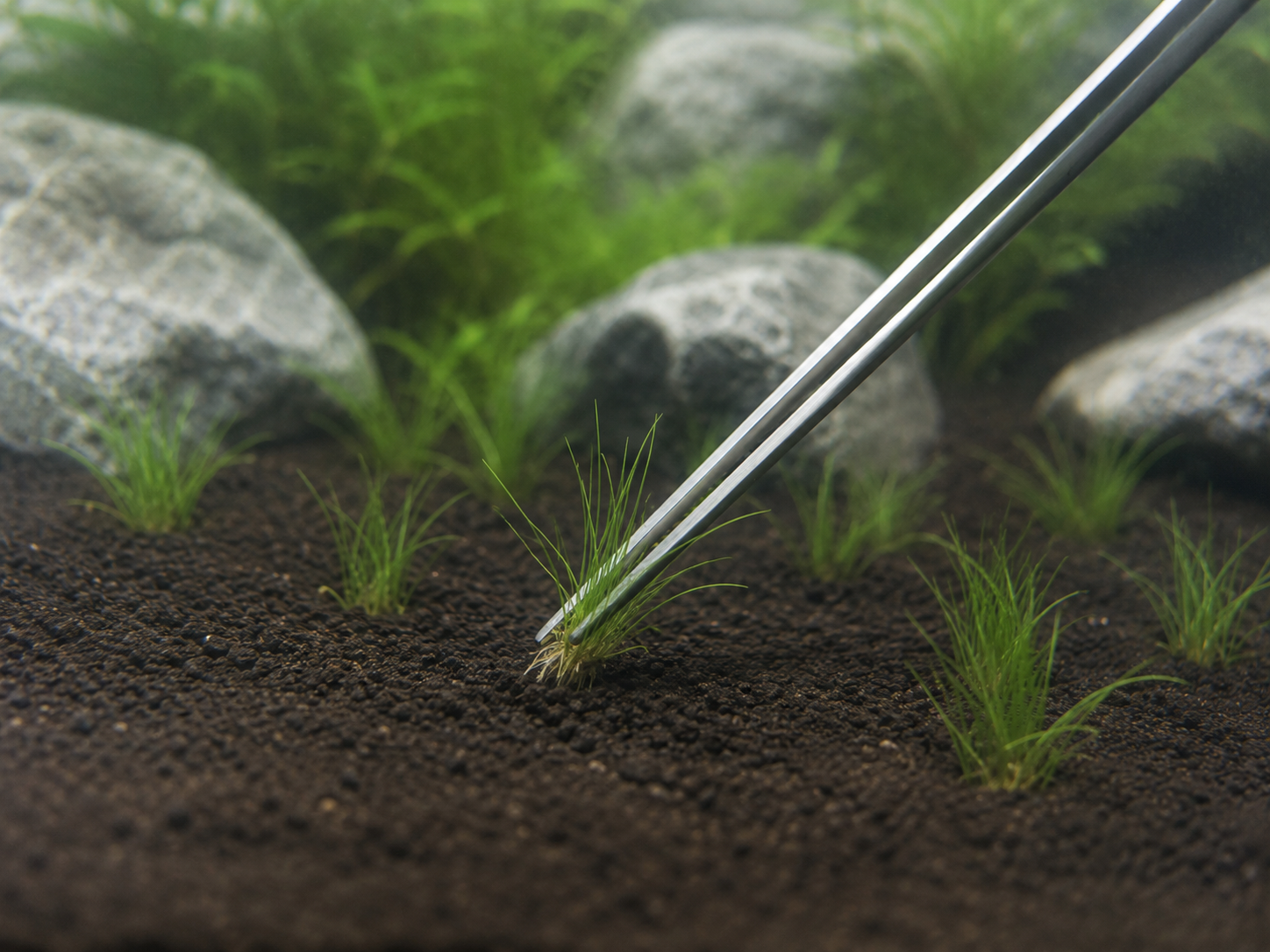
The front of the tank is where carpeting plants and low mounding species go — anything here should stay short so it doesn’t block the view of everything behind it.
Monte Carlo
A popular carpeting plant with rounder leaves than most carpet species, making it a bit more forgiving to grow than the very fine-leaved options.
Glossostigma
A classic low, dense carpeting plant prized in competition aquascaping for how tightly it hugs the substrate — but it’s also one of the more demanding carpet species to keep looking its best.
→ Full Glossostigma care guide
HC Mini (Dwarf Baby Tears)
Tiny, densely packed leaves that create one of the most sought-after true “lawn” carpets in the hobby. Gorgeous when it works, but it’s unforgiving of weak light or unstable conditions.
Staurogyne Repens
A sturdier, more forgiving carpet or low-mound plant than the true carpet species above — it stays compact without needing quite the same light intensity, making it a good middle ground for foreground planting.
→ Full Staurogyne Repens care guide
A quick note on foreground carpets: dwarf carpeting plants as a group generally need more light — and often CO2 injection — than background or midground plants to spread horizontally instead of stretching upward. If you’re running a basic low-tech setup, plan on Staurogyne Repens or a slower, patchier carpet rather than expecting a dense HC Cuba lawn overnight.
Use All Three Zones, Not Just Your Favorites
It’s tempting to fill a tank with whatever plant you find most exciting, but a layout that only uses one zone — all foreground carpet, or all tall background stems — tends to look flat no matter how healthy the plants are. The tanks that actually look like something usually lean on all three zones working together: height and density at the back to create depth, a bridge of medium plants in the middle, and a clean, low foreground that keeps the whole scene readable. Pick one or two plants per zone rather than one of everything, and let each area do its job.