Best Low-Light Aquarium Plants
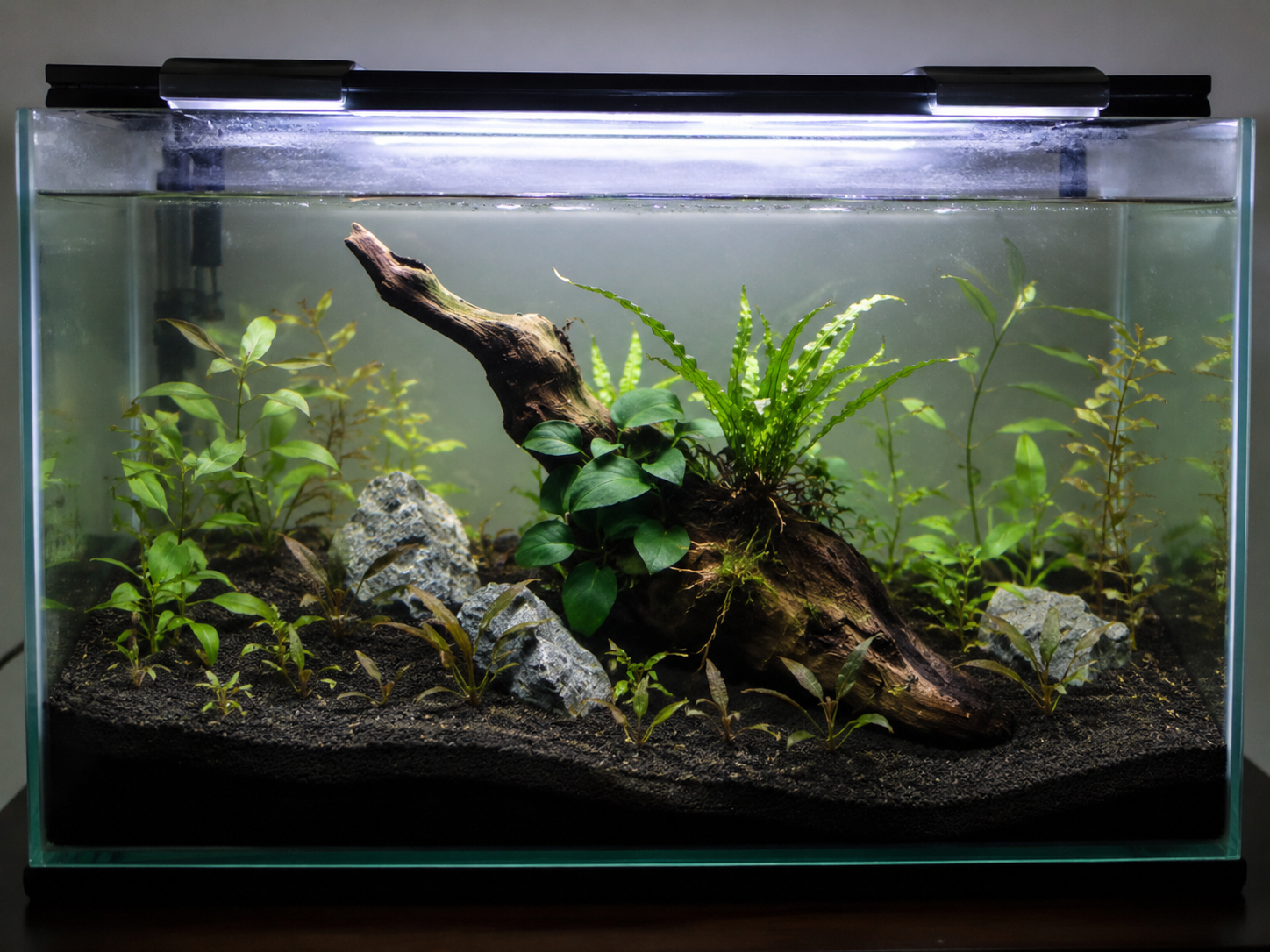
Not every tank sits under a bright full-spectrum fixture. Maybe your aquarium is in a dim corner of the living room, maybe it came with the basic single-tube light the store threw in, or maybe you’ve got a lid and hood that block half the output before it even hits the water. If that’s your situation, the question isn’t “what plants are easy” — it’s “what plants will actually grow in the light I have.”
The good news: a handful of aquarium plants evolved in shaded streams and forest floors, not open sunlit ponds, so dim light isn’t a compromise for them — it’s home turf.
Quick answer: what should you buy first?
For a true low-light aquarium, start with Java Fern, Anubias, Java Moss, Taiwan Moss, and Cryptocoryne wendtii. Those are the safest choices because they tolerate shade, grow slowly, and do not need CO2. If you want one faster plant for nutrient control, add Pennywort or a small floating plant layer.
| Goal | Best low-light choice | Why it works |
|---|---|---|
| Hardiest plant overall | Java Fern | Attaches to hardscape and tolerates dim tanks |
| Tough foreground/midground leaves | Anubias | Slow, waxy, shade-tolerant growth |
| Shrimp or fry cover | Java Moss | Dense texture even under weak light |
| Rooted plant for substrate | Cryptocoryne wendtii | Settles into dim, stable tanks |
| Faster nutrient uptake | Pennywort | Grows in more forms than most stems |
Low light does not mean no maintenance. It means growth is slower, so algae on old leaves and nutrient imbalances show up gradually. Pick plants that are naturally slow and sturdy instead of forcing demanding plants to limp along.
1. Java Fern (Microsorum pteropus)
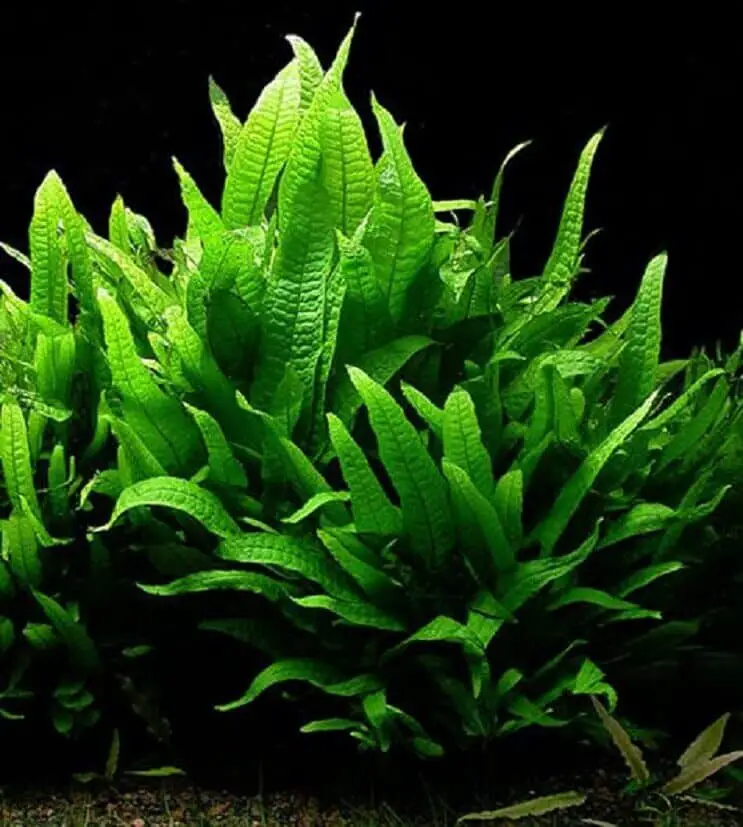
Java Fern is the gold standard for low-light setups. In the wild it grows attached to rocks and driftwood in shaded, flowing streams under a forest canopy, so a dim living room tank is nothing new to it. It doesn’t root in substrate — tie or glue the rhizome to hardscape and it will slowly spread across it for years with almost no input from you.
2. Anubias
Anubias is the other pillar of low-light aquascaping, and for the same reason as Java Fern: it’s an epiphyte from shaded African streambanks, built to get by on scraps of light. Its thick, waxy leaves are slow-growing and tough, which also makes it one of the few plants a betta or larger cichlid won’t shred. Like Java Fern, the rhizome must stay above the substrate — bury it and it will rot.
3. Java Moss
Java Moss will grow in almost any light level, including the dim glow of a covered nano tank. It’s not fussy about attachment either — tie it to hardscape, let it float, or let it carpet the substrate loosely, and it will fill in regardless. It’s also one of the few plants that gives shrimp and fry meaningful cover in a tank that can’t support demanding carpeting species.
4. Taiwan Moss
Taiwan Moss is a slightly more structured, feathery cousin of Java Moss, and it tolerates low light just as well. It holds its shape a bit better when tied to wood or rock, which makes it a nice option if you want a moss look without the loose, drifting texture Java Moss can get in low flow.
5. Cryptocoryne, Especially Wendtii
Crypts are rooted rosette plants that actually prefer being left alone in a stable, dimmer tank — they’re notorious for “crypt melt” when conditions change suddenly, but a steady low-light setup is exactly where they settle in and thrive long-term. Cryptocoryne wendtii is the most forgiving of the bunch and comes in bronze, green, and red-tinted forms, giving you color variation without needing color-demanding lighting.
→ Full Cryptocoryne care guide
6. Pennywort
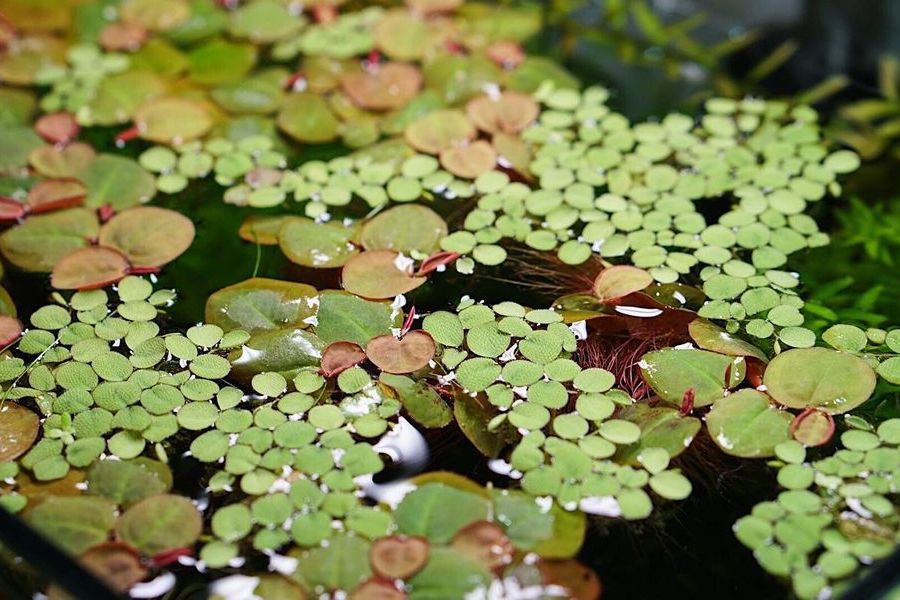
Pennywort (Hydrocotyle) is a fast, adaptable stem plant that will grow emersed, submersed, or floating, and it doesn’t sulk under weak light the way many stems do. Its round, lily-pad-like leaves add a different shape to the tank than the ferns and mosses above, and it can be planted in substrate or simply left to trail along the surface.
How to tell if your light is too weak
A plant can be low-light tolerant and still starve if the fixture is extremely weak, blocked by a lid, or running too few hours. Watch the growth pattern:
- Healthy low-light growth: slow but steady new leaves, deep green color, little stretching.
- Not enough light: long gaps between leaves, pale new growth, stems leaning hard toward the fixture.
- Too much light for slow plants: older Anubias or Java Fern leaves collect green spot algae while the plant grows too slowly to outpace it.
For most low-light plants, a stable 6-8 hour photoperiod is a better starting point than leaving a weak light on all day. Longer light duration does not fully make up for poor intensity, and it often gives algae more time than the plants can use.
Plants That Don’t Belong on a Low-Light List
Just as important as knowing what works is knowing what to skip, so you don’t waste money and effort on plants that were never going to succeed under your lighting.
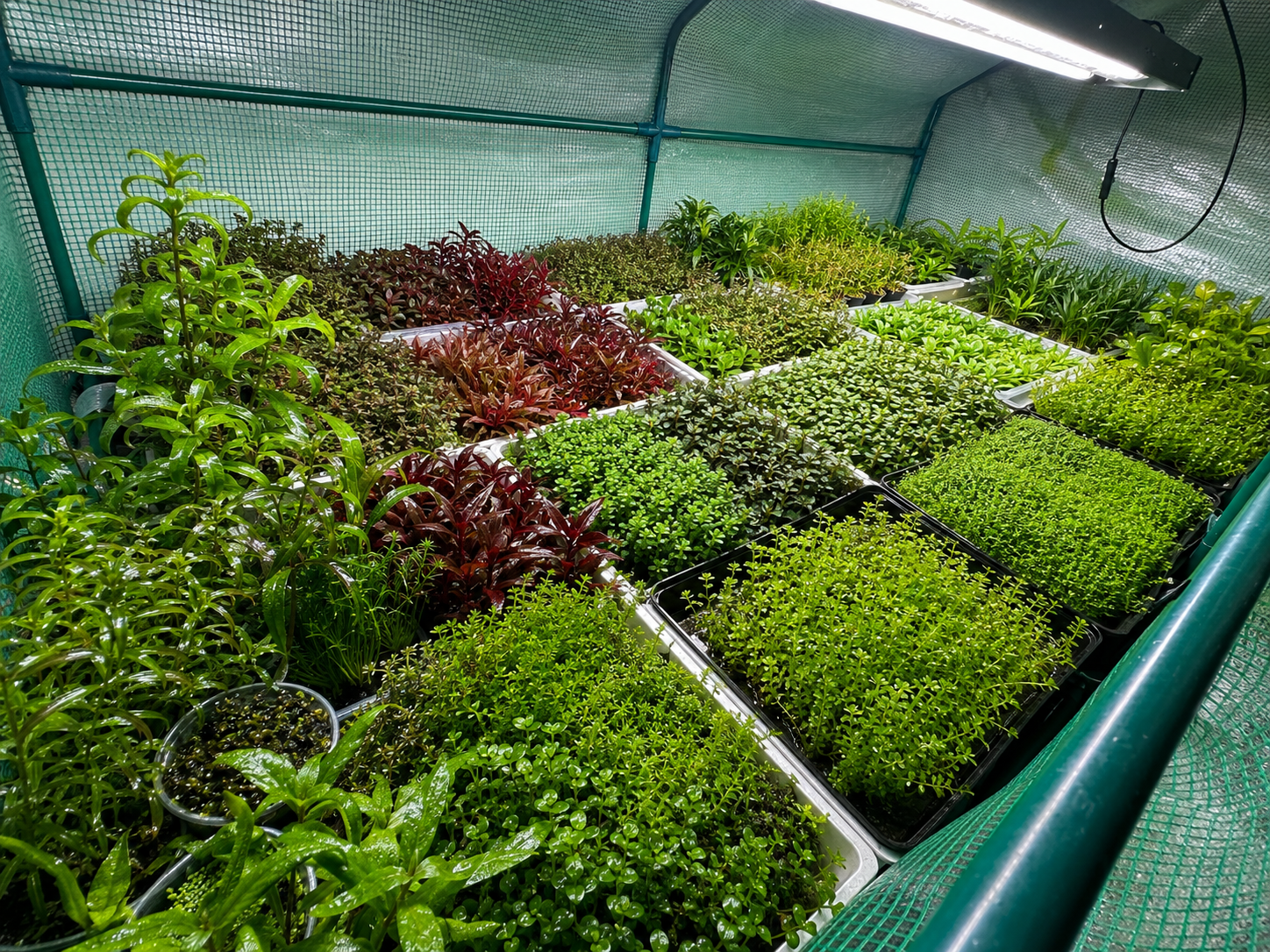
Red stem plants like Rotala and Alternanthera are often marketed as showpieces, but their signature color comes from intense light stress — under weak light they’ll grow, just green and leggy, never developing the reds and pinks they’re bought for. If color is the goal, you need to solve the lighting problem first.
→ Why some plants turn red (and others won’t)
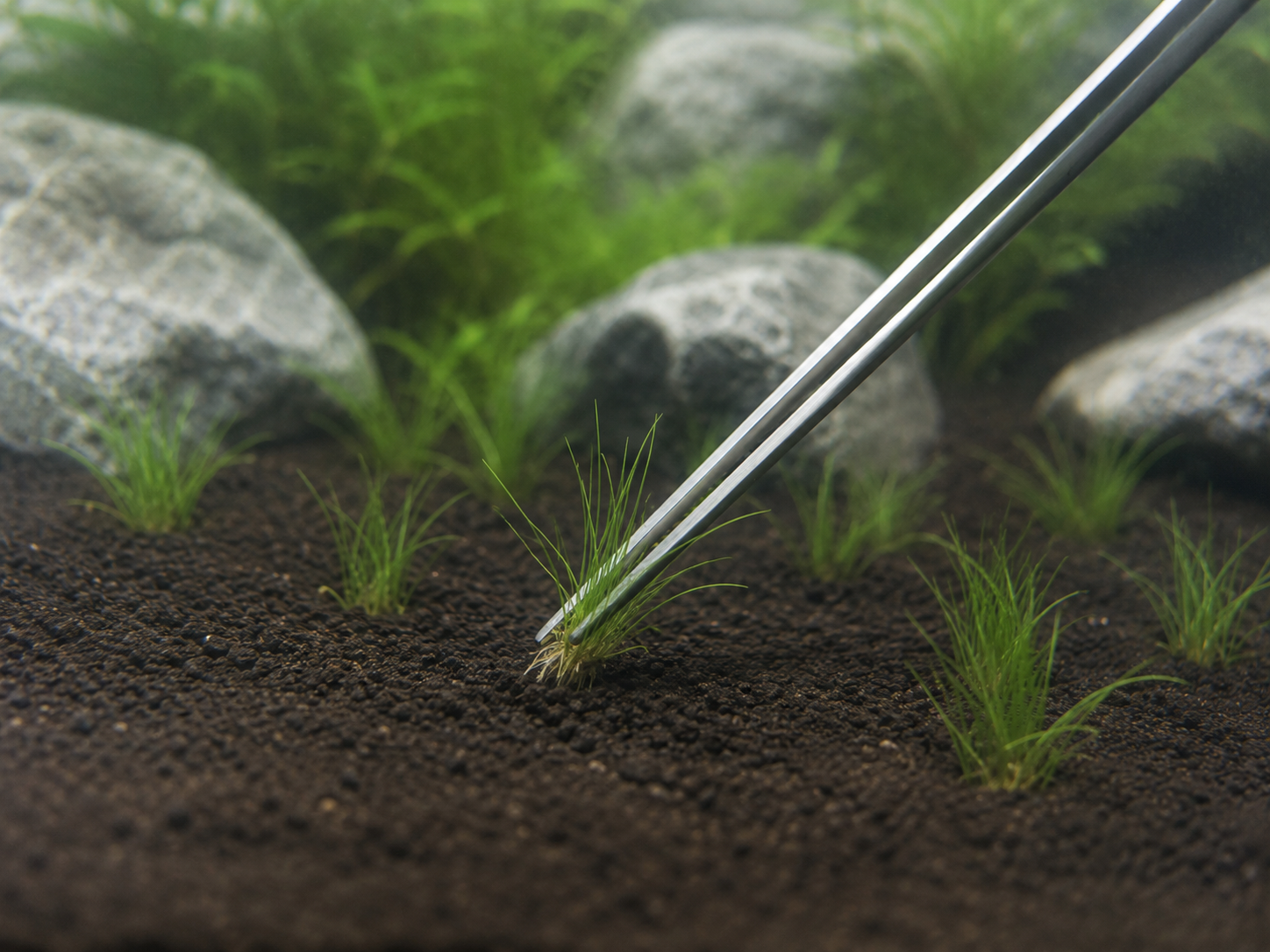
Carpeting plants like HC Cuba are another common low-light disappointment. These tiny foreground plants need high light intensity to out-compete algae and spread horizontally instead of stretching upward and thinning out. Under a basic stock fixture, HC Cuba typically melts or gets leggy rather than carpeting.
Most red plants are also poor first choices if the goal is visible color. Some, like Ludwigia Repens, can survive and show copper tones under a decent low-tech light. But if the tank is genuinely dim, red stems usually become green, tall, and sparse.
The Bigger Picture
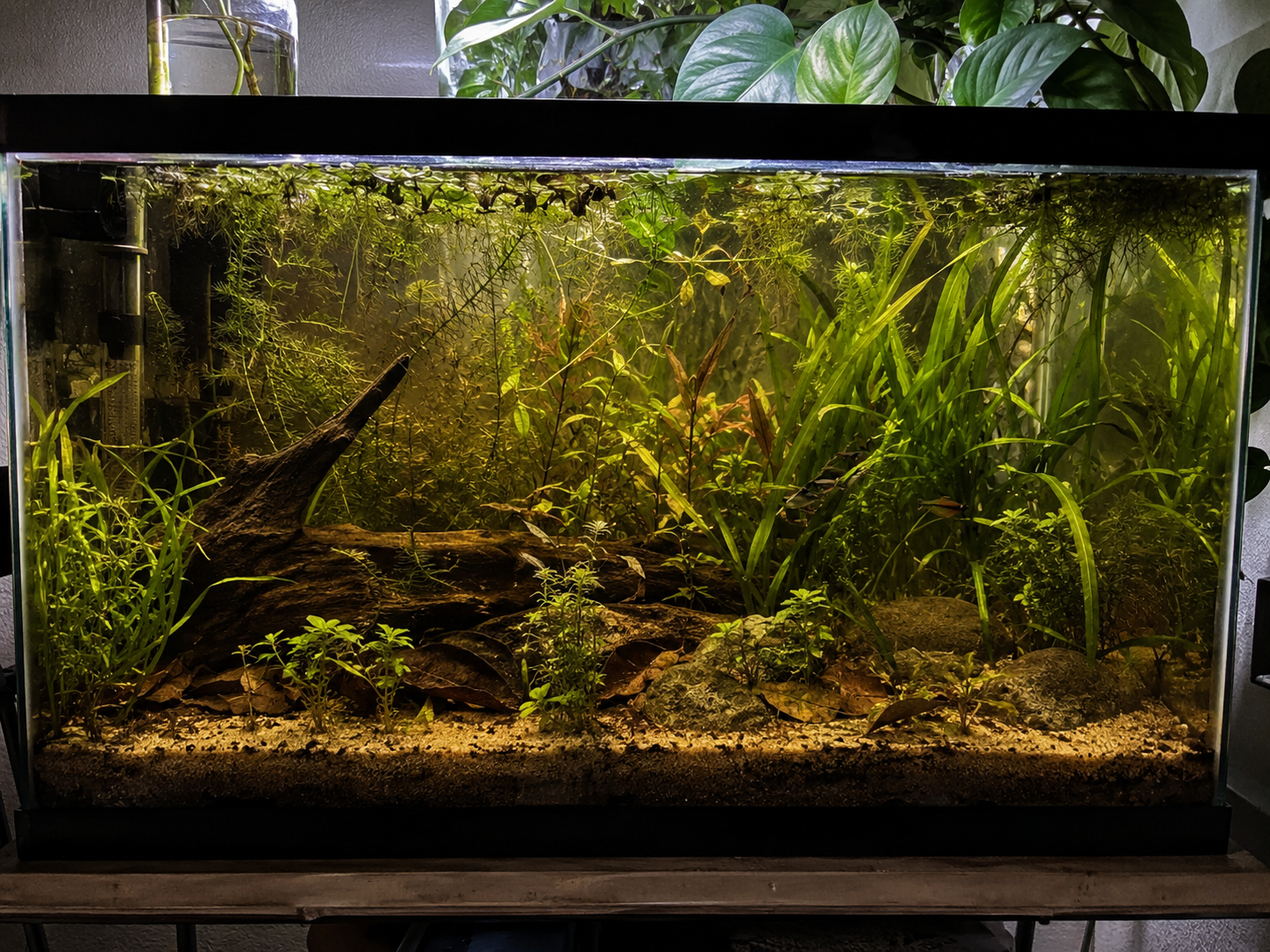
Low light doesn’t mean “no plants” — it means picking species that are naturally built for shade rather than fighting your lighting to force in ones that aren’t. Java Fern, Anubias, the mosses, Crypts, and Pennywort will all fill in a dim tank nicely with minimal fuss.
If you want a wider survey of easy, hardy plants that skip CO2 and heavy dosing entirely (not just low light specifically), the low-tech guide below covers more ground and is a good next read.