Java Fern vs. Anubias: Which Should You Choose?
If you’ve asked anyone what plant to start with, you’ve gotten one of two answers: Java Fern or Anubias. Both are epiphytes — meaning they attach to hardscape instead of rooting in substrate — and both are about as close to indestructible as aquarium plants get. So which one actually belongs in your tank?
The honest answer is usually both. But they’re not interchangeable, and knowing how they differ will help you use each one where it actually shines.
Growth Rate and Form
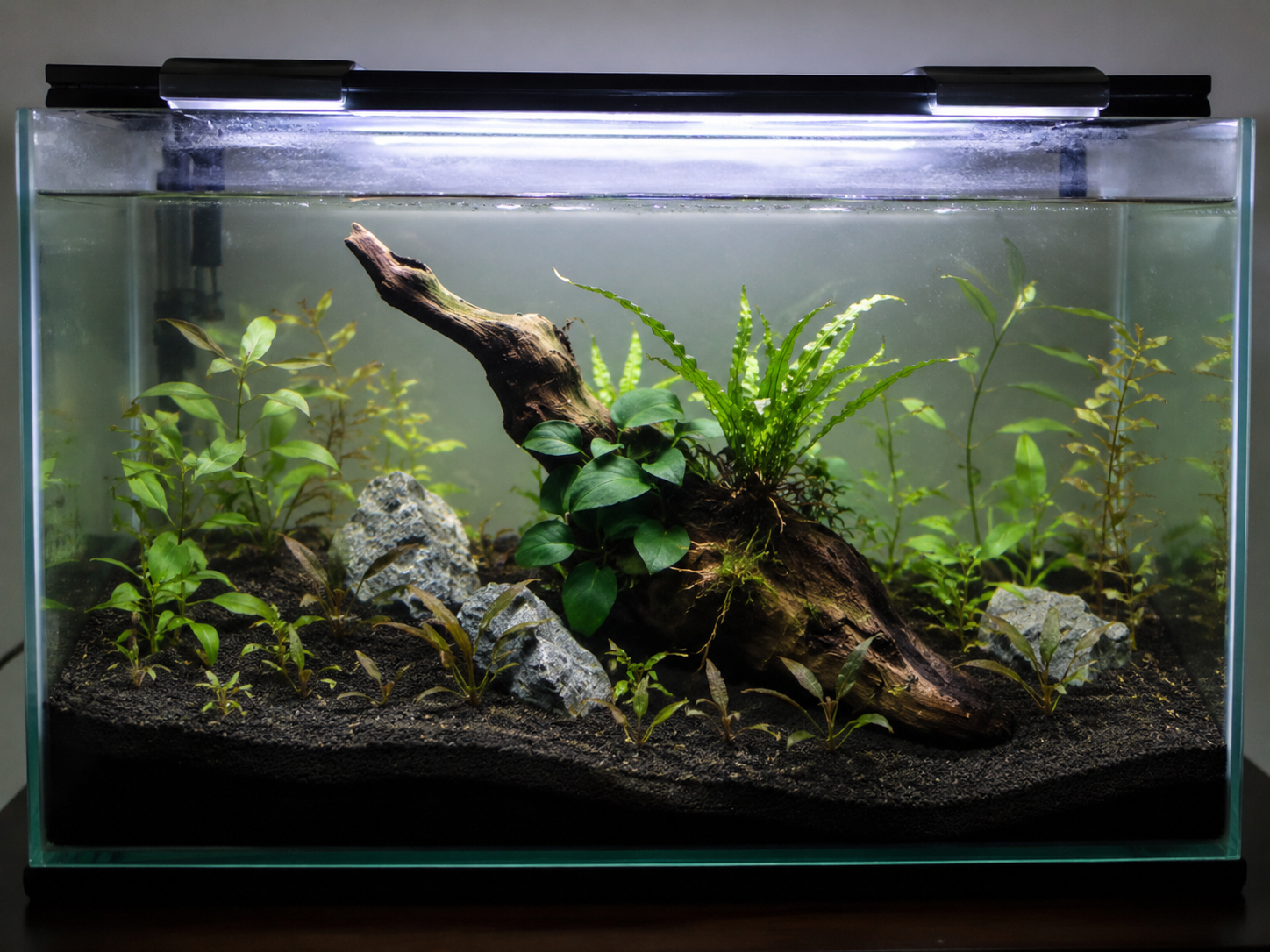
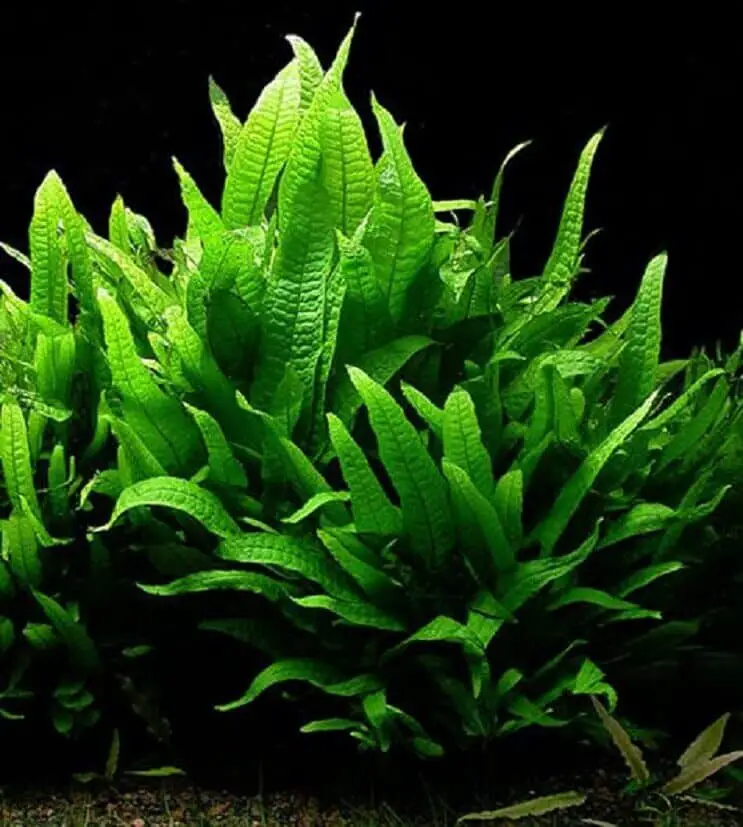
Java Fern grows in long, wavy, ribbon-like fronds that fan out from a central rhizome. It has a loose, airy silhouette and fills vertical space quickly once established. New plantlets even sprout directly from the tips of older leaves — clip one off, tuck it against driftwood, and you’ve got a second plant for free.
Anubias is the opposite in almost every way. Its leaves are thick, waxy, and rounded, growing in a low, compact clump close to the rhizome. It’s a slow grower — sometimes putting out just one new leaf a month — which makes it feel more like a permanent fixture than a spreading plant.
If you want movement and fullness, Java Fern gets there faster. If you want a tidy, structural anchor point in your aquascape, Anubias holds its shape for months without needing to be touched.
Light Tolerance
Both plants are famous for surviving in low light, but Anubias takes it a step further. It’s one of the few plants that will genuinely tolerate near-shade conditions — under overhangs, behind taller plants, or in tanks lit mostly by ambient room light. Java Fern wants a little more than “almost nothing,” though it’s still comfortably a low-light plant and will melt or bleach out under intense, unshaded lighting.
If you’re stocking the darkest corner of your tank, Anubias is the safer bet.
Placement and Aesthetic
This is really where the two plants diverge. Java Fern’s flowing fronds read as a mid-to-background texture — great for softening the back of a tank or wrapping around a piece of driftwood to hide equipment. Anubias’s compact rosettes work best as a foreground-to-midground accent, tied to a single rock or root where its bold, glossy leaves stand out on their own.
Many aquascapers use Java Fern to create motion and volume, then use Anubias as a punctuation mark — a single specimen wired to a stone that draws the eye without competing with everything else in the tank.
Care Difficulty
Practically speaking, there’s no difference here. Both tolerate a wide range of pH and hardness, don’t need CO2 or root fertilization, and will survive weeks of neglect. If you can keep a Betta alive, you can keep these plants alive.
The One Real Differentiator
The genuine trade-off comes down to speed versus toughness. Java Fern’s faster growth and easy propagation make it the better choice if you want to fill a tank out quickly or plan on trading/selling plantlets. Anubias’s slow growth is actually an advantage against nibbling or grazing fish — its thick, tough leaves hold up far better against fish that like to pick at softer plant tissue, which is why it’s the go-to recommendation for cichlid tanks and other setups with less plant-friendly tankmates.
Verdict: Get Both
This isn’t really an either/or decision. Java Fern and Anubias solve different problems in the same tank — one gives you fast-growing texture and volume, the other gives you a slow, tough, sculptural focal point. Both show up on our list of the best low-tech plants for a betta tank for exactly this reason: they’re low-maintenance enough that there’s no real cost to running both side by side.
Start with one of each, tie them to separate pieces of hardscape, and let them do what they each do best.