How to Get Rid of Pest Snails in a Planted Tank
You didn’t buy snails. You went to bed with a normal-looking tank and woke up to a dozen tiny snails on the glass, and now there are more every week. This is one of the most common early-hobby surprises, and the good news is it’s completely manageable once you understand where they came from and how they reproduce.
Which Snails Are “Pests”?
The snails people usually mean when they say “pest snails” are:
- Bladder snails — small, teardrop-shaped, translucent brown, reproduce constantly
- Pond snails — similar shape but larger, faster-growing, will eat healthy plant tissue if food is scarce
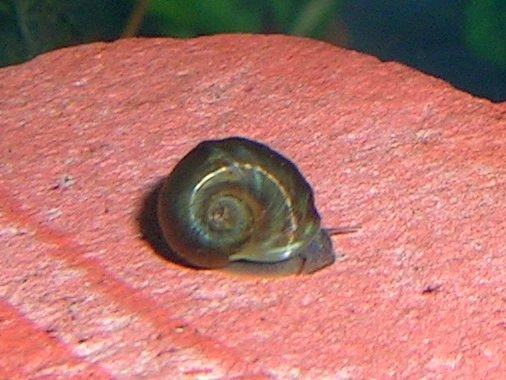
- Ramshorn snails — flat, coiled shell, come in brown or red, breed almost as fast as bladder snails
None of these are dangerous to fish, and in small numbers they’re harmless cleanup crew. The problem is that all three are hermaphroditic and lay eggs constantly, so a population that starts as two or three snails can hit the hundreds within a couple of months if the tank has enough leftover food to support them.
This is a different category from snails people keep on purpose — nerite snails (which can’t reproduce in freshwater, so their numbers stay put) and mystery snails (which do breed but are large, slow, and easy to track). If you added those deliberately, you don’t have a pest problem — you have pets.
How They Get In
The overwhelming majority of pest snail infestations start the same way: eggs riding in on new plants or substrate. Snail eggs look like tiny clear gel dots, often stuck to the underside of leaves or tucked into root systems, and they’re easy to miss during a quick inspection. A single egg cluster on one plant is enough to seed an entire tank within weeks.
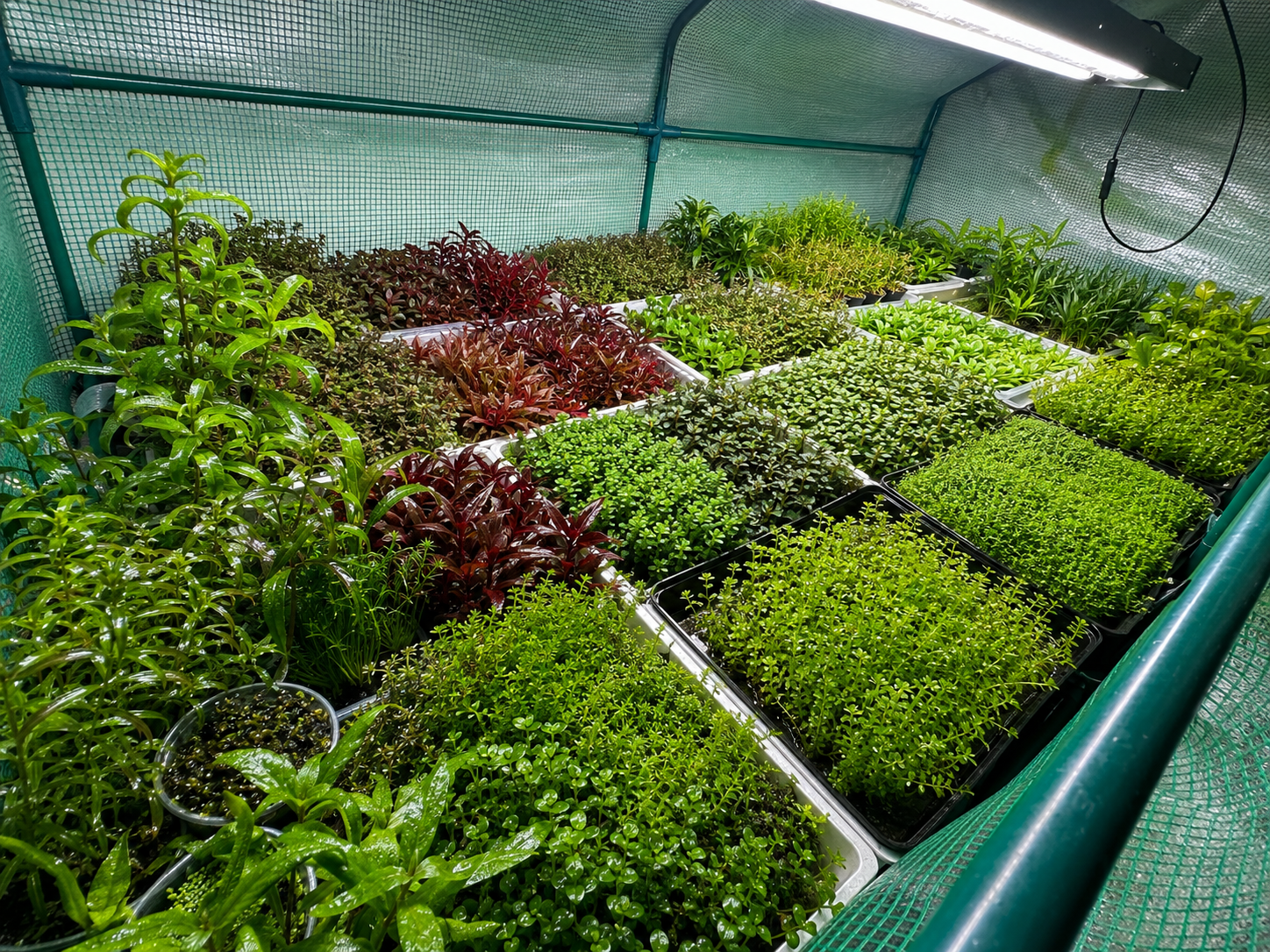
This is also why the growing method behind your plants actually matters here. Plants grown and shipped emersed — in open air rather than submerged tanks — spend their entire life in an environment where aquatic snail eggs simply can’t establish, because the beds aren’t underwater. That’s a big part of why emersed-grown stock ships essentially snail-free, and it’s the reason it’s become the standard for reputable growers rather than a marketing footnote. See our guide to emersed-grown plants for more on why that growing method matters beyond just snails.
Getting Rid of an Existing Boom
Manual removal
Tedious but effective, especially combined with the methods below. Pick snails off the glass and leaves by hand or with tweezers whenever you see them, focusing on egg clusters first since removing an egg mass prevents dozens of future snails at once.
DIY traps
Drop a piece of blanched zucchini, cucumber, or a lettuce leaf into the tank overnight, weighted down so it sinks. Snails swarm to it to feed, and in the morning you lift the whole thing out — snails and all — and discard it outside the tank. Repeat every night or two for a week and you’ll remove a large share of the adult population quickly.
Assassin snails
Clea helena, commonly sold as assassin snails, actively hunt and eat pest snails and are a genuinely effective biological control in most community tanks. They’re slow-breeding themselves, so they won’t turn into their own infestation, and once the pest population is knocked down they’ll simply level off at low numbers rather than starving out completely.
Limit feeding
Pest snail booms are almost always a symptom of excess food in the tank, not just a snail problem on its own. Cutting back to only what your fish finish in two to three minutes, and vacuuming any leftover food during water changes, starves out the surplus and slows reproduction dramatically even without adding predators.
Preventing It Next Time
The single most reliable prevention is inspecting or quarantining new plants before they go into an established tank. A short quarantine (one to two weeks in a separate container) gives any hidden eggs time to hatch where you can see and remove them before the plant ever touches your display tank. A quick dip or rinse under running water and a visual check of the undersides of leaves catches most egg clusters even without a full quarantine.
Or, simpler still: start with stock that was grown emersed in the first place, so there’s very little for a quarantine to even need to catch. It’s not a guarantee against every hitchhiker, but it removes the single biggest source of pest snail introductions before the plant ever reaches your tank.