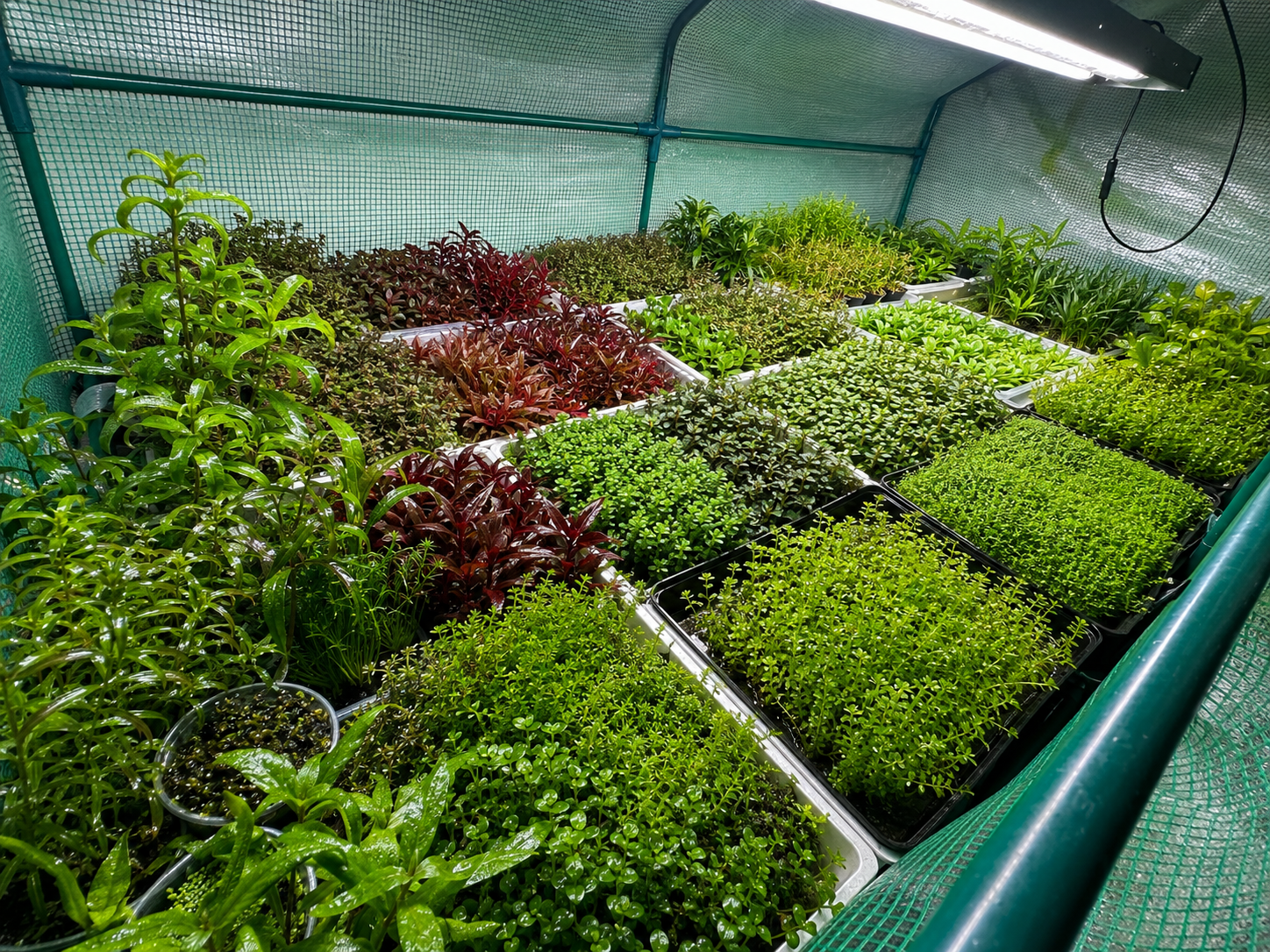
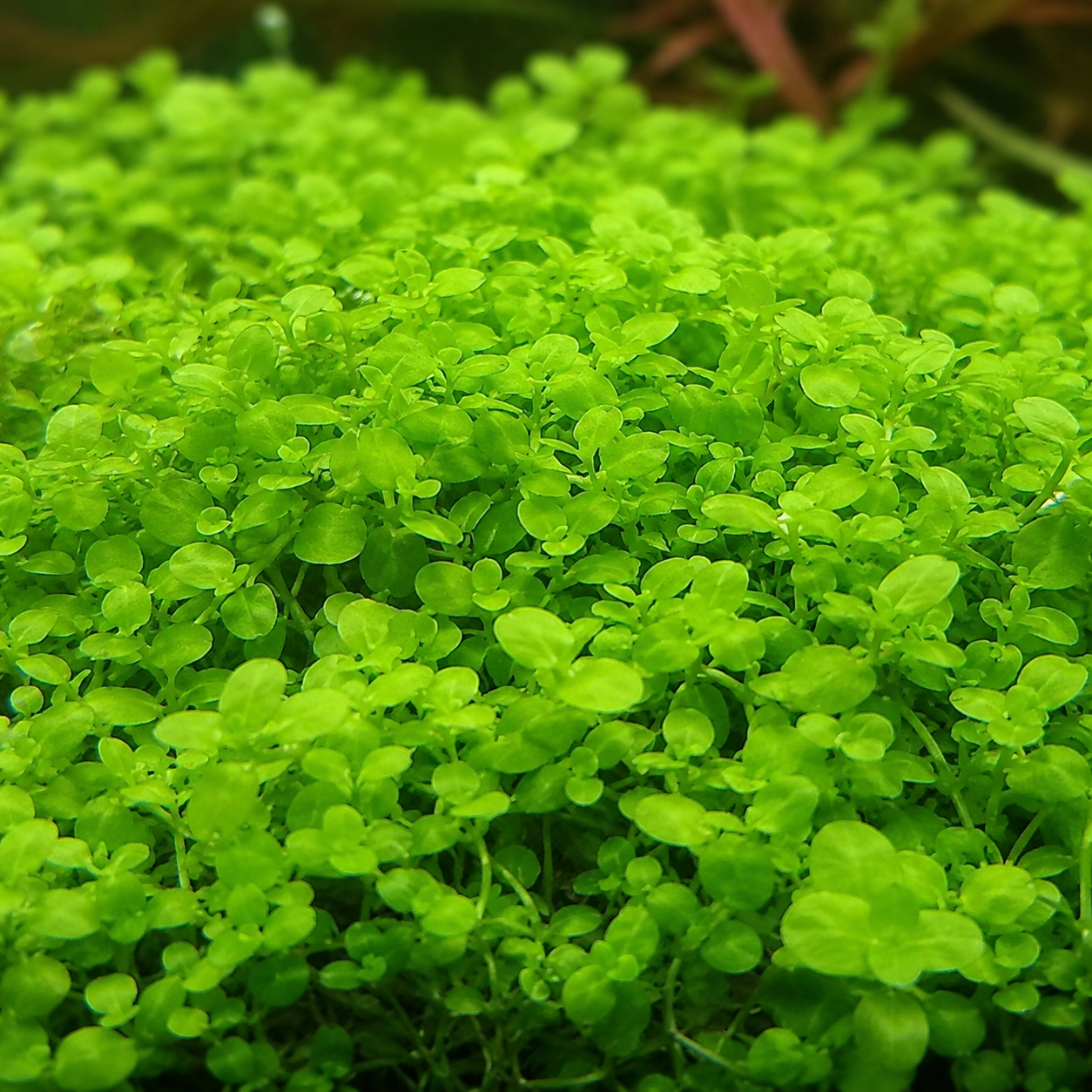
HC Cuba and Monte Carlo are the two plants that come up in almost every “what carpet plant should I get” conversation, and for good reason — they’re the most reliable options at opposite ends of the difficulty spectrum. If you’re trying to decide between them, the honest answer is that the decision is mostly made for you by one factor: whether you’re running CO2.
The Quick Answer
No CO2 (low-tech tank): Monte Carlo. It’s the only one of the two that reliably carpets without injected CO2.
CO2 injection available: Either works. HC Cuba gives the finest, most “manicured lawn” texture and is the classic choice for competition-style layouts. Monte Carlo is more forgiving and a safer first carpet plant even in a high-tech tank.
| Factor | Monte Carlo | HC Cuba |
|---|---|---|
| Low-tech/no CO2 | Realistic, slower | Not recommended |
| Leaf size | Larger, round 3-5mm leaves | Tiny, fine 1mm leaves |
| Difficulty | Moderate | High |
| Best look | Soft green lawn | Fine manicured carpet |
| Substrate tolerance | More forgiving | Needs fine, stable substrate |
| Trim frequency | Every 3-4 weeks | Every 2-3 weeks |
| Best buyer | Beginner to intermediate | High-tech aquascaper |
Leaf Size and Appearance
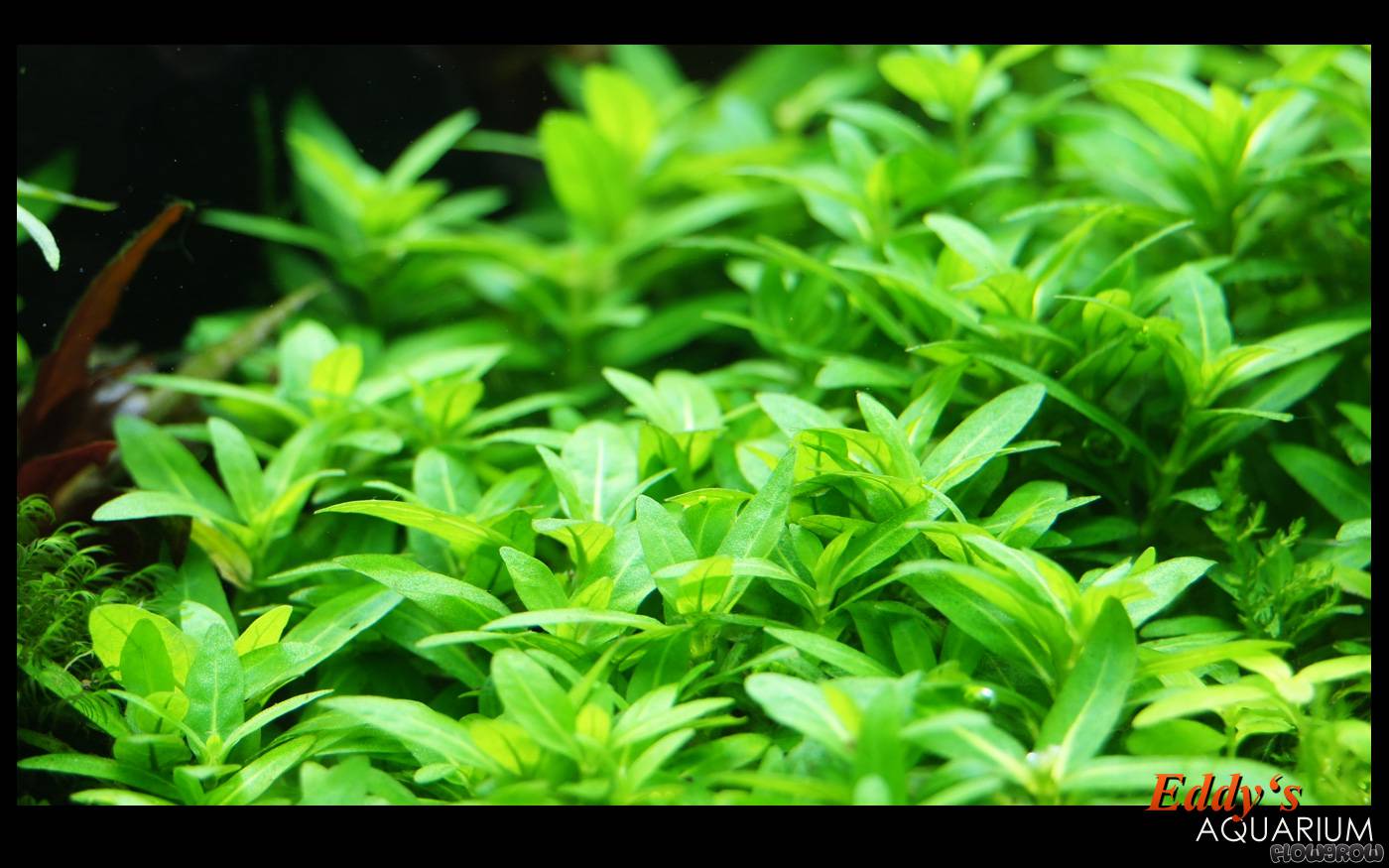
Monte Carlo has round leaves 3-5mm across on fine horizontal runners — a genuinely lush, full-looking green carpet. HC Cuba has the smallest leaves of any commonly available aquarium plant, roughly 1mm across, producing an extremely fine, dense texture that’s hard to replicate with any other plant. Side by side, HC reads as more delicate and manicured; Monte Carlo reads as a slightly bolder, fuller green.
CO2 and Light: The Real Deciding Factor
This is where the two plants genuinely diverge. HC Cuba requires CO2 injection to carpet — without it, the plant grows upward instead of spreading, loses color, and eventually melts. There’s no low-tech workaround. Monte Carlo, by contrast, will spread horizontally under moderate light with no CO2 at all, just more slowly than it would with injection. Both want strong light reaching the substrate level, but Monte Carlo’s threshold for successful horizontal growth is meaningfully lower than HC’s.
If your tank doesn’t have CO2 and you’re not planning to add it, this single fact settles the decision — Monte Carlo is the only realistic option between the two.
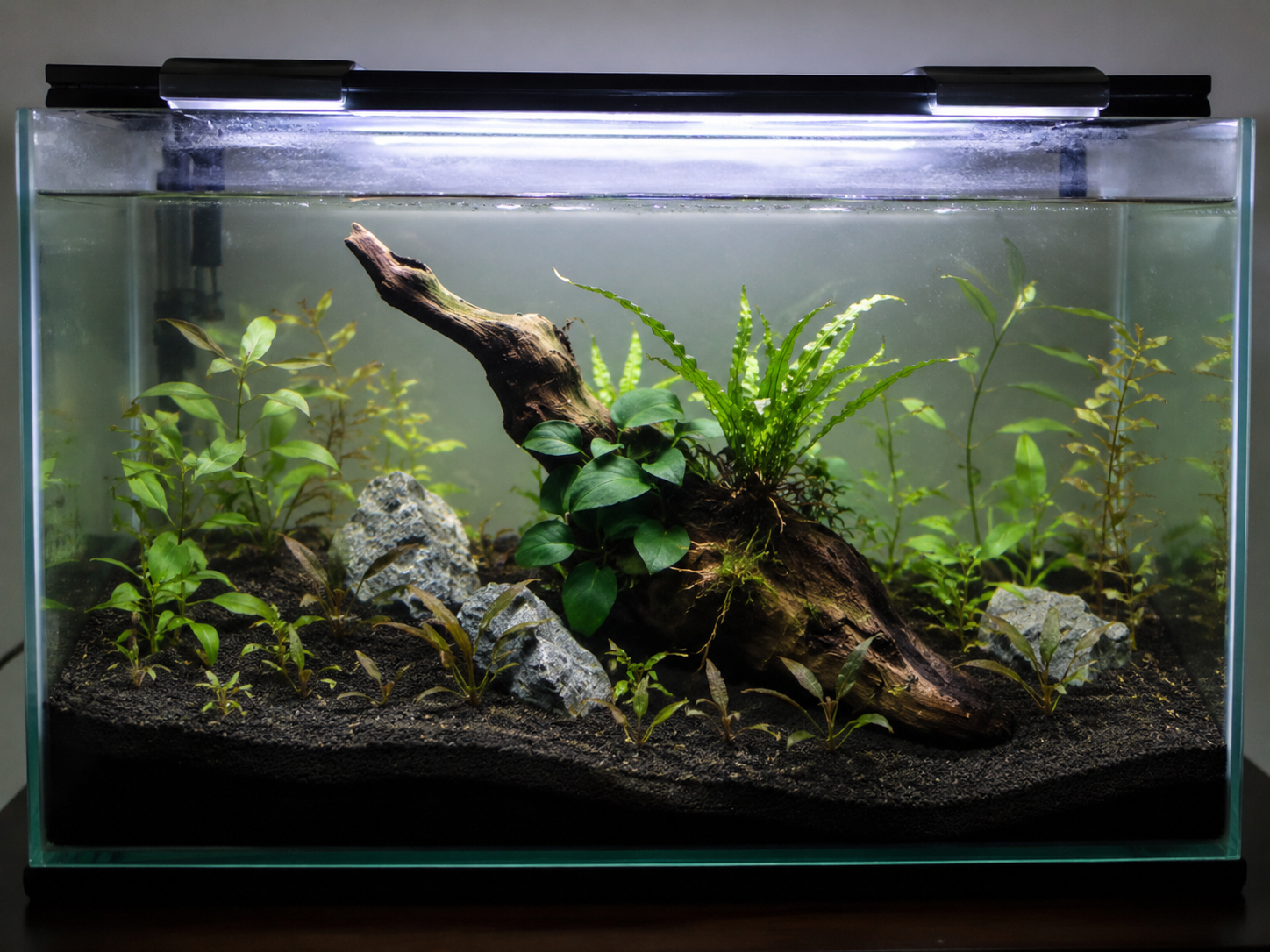
This is also why search results and store photos can be confusing. HC Cuba usually looks incredible in high-tech aquascapes because those tanks are built around CO2, bright light, frequent trimming, and nutrient control. Dropping the same plant into a low-tech betta tank does not recreate those conditions. Monte Carlo is popular because it still behaves like a carpet plant when the setup is less perfect.
Growth Rate and Establishment Time
With CO2, both plants fill in within 3-4 weeks under good conditions. Without CO2, Monte Carlo takes 6-10 weeks to fill the same area — slower, but it gets there. HC Cuba without CO2 simply won’t carpet regardless of how long you wait.
Substrate and Root Feeding
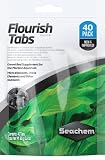
Both plants are demanding root feeders and need fine substrate (1-3mm grain) to let their runners maintain contact with the ground — coarser gravel causes both to lift and grow upward instead of spreading. Seachem Flourish Tabs placed in a grid across the planting area are important for either plant, though HC Cuba’s shallow, fine root system exhausts nutrients faster and typically needs tabs replaced every 2-3 months versus Monte Carlo’s more standard 3-4 month cycle.
For a small foreground, do not plant one large clump and wait for it to crawl across the whole tank. Split the portion into small plugs and space them evenly. More starting points means faster coverage and less algae-prone bare substrate between patches.
| Foreground size | Monte Carlo starting amount | HC Cuba starting amount |
|---|---|---|
| 5-gallon nano foreground | 1-2 portions | 2+ portions with CO2 |
| 10-gallon foreground strip | 2-4 portions | 4+ portions with CO2 |
| 20-gallon long carpet | 5-8 portions | 8+ portions with CO2 |
Trimming and Maintenance
Both need regular trimming with flat scissors to stay low and dense — every 2-3 weeks for HC Cuba, every 3-4 weeks for Monte Carlo, in each case trimming before the carpet exceeds about 2cm. HC Cuba is more prone to trapping debris and developing anaerobic patches under a thick, dense mat, so it rewards slightly more frequent, lighter trims over letting it grow out between cuts.
The first trim feels wrong because the carpet finally looks like it is filling in, but trimming early is what makes it thicken. If you wait until the mat is tall and layered, the lower growth gets shaded, weakens, and can lift from the substrate in sheets.
Which One Should You Actually Buy?
- Low-tech, no CO2: Monte Carlo. Not a close call.
- High-tech, new to carpeting plants: Monte Carlo, for the larger margin of error while you learn to manage a carpet.
- High-tech, want the finest possible texture: HC Cuba, understanding it demands more consistent attention to light, CO2, and root nutrition than almost anything else in the hobby.
- Want both: plant them in separate zones of the same high-tech tank rather than mixed together — Monte Carlo’s faster growth will otherwise crowd out HC Cuba over time.
Better alternatives if neither one fits
If your tank is very low light, very coarse gravel, or brand new and unstable, neither plant may be the right first carpet. Consider:
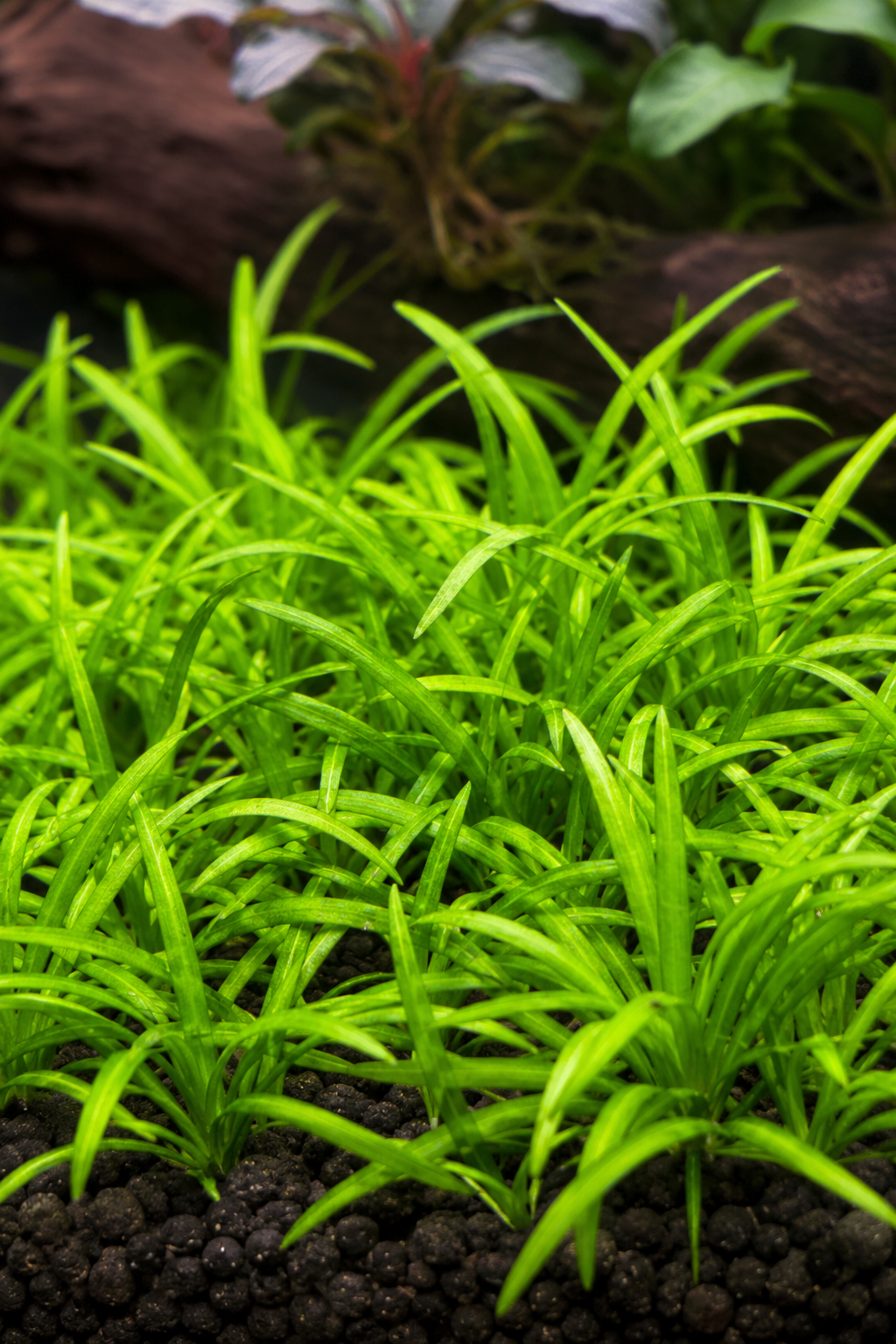
- Dwarf Sagittaria: grass-like, rooted, and much more tolerant of beginner conditions.
- Pearlweed: can be trimmed into a low mound or loose foreground without needing perfect substrate.
- Dwarf Hairgrass: still appreciates good light, but is often more forgiving than HC Cuba.
- Staurogyne Repens: not a true carpet, but creates a low, dense foreground bush in low-tech tanks.
Choosing a slightly less delicate foreground plant often gives a better-looking tank than forcing HC Cuba into conditions it was never going to like.
Common Problems With Both
- Growing upward instead of spreading. For both plants, this means light and/or CO2 (Monte Carlo can compensate for missing CO2 with time; HC Cuba cannot) aren’t sufficient at substrate level.
- Slow or patchy fill-in. Almost always fine substrate contact or a missing root tab — see the feeding section above.
- Melting. More common with HC Cuba given its narrower tolerance; check light, CO2, and root nutrition in that order.
Both plants reward patience and fine substrate more than any single trick — pick based on your actual setup rather than the more dramatic photos, and the carpet will fill in either way.