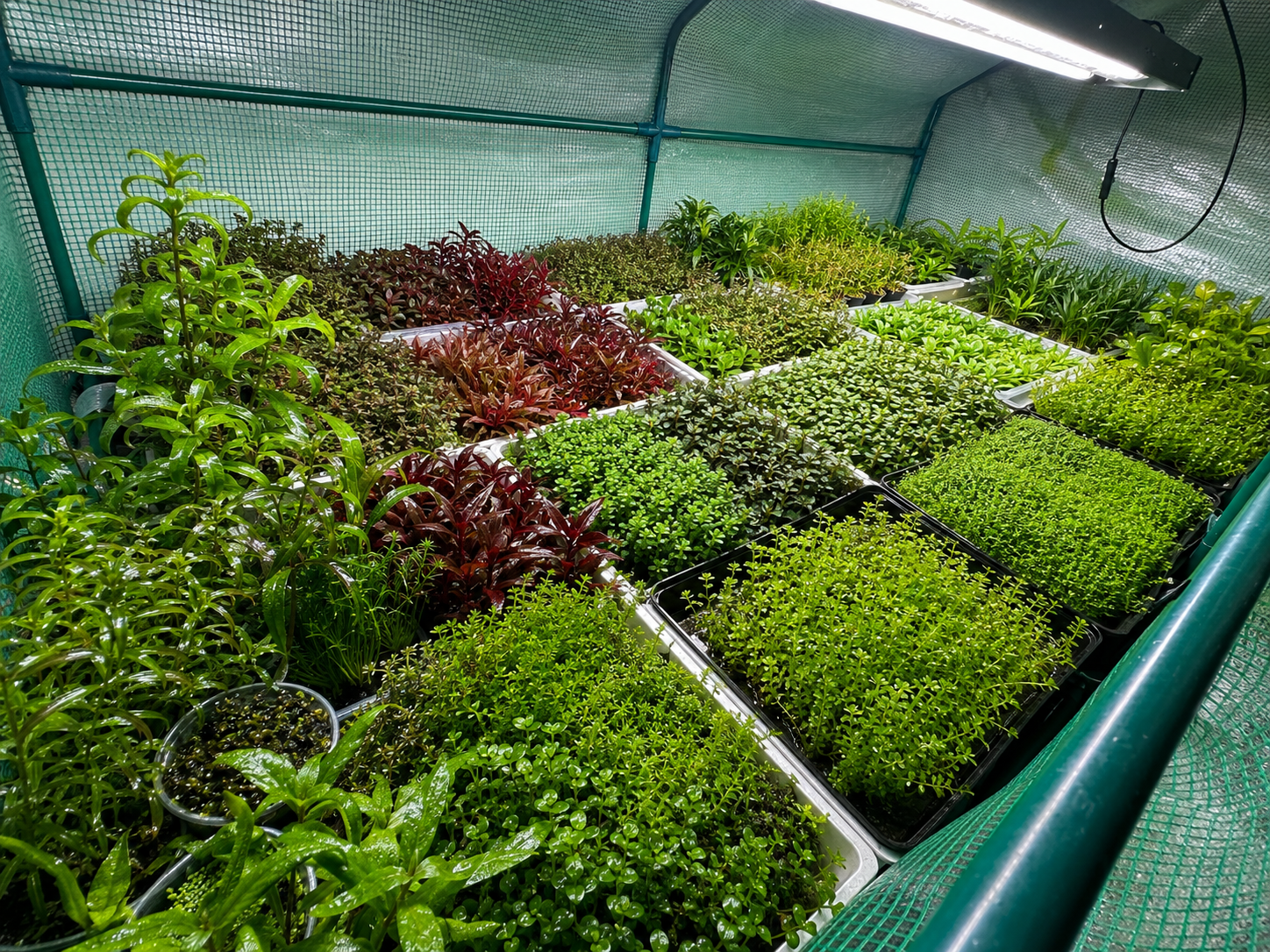
Search “best carpet plants” and most lists quietly assume a CO2 system you may not have. If you’re running a genuine low-tech tank — no injected CO2, standard lighting — the realistic list is shorter, but it’s real. These four plants will actually carpet without CO2, ranked from most to least forgiving.
1. Monte Carlo — The Easiest by a Clear Margin
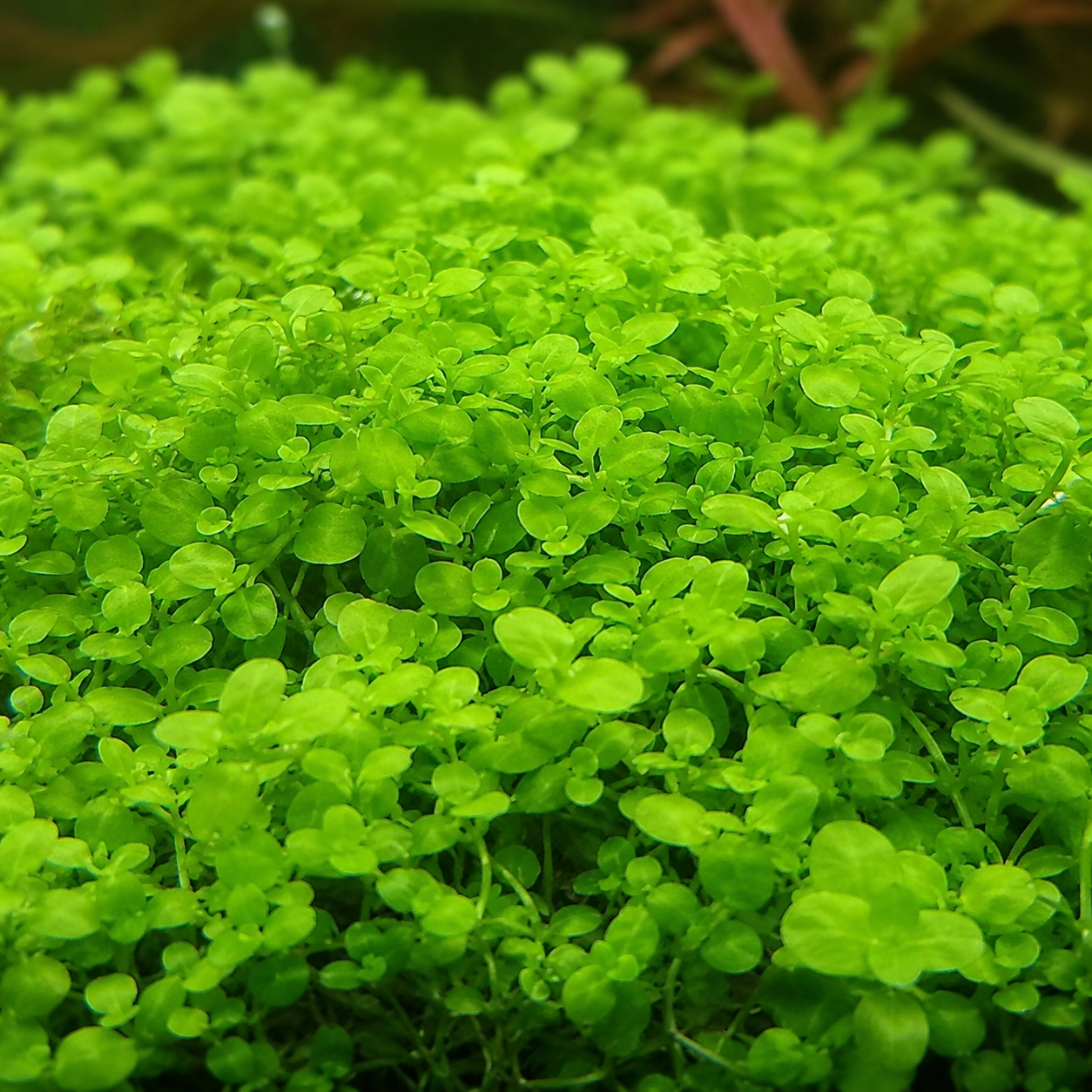
Monte Carlo (Micranthemum tweediei) is the standard recommendation for a reason: it has the lowest light threshold for horizontal spreading of any carpet plant, and its runners are robust enough to maintain substrate contact even when conditions aren’t perfect. Expect 6-10 weeks to fill an area under moderate light with a root tab under each starting cluster. If you’re picking just one plant from this list, this is it.
2. Staurogyne Repens — Thicker Leaves, Same Ease
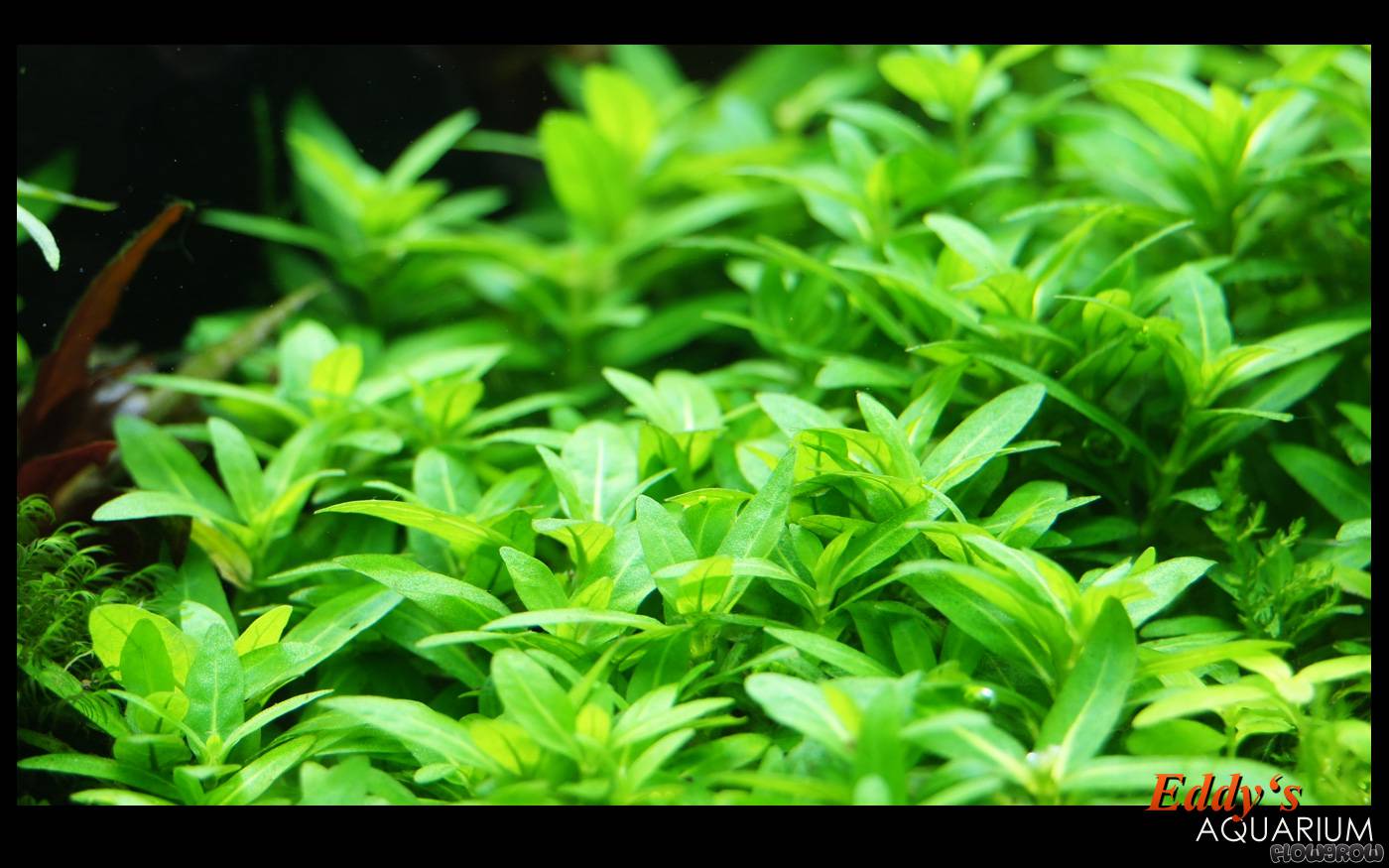
Staurogyne repens creeps horizontally rather than growing tall, producing a dense, slightly thicker-leaved mat than Monte Carlo’s fine texture. It’s just as genuinely low-tech capable, spreading reliably under moderate light with consistent root feeding. Where Monte Carlo gives the more “manicured lawn” look, Staurogyne gives a bolder, thicker-textured carpet — a matter of preference more than difficulty.
3. Dwarf Sagittaria — More of a Lawn Than a Flat Carpet
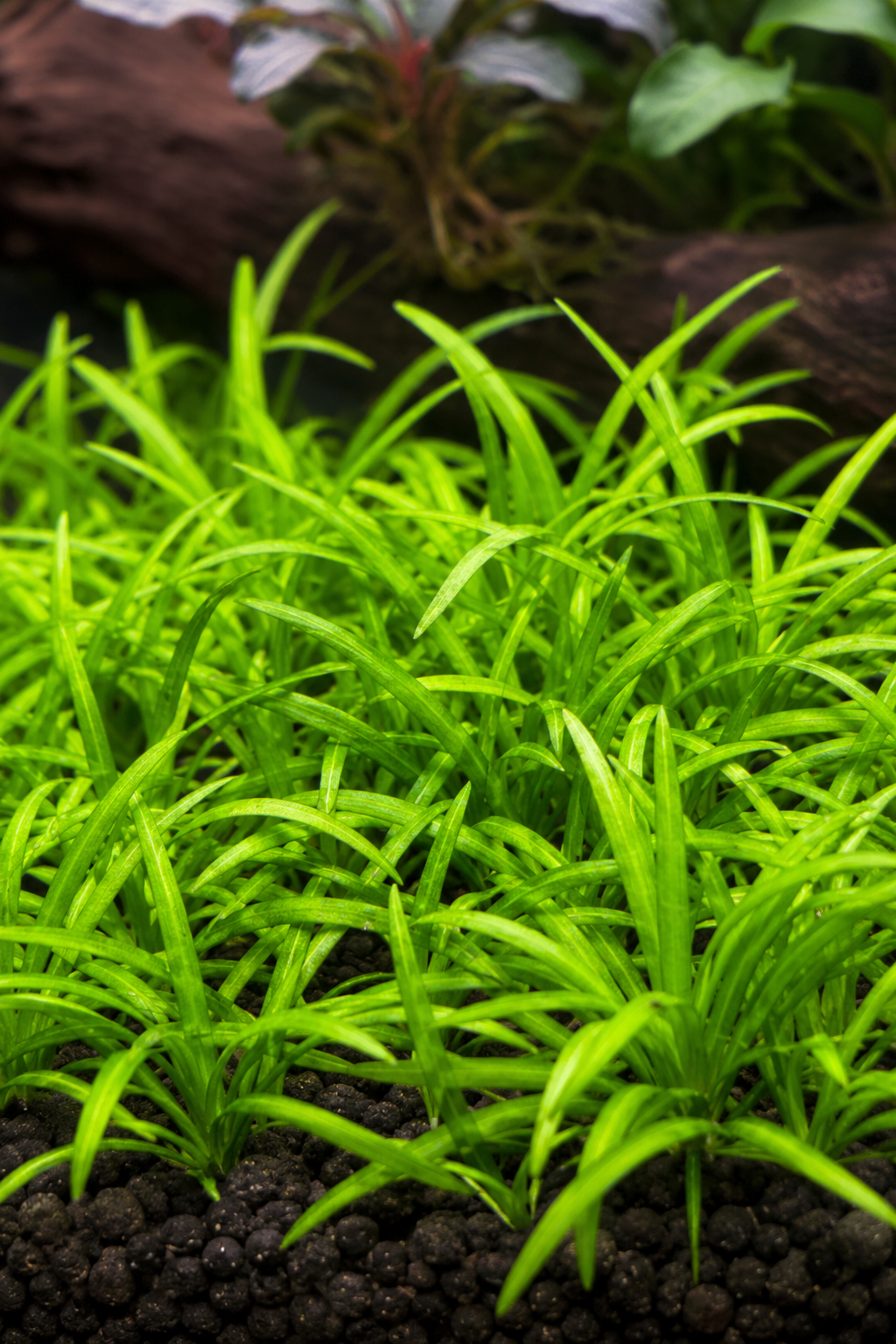
Dwarf Sagittaria (Sagittaria subulata) spreads by runners the same way true carpet plants do, but its strap-shaped leaves give a looser, grassier look rather than a tight, flat mat — closer to a lawn than a carpet in the strictest sense. It’s genuinely easy and low-tech friendly, and worth including if you want carpet-style ground cover without the higher light demands of hairgrass.
4. Dwarf Hairgrass — Possible, but the Hardest of the Four
Dwarf Hairgrass (Eleocharis acicularis) can carpet without CO2, but it’s honestly the least forgiving plant on this list — it needs stronger light than the other three to trigger horizontal spreading, and without CO2 it’s noticeably more prone to growing tall and sparse instead. Include it if your low-tech tank already runs strong light; otherwise, one of the first three plants above will get you there with less frustration.
What Doesn’t Belong on This List
HC Cuba and Glossostigma are the two carpet plants that realistically require CO2 injection to spread — without it, both grow upward instead of carpeting, and eventually decline. If you’re deciding between a low-tech carpet from this list and going high-tech instead, see HC Cuba vs. Monte Carlo for the fuller comparison.
Getting Any of These to Actually Spread
Two things matter more than which plant you pick:
- Fine substrate. All four plants need 1-3mm grain size to let their runners maintain ground contact. In coarse gravel, even Monte Carlo will lift and grow upward instead of spreading.
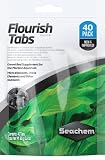
- Root tabs under every cluster. Seachem Flourish Tabs placed at planting and replaced every 3-4 months make a dramatic difference in spread rate across all four — this isn’t optional if you want a genuinely dense result rather than a sparse, slow one.
Beyond that: plant in small, dense clusters rather than a few widely spaced pieces, expect several quiet weeks of root establishment before visible spreading starts, and trim flat with scissors every few weeks once established to keep growth low and dense rather than tall and patchy.
A full, genuinely dense low-tech carpet takes longer than a high-tech one — measure the timeline in months, not weeks, and it holds up just as well once it gets there.