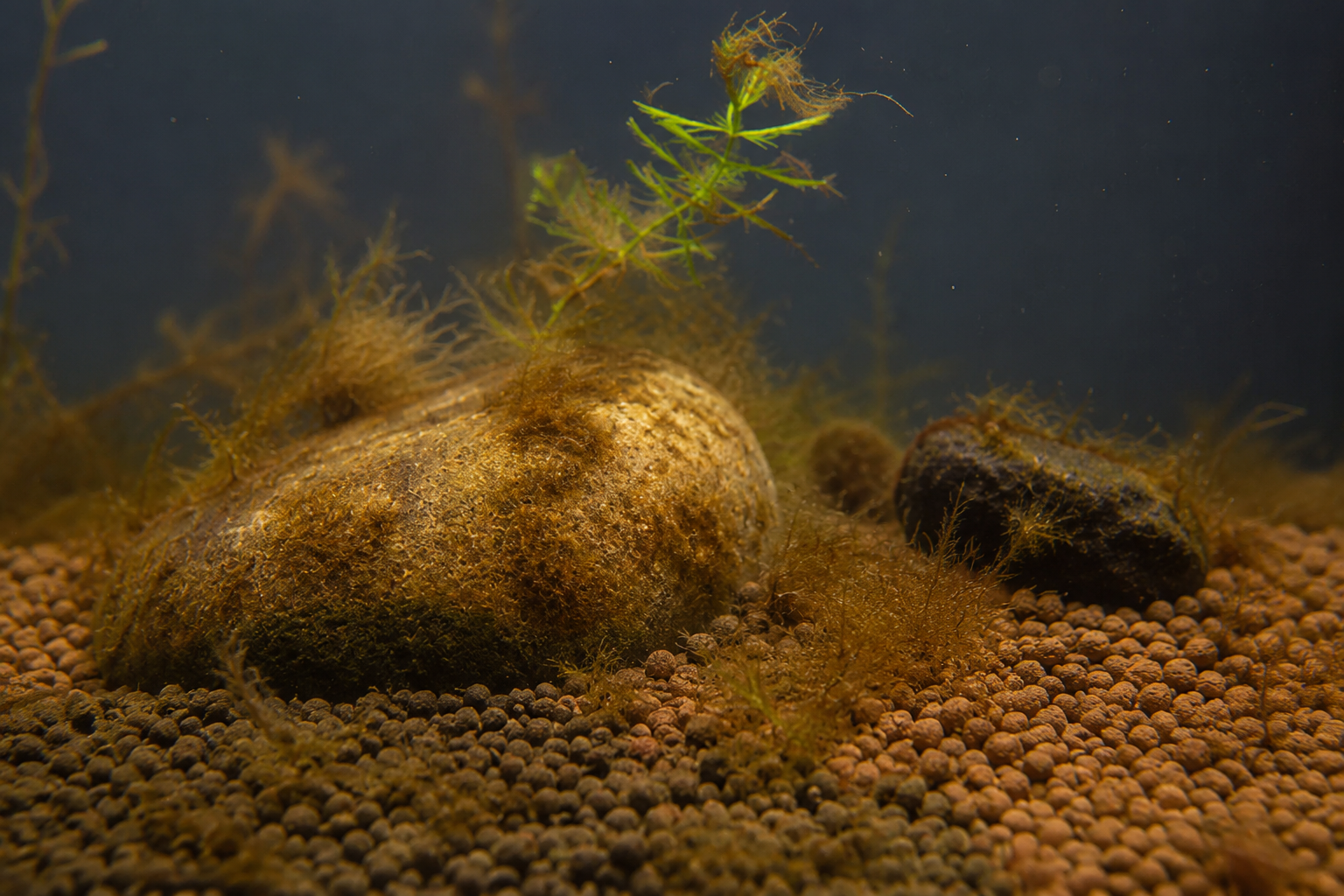

This one is different from every other entry in our algae identification series, because it usually isn’t actually an aquarium problem at all. Thorea hispida is a genus of freshwater red algae that grows naturally in clean, flowing, well-oxygenated rivers and streams — and the only reason it shows up in a home aquarium is almost always that it hitchhiked in on a wild-collected rock, piece of driftwood, or other hardscape.
What It Looks Like
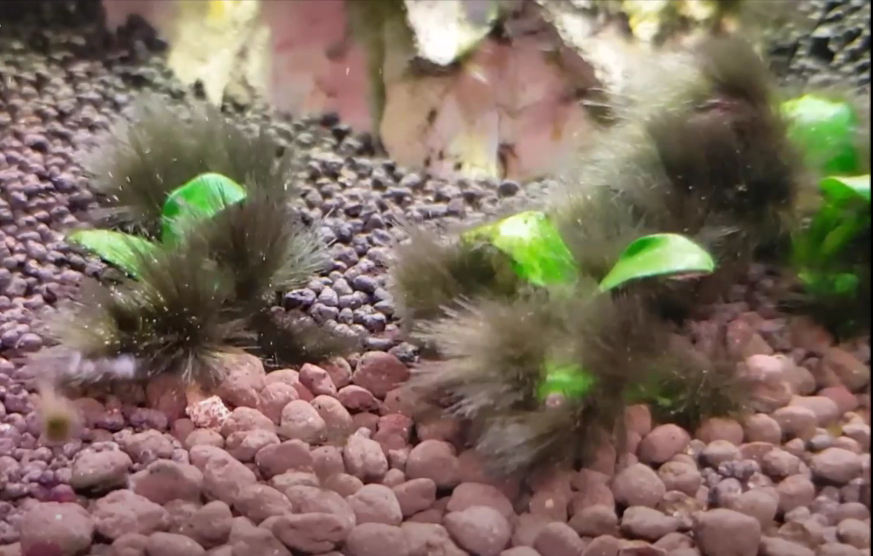
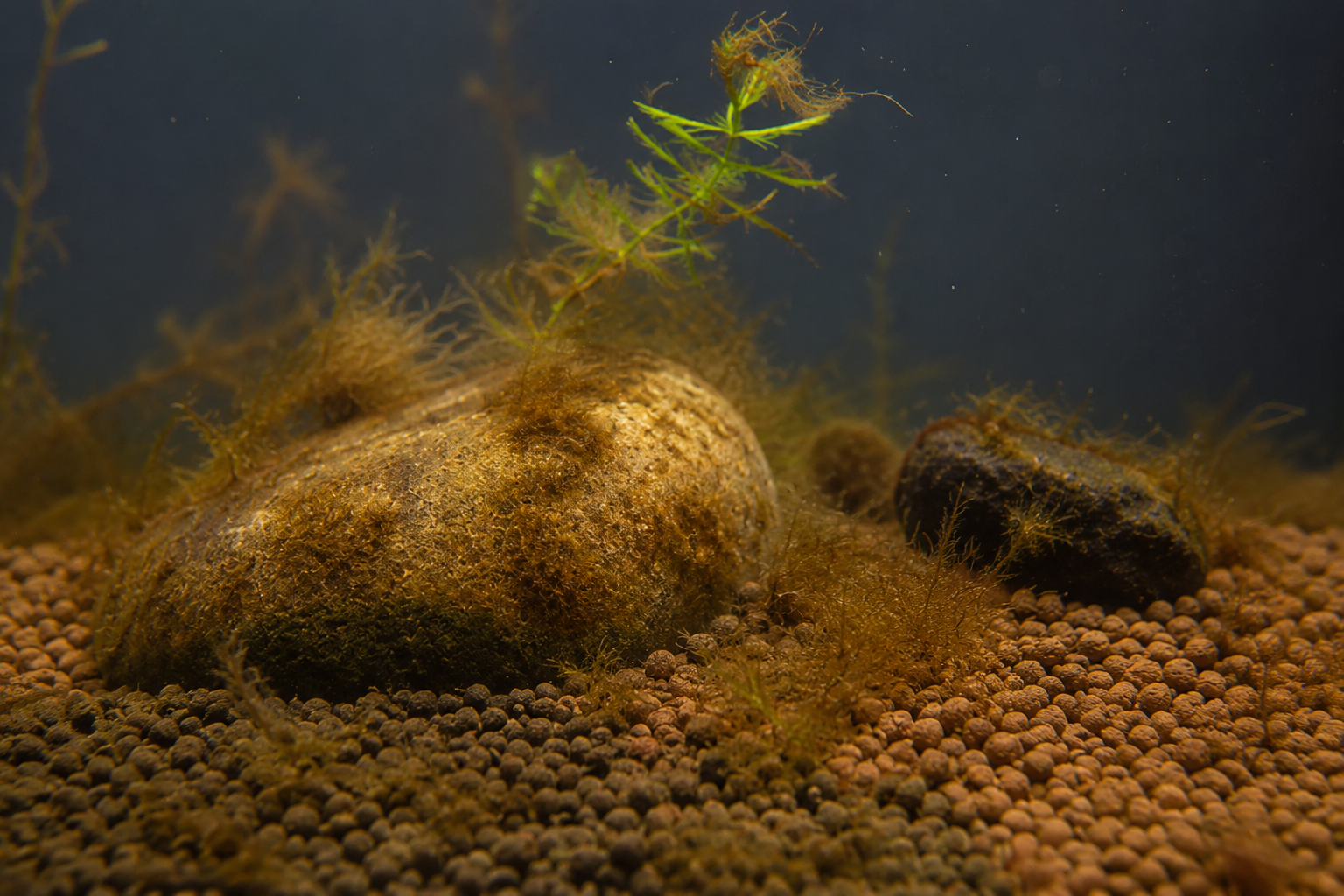
Long, thick, cord-like or slightly slimy dark strands — naturally reaching up to 2 meters in flowing water, though anything that made it into your tank will be far shorter. Despite belonging to the “red algae” group taxonomically, it isn’t actually red; it’s dark green to olive or nearly black, which trips people up when they go looking for identification by color alone.
How It’s Different From Real Aquarium Nuisance Algae
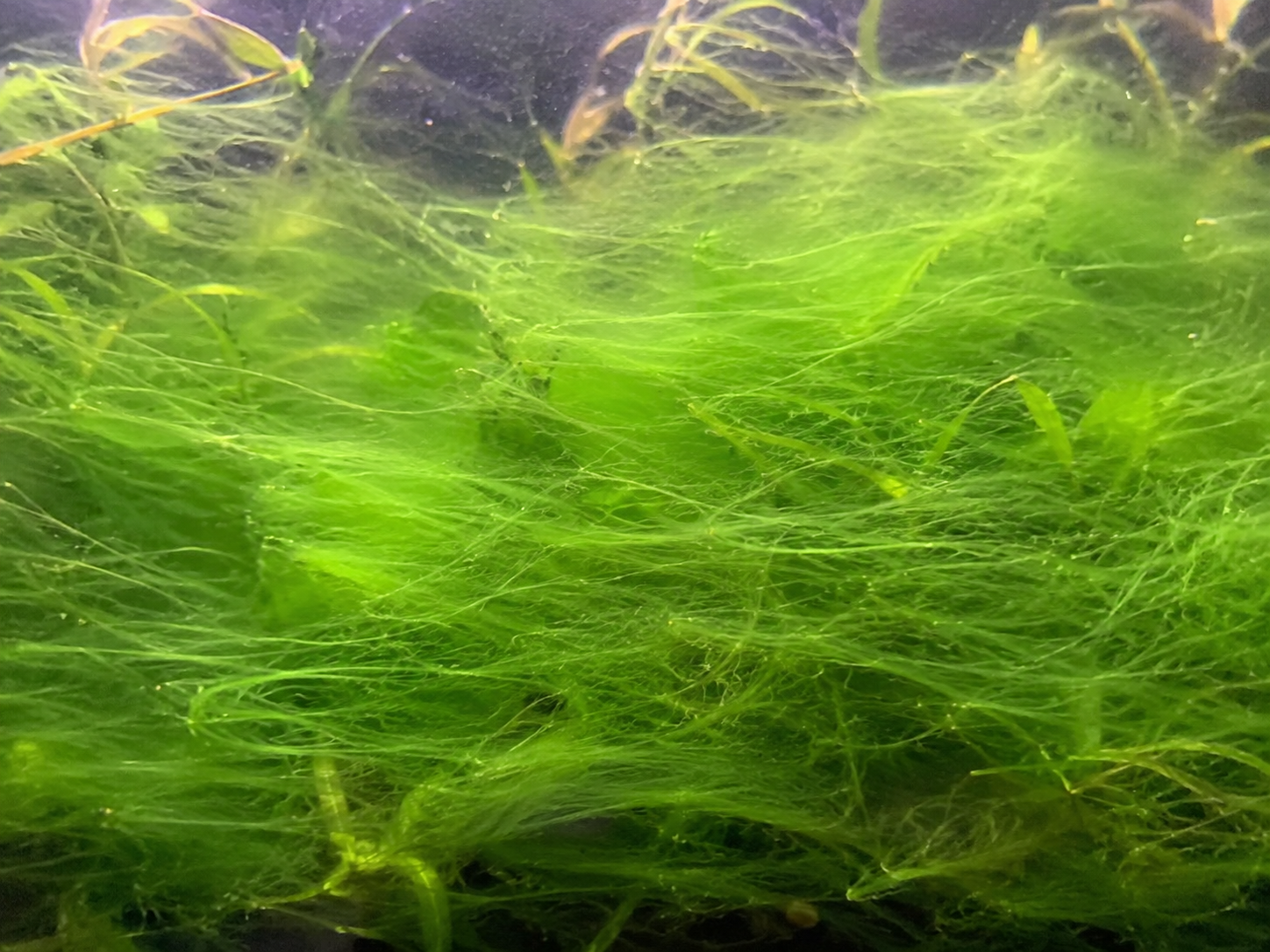
This is the important distinction. Black beard algae and hair algae are genuine nuisance algae — they thrive under normal aquarium conditions, spread from a nutrient or light imbalance, and need active management to control. Thorea hispida is a wild species that needs conditions most aquariums don’t provide: cooler temperatures, real current, and high oxygenation. If you’re seeing it, it’s confined to whatever specific piece of hardscape it arrived on, rather than spreading across leaves and glass the way true nuisance algae does.
Why It Shows Up
Almost exclusively from wild-collected material — a rock or branch pulled from a stream or riverbed and added to a tank without cleaning it first. It isn’t a sign that something is wrong with your water chemistry, lighting, or maintenance routine, which is the reassuring part: this isn’t the same category of problem as the rest of the algae series.
Will It Survive in Your Tank?
Usually not for long. Thorea needs flowing, cool, oxygen-rich water to persist — a standard heated community or betta tank running 76-80°F with modest flow is a genuinely poor match for it. Most of the time it will visibly decline and disappear within a few weeks on its own as it fails to adapt, with no intervention required.
How to Remove It
If you’d rather not wait it out, manual removal is the most direct option: take out the affected piece of hardscape and physically scrub or pull the strands off by hand. Because it isn’t rooted in an ongoing nutrient imbalance the way true nuisance algae is, there’s generally no need for liquid carbon spot-treatment, blackout periods, or any of the interventions covered elsewhere in the algae series — physical removal is usually the whole fix.
Prevention
The actual fix is upstream of the tank: quarantine or clean any wild-collected hardscape before it goes in. A thorough scrub under running water handles most cases; for extra assurance, a brief bleach dip (followed by a complete dechlorinated rinse) or boiling smaller pieces will eliminate hitchhikers entirely, whether that’s this algae, unwanted snails, or anything else riding along on material collected outdoors.
Common Confusions
- Mistaken for black beard algae. BBA is shorter, bristlier, and denser, and it spreads through the tank rather than staying on one piece of hardscape.
- Assumed to be a water quality problem. It isn’t — this is a hitchhiker issue, not a sign of anything wrong with your tank’s chemistry or maintenance.
- Panic-treating it like a true outbreak. Given it typically declines on its own, aggressive chemical treatment is rarely necessary or worth the risk to your other plants.
If you’re seeing long, dark, cord-like strands confined to one wild-collected rock or branch, this is very likely what you’re looking at — and very likely already on its way out on its own.