Ask anyone who’s run a densely planted, low-tech tank for a few months and they’ll tell you the water “just gets softer” over time, without ever touching the source water. That’s not folklore — it’s a real, explainable effect of what dense planting actually does to a closed system, and it’s worth understanding both for its own sake and because it quietly explains a few other things people notice, like snails becoming less active.
GH: plants are eating your minerals
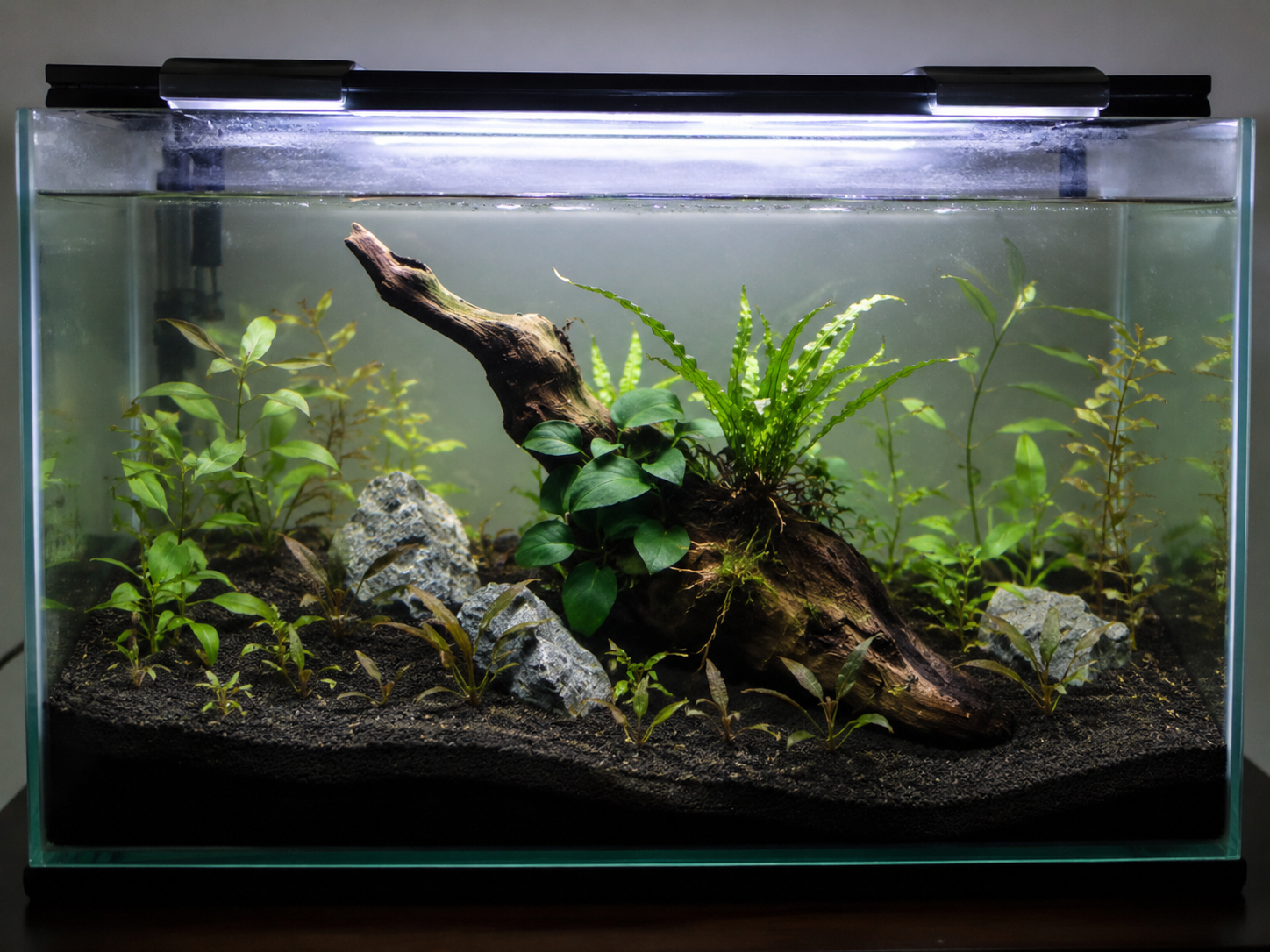
General Hardness (GH) measures the dissolved calcium and magnesium in your water. Those two minerals aren’t just a hardness reading — they’re nutrients plants actively pull out of the water column to build cell walls and support basic function. A tank with heavy plant mass and infrequent water changes is constantly exporting calcium and magnesium into plant tissue, with nothing replacing what’s consumed between water changes. Over months, GH in a densely planted, low-water-change tank trends downward unless you’re actively remineralizing.
This is one of the reasons a mature, heavily planted tank often runs noticeably softer than the tap water it started with — the plants are doing exactly what you want them to do (consuming nutrients instead of leaving them for algae), and mineral hardness is one of the nutrients on that list.
pH: decaying plant matter makes acid
The second half of the effect is pH, and it comes from a different mechanism: organic matter. Dying leaves, root exudates, and general plant decay release humic and tannic acids into the water — the same compounds responsible for the tea-colored tint in blackwater tanks and Amazon biotopes. In a tank with a lot of plant mass (and especially one with a soil-based substrate, as in the Walstad Method), that steady trickle of organic acid gradually pulls pH downward, especially if KH (carbonate hardness, the buffer that resists pH swings) is also low because GH has already dropped.
The two effects compound each other: soft water has less buffering capacity, so the same amount of acid production causes a bigger pH swing than it would in harder, more buffered water.
Why this matters for melt and plant health
Crypts in particular are known for reacting badly to sudden shifts in GH and pH — “crypt melt” after a big water change is often exactly this effect in reverse, where a large water change abruptly resets softened, acidic tank water back toward harder tap water parameters faster than the plant can adjust. See our Cryptocoryne guide for more on managing that transition. This is also part of why very large, infrequent water changes are often worse for a mature planted tank than smaller, more frequent ones — see our guide to running a tank with almost no water changes for the fuller picture.
The snail connection
Snails — pest species and nerites alike — rely on dissolved calcium to build and maintain their shells, and tend to be more reproductively active and generally more active in harder water. A heavily planted, low-tech tank that’s naturally trending soft and mildly acidic is, incidentally, a less hospitable environment for snail activity than a sparsely planted tank with harder, more stable water. This isn’t a reliable pest-control method on its own — don’t count on soft water alone to solve a snail boom, manual removal and the steps in our pest snail guide still do the real work — but it does help explain why some densely planted tanks seem to have fewer snail problems than lightly planted ones with identical starting stock.
What to actually do about it
For most low-tech tanks, nothing — a gradual, moderate softening and acidification is a normal sign of a mature, well-planted system and isn’t harmful to fish or plants adapted to it. Two situations where it’s worth paying attention:
- If you keep shrimp or hard-water-loving species, a GH that’s dropped too far can be a real problem — test periodically rather than assuming your tap water parameters still apply months into a tank’s life.
- If a plant that was previously stable suddenly starts melting, check whether a recent large water change reset GH/pH abruptly rather than assuming a nutrient or lighting issue.
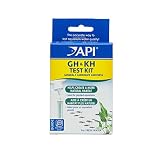
A basic GH/KH test kit or a TDS meter is the easiest way to actually track this instead of guessing — we cover which one to reach for in our GH vs. TDS vs. pH guide.