 plant spotlight
Anacharis (Egeria densa): The Classic Cheap, Fast Oxygenator
Egeria densa — Anacharis — is the plant behind decades of science-kit fish tanks and goldfish bowls. Cheap, nearly indestructible, and genuinely useful for water quality, with one real responsibility attached.
 plant spotlight
Dwarf Sagittaria (Sagittaria subulata): The Grass That Adapts to Your Light
Sagittaria subulata stays low and lawn-like under modest light, or reaches for the surface under stronger conditions — a genuinely flexible, easy grass-like plant for foreground or midground.
 plant spotlight
Water Sprite (Ceratopteris thalictroides): The Fern That Does Both Jobs
Ceratopteris thalictroides is one of the few aquarium plants that genuinely thrives either rooted or fully floating — a fast, easy fern that changes its own leaf shape depending on which job it's doing.
 plant spotlight
Dwarf Hairgrass (Eleocharis acicularis): The Classic Lawn Carpet
Eleocharis acicularis is the plant behind that classic green "lawn" look in planted tanks — fine, grass-like blades that spread by runners into a dense mat. Here's what it actually needs to carpet properly.
 plant spotlight
Marimo Moss Ball (Aegagropila linnaei): The Plant That Isn't a Plant
Marimo moss balls aren't moss, and they aren't really "plants" either — they're a rare growth form of freshwater algae, and they're about as close to indestructible as anything you can put in a tank.
 plant spotlight
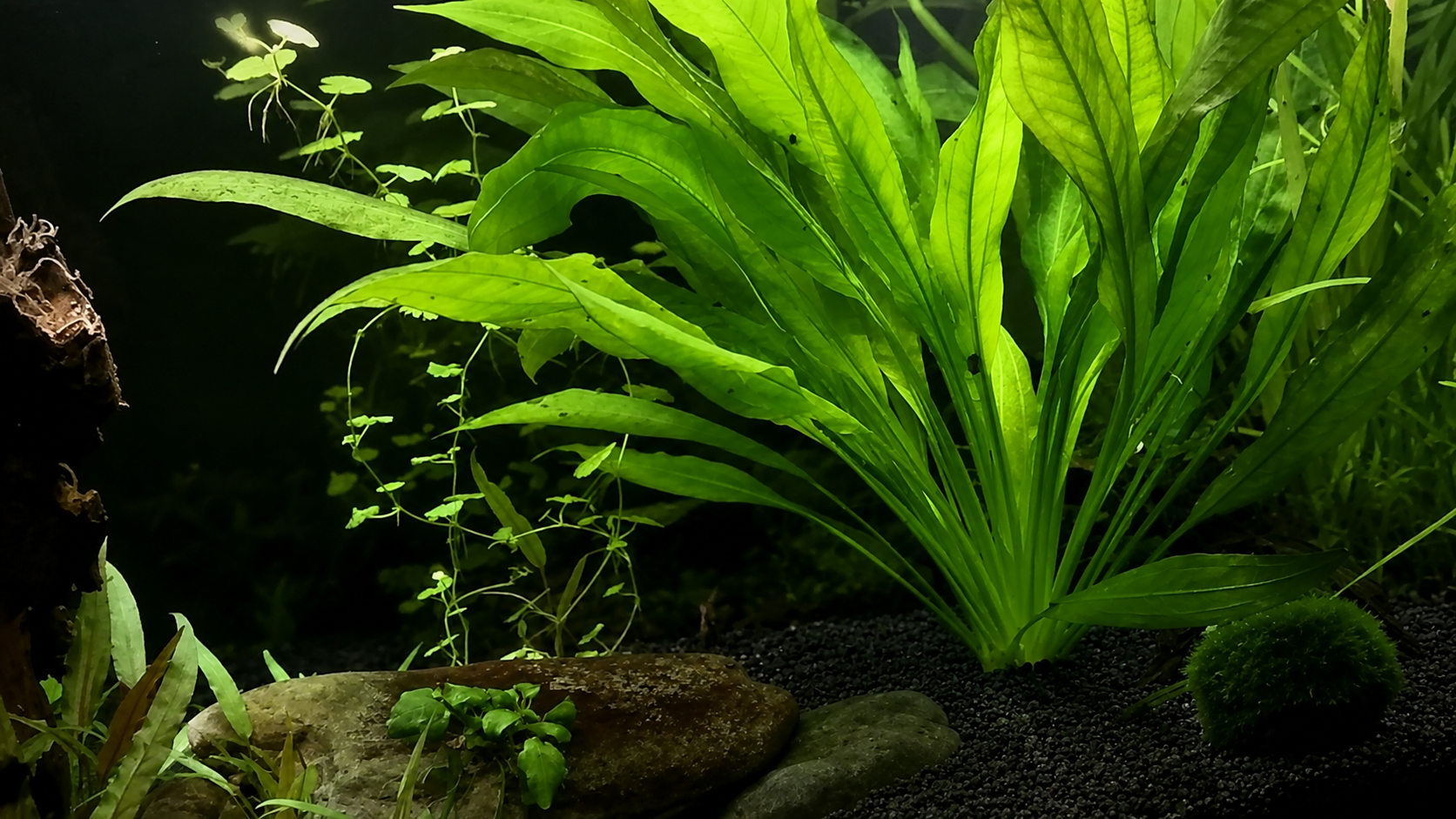
Amazon Sword (Echinodorus bleheri): The Classic Centerpiece Plant
Echinodorus bleheri, the Amazon Sword, is the plant that defined the "centerpiece" role in planted tanks — big, bold, low-tech friendly, and a heavy root feeder. Here's how to actually get it right.
 care guides
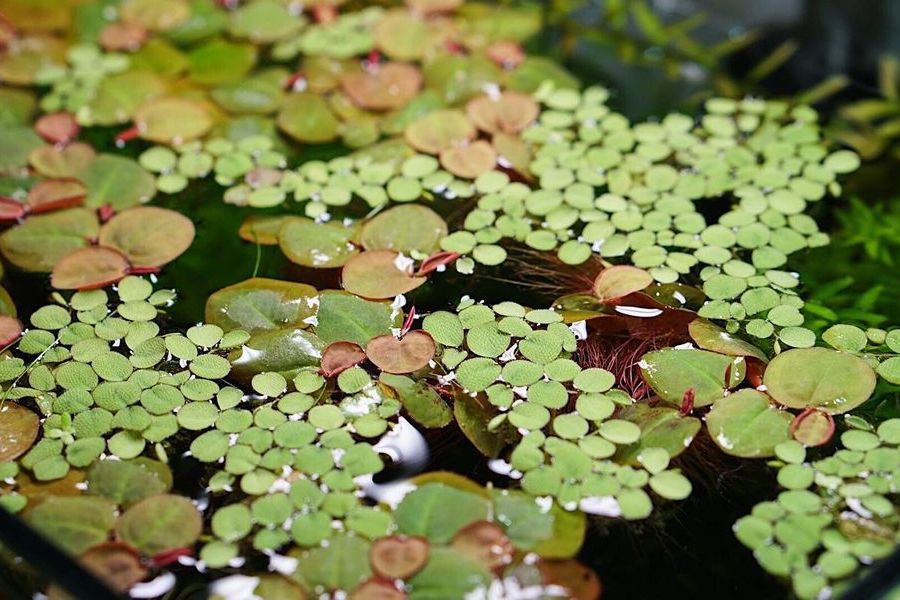
Do Bettas Need Live Plants?
Bettas can survive without plants, but they don't just tolerate them — live plants mimic the dense, shallow habitat bettas evolved in, and the difference shows up in behavior, stress, and water quality.
 care guides
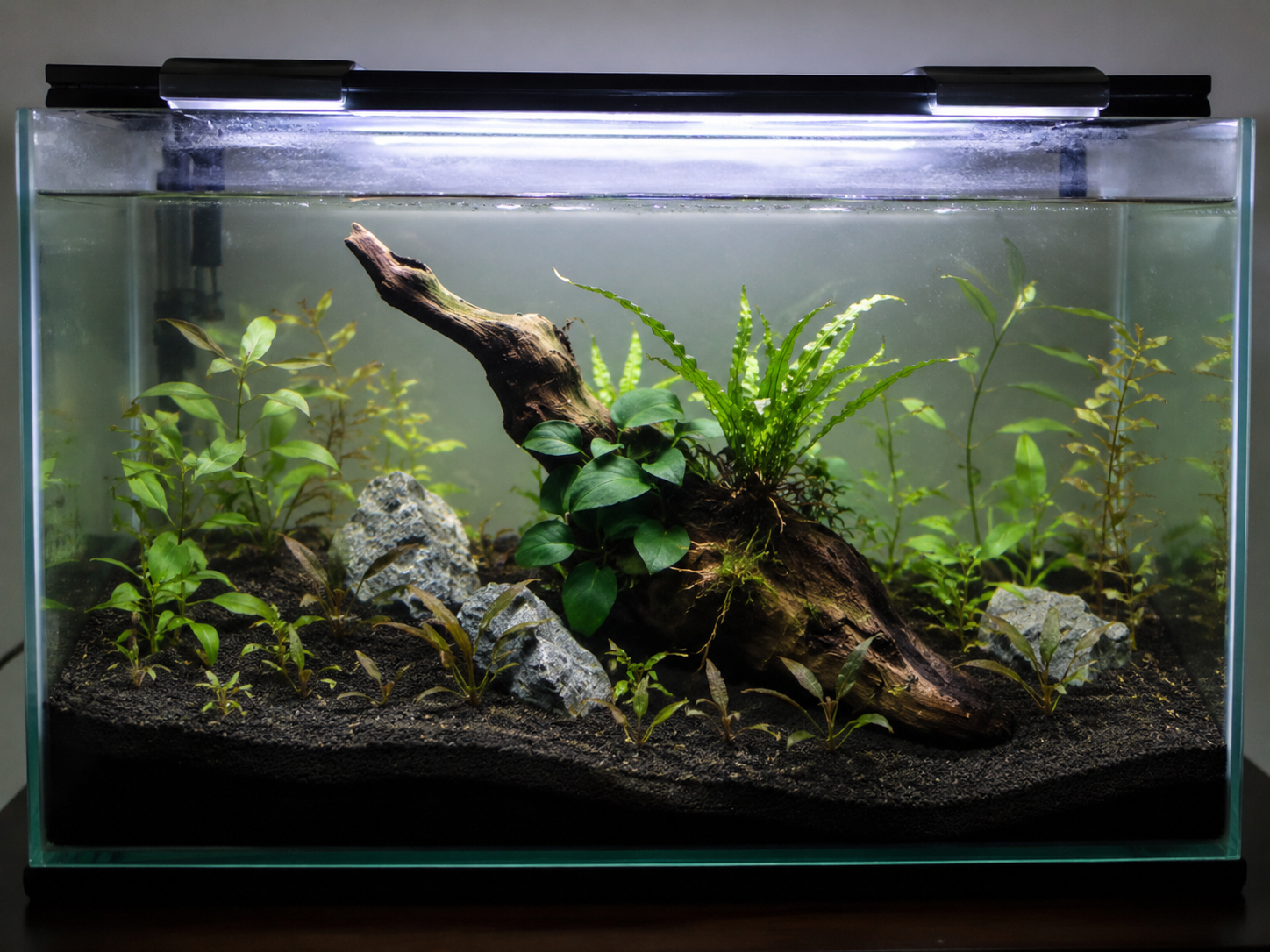
How to Set Up a Planted Aquarium: The Complete Beginner's Guide
Everything you need to go from an empty tank to a thriving low-tech planted aquarium — substrate, hardscape, light, filtration, cycling, and your first plants, in order.
 care guides
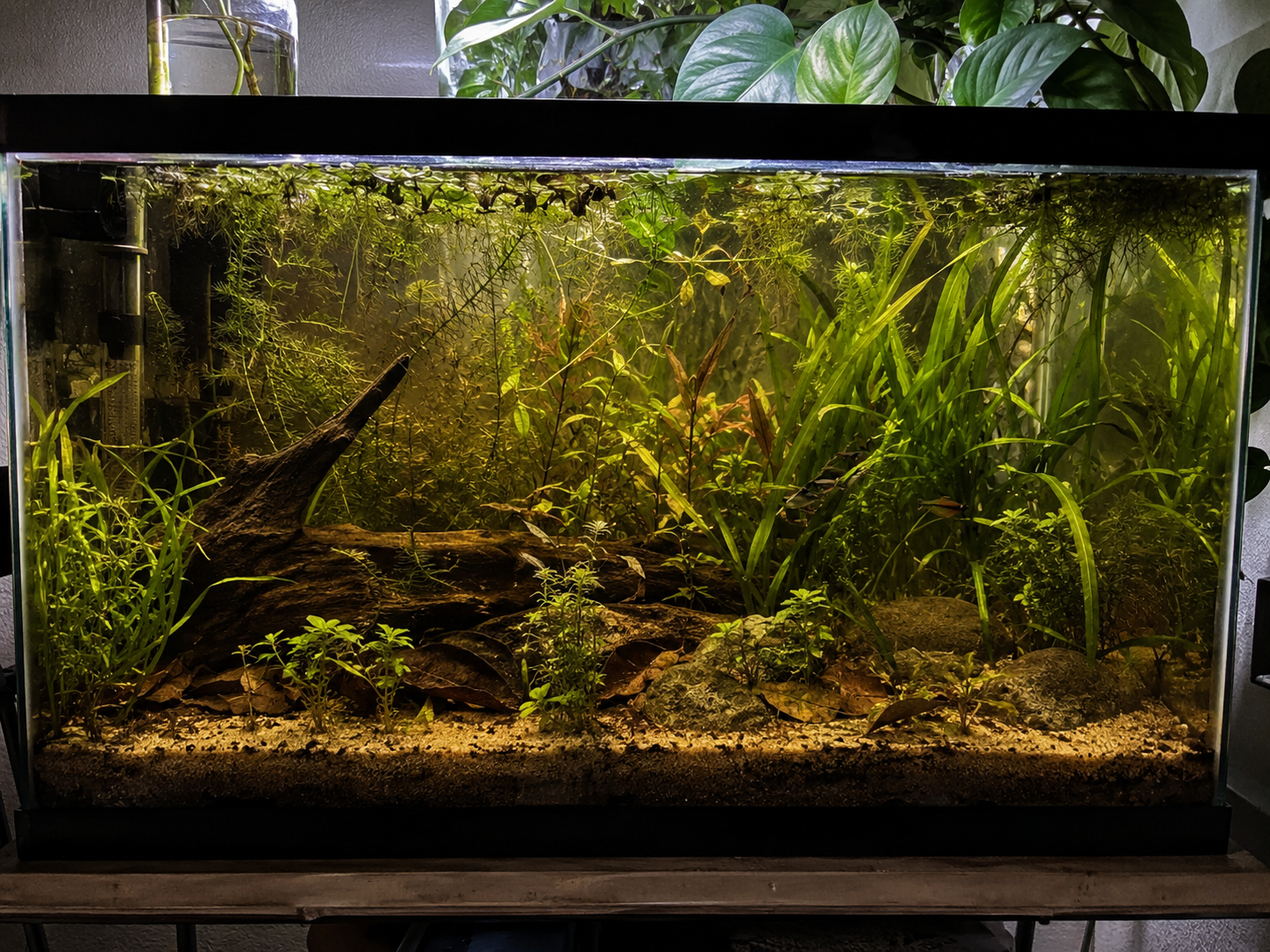
Where to Buy Live Aquarium Plants Online: What to Actually Look For
Buying aquarium plants online is now the norm, but quality varies enormously between sellers. Here's what actually separates a good source from a bad one, before you check out.
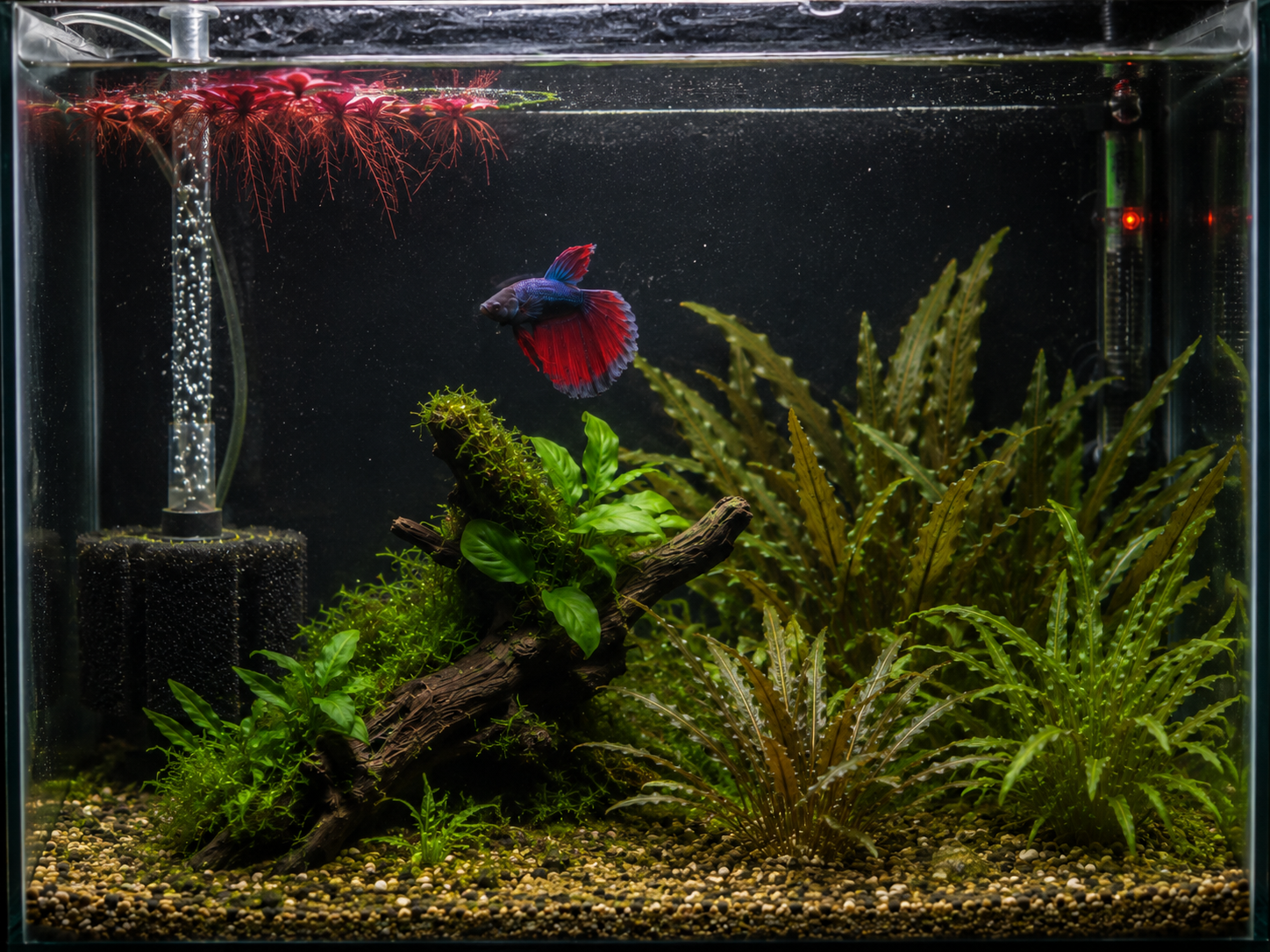 tank setups
5-Gallon Betta Tank: A Simple Planted Setup
We built a low-tech, planted 5-gallon betta tank from scratch — the exact hardscape, plant list, and gear that made it work.
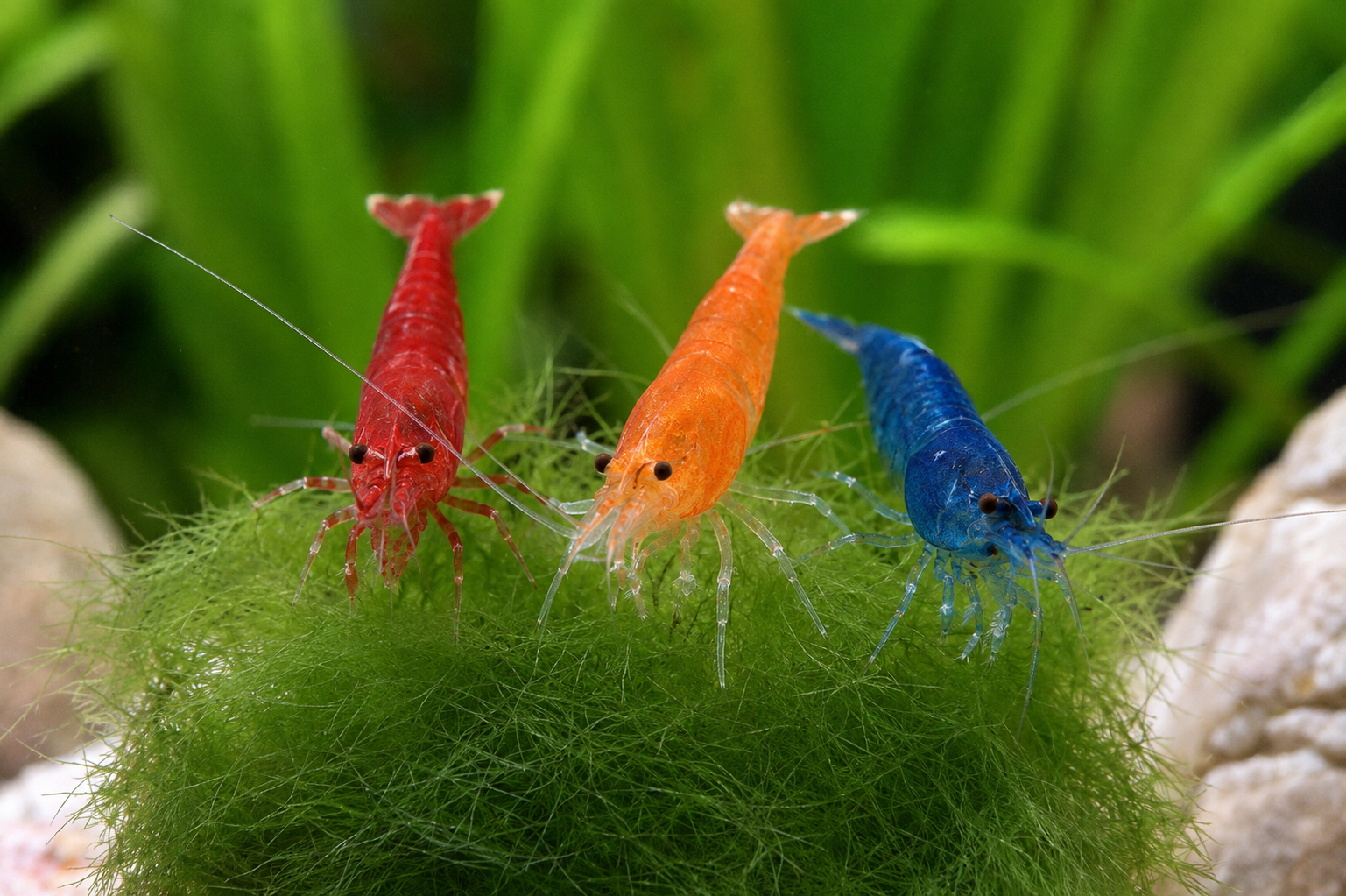 care guides
Building a Shrimp Haven: The Best Plants for a Shrimp Tank
Shrimp lean on plants more than most fish do — for grazing surface, molting cover, and shrimplet refuge. Here's how to plant a tank that a colony can actually thrive in.
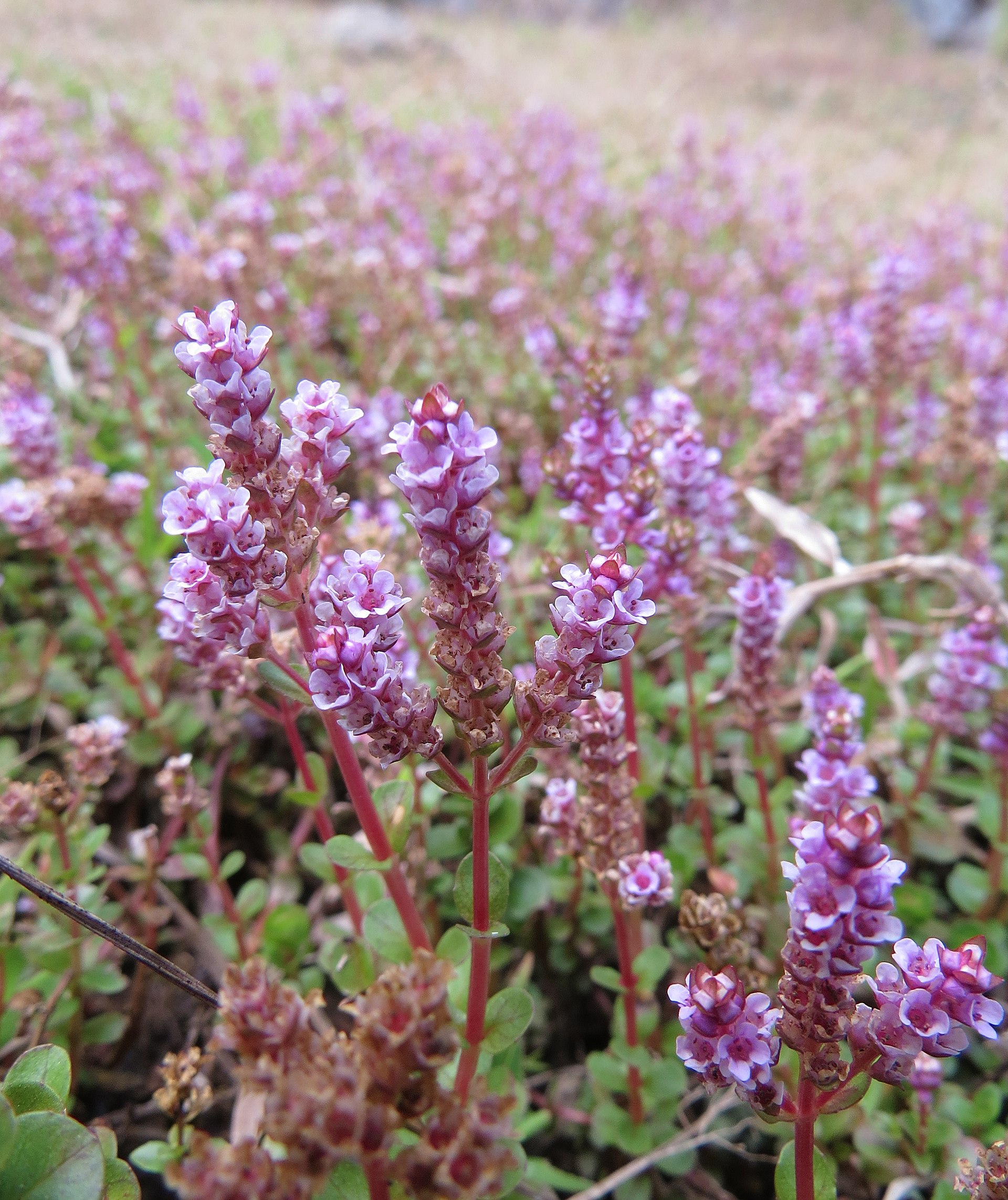 care guides
Why Emersed-Grown Plants Belong in Your Tank
Most healthy aquarium plants started life growing in air, not underwater. Here's what "emersed-grown" actually means, why it matters for the plants you buy, and how to handle the transition to submersed growth.
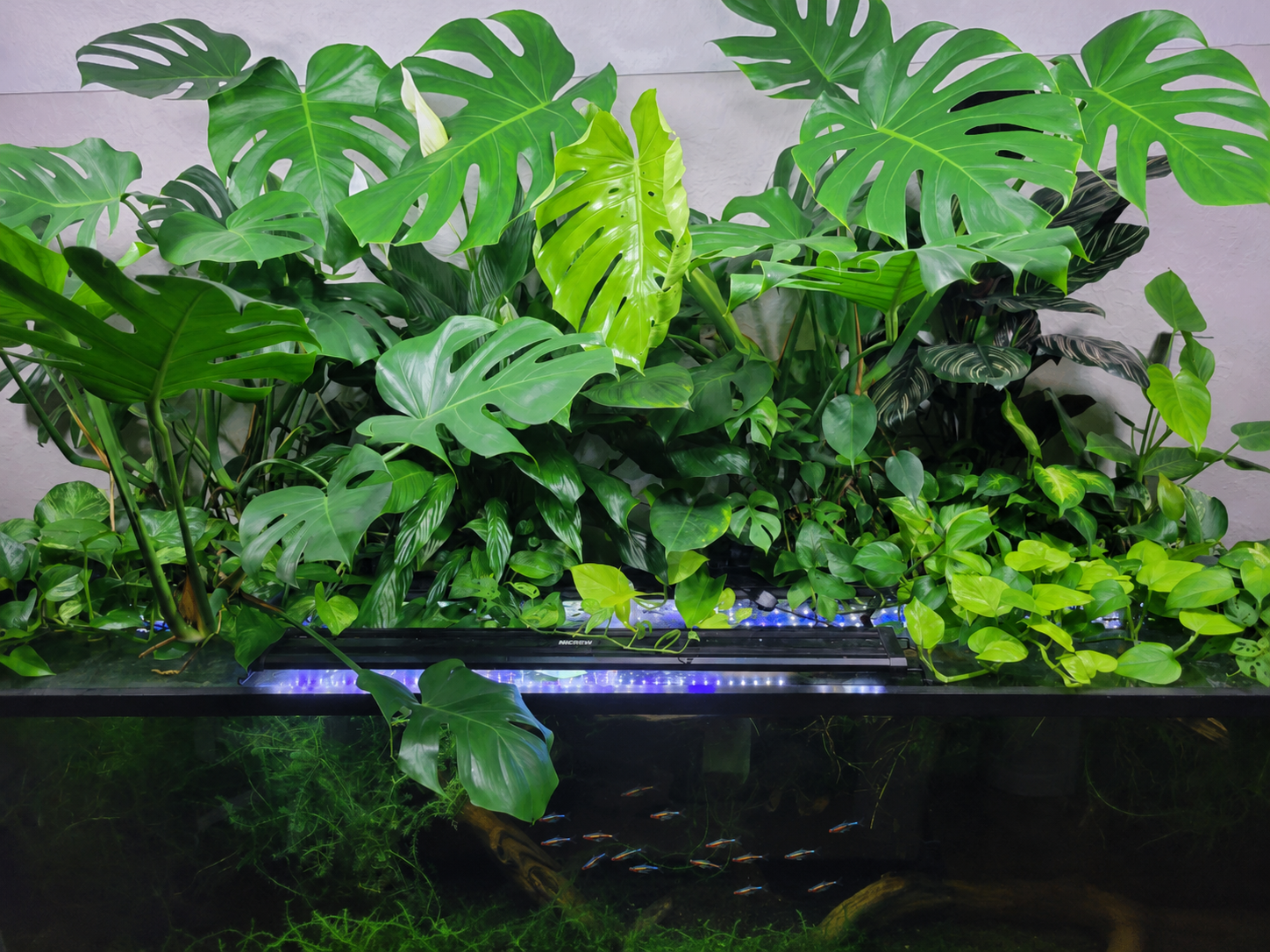 care guides
Pothos & Friends: The Houseplants That Filter Your Tank From Above the Waterline
Rooting a houseplant straight into your aquarium water is one of the most effective nitrate-control tricks in the hobby — and it fills the space above the tank with trailing green instead of empty air.
care guidesThe Ultimate Guide to Floating Aquarium Plants
Floating plants soften light, pull nitrates fast, and give surface fish a place to hide. Here's how to choose the right species, how much coverage to keep, and how to stop them from taking over.
tank setupsThe Walstad Method: A Self-Sustaining Planted Tank with Almost No Maintenance
No CO2, no liquid fertilizers, minimal water changes — the Walstad Method uses organic soil under a sand cap to create a self-sustaining ecosystem. Here's how to set one up right.
 plant spotlight
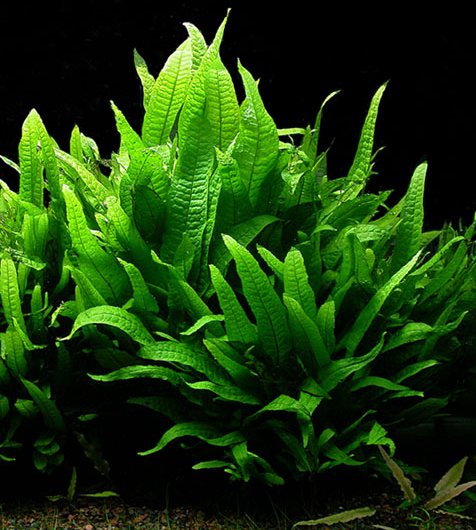
Java Fern (Leptochilus pteropus): The One Plant That Goes on Everything
Java Fern from Southeast Asia attaches to rocks and driftwood, thrives under low light, and never needs substrate. The rhizome rule is the only thing to remember — and if you follow it, this plant is indestructible.
care guidesThe Best Low-Tech Plants for a Planted Aquarium
A complete guide to choosing easy, hardy aquatic plants that thrive without CO2 or special lighting — perfect for planted, community and nano tanks alike.
 plant spotlight
Java Moss (Taxiphyllum barbieri): The Foundation of Every Planted Tank
Java moss from Southeast Asia attaches to any surface, survives any light level, and provides cover for fry, shrimp, and bettas. It's the single most versatile plant in the freshwater hobby.
 plant spotlight
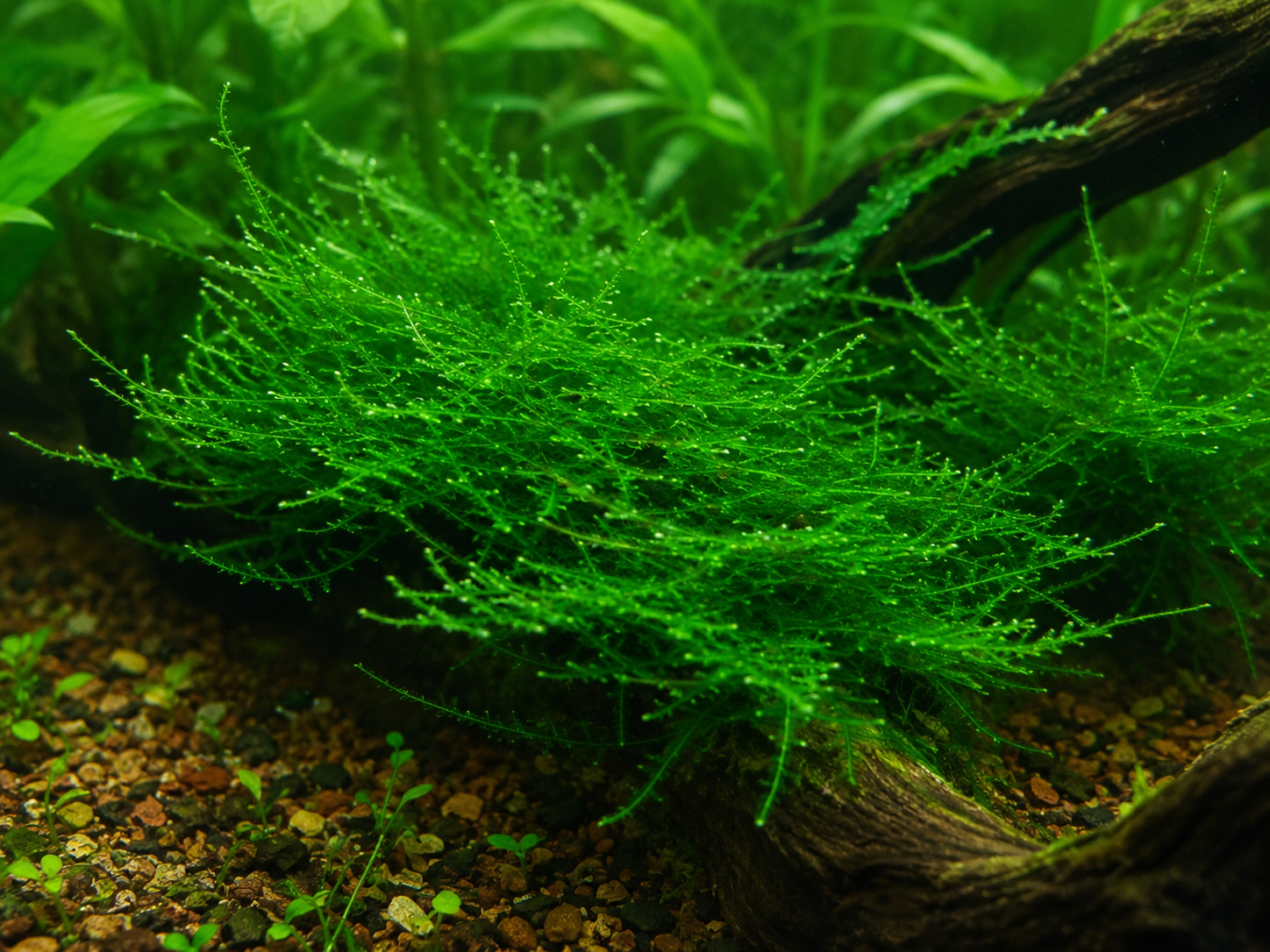
Taiwan Moss (Taxiphyllum sp. "Taiwan"): Finer Texture, Same Toughness
Taiwan Moss is a compact, fine-leaved moss from East Asia closely related to Java Moss. It attaches to hardscape, grows in any light, and creates a denser, more refined texture than its famous cousin.
 plant spotlight
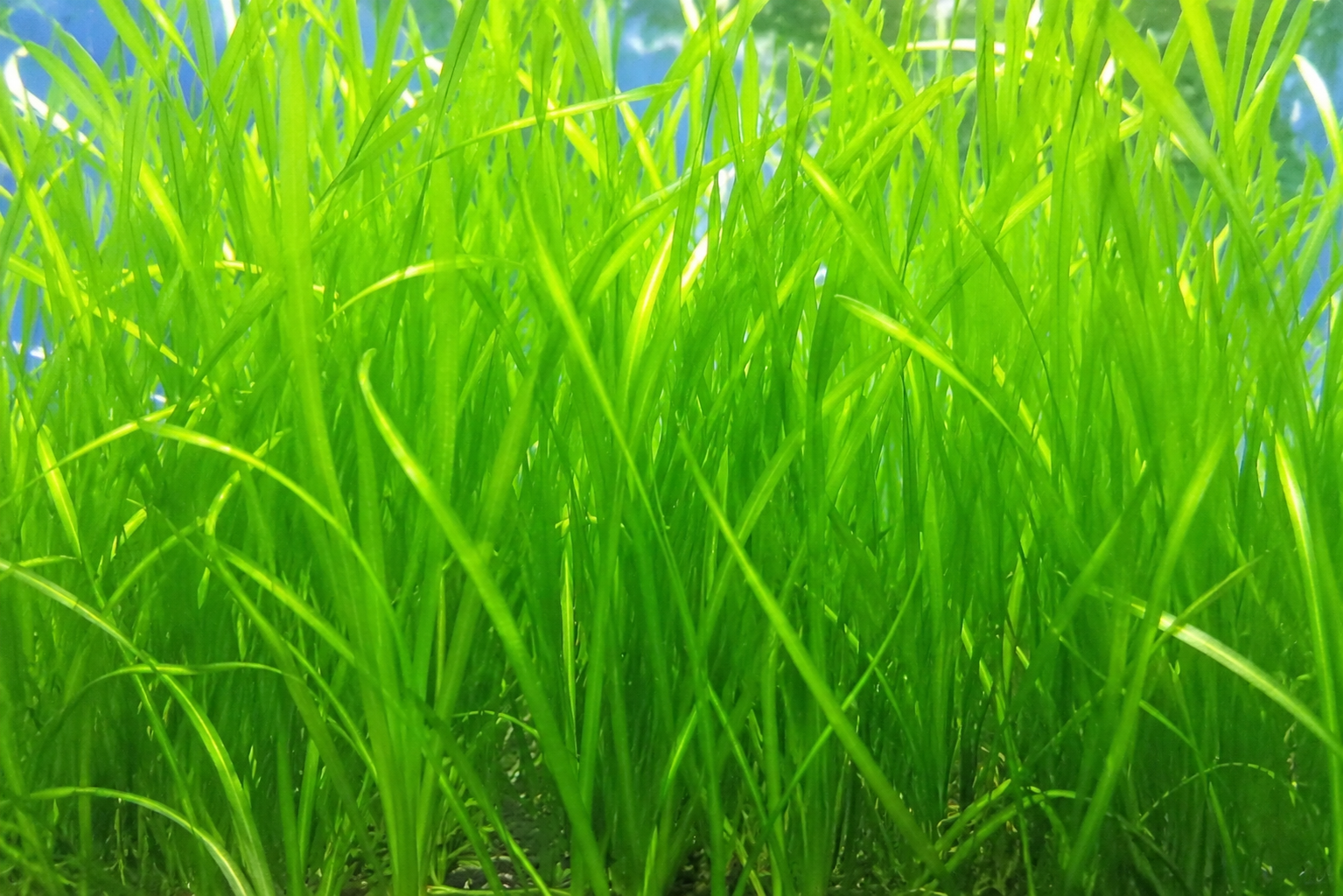
Vallisneria Americana: The Flowing Grass for Any Tank Background
Vallisneria americana grows wild across North and Central America in rivers, lakes, and estuaries. Long, ribbon-like leaves create a graceful, flowing background — and a root tab makes all the difference.
 plant spotlight
Amazon Frogbit (Limnobium laevigatum): The South American Floater for Calm Tanks
Limnobium laevigatum from South America produces large, flat floating rosettes with dangling white roots — excellent betta cover, strong nitrate removal, and easy care in still to slow-moving water.
 plant spotlight
Giant Duckweed (Spirodela polyrhiza): The Nutrient Vacuum of the Planted Tank
Spirodela polyrhiza is the largest duckweed species, found worldwide. Its multiple hanging roots and rapid growth make it an exceptional nutrient remover and surface cover for bettas and small fish.
 plant spotlight
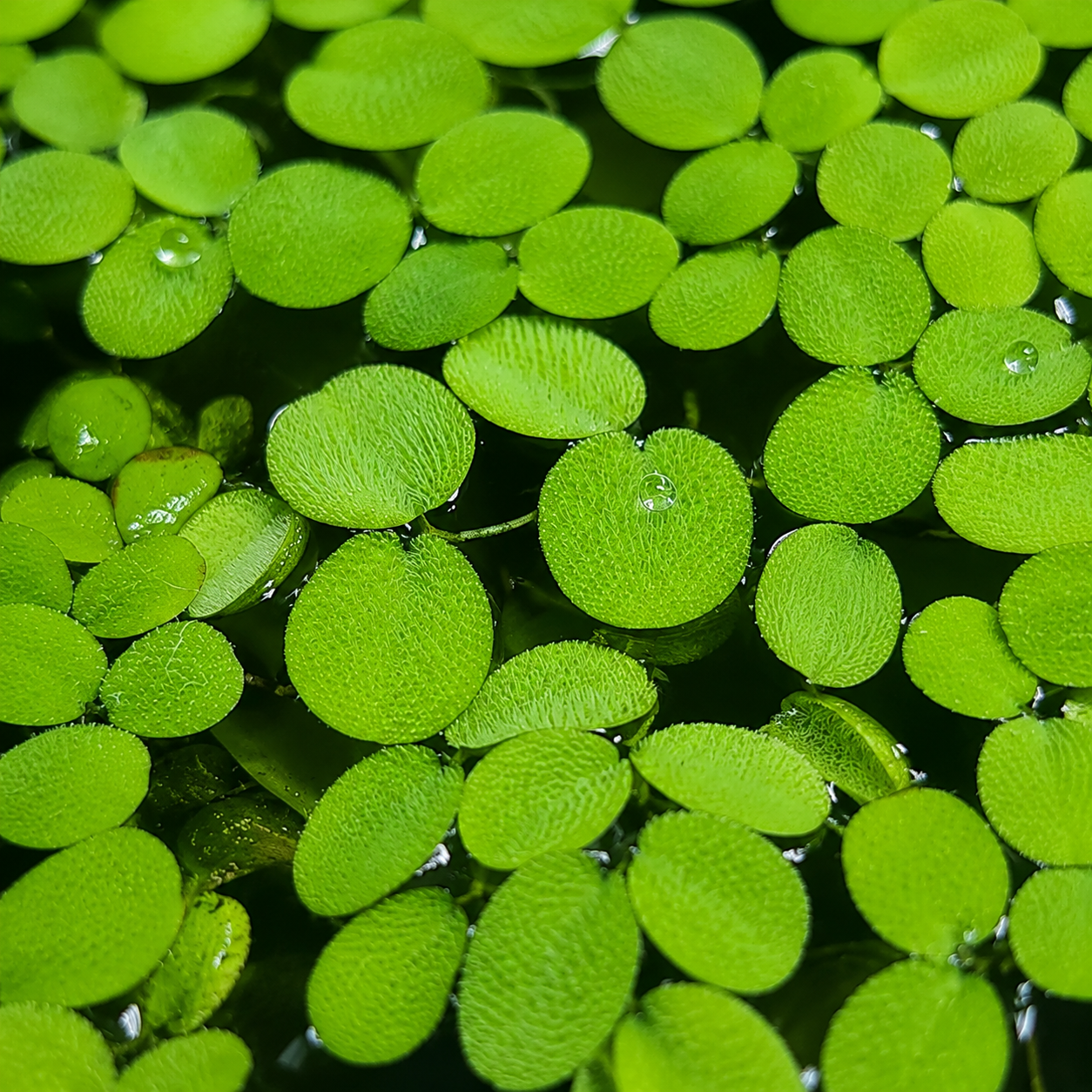
Salvinia Minima & Cucullata: Two Floating Ferns, Zero Effort
Salvinia minima from the Americas and Salvinia cucullata from Southeast Asia are floating ferns that cover the surface, shade the tank, and remove nutrients fast — all with no planting required.
 plant spotlight
Water Lettuce (Pistia stratiotes): Tropical Floating Cover That Bettas Love
Pistia stratiotes is a pantropical floating rosette with velvety ribbed leaves and trailing roots. It provides unmatched betta cover, aggressive nitrate control, and a lush, natural surface appearance.
 plant spotlight
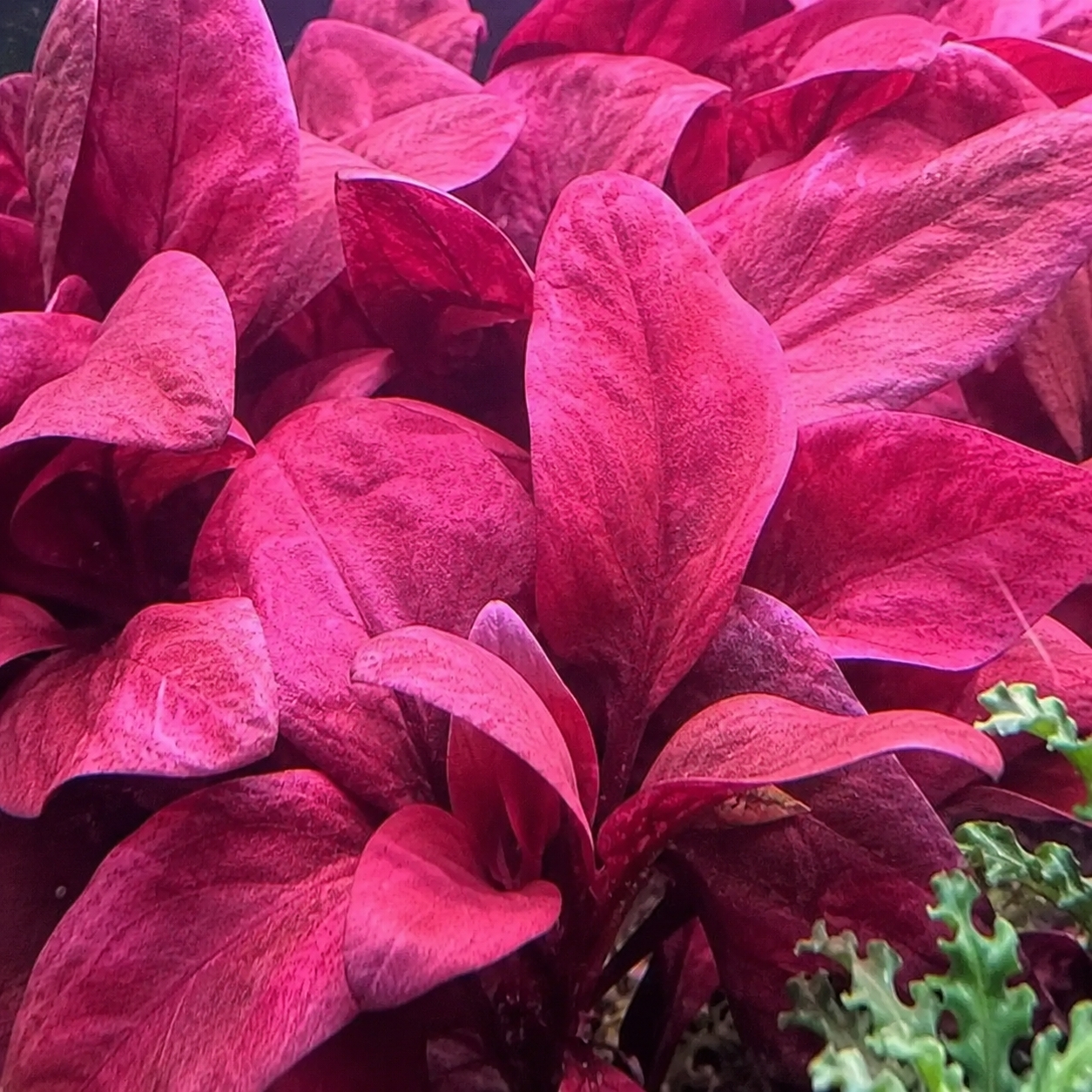
Samolus Parviflorus (Water Cabbage): The Underrated Rosette for Low-Tech Tanks
Samolus parviflorus is a small rosette plant native to the Americas that grows as a striking plant in the aquarium. Easy, low-light tolerant, and a great alternative to Echinodorus in smaller tanks.
 plant spotlight
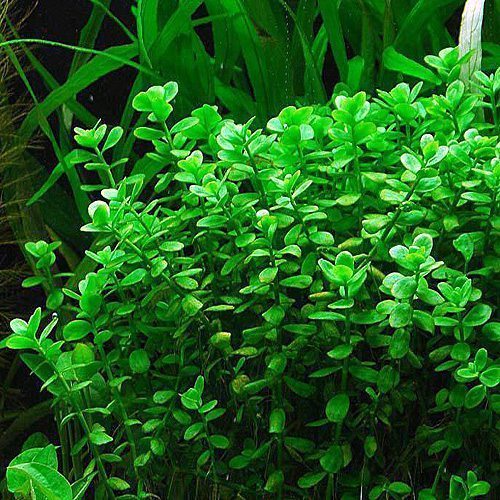
Bacopa Monnieri: The Medicinal Stem Plant That Loves Your Aquarium
Bacopa monnieri grows wild across tropical and subtropical regions worldwide. In the aquarium it produces succulent, round leaves on upright stems and thrives under low to moderate light with no CO2.
 plant spotlight
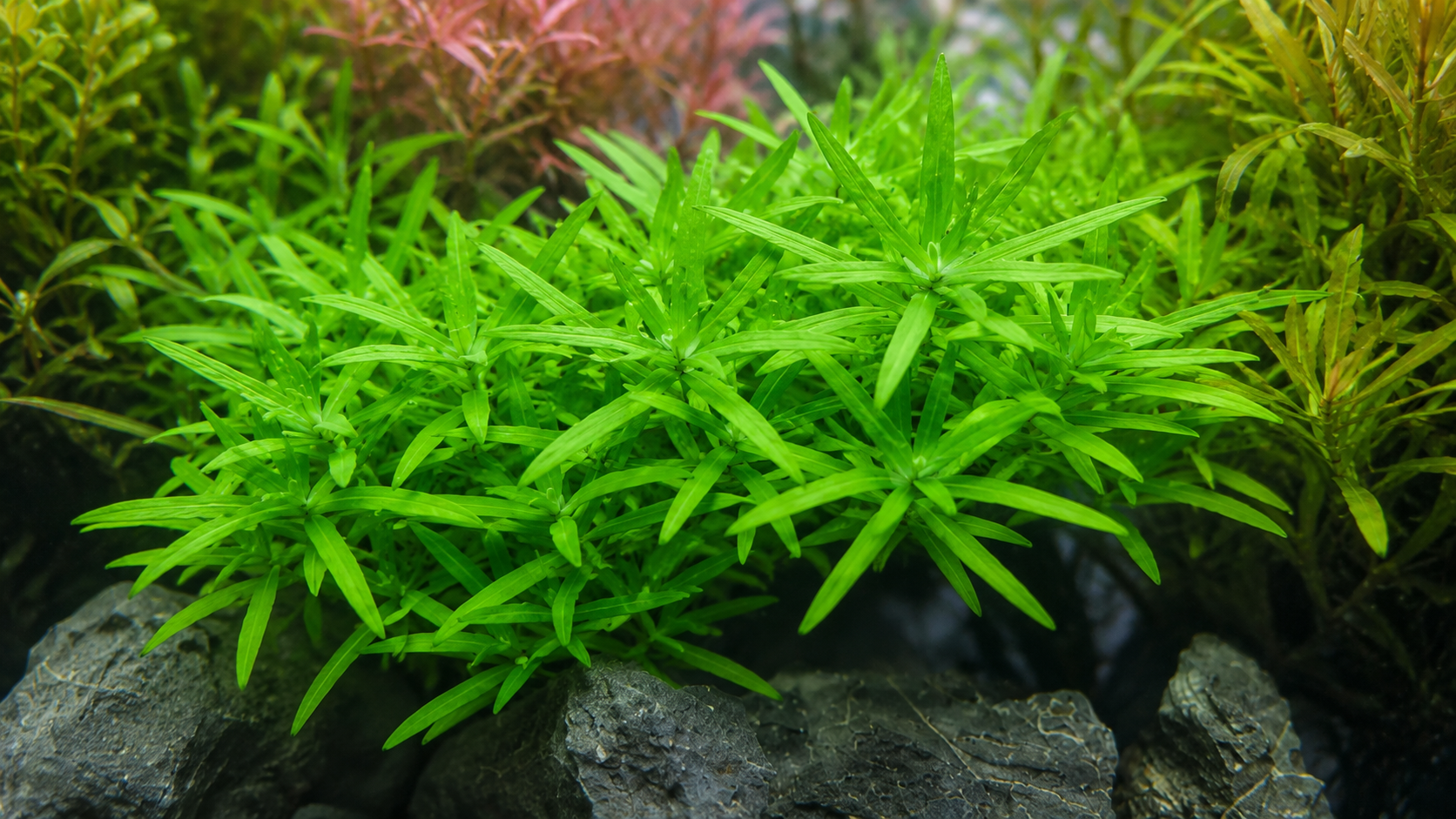
Stargrass (Heteranthera zosterifolia): The Unique Star-Shaped Background Plant
Heteranthera zosterifolia from South America produces clusters of thin, grass-like leaves that radiate in a star pattern from each node. A distinctive, underused background plant for low-tech tanks.
 plant spotlight
Guppy Grass (Najas guadalupensis): The Hardiest Fine-Leaved Plant in the Hobby
Native to the Americas, Guppy Grass is a fast-growing, ultra-adaptable fine-leaved plant that works planted or floating. Exceptional for fry survival, shrimp cover, and water quality.
 plant spotlight
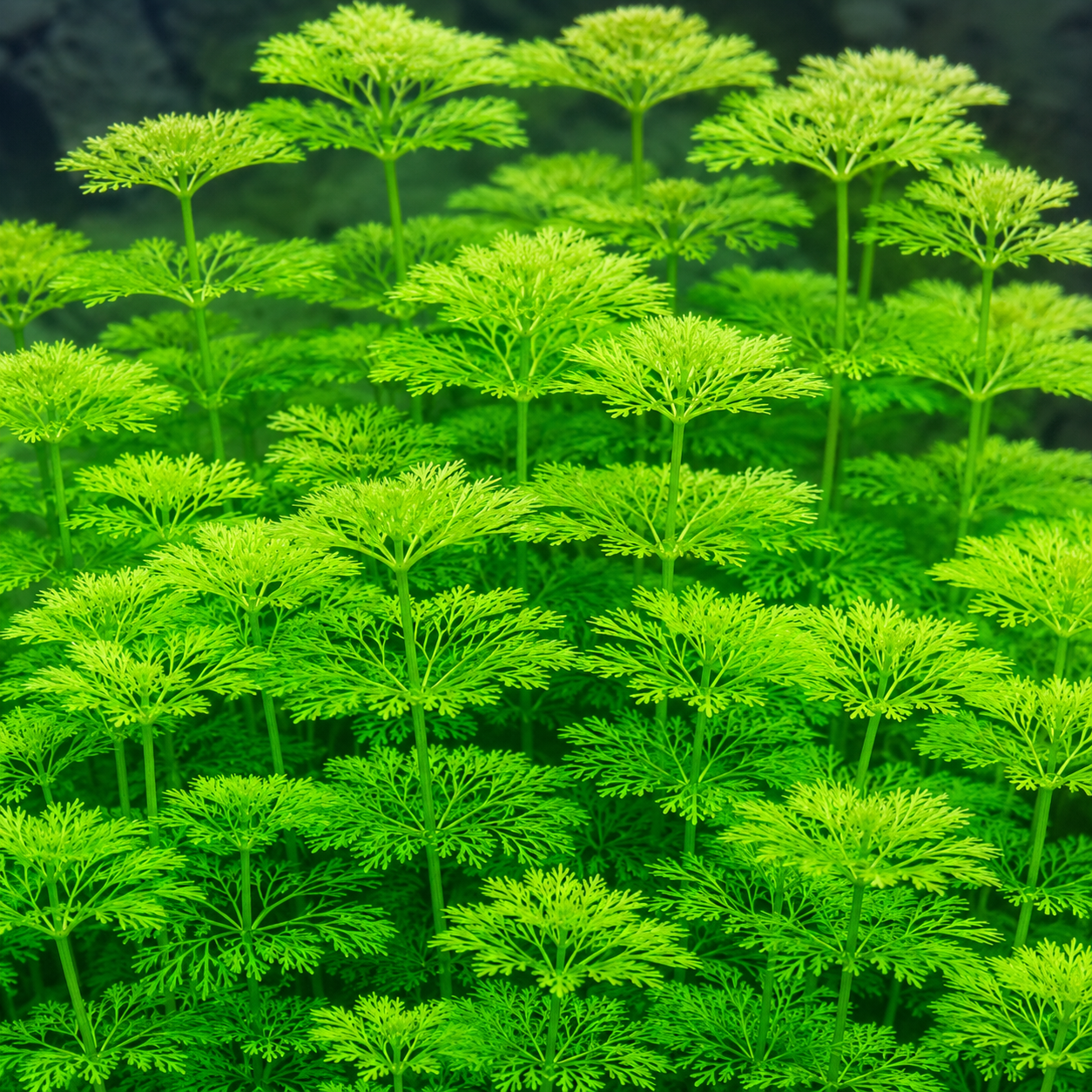
Limnophila Sessiliflora: The Asian Ambulia That Never Stops Growing
Limnophila sessiliflora from Southeast Asia is a fast-growing, fine-leaved background stem plant that adapts to virtually any conditions. An excellent low-light, no-CO2 performer.
 plant spotlight
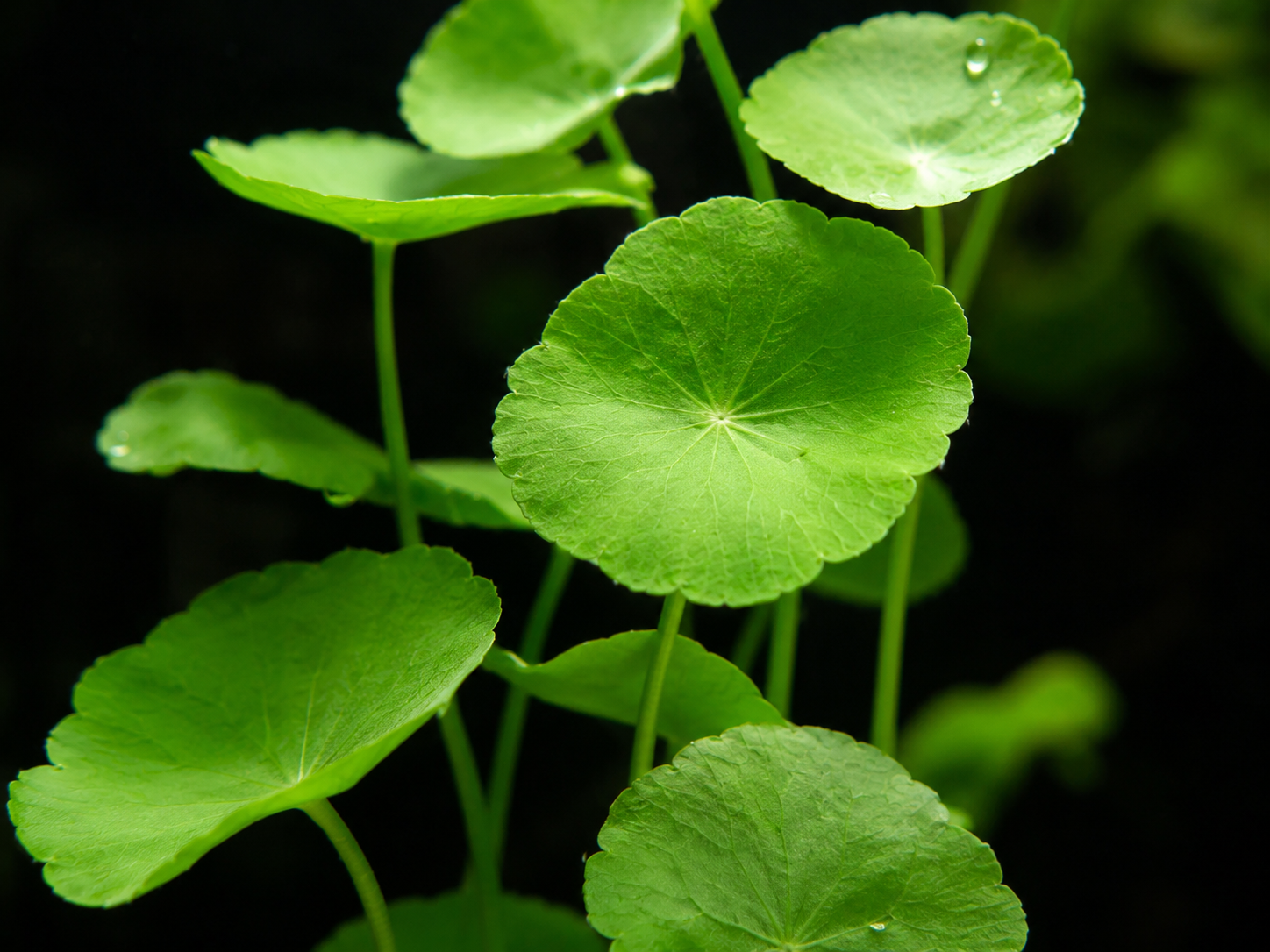
Pennywort (Hydrocotyle leucocephala): The Round-Leaved Background Filler
Brazilian Pennywort is a fast-growing stem plant with distinctive circular leaves. It adapts to any placement — background stem, floating cover, or trailing midground — and thrives with minimal care.
 plant spotlight
Hygrophila Difformis (Water Wisteria): Fast, Feathery, and Forgiving
Water Wisteria from India and Bangladesh is one of the fastest-growing stem plants in the hobby. Its deeply cut, feathery leaves are unique, and it thrives in almost any conditions — no CO2 needed.
 plant spotlight
Hygrophila Corymbosa: The Giant That Fills Background Space Fast
Hygrophila corymbosa is a large-leafed Southeast Asian stem plant ideal for filling background space in medium to large tanks. Bulletproof, fast-growing, and low maintenance.
 plant spotlight
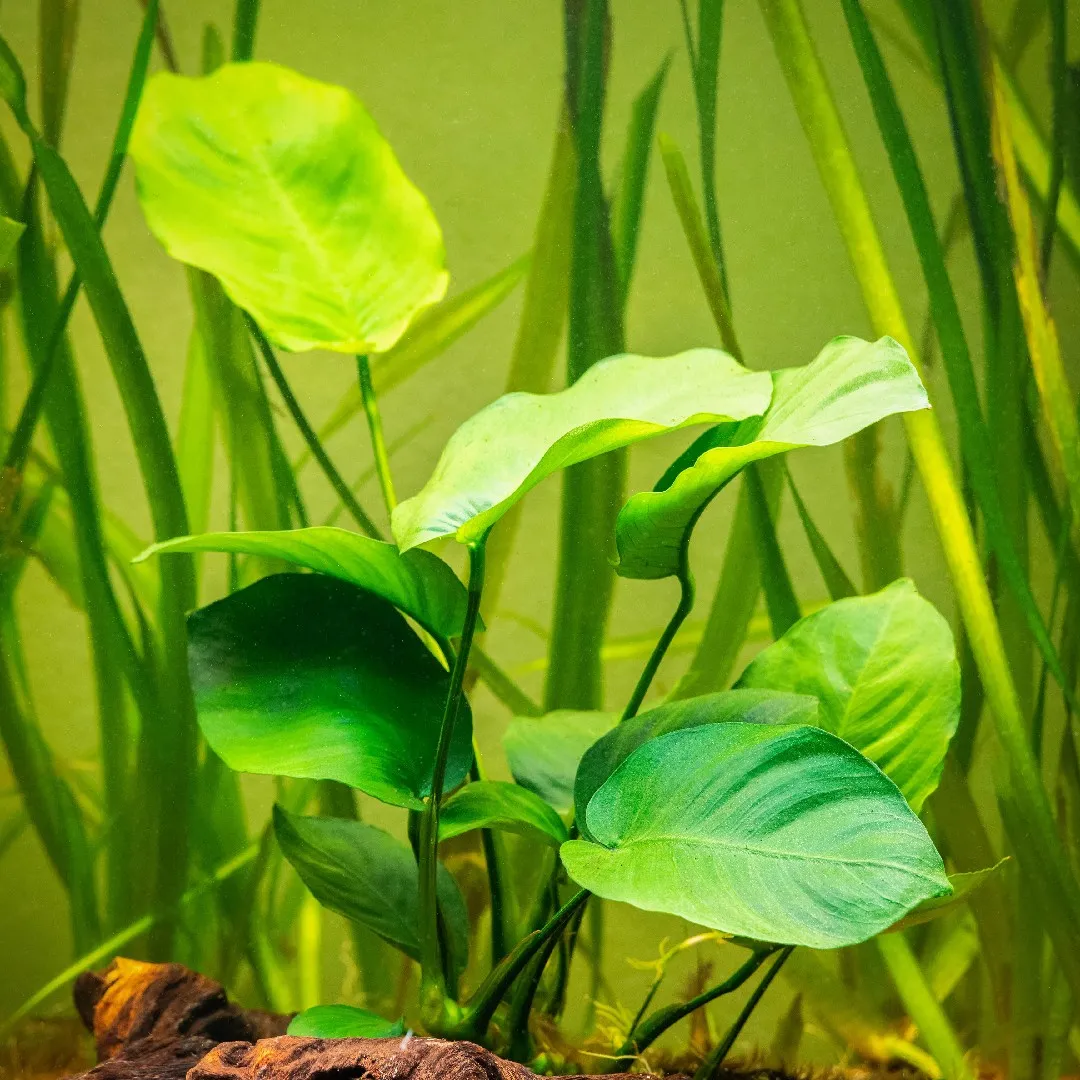
Anubias Care: The Plant You Cannot Kill
Thick, dark leaves that shrug off low light — just keep the rhizome exposed and Anubias will outlive everything else in your tank.
 plant spotlight
Ludwigia Repens & Narrow Leaf: Easy Background Color from North America
Ludwigia repens is one of the most beginner-friendly red stem plants in the hobby. Native to North America, it transitions from olive green to deep red with better light and a root tab.
 care guides
Cryptocoryne Complete Guide:
Three Sri Lankan crypts, one care sheet. Wendtii Bronze, Pygmy, and Undulata Red are slow, dramatic, and virtually indestructible once settled — just plant, feed the roots, and wait.
 care guides
How to Acclimate New Aquarium Plants When They Arrive
What to actually do in the first hour after your mail-order plants show up — unboxing, trimming, planting, and what melt to expect over the following weeks.
 care guides
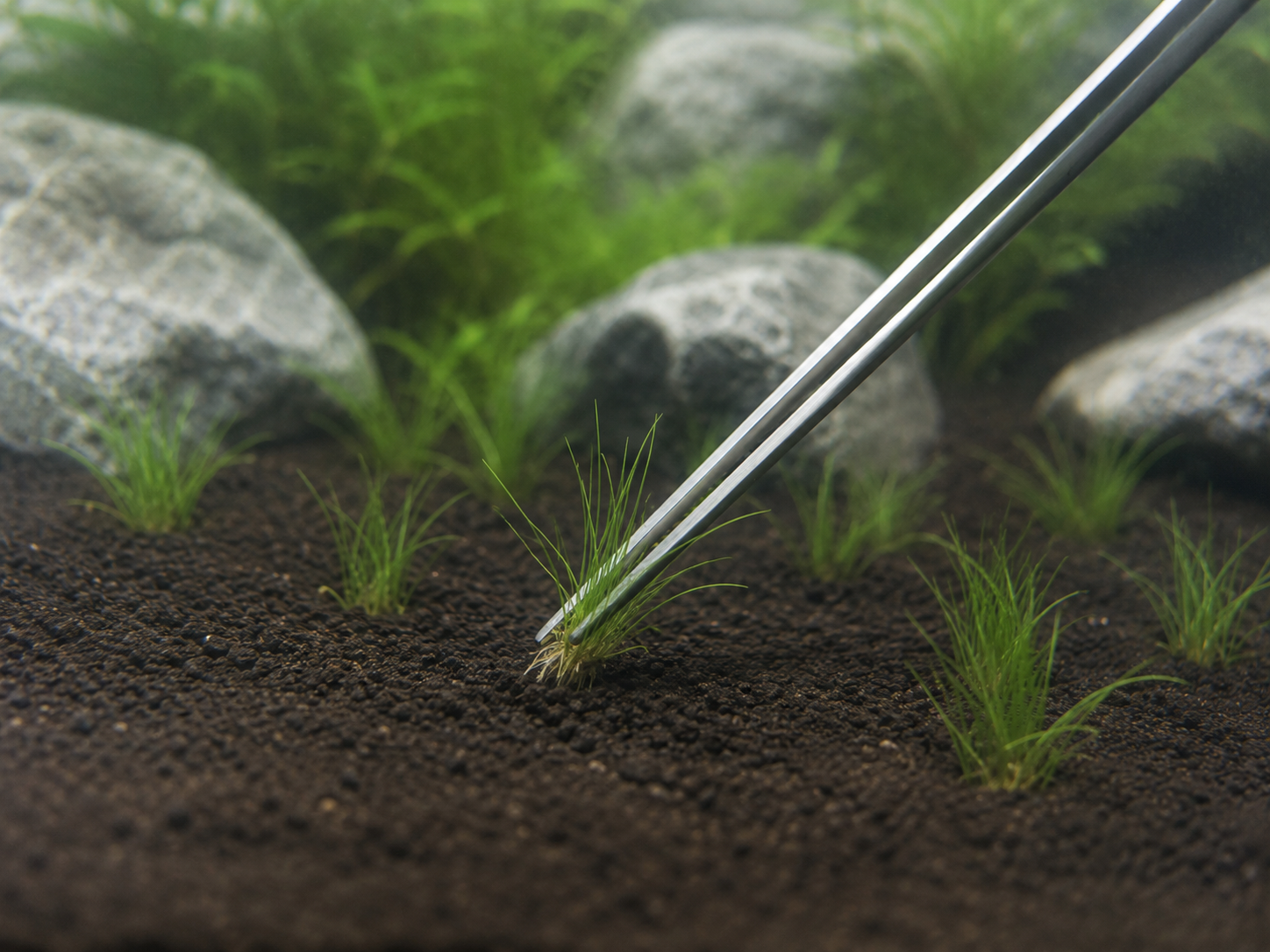
How to Plant Aquarium Plants: A Beginner's Guide
A step-by-step guide to planting rosettes, stems, epiphytes and floaters correctly — plus the tools you need and what normal transplant melt looks like.
 care guides
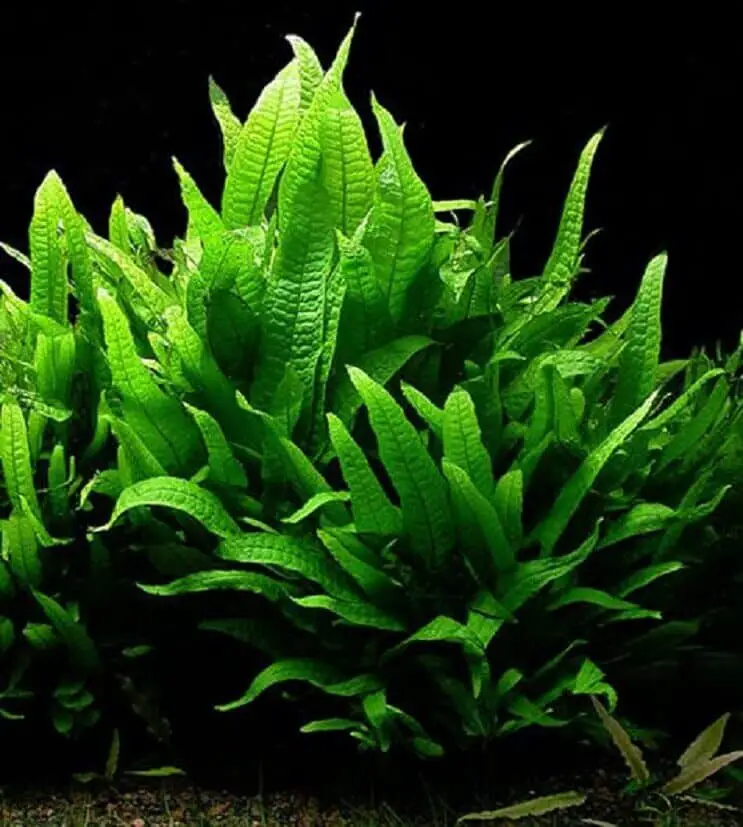
Best Low-Light Aquarium Plants (No Special Fixture Needed)
Live in a dim room or run a basic stock light? Here are the aquarium plants that actually thrive in low light — plus a few popular plants to skip.
 care guides
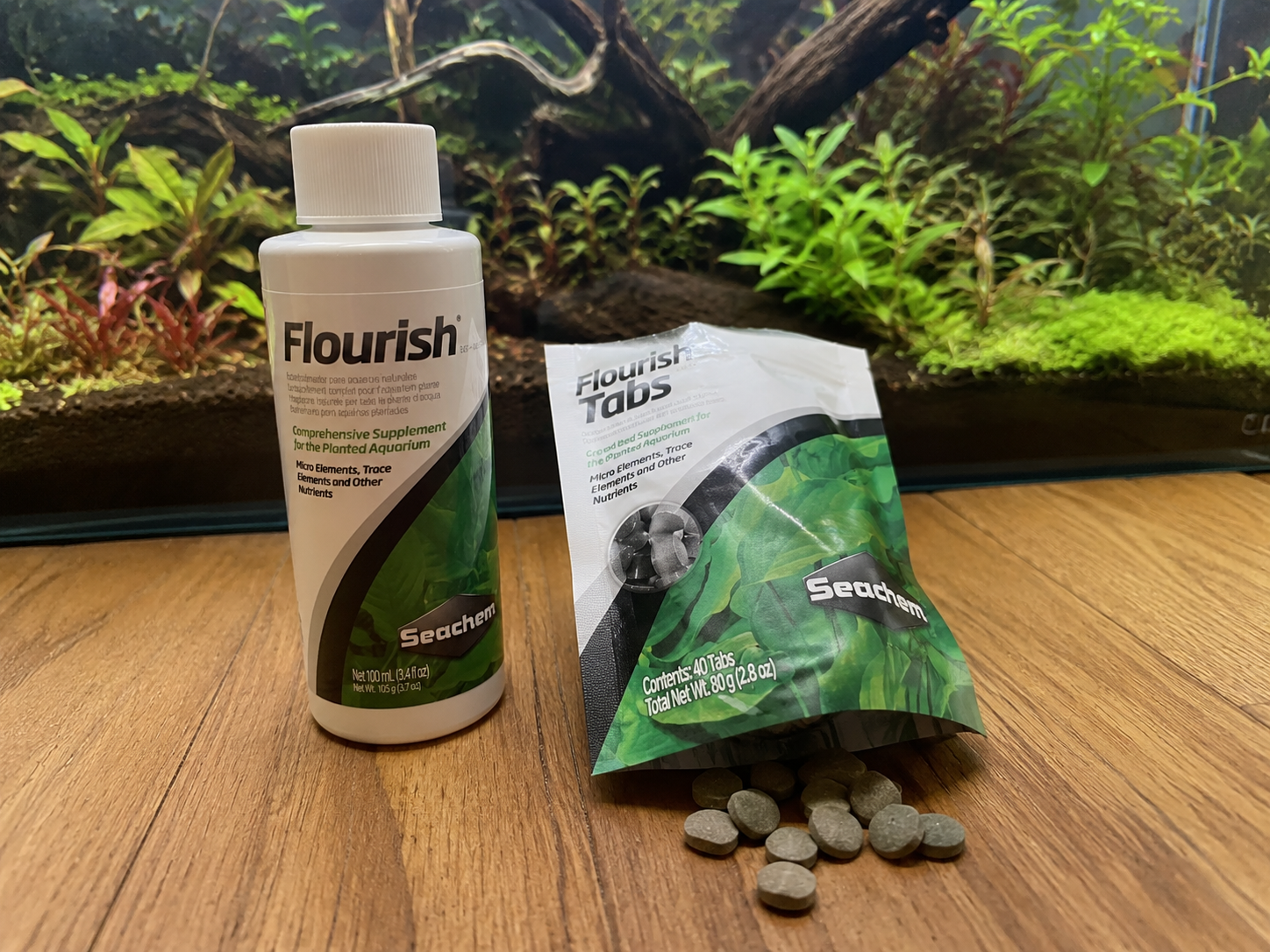
Root Tabs vs. Liquid Fertilizer: Do You Need Both?
What root tabs and liquid fertilizer actually feed, why dosing only one leaves half your plants starving, and a simple rule of thumb for which plants need which.
 care guides
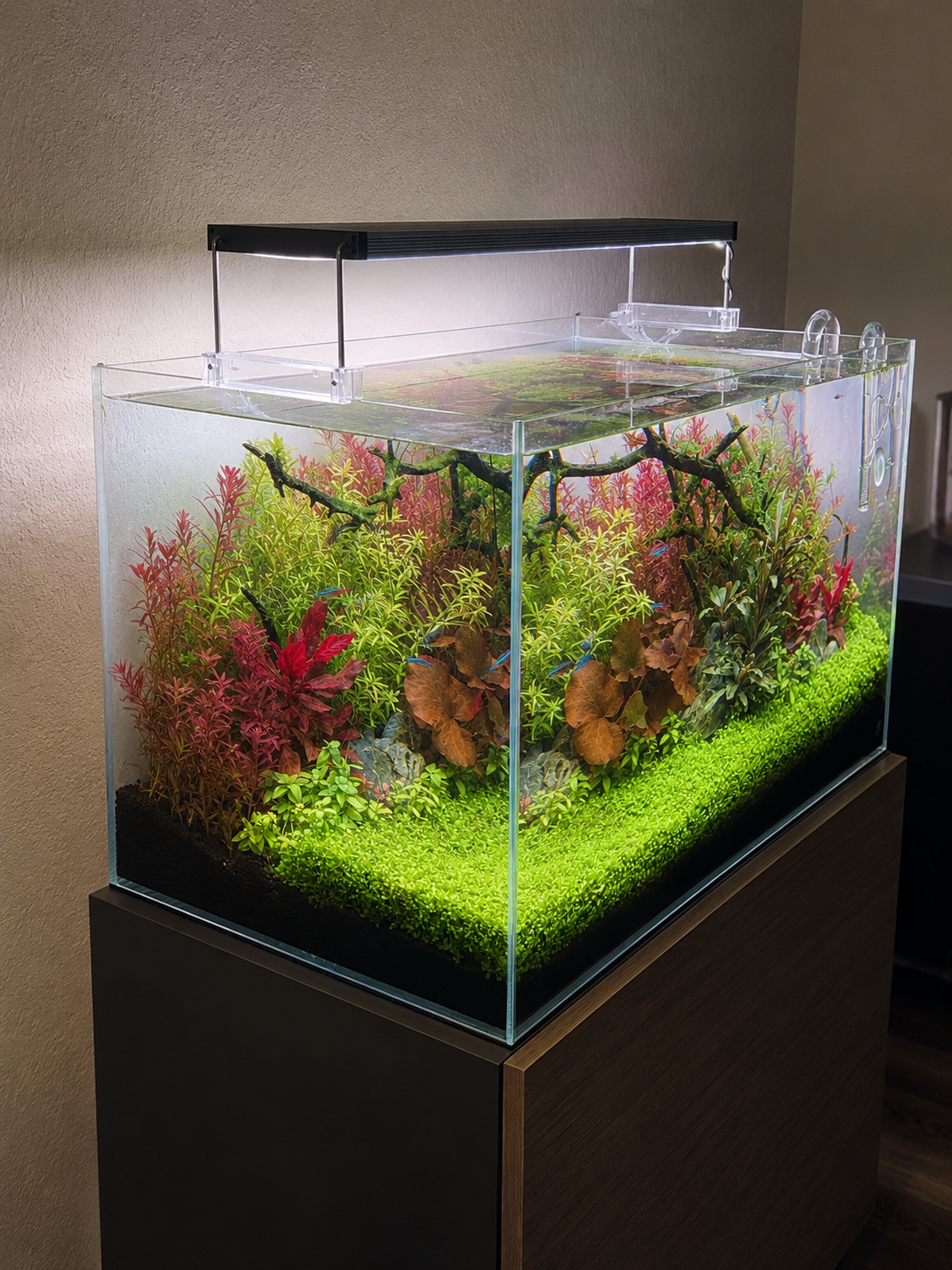
CO2 vs. No-CO2 Planted Tanks: Which Is Right for You?
What pressurized CO2 injection actually buys you, what it costs, and how to decide between a high-tech CO2 setup and a low-tech no-CO2 tank.
care guidesJava Fern vs. Anubias: Which Should You Choose?
A side-by-side comparison of the two most recommended beginner epiphytes — how they differ in growth, light needs, and toughness, and why most tanks are better off with both.
 troubleshooting
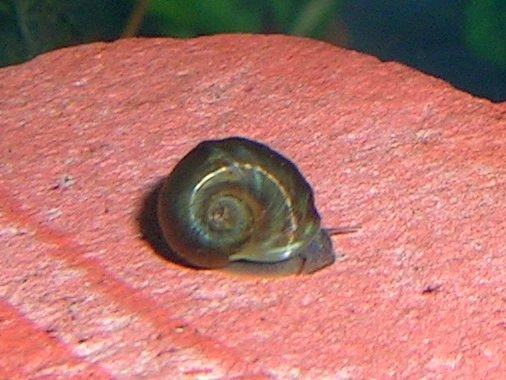
How to Get Rid of Pest Snails in a Planted Tank
How bladder, pond, and ramshorn snails hitchhike into a tank, how to knock down a booming population, and how to stop it from happening again.
 troubleshooting
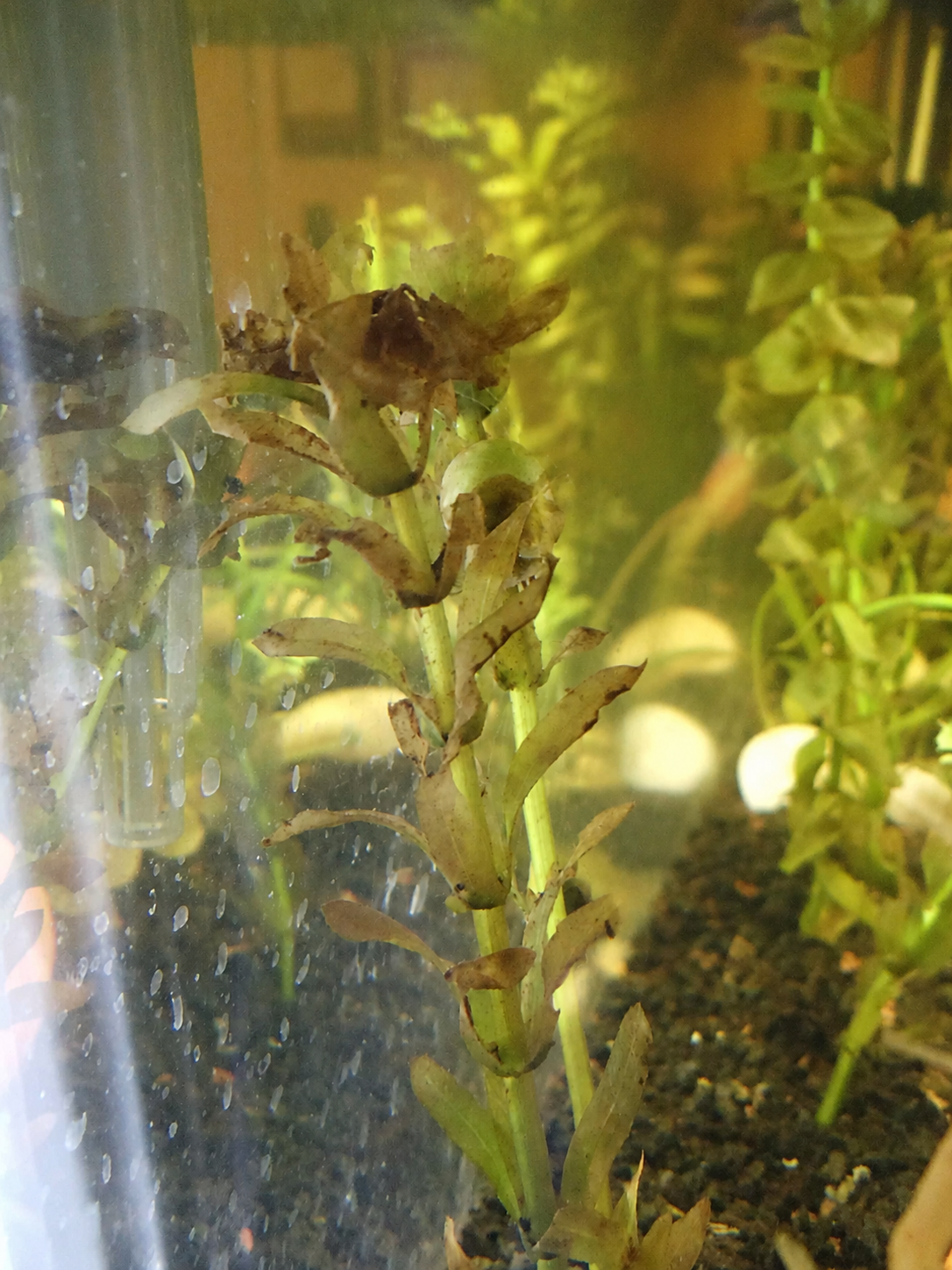
Why Is My Aquarium Plant Dying? A Troubleshooting Guide
A calm, step-by-step way to tell normal transition melt from actual decline — and what to do about each.
 care guides
GH vs. TDS vs. pH: Which Water Test Do You Actually Need?
Three different numbers, three different tools, and a lot of overlap in what people assume they measure. Here's what each one actually tells you and which is worth buying first.
 troubleshooting
Why Won't My Nerite Snail's Eggs Go Away?
Nerite snail eggs don't hatch in freshwater, but they don't disappear on their own either. Here's why they stick around and what actually gets rid of them.
 care guides
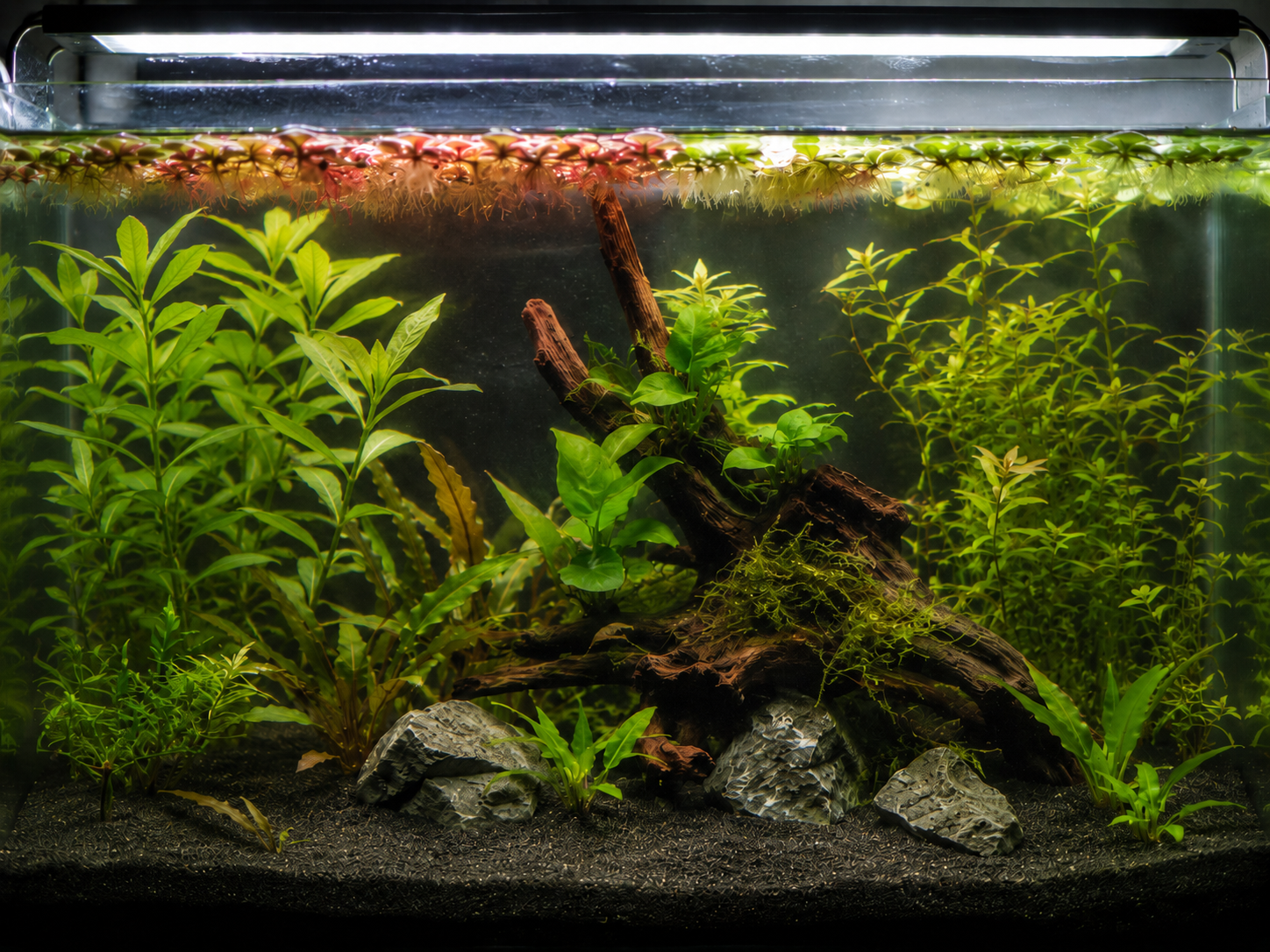
Choosing a Light for Your First Planted Tank
Aquarium lighting gets more complicated than it needs to be. Here's what actually matters — intensity, spectrum, and duration — when picking a fixture for a low-tech or high-tech planted tank.
 care guides
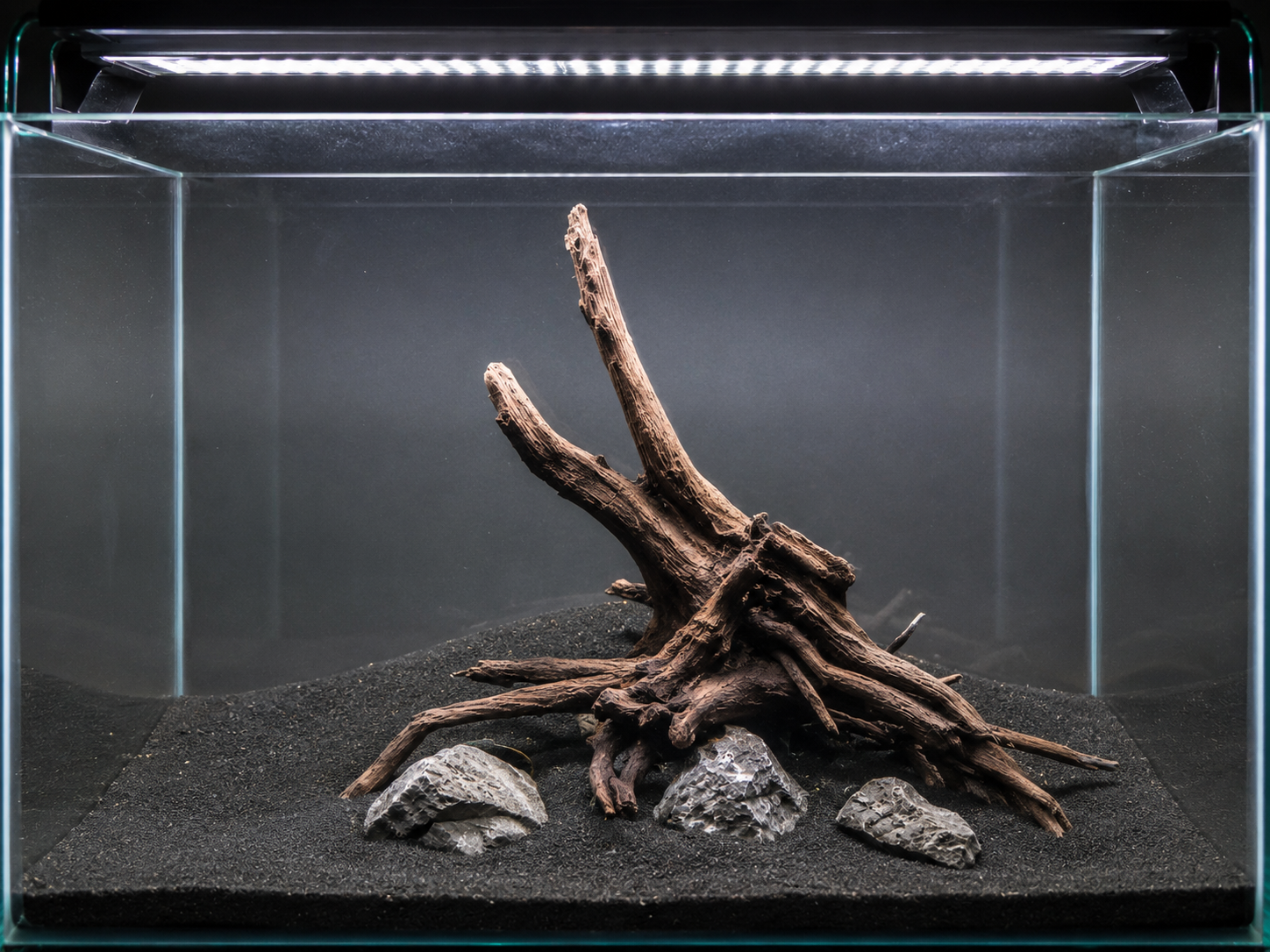
Aquascape or Just Filling the Tank? Figure This Out Before You Order Plants
The single most useful question before placing a plant order isn't "which species" — it's whether you're building an aquascape or just filling a tank. Here's how to tell which one you actually want.
 care guides
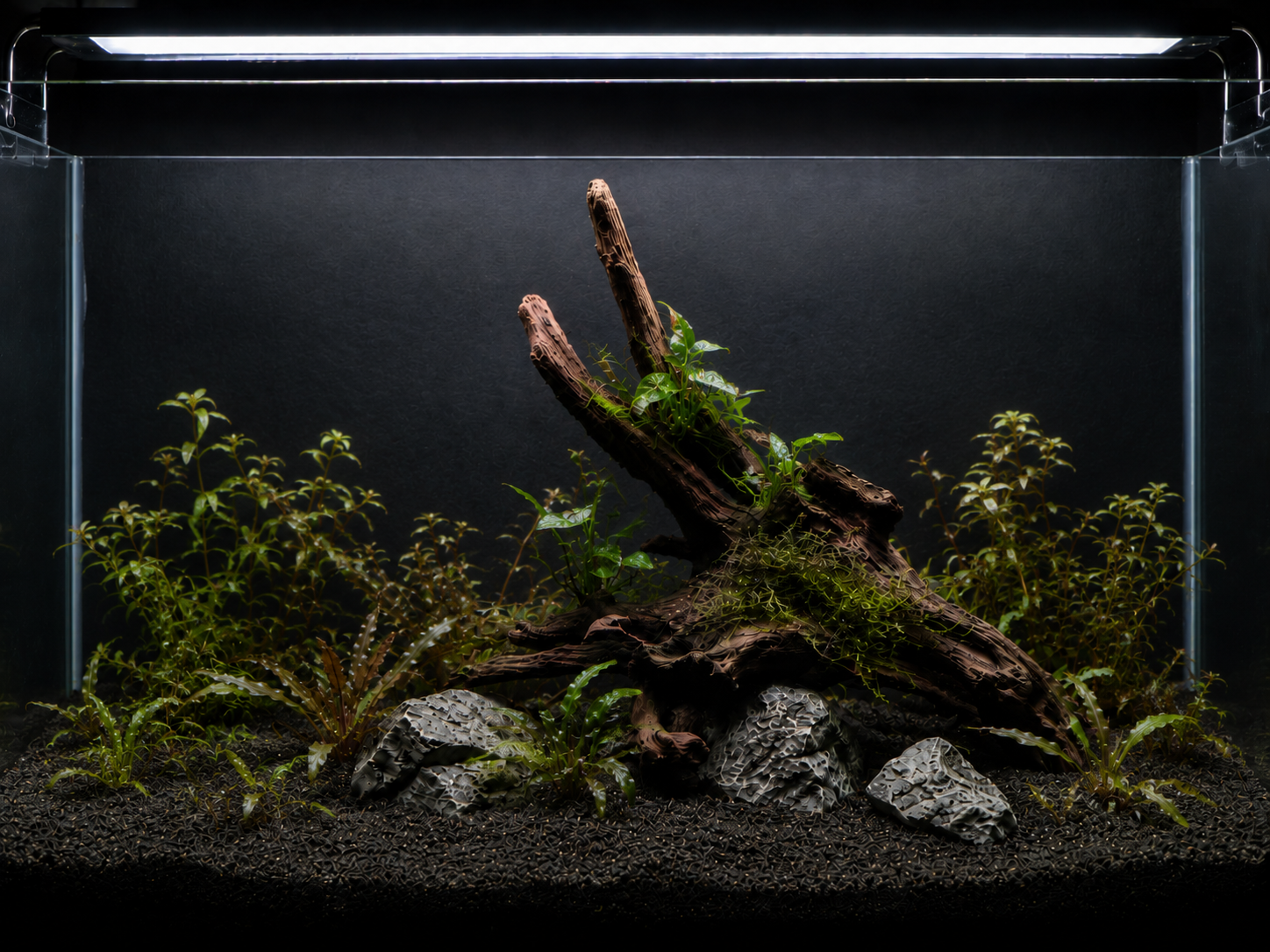
How Many Plants Do You Need for a 10-Gallon Tank?
A practical stem count and coverage guide for planting a 10-gallon tank — plus how the numbers scale up or down for other tank sizes.